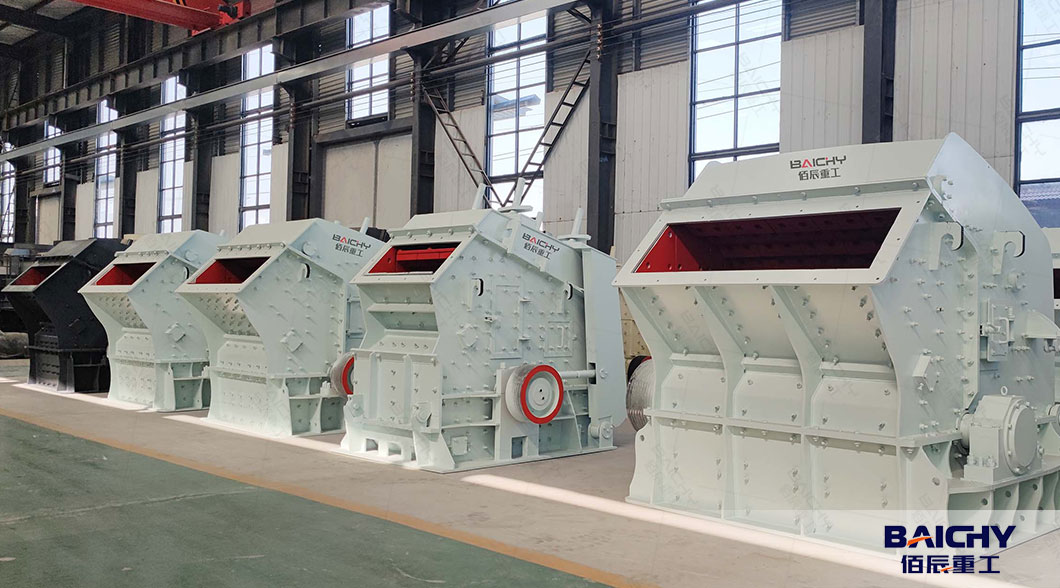
An impact crusher is a powerful machine used to break down large rocks or materials into smaller, more manageable pieces. Unlike traditional crushers that use compression, impact crushers rely on high-speed impact force to reduce material size. This crushing method allows the crusher to handle various materials, including rocks, concrete, and even asphalt, making it versatile for different industries. Impact crushers are widely used in the construction, mining, and recycling industries, particularly in applications where efficiency and material shape are essential. They are designed to produce cubic-shaped products, which are ideal for aggregate production. Impact crushers work by using high-speed rotors and impact bars to strike and break materials, making them an essential tool for reducing materials into smaller particles.
1. How Does an Impact Crusher Work?
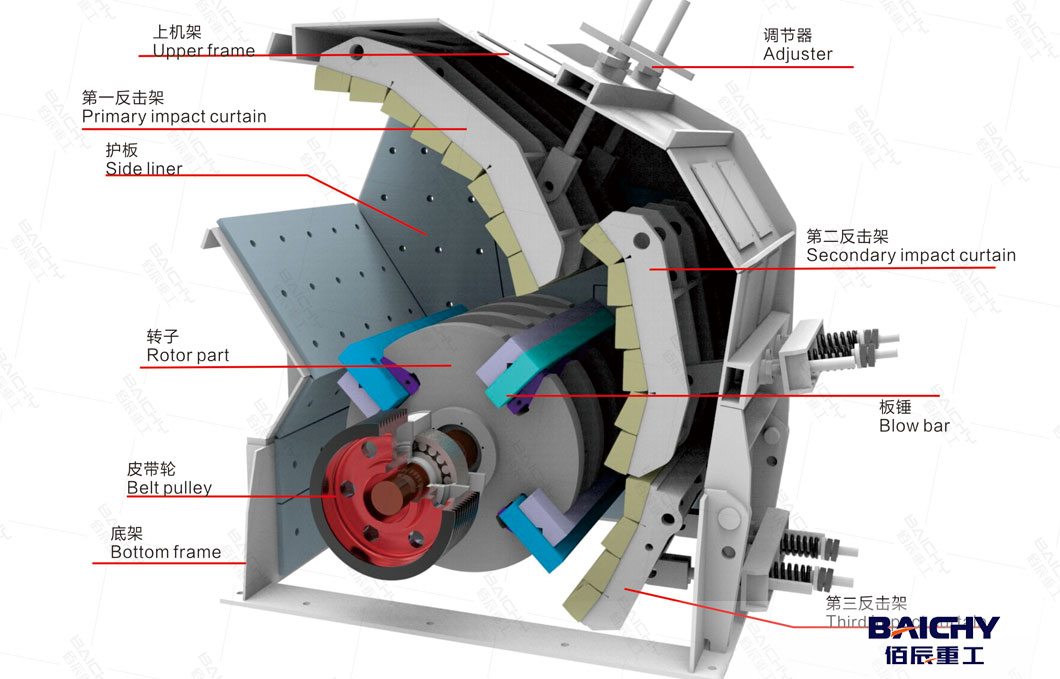
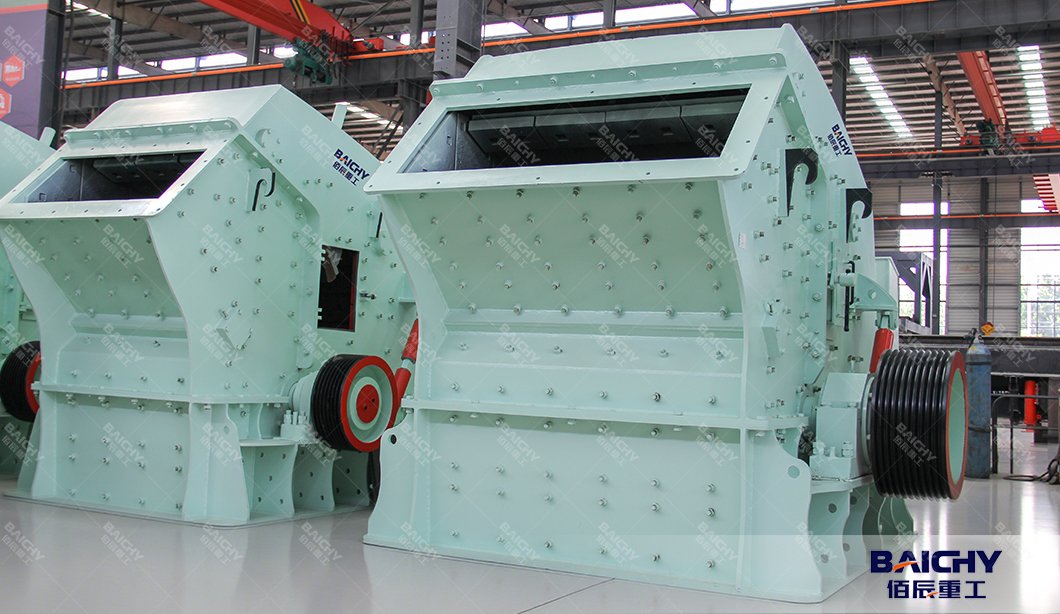
The performance of an impact crusher is determined by the rotor size, feed capacity, product size, and rotor speed. The rotor is the main work component of the impact crusher and it has many rotors. The name suggests that the crushing mode of the impact crusher is the impact breaking mode , which are crushing by breaking and impact, and can predict the general name of the crusher being an impact crusher. The impact breaker is used in the impact crushing mode, the hammer is fixed to the rotor and all the walls are parallel to the hinged shaft with the bore shaft, so when crushing the material, the bumper strap is connected with the hammer and the gear moves in the same direction as the hammer. The material in both the rotation and the revolution is crushed from a concentrated point. It could minimize the proportion of the sand fraction from the crusher.
Impact crushers utilize a high-speed rotor that rotates rapidly and throws materials against impact bars or a fixed wall. The force generated by the rotor’s speed causes the materials to break upon contact with the impact bars, and the resulting smaller pieces are expelled through a discharge port. The continuous impact between the material and the rotor ensures an even reduction in size.
.
2. Types of Impact Crushers
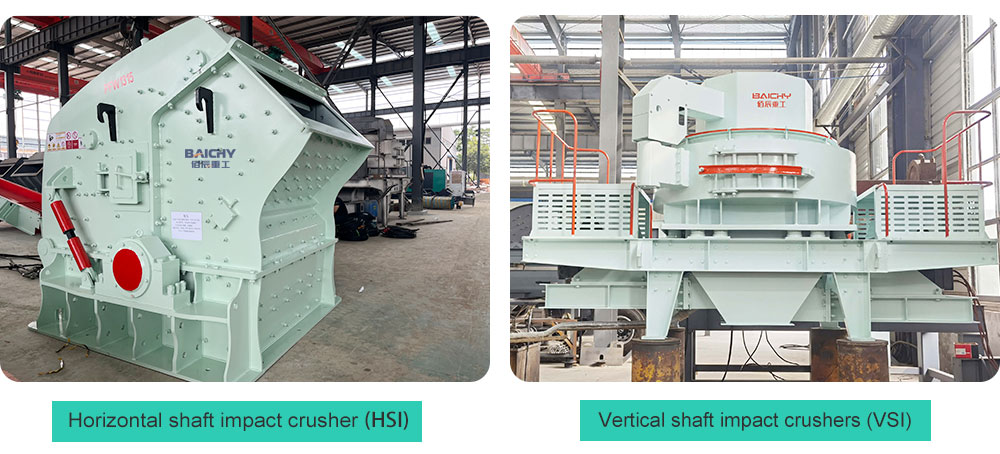
Impact crushers can be categorized into two main types: Horizontal Shaft Impact (HSI) crushers and Vertical Shaft Impact (VSI) crushers. HSI crushers primarily use a horizontal rotor to crush materials, while VSI crushers use a vertical rotor. Both types use similar mechanisms but differ in their design and applications.
● Horizontal Shaft Impact Crushers (HSI)
Horizontal Shaft Impact crusher consist of a hopper, two or three cavity, a rotor, and hammers (blow bars). Essentially, large products are fed into the hopper where they come into contact with hammers on a spinning rotor which crushes the material into smaller pieces. As the larger material gets impacted by the hammers it comes into contact with each apron rebounding it back to the rotating hammers for another round of impacting until it is discharged out of the impact crusher. HSI crushers are suitable for primary, secondary, and tertiary crushing stages. They are ideal for reducing large rocks or ores into smaller aggregates for construction purposes. The horizontal rotor allows for better control over the material size and shape.
● Vertical Shaft Impact Crushers (VSI)
VSI crushers are typically used for finer crushing and are commonly used in sand production. The vertical rotor configuration helps create a more uniform particle size, which is especially useful in the production of high-quality aggregates.
3. Key Components of an Impact Crusher
3.1. Rotor Design
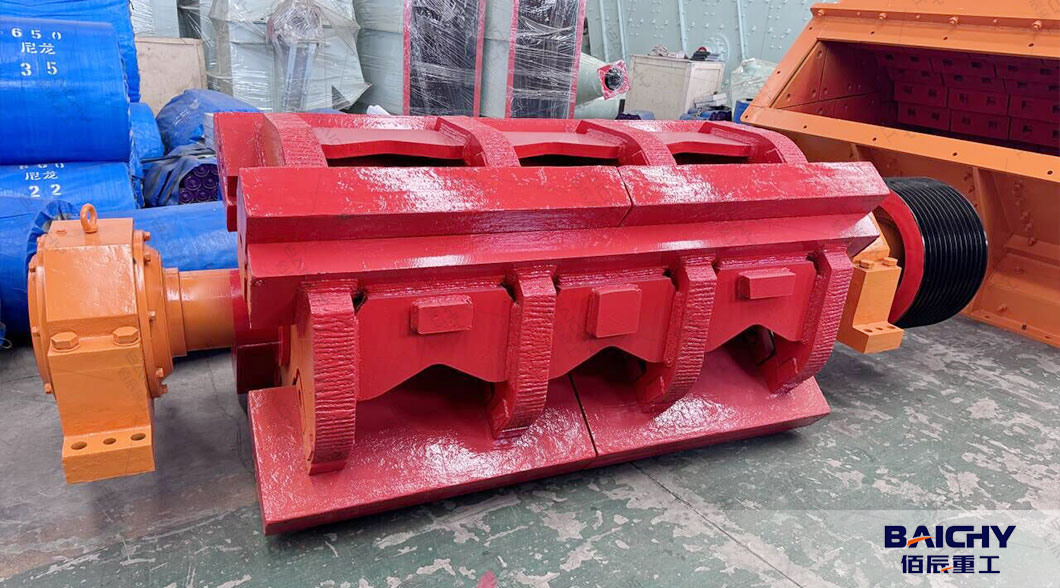
The rotor is the heart of an impact crusher. It is a rotating component that provides the necessary kinetic energy to break down materials. The rotor’s speed and design directly affect the efficiency and performance of the crusher. Higher rotational speeds result in more powerful impacts, which help achieve faster material reduction. The rotor of an impact crusher is a large flywheel that holds blow bars in place and increases the machine's power and stability. The rotor's design can vary depending on the type of impact crusher, which is classified as either horizontal shaft impact (HSI) or vertical shaft impact (VSI). The speed of the rotor varies between 500 and 3,000 rpm. Due to the high rate of wear on these machines (wear can be taken up by moving the hammers on the pins) they are limited in use to relatively non-abrasive materials. They have extensive use in limestone quarrying and in the crushing of coal.
3.2. Impact Bars and Plates
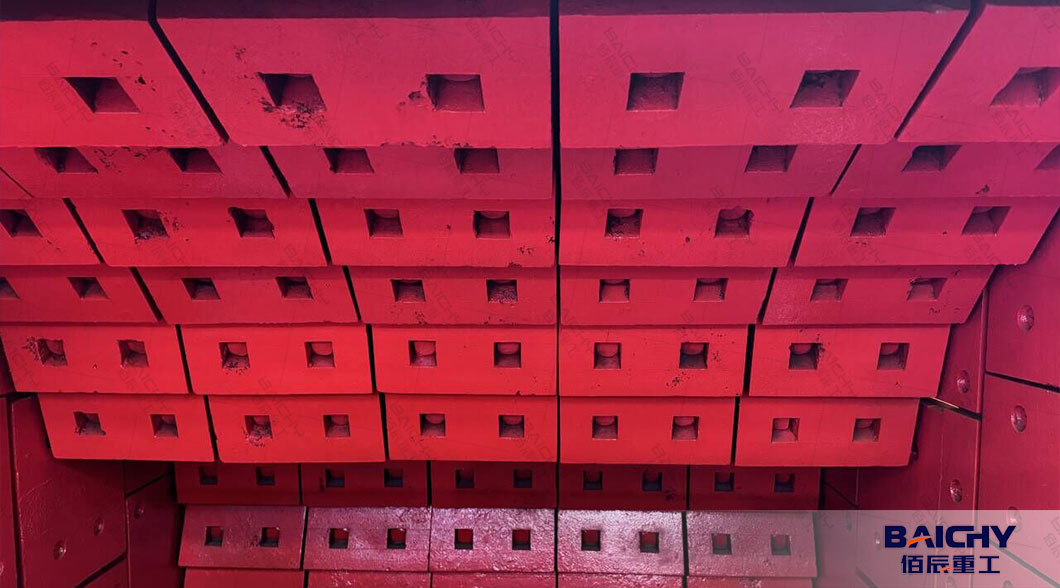
Impact bars or blow bars are the main components that strike and break the material. These bars are typically made of tough, durable materials to withstand the high-speed impacts they endure during operation. The wear and tear on impact bars can affect the efficiency of the crusher, which is why regular maintenance and replacement are essential. Impact crusher impact plates and liners, also known as wear liners, are consumables that are frequently worn down and need to be replaced during the crushing process. These parts protect the impact crusher housing from abrasion and are typically made from wear-resistant steel. The rate at which they wear down depends on the hardness, abrasion, and fines content of the material being crushed. For example, materials like sandstone, which contain high amounts of silica, can wear out liners more quickly.
3.3. Crusher Housing and Frame
The housing and frame provide structural integrity to the impact crusher. They house the rotor and impact bars and protect the internal components from external damage. The frame must be robust enough to handle the force generated during crushing operations without compromising performance.
4. Functions of an Impact Crusher
4.1.Material Size Reduction
The primary function of an impact crusher is to reduce large materials into smaller, more manageable pieces. This is particularly useful in industries like construction, where crushed aggregates are used in the production of concrete, road base materials, and other construction products. The size reduction process is highly efficient, allowing large amounts of material to be processed in a short period.
4.2. Versatility in Material Processing
Impact crushers are versatile machines that can crush a wide variety of materials. Whether it’s hard rock, concrete, asphalt, or even glass, an impact crusher can effectively reduce materials to the desired size. This versatility makes them indispensable in both primary and secondary crushing stages across various industries.
4.3. Shape of Final Product
One of the key advantages of using an impact crusher is its ability to produce cubic-shaped products. The high-speed impact forces create a product that is typically more uniform in shape than that produced by other types of crushers. This is particularly important in the production of high-quality aggregates for construction and road-building projects.
5. Applications of Impact Crushers
5.1. Construction Industry
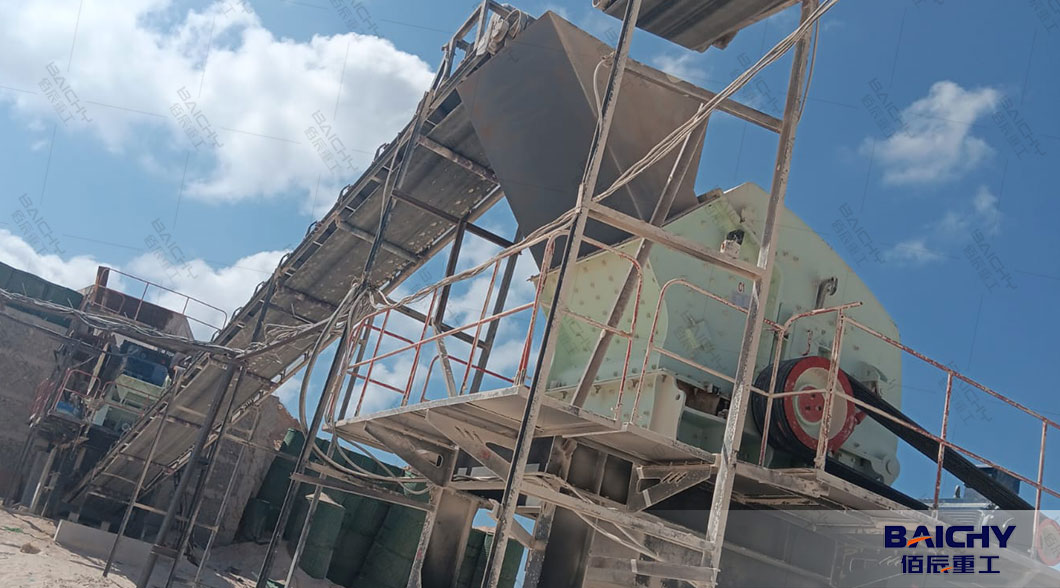
In the construction industry, impact crushers play a crucial role in producing aggregates, which are used in concrete and asphalt production. They are used to crush stones, gravel, and concrete rubble into smaller particles, which are then reused in construction projects. The cubic shape of the crushed product is particularly valuable in producing high-quality concrete and asphalt.
5.2.Recycling
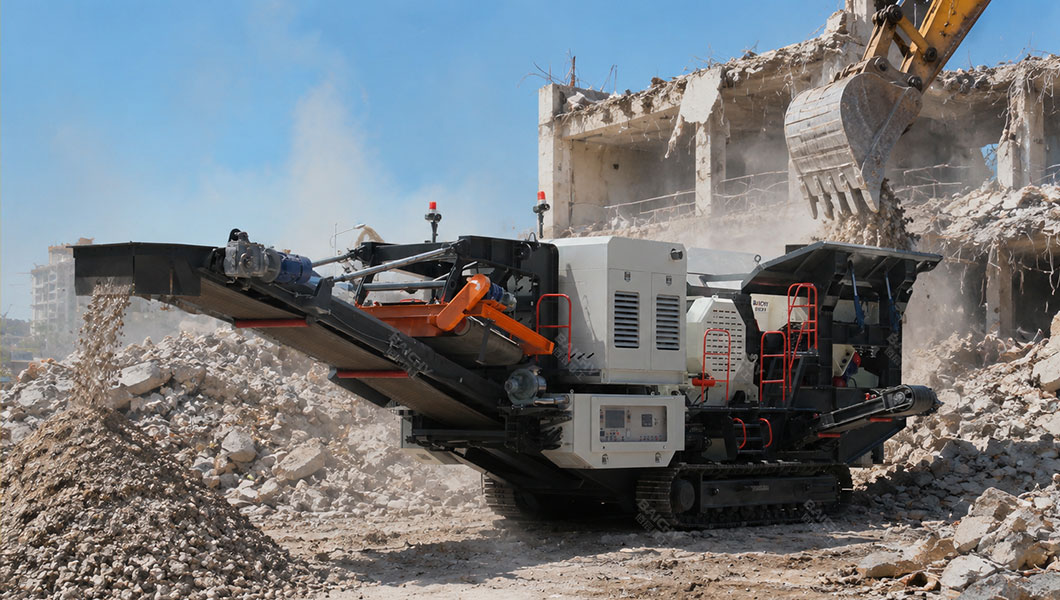
Impact crushers are also essential in recycling operations. They help reduce construction and demolition waste, such as concrete, asphalt, and glass, into smaller pieces that can be reused in new construction projects. This not only reduces the environmental impact of waste disposal but also makes recycled materials more valuable and usable.
5.3.Mining and Quarrying
In the mining industry, impact crushers are used to break down ore and rock into smaller sizes for further processing. The crushers are capable of handling a variety of materials, making them ideal for both soft and hard rock crushing in mining operations. Their ability to handle large volumes of material makes them essential in extracting valuable minerals and ores.
6. Advantages of Using an Impact Crusher
6.1. High Efficiency
Impact crushers are known for their high throughput and efficiency. The high-speed rotor generates a significant amount of energy, enabling the machine to process large quantities of material in a short period. This efficiency is especially beneficial in large-scale operations where high output is essential.
6.2. Cost-Effectiveness
Compared to other crushers, impact crushers tend to have lower maintenance costs. Since they are designed to handle material impacts, they typically experience less wear and tear than jaw or cone crushers. This makes them a cost-effective solution for many industries, particularly for companies that need reliable and low-maintenance crushing equipment.
6.3. Environmental Benefits
Impact crushers can contribute to environmental sustainability by promoting the recycling of materials. Many impact crushers are designed to reduce construction waste, enabling the reuse of materials in new projects. Additionally, their energy-efficient design reduces the carbon footprint of material processing.
7. Maintenance and Care for an Impact Crusher
7.1. Regular Inspections
Maintaining an impact crusher involves regularly checking key components such as the rotor, impact bars, and bearings. Frequent inspections help identify potential issues before they lead to major breakdowns, ensuring the machine continues to perform at optimal levels.
7.2. Replacement and Repairs
Due to the wear-and-tear nature of the machine, parts like impact bars and rotors will need to be replaced over time. Regular maintenance schedules should include the timely replacement of these components to prevent damage and maintain crushing efficiency.
7.3. Troubleshooting Common Issues
Some common problems that may arise during the operation of an impact crusher include material blockages, excessive wear of impact bars, and issues with rotor speed. Troubleshooting these problems early can prevent costly repairs and ensure smooth operation.
Impact crushers are essential pieces of equipment used in various industries, including construction, mining, and recycling. They efficiently reduce large materials into smaller, more manageable sizes, providing high-quality aggregates and other materials for construction projects. Their versatility, high efficiency, and cost-effectiveness make them indispensable in modern material processing operations. By understanding how impact crushers work and maintaining them properly, industries can continue to benefit from their capabilities, improving both the quality and cost-effectiveness of their operations.




 2026-10-22





 86-15093113821
 86-15093113821