In the mineral processing industry, the debate between dry grinding and wet grinding is not only about physical principles, but also about profits. Many buyers mistakenly believe that wet grinding is always more efficient. Although wet ball mills consume less energy during the grinding process, this ignores the huge costs of the downstream procedures. Do you want to produce slurries (such as ceramic inks) or powders (such as cement or fillers)? The final application determines the grinding method.

Baichy Machinery helps you calculate the total operating costs. Here is a detailed analysis of the four decisive factors.
Before choosing the machine, please first understand the chemical properties of the materials.
● Water sensitivity: Materials such as cement, hard gypsum or lime will undergo chemical reactions with water (hardening or hydration). For these materials, dry grinding (using a Raymond mill or vertical mill) is the only option. Oxidation: Some metal ores will rapidly oxidize in water, resulting in a decline in quality. Dry grinding can maintain their chemical stability.
● Raw ore moisture content: If the moisture content of your raw ore exceeds 50%, wet grinding is a reasonable choice. However, if your ore is dry (with a moisture content below 5%), adding water merely for grinding will cause expensive dehydration problems in the subsequent process.
The reason why most projects suffer losses lies in this.
● Wet grinding: The wet ball mill for grinding the same tonnage of materials is approximately 30% more energy-efficient than the dry ball mill. However, if your final product must be dry powder, a filter press and a rotary dryer must be installed. The fuel cost for drying the slurry is typically 3 to 5 times that of saving energy during the grinding process.
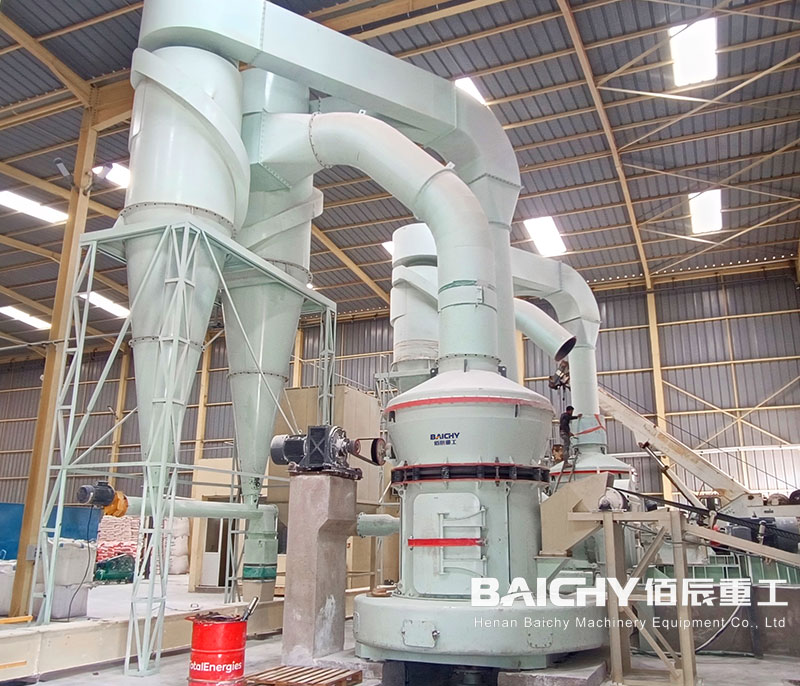
● Dry grinding: Machines like the Baichy Raymond mill or the HGM micro-powder mill can complete both grinding and classification in one step. The product is finished powder and can be directly packaged. No drying fuel is required.
● Conclusion: For industrial powders, the total cost of dry grinding is the lowest.

● Wet grinding: Traditionally, wet grinding is a necessary step for processing ultrafine particles (<5 micrometers) to prevent the particles from clumping together.
● Dry grinding: Technology has advanced. The Baichy HGM series of dry grinding machines employ advanced air classifiers, enabling efficient separation of particles as fine as 2500 mesh (5 microns) without the need for water. Unless you require nanometer-sized particles, modern dry grinding technology is sufficient to meet your needs.
● Dry grinding: The main by-product is dust. Using a pulse dust collector can easily handle the dust and achieve a clean air standard of 99.9%. Moreover, there is no water waste.
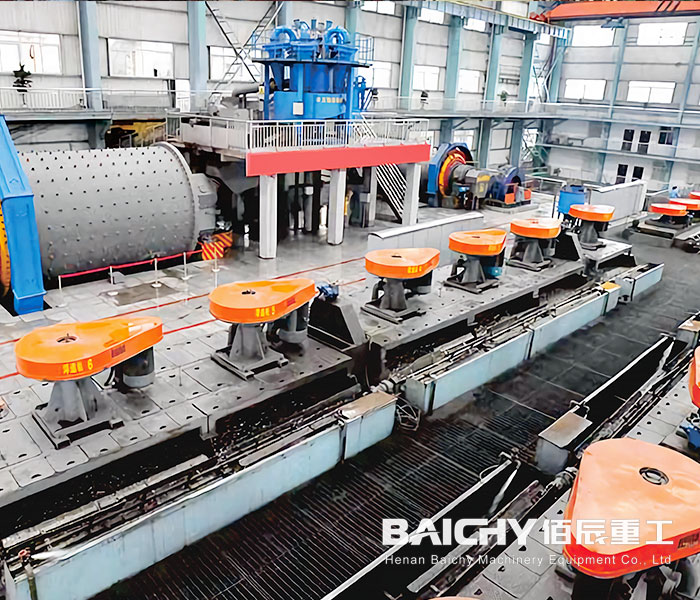
● Wet grinding: Although it does not produce dust, it generates wastewater and tailings. Treating the sludge requires sedimentation tanks and water treatment systems, and obtaining the necessary permits for these facilities is becoming increasingly difficult in many countries.
If you need the slurry for flotation/extraction, or if your material is already damp/viscous, choose wet grinding. If you need dry powder for fillers/cement and want to avoid the high costs of drying and water usage permits, choose dry grinding. Let us know about your raw materials and final application. Our Baichy engineers will design the most cost-effective process flow for you. Contact us now.

Answer: In terms of the grinding process alone, wet grinding is more energy-efficient (without the buffering effect). However, if the final product must be dry, the total energy consumption cost of dry grinding will be significantly lower because it eliminates the energy-consuming drying stage with its high oil consumption.
Answer: Yes. Although wet grinding is more suitable for grinding nanoparticles, the Bichai HGM micro powder mill is equipped with a high-precision classifier, which can efficiently produce powder with a particle size of up to 3000 mesh (approximately 5 micrometers).
Answer: No, as long as the equipment is properly configured. Modern dry grinding equipment operates under negative pressure and uses pulse-type dust collectors. This enables the capture of 99.9% of the dust, keeps the workshop clean, and complies with strict environmental regulations.
Save Time! Get A Detailed Quotation Quickly.