What Is a Closed Circuit Cone Crusher?
A closed-circuit cone crusher is a crushing system where the crusher operates in conjunction with a screen that returns oversize material back to the crusher for re-processing. Unlike an open circuit where material passes through only once, the closed circuit continuously recirculates material until it meets the desired size specification.The screen is the defining component. Without recirculation, a crushing system cannot truly be called "closed circuit."
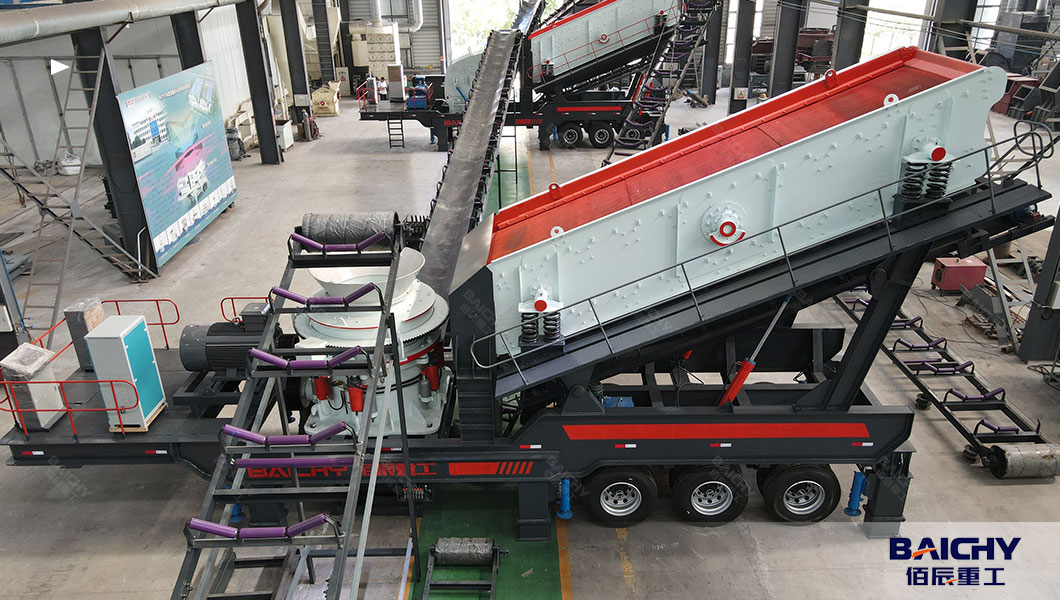
How Does a Closed Circuit Cone Crusher Work?
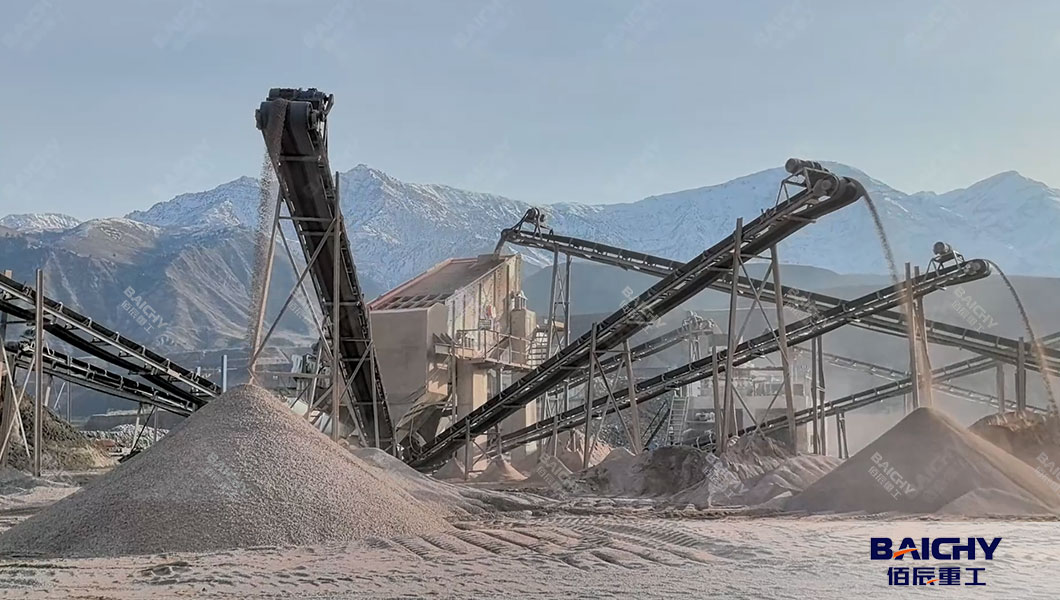
In a closed circuit cone crusher, feed material enters the hopper and moves into the crushing chamber, where the cone crushes it against a fixed surface. The discharged material then falls onto an integrated vibrating screen, which classifies the particles: material that meets the desired size specification passes through the screen as finished product, while oversize material is diverted onto a recirculation conveyor that carries it back to the crusher feed for another crushing cycle. This continuous loop repeats until every particle has been reduced to the correct size and passed through the screen, ensuring that no oversize material leaves the system.
Technical Note: The closed-side setting (CSS) of a cone crusher in closed circuit typically ranges from 6mm to 45mm, depending on the application and desired final product size.
Why Use a Closed Circuit Cone Crusher? Key Benefits
1. Superior Product Shape
The combination of cone crushing (compressive force) and recirculation produces cubical particles with minimal flakiness. This is ideal for high-grade concrete and asphalt applications where particle shape directly impacts workability and durability.
2. Higher Reduction Ratio
Closed circuits achieve effective reduction ratios of 8:1 or greater, as material is crushed repeatedly until it meets the specification. This means you can reduce large feed material to fine finished products in a single integrated system.
3. Consistent Product Size
Recirculation ensures no oversize material leaves the plant. The final screen aperture size directly controls the maximum product dimension, giving you complete control over your output specifications.
4. Lower Cost Per Ton
Mobile closed circuit plants eliminate the need for separate screening equipment and reduce material handling between machines. Fewer conveyors, less equipment mobilization, and simplified operation all contribute to lower operating costs per ton produced.
5. Single-Chassis Efficiency
By mounting the crusher, screen, and recirculation conveyor on a single chassis, closed circuit plants reduce the equipment footprint, simplify transport, and allow for faster setup and tear-down compared to multi-machine configurations.
Key Specifications to Evaluate
When selecting a closed circuit cone crusher for your operation, these specifications will directly impact performance and profitability:
| Parameter |
Typical Range |
Why It Matters |
| Crusher Head Diameter |
44" to 52" (1100-1300mm) |
Determines maximum capacity potential |
| Max Feed Size |
120-220mm (4.7-8.7 inches) |
Depends on liner profile; larger feed reduces pre-screening needs |
| Closed Side Setting (CSS) |
13-45mm (0.5-1.75 inches) |
Directly controls final product size |
| Screen Size |
5' x 20' to 7' x 20' |
Classifying area determines throughput capacity |
| Power Requirement |
300-400 HP (224-300 kW) |
Direct operating cost factor over time |
| Total Weight |
51,000-62,000 kg (113,000-138,000 lbs) |
Impacts transport permitting and site preparation |
Applications Best Suited for Closed Circuit Cone Crushers
Closed circuit cone crushers excel in applications requiring tight specifications and consistent output:
● Aggregate Production: Sand, gravel, and crushed stone for road base and construction fill
● Railroad Ballast: Tight gradation requirements (e.g., 2" x 7/8" minus)
● Mining (Pebble Crushing): Secondary and tertiary crushing in SAG mill circuits
● Recycling: Construction and demolition waste, overburden, foundry waste
● Asphalt & Concrete Aggregate: Applications that demand cubical particle shape and consistent gradation
Note: "Short head" cone crushers are specifically designed for tertiary closed circuit applications where finer products are required.
Real Project Case: Closed Circuit Cone Crusher in Indonesia
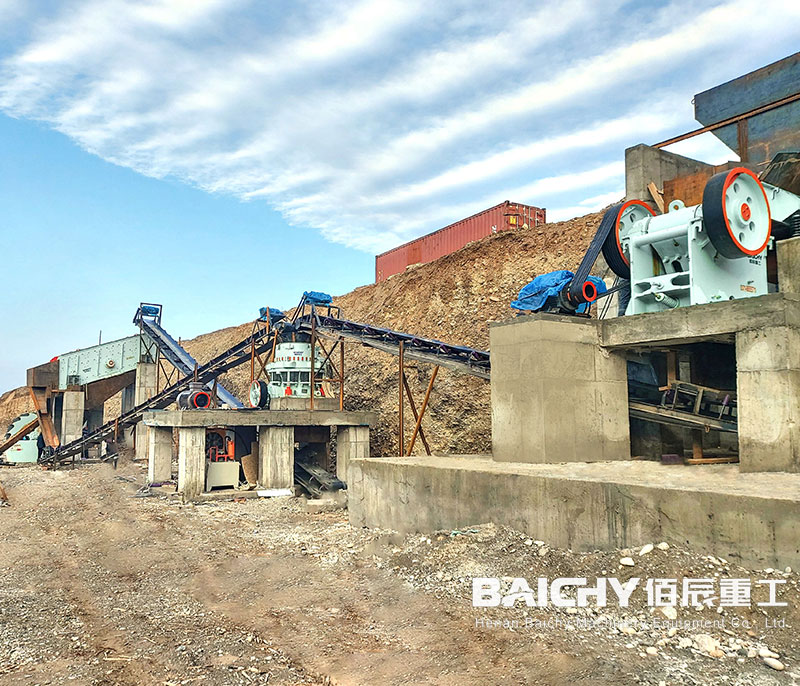
In Indonesia, a local quarry customer faced problems of unstable product size, high recirculation waste, and low efficiency when using a traditional open circuit crushing system. To solve these issues, Baichy supplied a closed circuit cone crusher system based on Hydraulic cone crusher HPC300 and 3YK1860 vibrating screen, designed for secondary crushing of andesite and basalt. After commissioning, the closed circuit system significantly improved material control. Oversized stone was automatically returned to the cone crusher for re-crushing, ensuring stable and well-graded final aggregates between 0–40 mm. The plant reached a stable capacity of 120–150 tph and reduced unnecessary material waste.
The customer reported that the biggest improvement was consistent product quality and better cubical aggregate shape, which directly increased their competitiveness in supplying road construction projects. They also highlighted that the closed circuit design helped reduce operator workload and improved overall plant stability.
The customer feedback was highly positive, stating that the system “solved the long-term problem of inconsistent output size and made production much more predictable and efficient.” Baichy’s technical support during installation and commissioning was also appreciated for its responsiveness and professionalism.
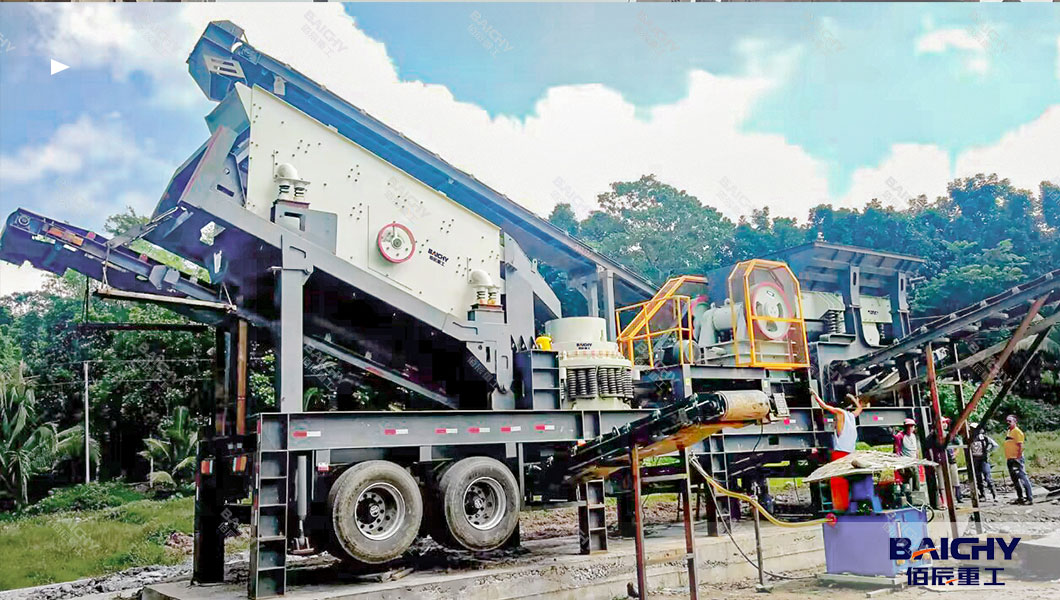
Closed circuit cone crushers represent the gold standard for producing consistent, high-quality aggregates in a single, portable package. By integrating crushing and screening on one chassis with recirculation conveyors, these plants eliminate the need for multiple equipment moves and separate screening operations.
For contractors, quarry operators, and mining companies, the key evaluation criteria should be:
● Required output capacity (TPH) – Match the crusher size to your production targets
● Desired final product size and shape – Determine whether a closed circuit is necessary for your application
● Feed material characteristics – Hardness, abrasiveness, and moisture content all impact crusher selection
● Mobility requirements – Consider transport permits, site access, and frequency of moves
● Power source availability – Electric drives offer lower operating costs; diesel provides site flexibility




 2026-09-08





 86-15093113821
 86-15093113821