In aggregate production and mineral processing, the cone crusher circuit configuration is a core factor that determines final product gradation, hourly output, operational costs, and overall plant efficiency. Two mainstream setups dominate the industry: open circuit cone crushing and closed circuit cone crushing. Choosing the wrong circuit type often leads to unqualified aggregate products, low material utilization, and unnecessary operational losses.
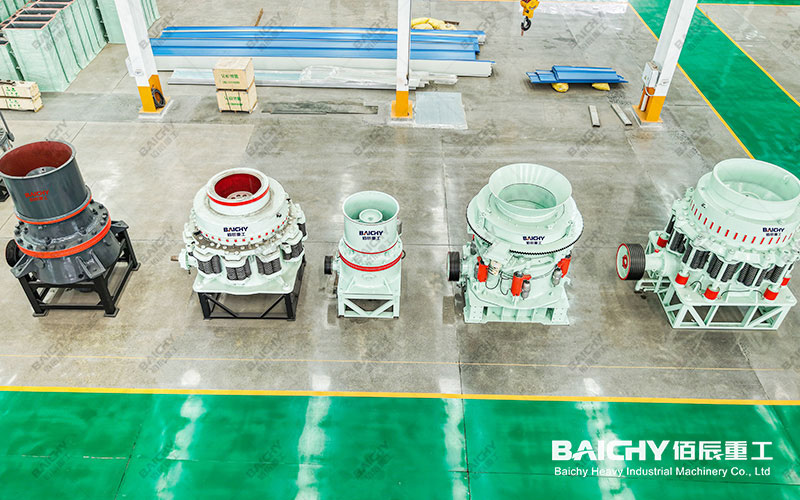
This comprehensive SEO guide clarifies the key differences between closed circuit vs open circuit cone crusher systems, covering their working mechanisms, unique advantages, limitations, and practical application scenarios. We also add a real engineering case to help you select the ideal crushing circuit for your project.
1. What Is an Open Circuit Cone Crusher?
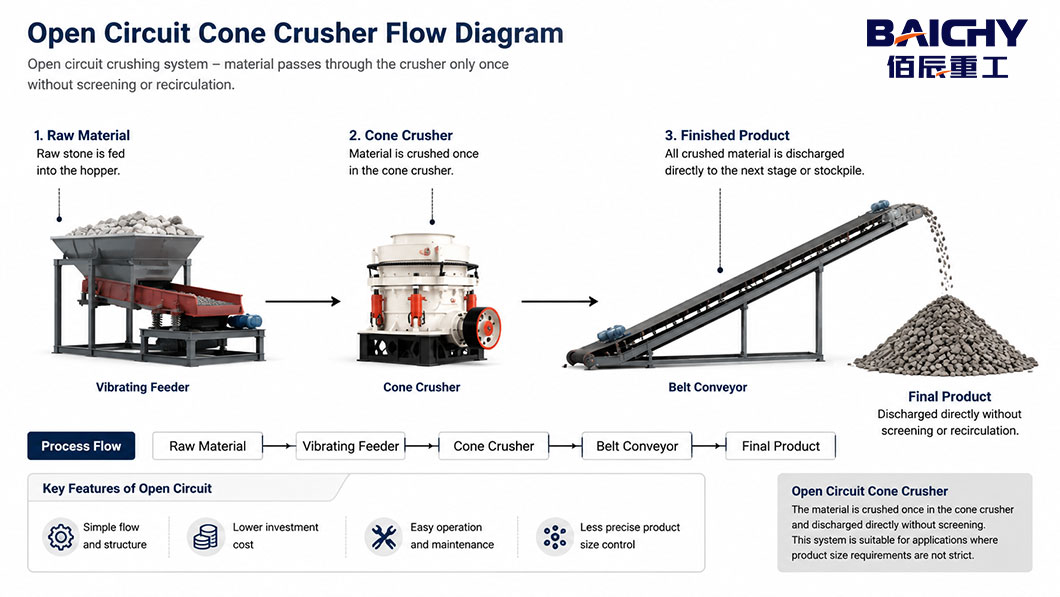
An open circuit cone crusher is a simplified single-pass crushing system without any material recirculation loop. Raw stone and ore materials pass through the cone crusher only once. After crushing, the discharged materials are directly transferred to the next processing link or stockpiled as finished products, with no post-crushing screening or re-crushing process involved.
Requiring no matched screening equipment, this open circuit setup features a simple structure and low failure rate. It is widely applied in primary and secondary coarse crushing stages for preliminary volume reduction of raw minerals and bulk aggregates.
Core Features of Open Circuit Crushing
•Single-pass processing: Material goes through the crusher once with no return feed
•No post-crushing screening: Saves equipment investment and layout space
•Simple workflow: Minimal system maintenance and fewer failure points
•Wide particle size distribution: Contains both fine particles and oversized fragments
Pros & Cons of Open Circuit Cone Crushers
Advantages
•Lower initial cost: No need for vibrating screens, return conveyors, or recirculation systems
•Higher raw throughput: No material recirculation reduces system resistance, enabling faster material processing
•Easy operation & maintenance: Fewer equipment components mean simpler daily operation and lower downtime risks
•Compact plant layout: Saves installation space for small-scale crushing projects
Disadvantages
•Inconsistent product uniformity: Unscreened oversized particles remain in the final output, leading to uneven aggregate sizes
•Loose gradation control: Cannot meet strict fine aggregate size specifications
•Low material utilization rate: Unqualified large particles cannot be reprocessed, resulting in raw material waste and reduced economic benefits
2. What Is a Closed Circuit Cone Crusher?
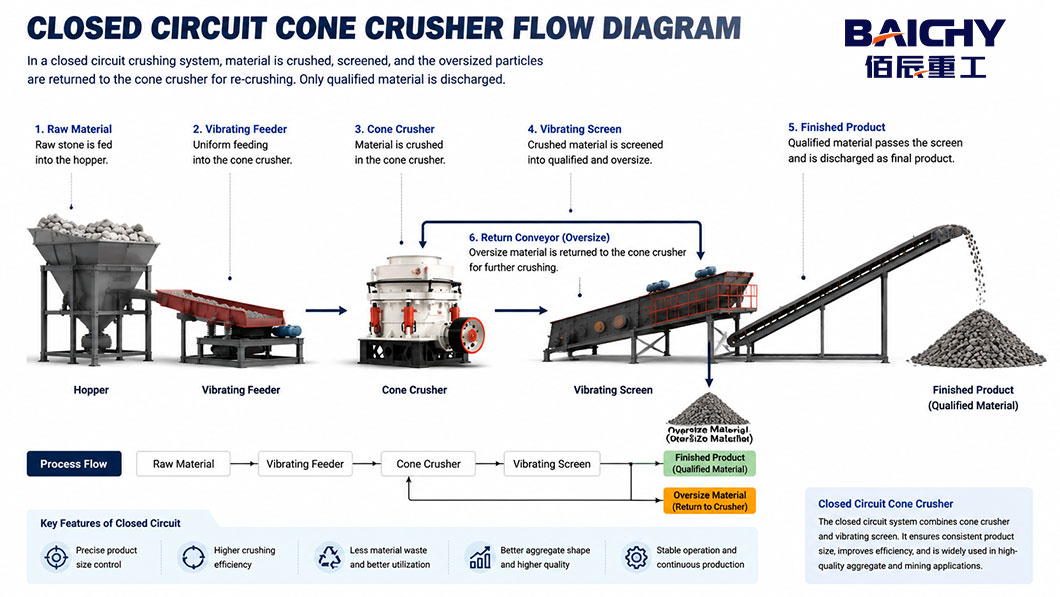
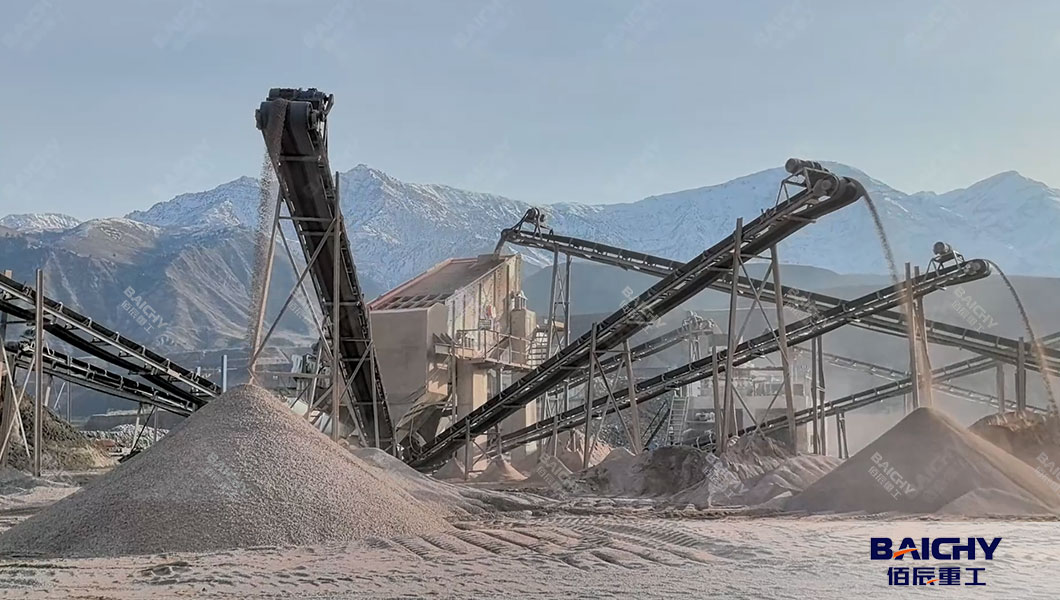
A closed circuit cone crusher adopts a complete closed-loop crushing system composed of a cone crusher, vibrating screen, and return conveyor. After raw materials are crushed by the cone crusher, the vibrating screen classifies materials by particle size. Qualified fine aggregates are sent to the finished product pile, while oversized materials are transported back to the cone crusher for repeated crushing until they meet standard particle size requirements.
This closed circuit crushing mode is the standard configuration for secondary and tertiary fine crushing. It is the preferred solution for projects requiring strict aggregate gradation and high-quality finished materials.
Core Features of Closed Circuit Crushing
•Recirculating crushing loop: Oversized materials are repeatedly re-crushed
•Post-screening classification: Strictly filters unqualified particles
•Tight size control: Consistent, uniform final product gradation
•Lower waste rate: Maximizes raw material utilization
Pros & Cons of Closed Circuit Cone Crushers
Advantages
•Superior product quality: Eliminates oversized particles, delivering uniform particle size and stable gradation
•Higher material utilization: 100% reprocessing of unqualified materials reduces resource waste
•Flexible output adjustment: Easy to adjust final particle sizes for high-standard construction and industrial materials
•Ideal for fine crushing: Perfect for tertiary crushing and finished aggregate production
Disadvantages
•Higher investment cost: Requires supporting screens, return belts, and auxiliary equipment
•Reduced net production throughput: Recirculating materials increase system load, slightly lowering hourly effective output
•Higher operational costs: Additional supporting equipment increases daily maintenance workload and wear parts consumption
3. Closed Circuit vs Open Circuit Cone Crusher: Direct Comparison Table
This side-by-side comparison helps you quickly distinguish the two cone crusher circuit configurations for fast selection:
| Comparison Item |
Open Circuit Cone Crusher |
Closed Circuit Cone Crusher |
| Working Mode |
Single-pass crushing, no recirculation |
Loop crushing with oversized material recirculation |
| Supporting Equipment |
Only cone crusher, no screen required |
Cone crusher + vibrating screen + return conveyor |
| Product Uniformity |
Low, wide size distribution |
High, precise and consistent gradation |
| Production Throughput |
Higher raw throughput |
Slightly lower net effective throughput |
| Initial & OPEX Cost |
Low investment, low maintenance cost |
High investment, moderate maintenance cost |
| Best Application Stage |
Primary & secondary coarse crushing |
Secondary & tertiary fine crushing |
| Product Standard |
Suitable for low-spec materials (road base, filler) |
Suitable for high-spec materials (concrete aggregate, mining ore) |
For most medium and large-scale crushing plants, the hybrid collocation mode (open circuit for pre-crushing, closed circuit for fine crushing) is the most scientific solution. It perfectly balances production efficiency, product quality, and long-term operational costs, bringing the highest economic return for crushing projects.
Key Takeaways
•Open circuit cone crusher: Simple layout, low investment & OPEX, high throughput, loose particle size control
•Closed circuit cone crusher: Precise aggregate gradation, high material utilization, premium product quality, moderate investment
5. Real Project Case: Circuit Configuration Application
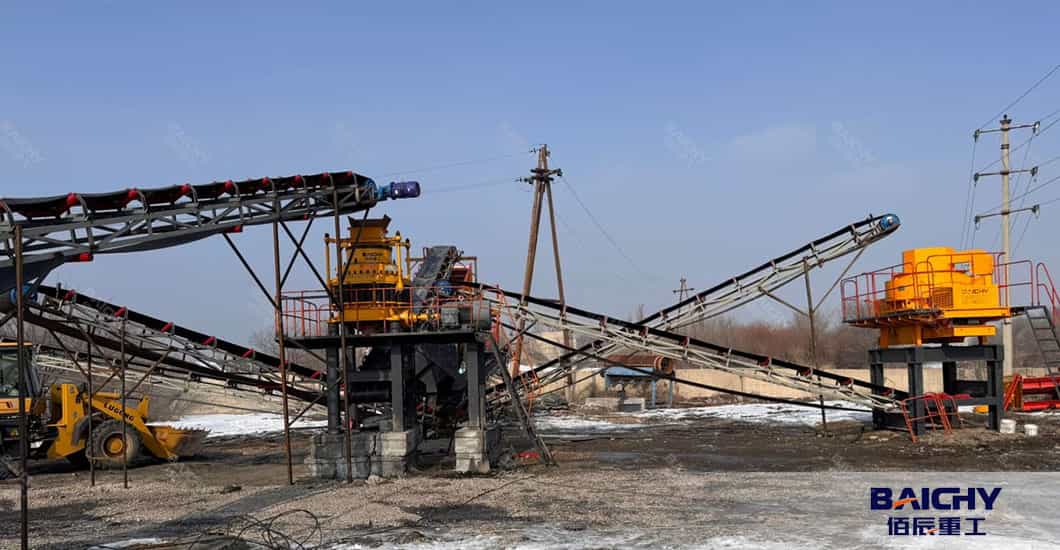
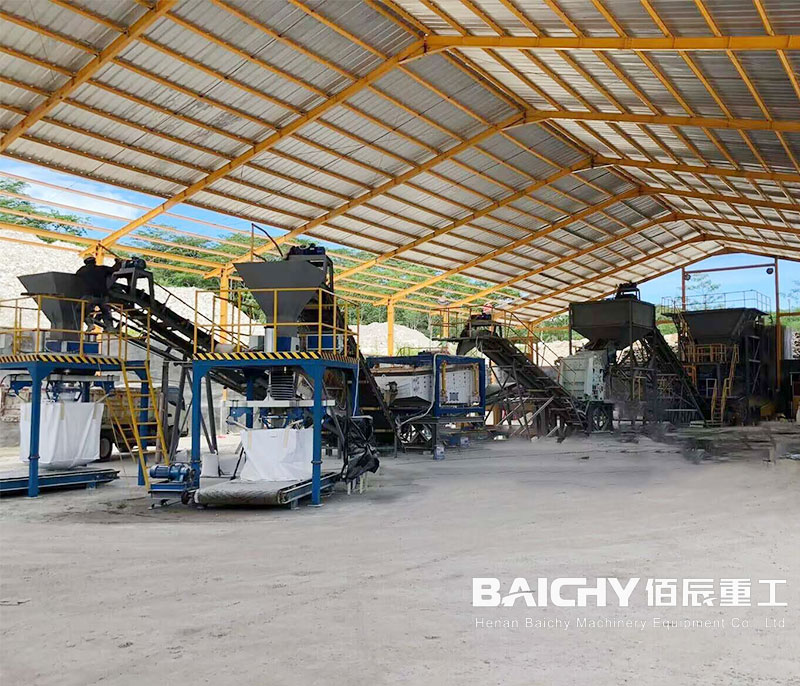
To help you intuitively understand the practical value of closed circuit vs open circuit cone crusher matching, we share a typical 200TPH granite aggregate production project in Southeast Asia, which covers mixed circuit application and efficiency optimization.
Project Overview: This commercial aggregate plant produces high-standard concrete aggregates (0-5mm, 5-10mm, 10-20mm) and road base fillers, with dual production demands for low-cost bulk materials and high-precision finished products.
Final Circuit Matching Scheme
The project adopted a hybrid open and closed circuit cone crusher setup to balance efficiency and quality:
•Primary & Secondary Coarse Crushing (Open Circuit): After jaw crusher primary crushing, the cone crusher runs in open circuit mode to process bulk granite materials. This setup delivers a high throughput of 220TPH, reduces pre-processing costs, and produces irregular coarse materials dedicated to road base filling, avoiding unnecessary screening and recirculation costs.
•Tertiary Fine Crushing (Closed Circuit): The coarse crushed materials are transferred to a tertiary cone crusher with a full closed circuit system (equipped with circular vibrating screen and return conveyor). The system automatically screens out oversized particles for re-crushing, controlling the finished aggregate particle size error within ±0.5mm and achieving a material utilization rate of 98%.
Project Operation Results
Compared with a full open circuit setup, the hybrid scheme improved qualified fine aggregate output by 35% and reduced material waste by 28%. Compared with a full closed circuit setup, it cut daily power consumption and maintenance costs by 18%. This case fully verifies that targeted selection of open and closed circuit cone crusher systems can maximize project ROI based on product demands.
FAQ About Closed & Open Circuit Cone Crushers
Q1: Is closed circuit crushing always better than open circuit?
No. The performance of closed circuit and open circuit cone crusher systems is scenario-dependent. Closed circuit crushing excels in precise particle control and high product uniformity but requires higher investment. Open circuit crushing features higher throughput and lower costs, making it more suitable for coarse crushing and low-spec material production. The optimal choice depends on your product standards and project budget.
Q2: Can I switch an open circuit cone crusher to closed circuit?
Yes. Ordinary open circuit cone crusher equipment can be upgraded to a closed circuit system by adding supporting vibrating screens and return conveyors. This low-cost retrofit is widely used for old crushing plant renovation to improve finished aggregate quality and market competitiveness.
Q3: Which circuit has higher production efficiency?
In terms of gross hourly throughput, the open circuit cone crusher is more efficient due to no material recirculation resistance. In terms of comprehensive production efficiency (qualified product rate + material utilization), the closed circuit cone crusher performs better, with fewer waste materials and higher finished product yield.
Q4: What industries prefer closed circuit cone crushing?
High-standard infrastructure projects including highway construction, commercial concrete batching plants, asphalt mixing plants, and metal ore mineral processing (iron, copper, gold ore) all rely on closed circuit cone crusher systems. Only closed-loop crushing can meet the strict gradation requirements of high-end industrial and construction aggregates.




 2026-09-08





 86-15093113821
 86-15093113821