Home About us
Products
News
Solution
Video Service Contact us
Home  /  News

Silica sand is a critical raw material in industries ranging from glass manufacturing and foundry casting to hydraulic fracturing and dry mortar production. However, after the washing and classification process, silica sand often contains 15% to 20% moisture. For most high-precision applications, this moisture must be reduced to less than 0.5%. So, how do you dry silica sand efficiently on an industrial scale? The answer lies in the Industrial Rotary Drying System.


sand-dryer.jpg


The Step-by-Step Silica Sand Drying Process

Drying silica sand is not just about heat; it’s about the controlled interaction between material flow and hot air. Here is how a professional plant operates:

1. Feeding and Pre-treatment
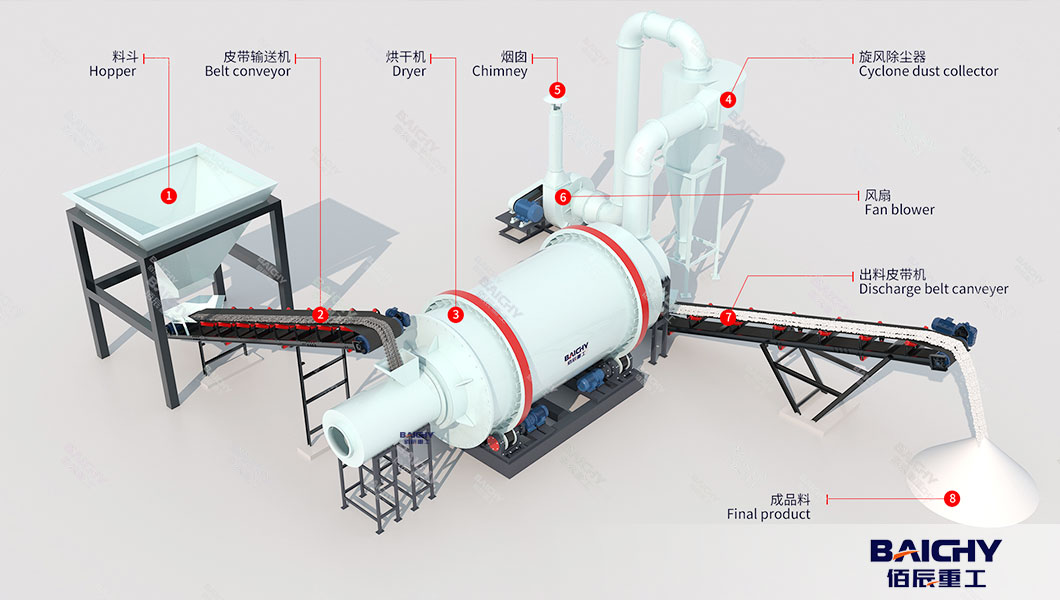
Wet sand is delivered via a belt conveyor to a hopper. A vibrating feeder ensures a uniform flow of sand into the dryer drum. Uniform feeding is crucial to prevent the machine from clogging and to ensure consistent dryness.


2. The Drying Phase (Heat Exchange)
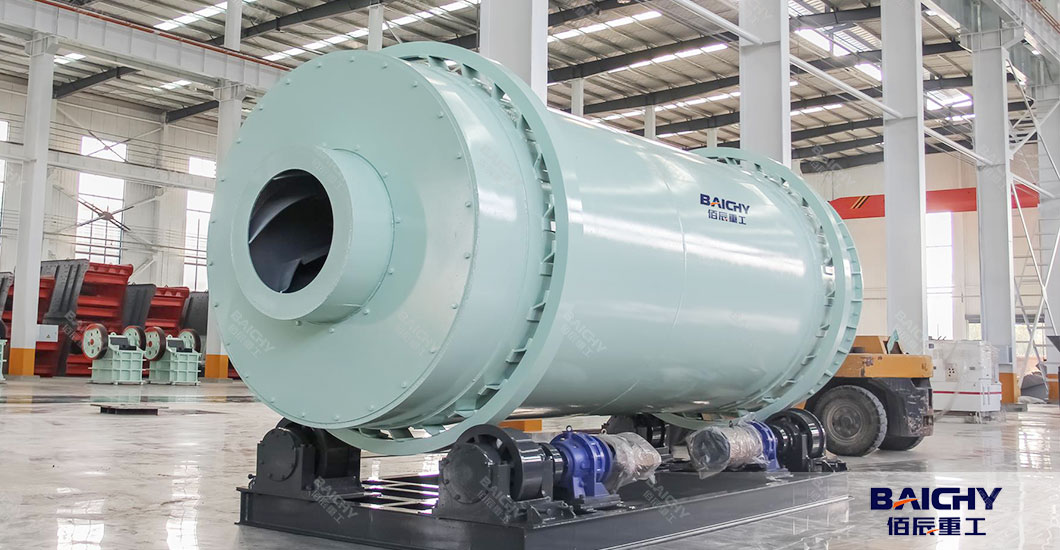
The sand enters the Rotary Drum Dryer. As the drum rotates, internal "lifting flights" (vanes) pick up the sand and shower it through a stream of hot air generated by a burner (using gas, diesel, coal, or biomass).

   ● Co-current Flow: The sand and hot air move in the same direction, which is ideal for high-moisture materials to prevent overheating.
   ● Triple-Pass Technology: Modern plants often use a Three-Return Rotary Dryer, which keeps the sand inside for a longer path in a smaller footprint, increasing thermal efficiency by up to 30%.


3. Dust Collection and Environmental Safety
Silica dust is a health hazard (silicosis). A professional drying system must include:

   ● Cyclone Dust Collector: For primary separation of coarse particles.
   ● Bag Filter: To capture fine dust, ensuring the exhaust air meets environmental regulations.


4. Cooling and Screening
Once dried, the sand is often hot. A cooling conveyor or a fluid bed cooler reduces the temperature before the sand is sent to a vibrating screen for final grading by size.


silica-sand-dryer.jpg


Key Factors Affecting Drying Efficiency


Factor Impact on Silica Sand
Initial Moisture Higher moisture requires longer retention time and more fuel.
Fuel Choice Natural gas is cleanest for glass-grade sand; biomass is cost-effective for construction sand.
Drum Speed Adjusting the RPM controls how long the sand stays in the heat zone.
Inlet Temperature Usually maintained between 600掳C - 800掳C for optimal evaporation.


Baichy’s Silica Sand Drying Solutions

At Baichy Machinery, we specialize in high-efficiency rotary dryers tailored for the silica industry. Our systems are designed to achieve:

   ● High Capacity: From 2 TPH to over 100 TPH.
   ● Ultra-Dry Results: Consistent moisture levels below 0.5%.
   ● Energy Savings: Our patented internal structure reduces heat loss by 20% compared to traditional single-drum dryers.


Drying silica sand is a balance of temperature control, airflow management, and dust suppression. Whether you are producing frac sand or high-purity quartz powder, choosing the right rotary dryer is the most important investment for your plant’s ROI. Need a customized silica sand drying layout? Contact Baichy Machinery's Engineers for a free technical consultation and equipment quote.


People Also Frequently Asked For - FAQ

Q: Can I dry silica sand naturally?

A: While sun-drying is possible for small DIY projects, it is impractical for industrial use due to weather dependency, large space requirements, and the inability to reach the <0.5% moisture threshold required by factories.


Q: What is the best dryer for silica sand?

A: The Three-Pass Rotary Dryer is widely considered the best for silica sand because of its high thermal efficiency, compact design, and ability to handle large volumes of abrasive material with low maintenance.


Q: How much fuel is needed to dry one ton of sand?

A: On average, drying one ton of sand with 10% moisture down to 0.5% requires approximately 6-8 cubic meters of natural gas or 10-12 kg of coal, depending on the dryer's efficiency.


Maybe you are interested in