Drying sand is a crucial process in many industrial applications, including construction, foundry, and manufacturing. Efficient sand drying ensures quality, reduces moisture-related issues, and optimizes downstream processing. A direct heated rotary sand dryer is one of the most popular solutions for large-scale industrial sand drying. It offers fast, efficient, and cost-effective drying by directly exposing wet sand to hot gases.
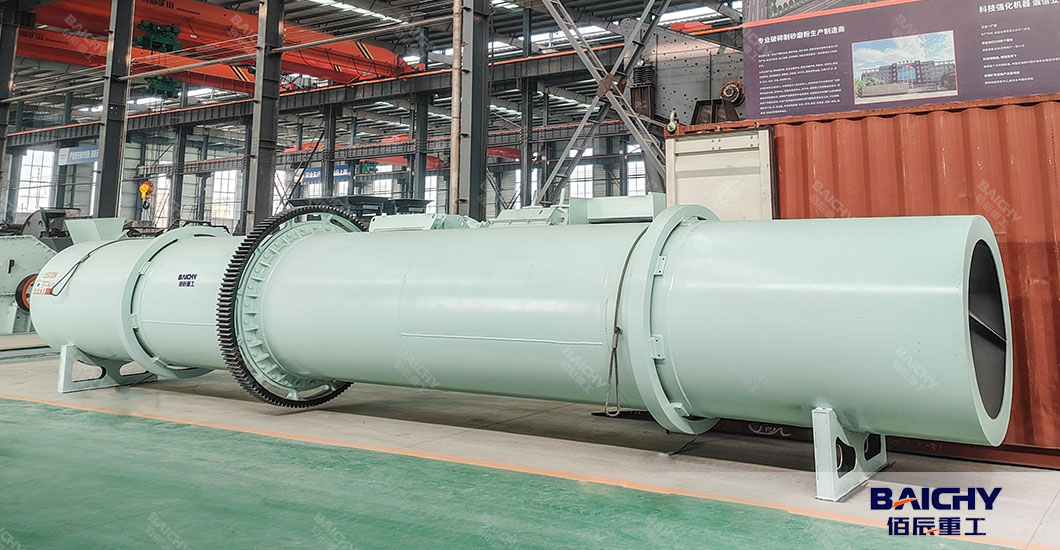
What Is a Direct Heated Rotary Sand Dryer
A direct heated rotary sand dryer is a specialized industrial drying equipment designed to reduce the moisture content of sand (river sand, silica sand, artificial sand, etc.) through direct thermal contact between the wet material and a heat carrier—typically hot air, flue gas, or combustion gases. Unlike indirect dryers that separate the material from the heat source, direct heated models offer faster heat transfer and higher efficiency, making them ideal for high-volume sand processing.
The basic components of a direct heated rotary dryer include:
● A rotating drum that tumbles and mixes the sand
● A heat source such as a gas burner or coal-fired system
● Feed and discharge mechanisms for sand input and output
● Flights or lifting plates inside the drum that lift and cascade the sand for uniform heat exposure
This design ensures efficient contact between the heat carrier and wet sand, improving drying performance.
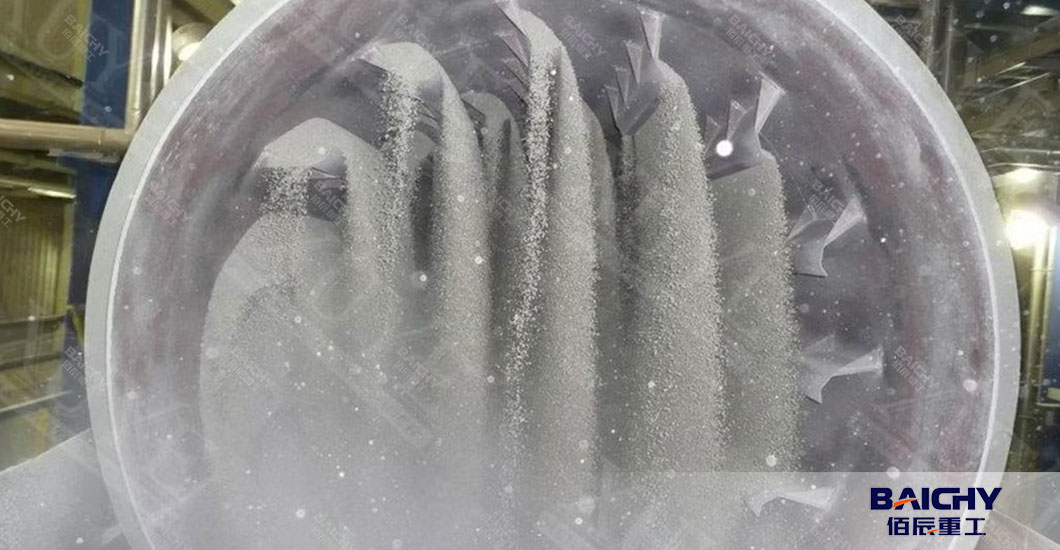
Working Principle of Direct Heated Rotary Sand Dryers
The efficiency of a direct heated rotary sand dryer lies in its seamless integration of material handling, heat transfer, and emissions control. Here’s a step-by-step breakdown of how it operates:
1. Material Conveyance Mechanism
•Feeding Process: Wet sand is transported to a hopper via belt conveyors or bucket elevators. From there, a feeder and inclined feeding pipe (angle > natural angle of repose of sand, typically 30-40°) guide the material into the higher end of the rotating drum. This design ensures smooth, clog-free feeding.
•Drum Rotation & Material Movement: The dryer’s drum is mounted at a slight incline (3-5°) from horizontal and rotates slowly (3-10 RPM). Inside the drum, evenly spaced lifting plates continuously lift and scatter the sand as the drum turns. This action maximizes the sand’s exposure to the heat carrier and promotes gradual movement toward the lower discharge end.
2. Direct Heat Transfer Mechanism
The dryer relies on two complementary heat transfer methods to achieve rapid moisture removal:
•Convective Heat Transfer: Hot gases (500-800°C) from a burner or heat exchanger enter the drum’s lower end, flowing countercurrently (or cocurrently) with the sand. Direct contact between the hot gases and wet sand transfers heat efficiently, causing moisture to evaporate instantly.
•Conductive Heat Transfer: The drum’s inner wall, heated by the hot gases, transfers additional heat to the sand in contact with it—reinforcing the drying effect and ensuring uniform moisture reduction.
3. Exhaust Gas Treatment
Moist air, dust, and fine sand particles are extracted from the drum by an induced draft fan. To comply with environmental regulations (e.g., EPA standards in the US, EU Emission Directives), the exhaust passes through air pollution control equipment:
•Cyclone dust collectors (primary dust removal)
•Bag filters or cartridge filters (secondary filtration for fine particles)
•Wet scrubbers (for acid gases or heavy metal removal, in specialized applications)
This process minimizes air pollution and recovers valuable fine sand, reducing material loss.
Main Applications
Direct heated rotary sand dryers are versatile machines, capable of handling various sand types and serving multiple industries. Here’s how they’re used across sectors:
1. Core Application Materials
•Natural Sand: River sand, silica sand, yellow sand, beach sand
•Industrial Sand: Artificial sand (crushed stone sand), coal slag, alumina trihydrate, nepheline ore
•Specialty Materials: Drill cuttings, oil-contaminated soil, coffee grounds (in modified designs)
2. Applied Industries
•Construction & Building Materials:
◦Drying sand for ready-mix concrete, precast concrete, and mortar
◦Producing hot mix asphalt (HMA) for roads and pavements
◦Manufacturing artificial marble and ceramic tiles
•Mining & Mineral Processing:
◦Purifying silica sand for glass, electronics, and solar panel production
◦Drying ore concentrates and mineral powders
•Industrial Manufacturing:
◦Casting sand drying (for metal casting molds)
◦Metallurgical applications (enhancing sand’s high-temperature resistance)
•Environmental Remediation:
◦Drying contaminated soil for remediation projects
◦Treating drill cuttings in oil and gas operations
◦Cleaning up oil lakes and sludge (modified dryers with corrosion-resistant components)
Industry Selection & Purchasing Guidelines
Choosing the right direct heated rotary sand dryer requires careful consideration of your specific needs and long-term goals. Here’s a step-by-step buying guide:
1. Core Selection Criteria
•Production Requirements: Calculate your daily/ hourly sand processing volume and required moisture reduction. For example, a 20 t/h dryer is suitable for medium-scale construction projects, while 100+ t/h units serve large mining operations.
•Heat Source Compatibility: Select a dryer compatible with local fuel availability and cost. Biomass-fired dryers are ideal for regions with abundant agricultural waste, while natural gas models offer clean operation in urban areas.
•Installation Space: Ensure your facility can accommodate the dryer’s dimensions (e.g., a 7′×30′ drum requires ~40′ of linear space) and ventilation for exhaust gases.
•Environmental Compliance: Verify that the dryer’s emissions meet local regulations (e.g., EPA Part 60 for US facilities, EU 2010/75/EU for European markets).
2. Supplier Service Evaluation
•EPC Capabilities: Choose suppliers with Engineering, Procurement, and Construction (EPC) expertise—they can design turnkey systems, including conveyors, storage, and controls.
•After-Sales Support: Look for suppliers offering:
◦Spare parts availability (lifting plates, burners, filters)
◦On-site maintenance and troubleshooting
◦Training for operators and technicians
•Certifications: Prioritize manufacturers with ISO 9001 (quality management) and CE (safety) certifications, ensuring product reliability and compliance.
People Also Frequently Asked For - FAQ
Q1: What is the difference between direct and indirect rotary sand dryers?
A: Direct dryers expose sand to hot gases directly, resulting in faster drying, while indirect dryers transfer heat through a drum wall, making them slower but suitable for heat-sensitive materials.
Q2: How to choose the right rotary sand dryer for industrial use?
A: Consider material properties, required capacity, heat source type, and environmental regulations to select the best dryer.
Q3: Can direct heated dryers handle wet river sand?
A: Yes, direct heated dryers are designed to handle high-moisture sand like river sand efficiently.




 2026-09-18






 86-15093113821
 86-15093113821