Home About us
Products
News
Solution
Video Service Contact us
Home  /  News

Getting the perfect aggregate size from your impact crusher is entirely dependent on how well the machine is calibrated. If your final product is too coarse or too fine, it can ruin your concrete or asphalt mix and hurt your profit margins. The key to controlling this output lies in the discharge port.


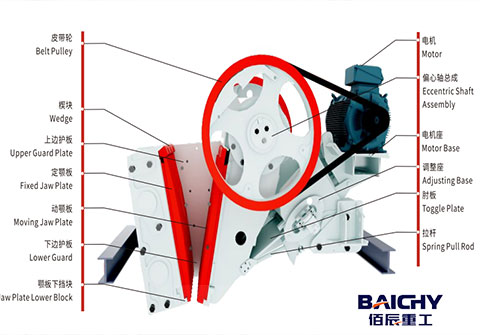
Unlike jaw crushers that use manual shim plates, adjusting an impact crusher requires a different approach. It primarily involves changing the clearance between the internal spinning parts and the heavy steel plates. In this comprehensive guide, we will walk you through the proven steps and methods to accurately adjust your impact crusher outlet.


How to adjust impact crusher outlet 1?


4 Proven Methods to Adjust the Discharge Size

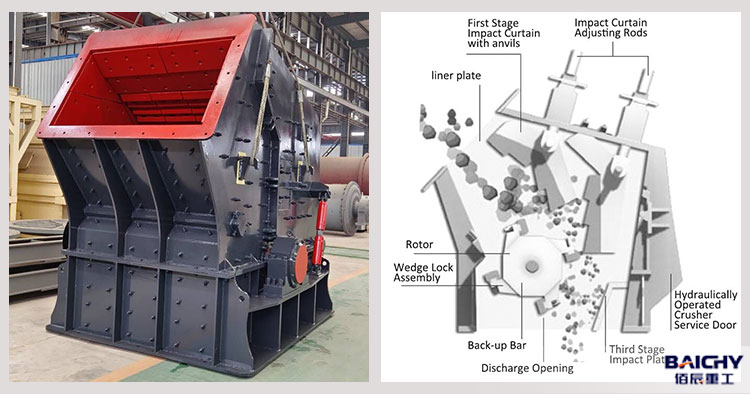
The discharge size of an impact crusher is determined by the specific gap between the spinning rotor (equipped with blow bars) and the impact aprons (also known as breaker plates). By mastering the following four adjustments, you can easily control your final product.

1. Adjust the Gap Between the Rotor and Breaker Plates

This is the most direct and common method to change your discharge size. Most modern impact crushers feature a mechanical or hydraulic adjustment system connected to the impact aprons. For standard operations, this gap is generally adjusted to sit between 15 and 20 millimeters.


   ● For a Finer Product: Use the hydraulic or mechanical controls to move the impact aprons closer to the spinning rotor. Decreasing this gap forces the rocks to be smashed into smaller pieces before they can exit the chamber.
   ● For a Coarser Product: Move the impact aprons further away from the rotor. Increasing this gap allows larger stones to pass through the discharge outlet without being pulverized.


2. Change the Rotor Speed

The speed at which your rotor spins directly impacts the kinetic energy transferred to the falling rock. Adjusting this speed is an excellent way to fine-tune your crushing results without physically moving the heavy internal plates.
 

   ● Faster Rotor Speed: Increasing the RPMs results in a much more violent, high-energy impact. This shatters the material more aggressively, resulting in a finer, more powdery end product.
   ● Slower Rotor Speed: Decreasing the rotor speed results in a lower impact force. The rocks hit the breaker plates with less energy, allowing larger, coarser gravel to pass through the outlet.


3. Compensate for Wear on the Impact Aprons

When optimizing your impact crusher, you must account for natural wear and tear. Over time, the heavy steel blow bars and the impact breaker plates will slowly wear down from constant friction. As this metal wears away, the gap between the rotor and the aprons naturally widens, causing your final product to become larger over time.


To maintain a consistent discharge size, operators must regularly monitor the internal chamber and adjust the aprons inward. This ongoing adjustment compensates for the worn metal and keeps your aggregate sizing perfectly uniform.


4. Control the Feed Rate and Material Hardness

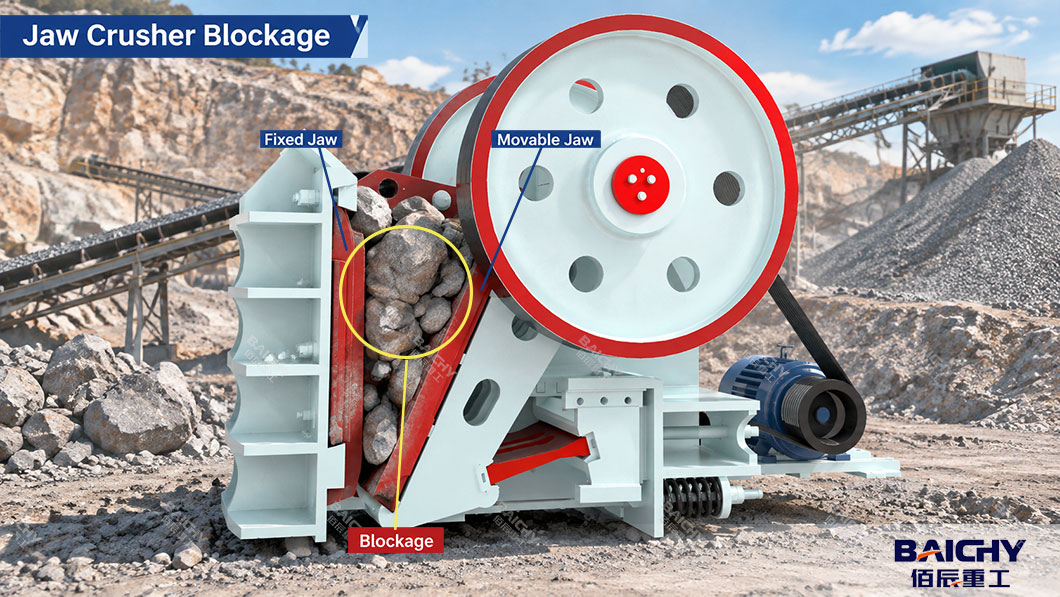
The amount and type of material entering your crusher directly affect how it performs. If you suddenly switch to crushing a much harder rock, or if you feed the machine too quickly, the crusher can experience dangerous blockages.
If the material being crushed changes significantly, you must adjust the discharge outlet accordingly. Opening the gap slightly or slowing down the variable vibrating feeder helps maintain a smooth, consistent flow. This prevents the machine from choking and keeps the outlet clear.


How to adjust impact crusher outlet 2?


Essential Tools Needed for Safe Adjustment

Adjusting the heavy internal components of an industrial rock crusher is dangerous work. It requires precision and the correct safety equipment. When adjusting the size of the discharge port, operators must always follow strict lockout/tagout safety procedures.


The primary tools needed for this task include accurate measuring tools and heavy-duty fastening tools. You will need long feeler gauges or measuring rods to safely check the exact millimeter clearance between the blow bars and the impact plates. Additionally, heavy wrenches and hydraulic controls are required to loosen, move, and securely tighten the adjustment bolts so the plates do not shift during operation.


   ● Measuring tools (to accurately measure the gap between the blow bars and the impact plate).
   ● Fastening tools (wrenches and ratchets to loosen and tighten the adjustment bolts or hydraulic locks).


Understanding how to properly adjust your impact crusher outlet ensures you always produce the exact aggregate size your customers demand. By regularly checking the rotor gap, adjusting the spinning speed, and compensating for normal wear, your machine will operate at peak efficiency for years to come. Do not let worn-out blow bars or jammed crushers slow down your production. Contact the expert engineering team at Baichy Machinery today! We provide impact crusher spare parts and professional technical guidance to keep your aggregate business highly profitable.


Maybe you are interested in