A direct fired rotary dryer is an industrial drying machine that uses hot gases generated by a combustion system to directly contact and dry wet materials inside a rotating drum. It is widely used for reducing moisture content in bulk materials such as minerals, sand, aggregates, biomass, fertilizers, chemicals, and agricultural products.
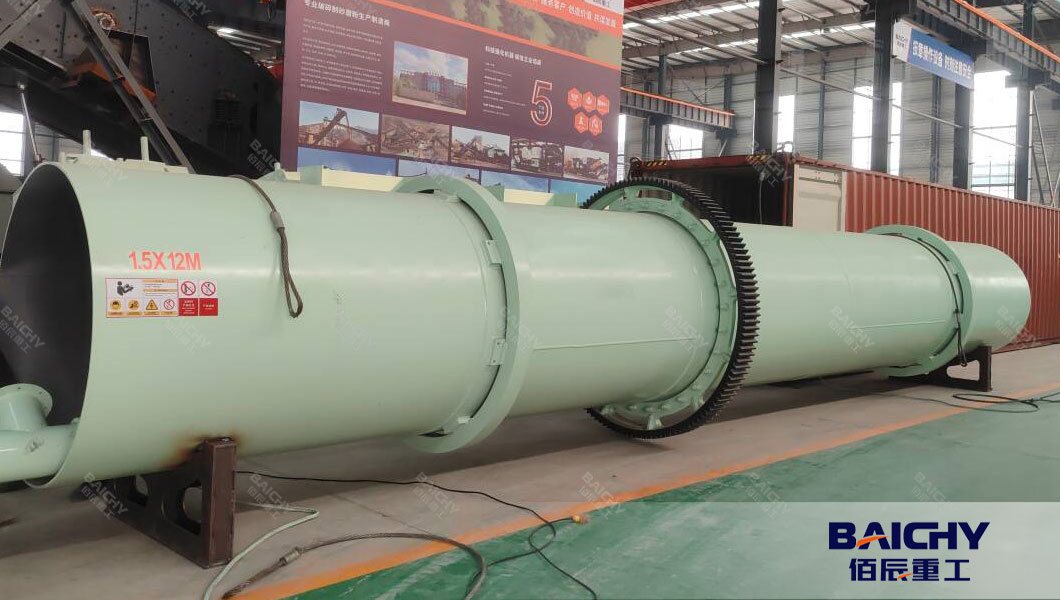
Compared with indirect heating dryers, direct fired rotary dryers provide higher heat transfer efficiency because the drying medium directly contacts the material. This makes them suitable for large-scale operations that require continuous processing, high evaporation capacity, and reliable performance. This guide covers everything you need to know—from working principles and design configurations to advantages, limitations, and applications.
How Does a Direct Fired Rotary Dryer Work?
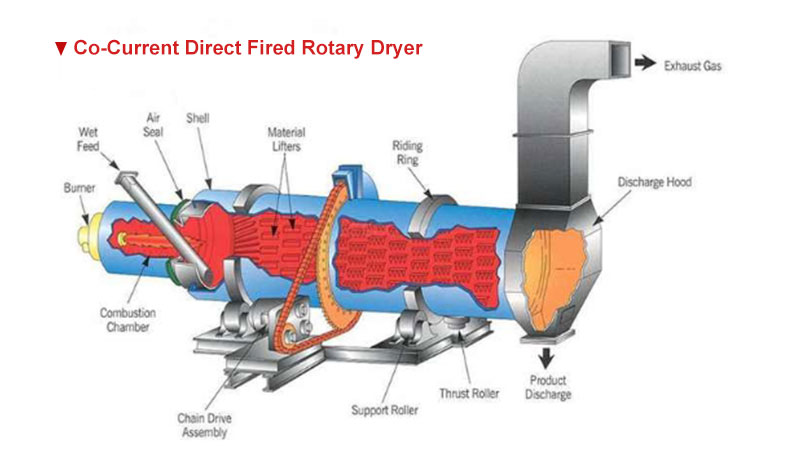
A direct fired rotary dryer introduces hot combustion gases directly into a rotating inclined cylindrical drum, where they contact the material to be dried. The drum, typically inclined at 2° to 5°, rotates on support rollers, allowing material to gradually advance from feed to discharge under gravity while being continuously mixed.
The burner—fueled by natural gas, propane, oil, or waste fuels—generates combustion gases at temperatures ranging from 400°F to over 2,000°F, depending on the material's thermal tolerance. Inside the drum, flights (metal lifters affixed to the inner wall) scoop up the material and drop it as a cascading curtain through the hot gas stream. This action maximizes surface area exposure to accelerate heat and mass transfer, while ensuring uniform drying. Without properly designed flights, material would simply slide along the drum bottom, resulting in slow and inefficient drying.
Heat transfer occurs primarily through convection between the hot gases and the cascading material, with minor contributions from radiation and conduction. Convection dominates moisture removal in direct fired systems.
Co-Current vs. Counter-Current Flow Rotary Dryer
Airflow direction relative to material flow is a critical design choice. In co-current (parallel) flow, material and gases move in the same direction. The hottest gases contact the wettest material at the feed end, creating a high initial evaporation rate, while cooled gases at discharge protect partially dried material from overheating. This configuration keeps material temperatures lower than the maximum gas inlet temperature, making it ideal for heat-sensitive materials like biomass, animal feed, and certain chemicals. Co-current designs are simpler and more common.
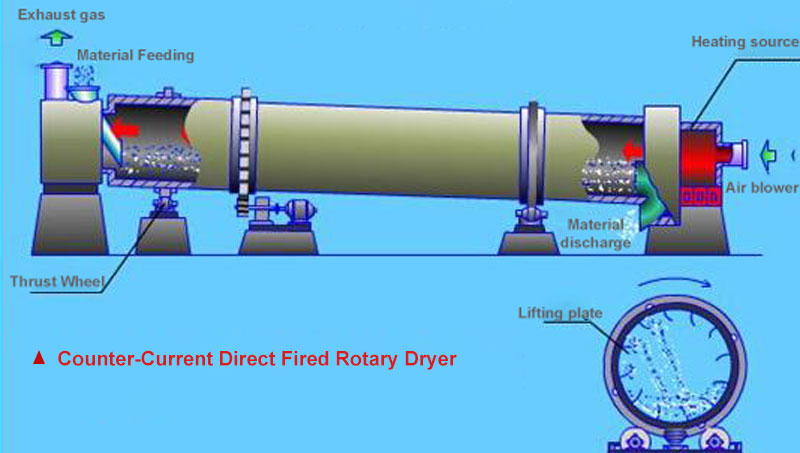
In counter-current flow, material moves opposite to the gases. Wet material enters at the cooler discharge end and travels toward the hottest gases at the feed end. This delivers higher thermal efficiency, deeper moisture removal (especially for bound moisture), and a cleaner product, as the highest temperatures occur where material is driest. However, counter-current is unsuitable for heat-sensitive materials due to thermal degradation risk, and requires more complex seals and feed mechanisms. It is best suited for heat-tolerant materials like minerals, ores, and aggregates requiring very low final moisture.
Direct-Heat vs. Direct-Fired Rotary Dryer
A subtle but important distinction exists within direct dryers. In a direct-heat rotary dryer, the burner is housed in a separate external combustion chamber; only hot exhaust gases contact the material—the flame itself does not. This configuration protects the product from direct flame exposure and is ideal for higher-value materials or those with tight quality specifications.
In a direct-fired rotary dryer, the burner is directly coupled to the shell and the flame extends into the drum. Material contacts not only hot gases but also radiant heat from the flame. This delivers the highest thermal efficiency and is the most cost-effective option for high-volume, low-value, heat-tolerant materials.
Advantages and Limitations About Direct Fired Rotary Dyer
Advantages
● Exceptional Thermal Efficiency. Direct contact between hot gases and material enables far more efficient heat transfer than indirect dryers, where heat must pass through a metal wall. This results in lower fuel consumption per ton of water evaporated and reduced operating costs.
● High Throughput Capacity. These dryers handle material flows from a few tons to over 200 tons per hour, making them the preferred choice for large-scale industrial operations.
● Cost-Effectiveness. Compared to indirect systems, direct fired dryers offer lower capital costs due to simpler construction, lower operating costs from higher thermal efficiency, and lower maintenance costs thanks to robust design with fewer moving parts and less complex sealing.
● Proven Reliability and Durability. Designed for 24/7 operation in harsh environments, these machines provide decades of reliable service, handling abrasive materials, high temperatures, and heavy loads with proper maintenance.
Limitations
● Not Suitable for Heat-Sensitive Materials. Materials that degrade, oxidize, or burn at high temperatures require indirect or gentler drying technologies.
● Material Contamination Risk. Direct gas contact poses contamination concerns for food-grade products, chemicals that may react with combustion byproducts, and color-sensitive materials prone to discoloration from smoke or soot.
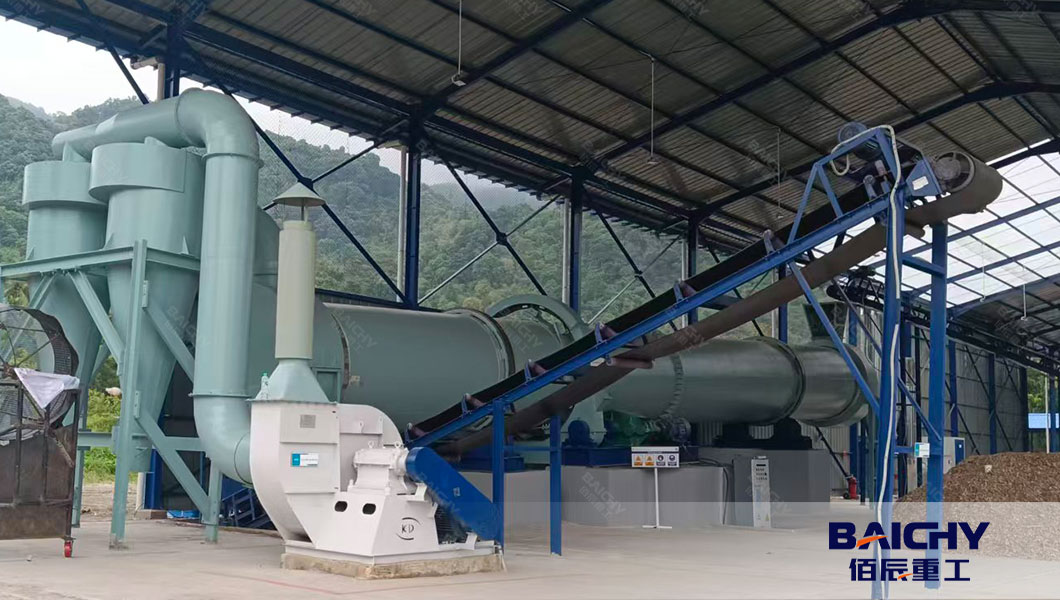
● Exhaust Gas Treatment Requirements. Substantial exhaust streams containing moisture vapor, particulates, and combustion byproducts typically require baghouses or cyclones for particulate removal, scrubbers for acid gases (if burning sulfur-containing fuels), and thermal oxidizers for VOCs in certain applications. These add to both capital and operating costs.
● Product Loss (Elutriation). Fine materials may be entrained in the gas stream and carried out. While cyclones or dust collection systems recover much of this material, some loss is inevitable, especially with very fine powders.
Core Applications in Industrial Processing
Direct fired rotary dryers are versatile workhorses across multiple sectors:
● Mining & Aggregates: Drying limestone, quartz sand, coal, iron ore, and clay.
● Agriculture: Processing fertilizers, potash, and animal feed.
● Waste Management: Drying municipal sludge and industrial by-products for recycling or fuel conversion.
FAQ for Industrial Rotary Dryer Buyers
1. What is the difference between direct and indirect rotary dryers?
Direct dryers bring the material into physical contact with hot gases, offering higher efficiency. Indirect dryers heat the material through the drum wall or internal tubes, which is necessary for volatile or oxygen-sensitive materials that cannot contact combustion gases.
2. How do you calculate the capacity of a rotary dryer?
Capacity is determined by the drum volume, the material's residence time, the moisture delta (initial vs. final), and the heat transfer coefficient of the specific airflow pattern used.
3. How can I improve the ROI of my drying production line?
Optimizing the flight pattern to ensure a consistent material curtain and insulating the drum to prevent heat loss are the two most effective ways to reduce fuel consumption and increase ROI.




 2026-09-17





 86-15093113821
 86-15093113821