1. What Is Tertiary Crushing Equipment?
Tertiary crushing equipment is used in the third stage of a multi-stage crushing process to further reduce material size and produce aggregates with specific particle sizes and shapes. It typically processes material from secondary crushers and prepares it for final screening, manufactured sand production, or downstream processing. For quarry operators and aggregate producers, tertiary crushing is important when secondary crushing alone cannot meet the required product specifications. It helps control final particle size, improve aggregate shape, and increase the proportion of valuable fine aggregates.
A typical three-stage crushing plant follows this process:
Primary Crushing → Secondary Crushing → Tertiary Crushing → Final Screening → Finished Products
Not every crushing plant requires a tertiary crushing stage. For projects producing relatively coarse aggregates, primary and secondary crushing may be sufficient. However, when customers require finer products, better particle shape, or manufactured sand, tertiary crushing becomes an important part of the production process.
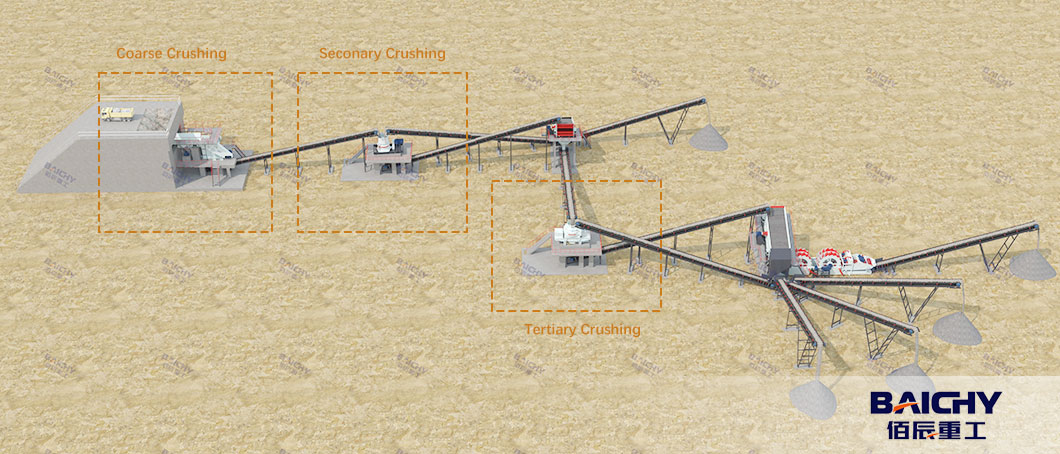
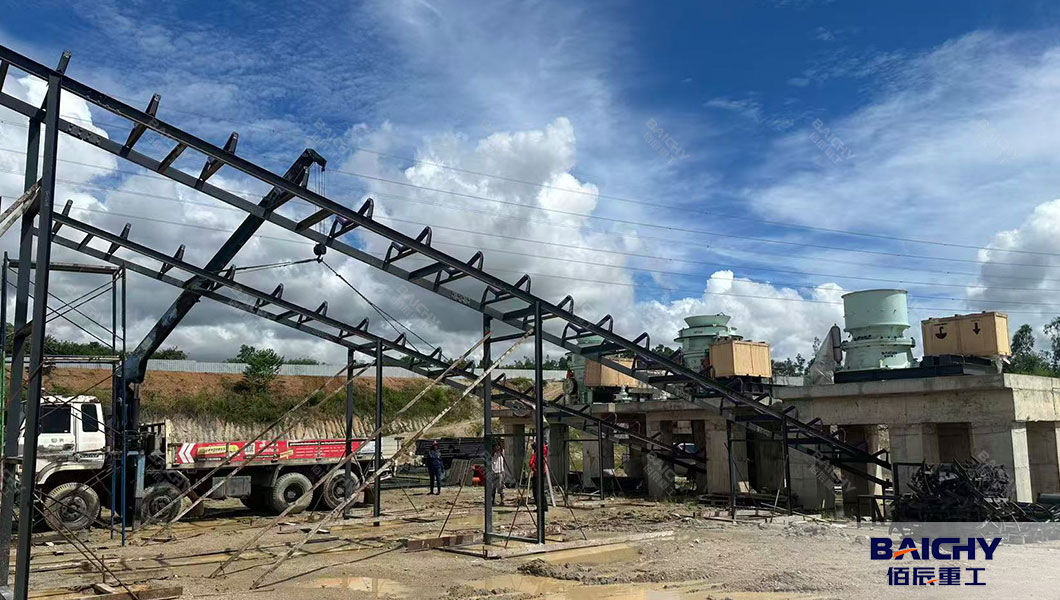
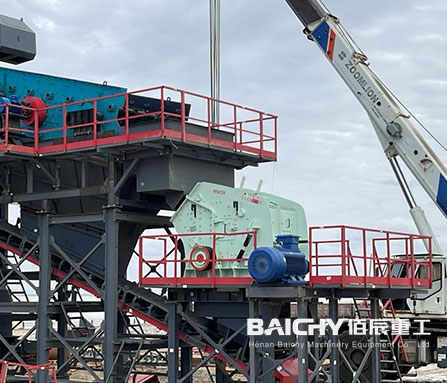
Tertiary crushing plant design
2. What Types of Tertiary Crushing Equipment Are Available?
The most commonly used tertiary crushing equipment includes cone crushers, vertical shaft impact crushers (VSI), and horizontal shaft impact crushers (HSI). Each machine uses a different crushing mechanism and has its own advantages depending on material hardness, abrasiveness, feed size, and final product requirements.
2.1 Tertiary Cone Crusher
A
tertiary cone crusher uses compression crushing to reduce rock size. Material enters the crushing chamber and is compressed between the moving mantle and stationary concave liners.
Short-head cone crushers and suitable hydraulic cone crusher configurations are commonly used for fine crushing applications.
Main advantages:
-
Suitable for hard and abrasive materials.
-
Provides stable continuous crushing performance.
-
Suitable for closed-circuit crushing systems.
-
Handles demanding quarry and mining applications.
-
Offers adjustable discharge settings to control product size.
-
Suitable materials:
Granite, basalt, river pebbles, quartz stone, and other hard or abrasive rocks.
Typical applications:
Tertiary cone crushers are suitable when a quarry needs to reduce secondary-crushed stone into smaller aggregate sizes without excessive wear from impact-based crushing. However, cone crushers mainly use compression. Their ability to improve particle shape is generally more limited than that of VSI crushers, particularly when highly cubical aggregates or manufactured sand are required.
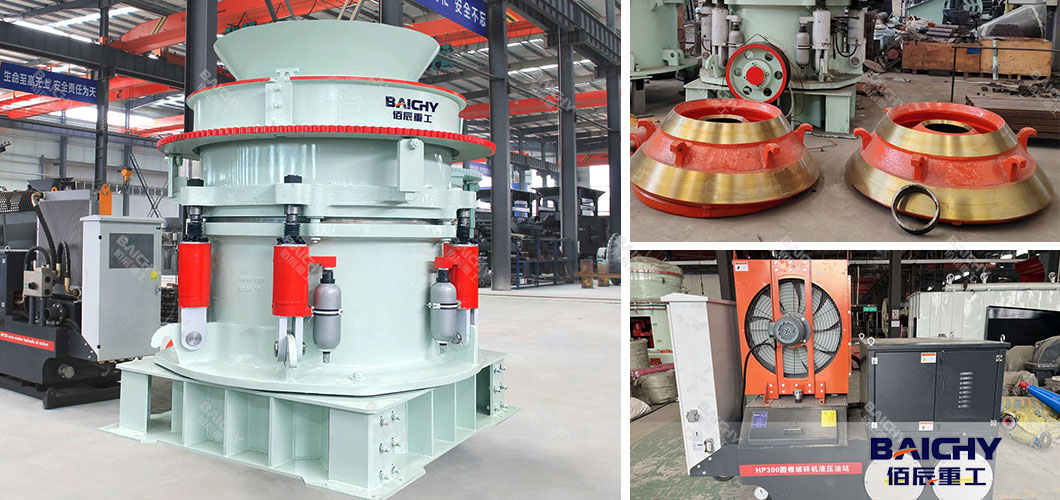
Tertiary cone crusher
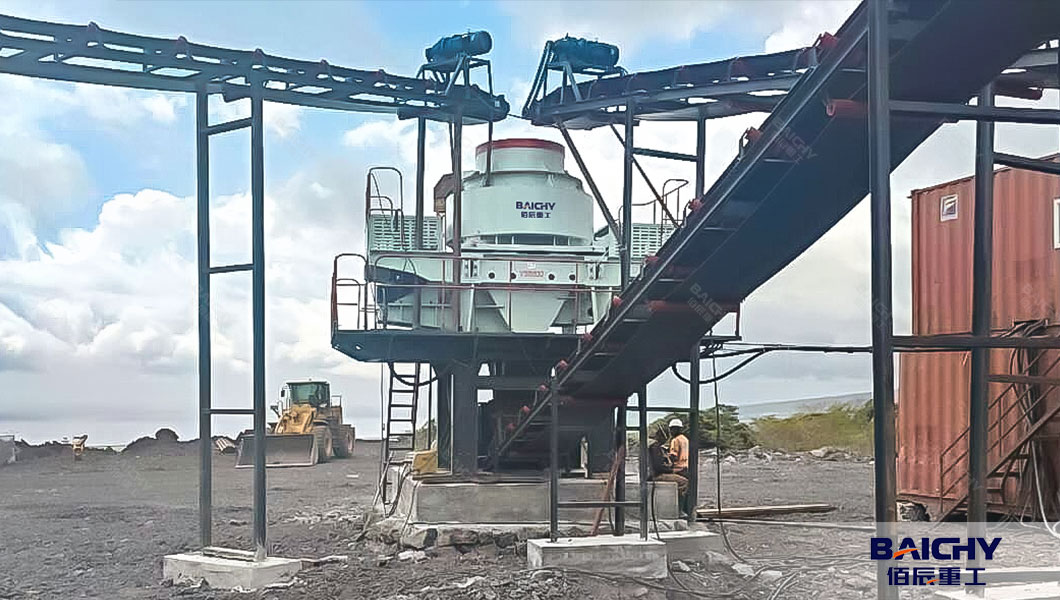
2.2 Vertical Shaft Impact Crusher (VSI Crusher)
A
VSI crusher uses high-speed rotor acceleration to throw materials against surrounding rock or impact surfaces. The collision breaks the particles into smaller sizes and helps improve their shape. It is widely used in tertiary crushing, aggregate shaping, and manufactured sand production.
Main advantages:
-
Produces cubical and well-shaped aggregates.
-
Suitable for manufactured sand production.
-
Improves particle shape for concrete and asphalt applications.
-
Offers flexible product adjustment through rotor speed and crushing configuration.
-
Can operate with rock-on-rock or rock-on-anvil crushing systems.
-
Suitable materials:
Granite, basalt, limestone, river pebbles, quartz stone, and other materials within the machine's design limits.
Typical applications:
VSI crushers are particularly useful when the final product needs a better particle shape or when a quarry wants to produce manufactured sand from crushed stone.
Two common crushing configurations are:
-
Rock-on-rock: Material impacts against a surrounding rock bed. This configuration is often selected to reduce metal-to-rock contact and manage wear when the material conditions are suitable.
-
Rock-on-anvil: Material impacts against metal anvils, providing a different crushing action and potentially higher reduction in suitable applications, but with different wear-part consumption.
The correct configuration depends on material abrasiveness, desired product grading, and operating cost.
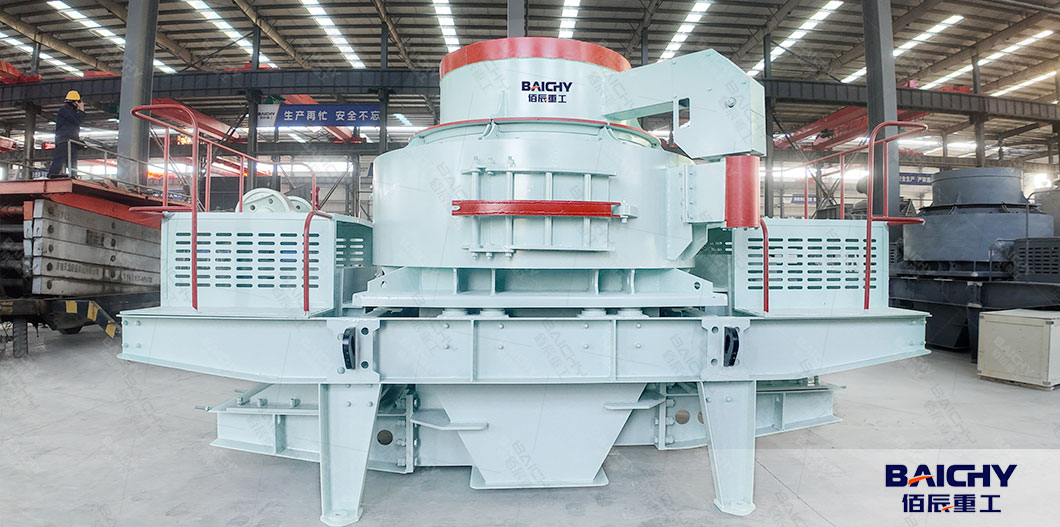
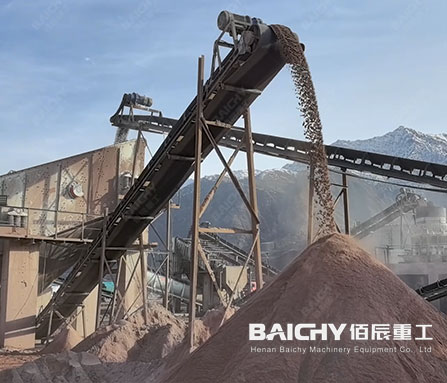
Tertiary crusher
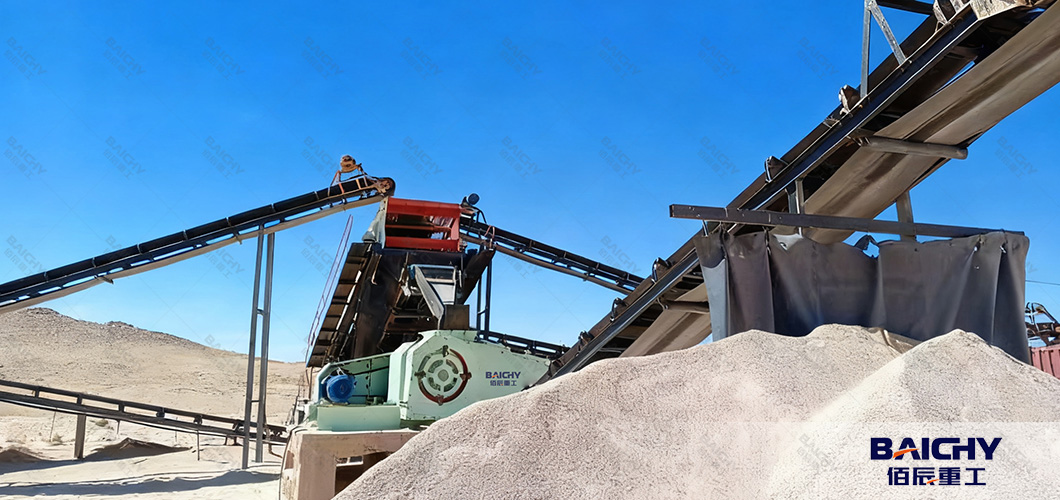
2.3 Tertiary Impact Crusher (HSI Crusher)
A
horizontal shaft impact crusher uses a high-speed rotor equipped with blow bars to strike and break materials against impact plates. It is commonly used for medium-hard and less abrasive materials where a relatively high reduction ratio and good product shape are required.
Main advantages:
-
High reduction capability.
-
Produces relatively cubical crushed products.
-
Suitable for limestone and similar materials.
-
Adjustable operating settings.
-
Can simplify crushing circuits in suitable applications.
-
Suitable materials:
Limestone, dolomite, and other medium-hard materials with manageable abrasiveness.
Typical applications:
A tertiary impact crusher can be used in limestone quarries and aggregate plants that require additional size reduction and product shaping. However, when processing highly abrasive granite or basalt, blow bar and impact plate wear can increase significantly. Therefore, wear-part cost should be evaluated before selecting this machine.
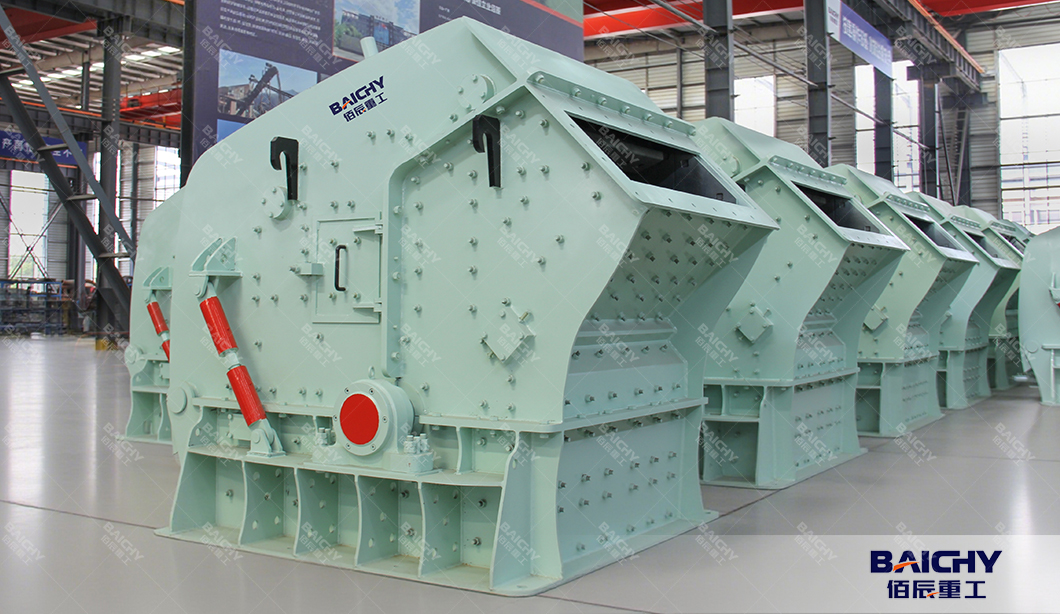
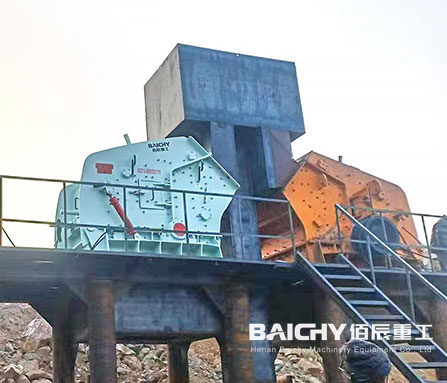
HSI crusher
2.4 Comparison of Different Tertiary Crushing Equipment
The following table summarizes the main differences between these three equipment types.
| Comparison |
Cone Crusher |
VSI Crusher |
HSI Crusher |
| Crushing principle |
Compression |
High-speed impact |
Rotor impact |
| Best suited for |
Hard rock |
Shaping and sand making |
Medium-hard rock |
| Particle shape |
Depends on chamber and operation |
Generally excellent |
Generally good |
| Abrasive material |
Suitable |
Depends on configuration |
Higher wear risk |
| Main application |
Fine crushing |
Aggregate shaping |
Fine crushing and shaping |
Engineering recommendation: For hard-rock aggregate production, a cone crusher is often suitable for tertiary size reduction, while a VSI crusher is more appropriate when particle shape and manufactured sand are major priorities. In some plants, both machines are used together to achieve the required product specifications.
3. How to Choose the Right Tertiary Crusher?
Selecting the right tertiary crushing equipment requires more than comparing machine prices or rated capacities. Quarry operators should evaluate material properties, feed size, required output specifications, production capacity, and long-term operating costs. A crusher that performs well in limestone production may not be economical for highly abrasive granite. The best configuration is the one that consistently meets product requirements at an acceptable cost per ton.
3.1 Choose Equipment According to Material Hardness and Abrasiveness
Material hardness and abrasiveness directly affect crushing performance, wear-part consumption, and maintenance costs.
| Raw Material |
Recommended Equipment |
Key Consideration |
| Granite |
Cone Crusher + VSI |
High hardness and abrasiveness |
| Basalt |
Cone Crusher + VSI |
Wear resistance and particle shape |
| Limestone |
HSI or VSI |
Reduction ratio and product grading |
| River Pebbles |
Cone Crusher + VSI |
Hardness and rounded feed particles |
| Quartz Stone |
Cone Crusher + VSI |
High abrasiveness and wear costs |
| Dolomite |
HSI or VSI |
Material properties and final product size |
For granite and basalt, cone crushers are commonly selected because compression crushing is suitable for hard, abrasive rocks. A VSI crusher can be added when the plant needs improved particle shape or manufactured sand.
For limestone, an impact crusher may be a practical option because the material is generally easier to crush than granite or basalt. However, the actual selection should consider the limestone's hardness, silica content, and abrasiveness.
Important: Material names alone are not enough for accurate equipment selection. A representative material sample and its physical properties provide a more reliable basis for engineering decisions.
3.2 Match Feed Size with Required Product Size
Feed size and target output size determine the reduction ratio and influence the choice of crushing equipment.
Before selecting a tertiary crusher, confirm the following:
-
Maximum feed size from the secondary crushing stage.
-
Average feed size and particle size distribution.
-
Required discharge size.
-
Maximum allowable oversize particles.
-
Required proportion of fine materials.
For example, if a quarry receives 20–40 mm crushed granite from its secondary crusher and needs 0–5 mm manufactured sand, a VSI crusher may be considered. However, the equipment must be checked against its maximum feed size, rotor configuration, throughput, and expected fine-product yield. A useful engineering principle is to avoid forcing a tertiary crusher to handle oversized feed material. If the feed exceeds the machine's design limits, crushing efficiency may decrease, wear may increase, and the risk of blockage or equipment damage may rise.
3.3 Select the Crusher Based on Required Production Capacity
Production capacity is another critical selection factor. A tertiary crusher should match the actual throughput of the entire crushing circuit rather than simply its advertised maximum capacity.
Typical project scales include:
| Project Scale |
Target Plant Capacity |
Main Selection Consideration |
| Small aggregate plant |
50–100 TPH |
Investment and operating simplicity |
| Medium quarry |
100–300 TPH |
Stable output and product flexibility |
| Large aggregate plant |
300–500 TPH or more |
Continuous operation and system integration |
These figures represent broad project categories, not guaranteed crusher capacities.
When calculating the required capacity, consider:
-
Actual operating hours: Daily production targets and available operating time.
-
Material characteristics: Hardness, density, moisture, and feed gradation.
-
Screening efficiency: The amount of material that passes through the screen on each cycle.
-
Circulating load: Oversized particles returned to the crusher.
-
Equipment availability: Planned maintenance and unexpected downtime.
For example, a plant targeting 200 TPH of finished aggregate may require a tertiary crushing circuit with a higher circulating throughput because some material is repeatedly returned from the screening stage.
Therefore, the crusher's required capacity should be determined through a complete process calculation.
3.4 Consider Product Shape and Final Aggregate Quality
For concrete and asphalt producers, particle shape can be as important as particle size.
Flat and elongated particles may affect aggregate packing, workability, and the performance of certain construction mixtures.
Different crushers produce different particle characteristics:
-
Cone crusher: Primarily reduces material through compression. Product shape depends on chamber design, feed gradation, and operating conditions.
-
VSI crusher: Uses high-speed impact and is commonly selected for producing more cubical aggregates and manufactured sand.
-
HSI crusher: Uses rotor impact and can produce relatively well-shaped products from suitable materials.
If the main objective is to produce high-quality manufactured sand or improve the shape of coarse aggregates, a VSI crusher deserves particular consideration.
However, particle shape should be verified through sample testing rather than assumed from the crusher type alone.
3.5 Compare Initial Investment and Long-Term Operating Costs
A low purchase price does not necessarily mean a low-cost crushing solution.
The total operating cost should include:
-
Equipment purchase and installation.
-
Electricity consumption.
-
Wear parts replacement.
-
Lubrication and maintenance.
-
Labor and downtime.
-
Screening and conveying costs.
For highly abrasive materials, wear-part consumption may become a major operating expense. For other projects, electricity consumption or production downtime may have a greater impact.
A practical comparison should focus on the cost per ton of qualified finished product rather than the price of one machine.
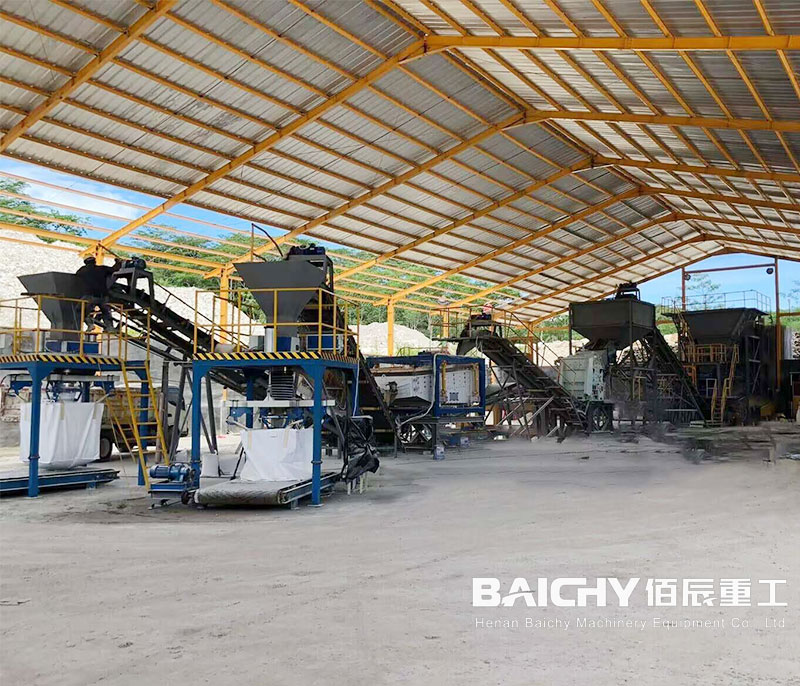
Tertiary crushing plant
4. Tertiary Crushing Equipment Cost and Investment
The cost of tertiary crushing equipment depends on crusher type, production capacity, material characteristics, equipment configuration, and the level of automation. For quarry investors, the purchase price is only one part of the total investment. A more useful evaluation considers the complete crushing system and its long-term operating cost.
4.1 What Factors Affect Tertiary Crusher Prices?
Several factors influence the price of tertiary crushing equipment.
1. Crusher Type and Model
A hydraulic cone crusher, VSI crusher, and impact crusher have different mechanical structures, manufacturing requirements, and wear components. Their prices cannot be compared directly without considering their intended applications.
2. Production Capacity
Larger-capacity equipment generally requires a larger crushing chamber, stronger structural components, and a more powerful drive system.
3. Material Characteristics
Hard and abrasive materials may require specific liner materials, rotor configurations, and wear-resistant components.
4. Motor Power and Configuration
Motor specifications, lubrication systems, hydraulic systems, and electrical control configurations affect equipment cost.
5. Complete Plant Requirements
A complete tertiary crushing system may include:
The more integrated the system, the more important it becomes to evaluate equipment compatibility and overall project requirements.
5. Get the Right Tertiary Crushing Solution for Your Project
Choosing tertiary crushing equipment is an important investment decision. The right crusher should match your raw material, production capacity, final aggregate specifications, and operating budget.
Whether you are upgrading an existing quarry or building a new aggregate production plant, selecting equipment based on actual production requirements can help reduce unnecessary investment and improve long-term operating efficiency.
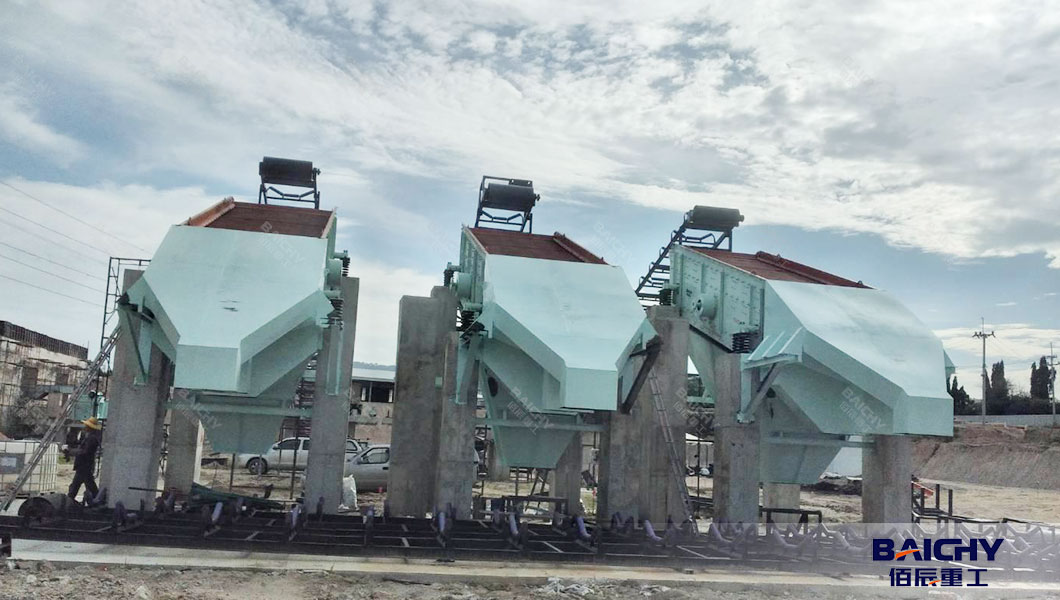
Baichy Machinery provides crushing equipment and customized crushing plant solutions for different materials and production requirements. Our equipment range includes hydraulic cone crushers, VSI sand making machines, impact crushers, vibrating screens, and complete crushing systems.
To receive a suitable equipment recommendation, provide the following project information:
-
Raw Material: Granite, basalt, limestone, river pebbles, etc.
-
Maximum Feed Size: Maximum incoming material size in mm.
-
Required Capacity: 50 TPH, 100 TPH, 200 TPH, 300 TPH, or more.
-
Final Product Sizes: 0–5 mm, 5–10 mm, 10–20 mm, etc.
-
Project Location: Country and working conditions.
Contact Baichy to discuss your tertiary crushing requirements and receive a customized equipment configuration and quotation.




 2026-11-13






 86-15093113821
 86-15093113821