What Is an Iron Ore Ball Mill?
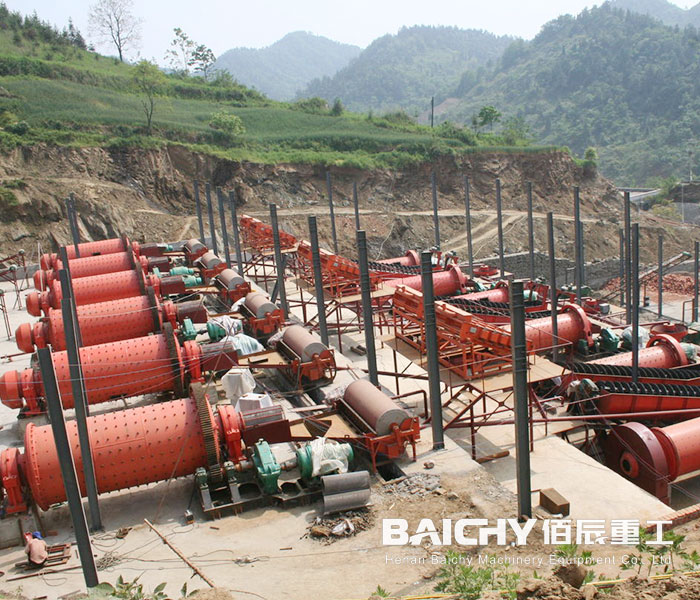
An iron ore ball mill is a critical grinding machine used in mineral beneficiation plants to reduce crushed iron ore—typically ≤25mm—into a fine powder ranging from 0.074mm to 0.4mm . This grinding process is essential for liberating iron minerals from gangue before downstream processes like magnetic separation or flotation. Modern energy-saving ball mills utilize double-row self-aligning roller bearings, which can reduce power consumption by 20-30% while maintaining high throughput . The ball mill is the core equipment in the grinding circuit, directly impacting the plant's productivity and profitability.
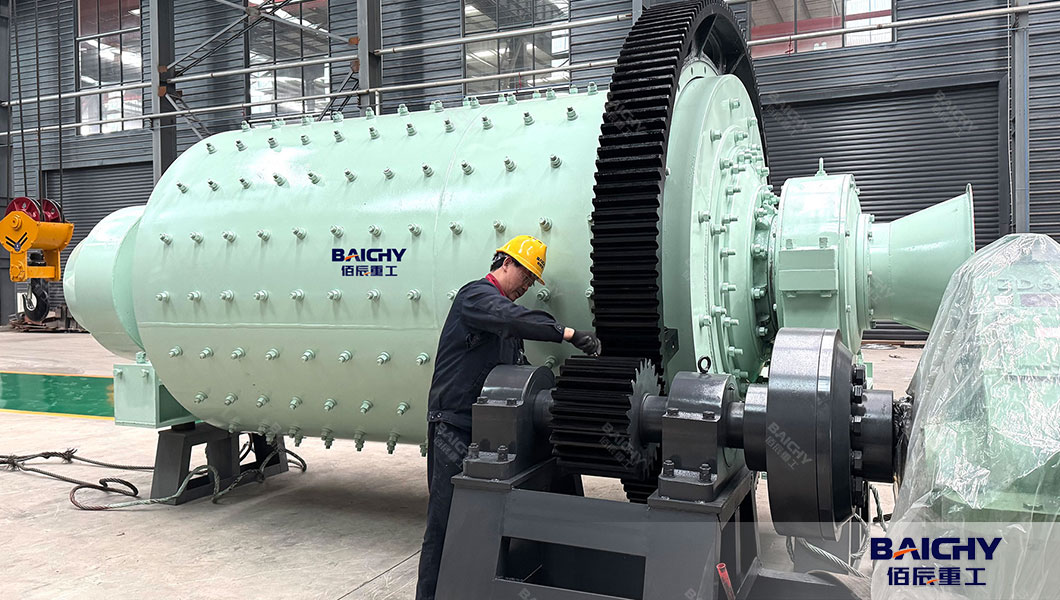
How Does an Iron Ore Ball Mill Work?
The operation of an iron ore grinding mill ball mill is based on two fundamental principles: impact and attrition .
● Feeding: Crushed iron ore enters the first chamber through the hollow shaft.
● Impact: As the horizontal cylinder rotates, centrifugal force lifts the grinding media (steel balls) to a certain height, where they fall and strike the ore, causing breakage.
● Attrition: The ore is further ground by the friction between the steel balls and the mill liners as the media cascade and tumble.
● Discharge: The ground material moves through the mill, often to a second chamber for finer grinding, before being discharged via the outlet.
Typically, iron ore ball mills are capable of grinding the ore to a fineness of 60% to 95% passing 200 mesh (74 microns), which is the ideal particle size for subsequent magnetic separation or flotation processes .
Types of Iron Ore Ball Mills
Choosing the right type of ball mill is a critical decision in plant design. The two main types used in iron ore processing are:
Grate Discharge Ball Mill
● Features: Equipped with a grate at the discharge end; low slurry level allows for faster discharge.
● AAdvantages: High processing capacity, less over-grinding.
● ABest For: Primary grinding stage in a two-stage circuit .
Overflow Ball Mill
● AFeatures: Pulp discharges freely through the hollow shaft at the discharge end; higher slurry level allows for longer retention time.
● AAdvantages: Simpler structure, produces finer and more uniform products.
● ABest For: Secondary and tertiary grinding stages where fine product is required .
In many modern iron ore plants, the combination of a grate mill for the first stage and an overflow mill for the second stage is considered the industry standard for optimal performance .
How to Select the Right Iron Ore Ball Mill
Selecting the correct ball mill is not a one-size-fits-all decision. It depends heavily on the physical and chemical properties of the ore.
Selection by Ore Type
| Iron Ore Type |
Characteristics |
Recommended Ball Mill Type & Process |
| Magnetite |
High hardness, strong magnetism, requires fine grinding for liberation. |
Often used for secondary grinding with hydrocyclones. |
| Hematite |
Moderate hardness, weaker magnetism. |
Grate mill for coarse grinding, overflow mill for fine grinding. |
| Limonite / Siderite |
High moisture, complex composition, some are refractory ores. |
May require a three-stage grinding process to achieve the target fineness -7. |
Key Selection Parameters
● Capacity (TPH): For a plant processing 3,000 tons per day, a model like MQY3200×4500 or larger is recommended .
● Feed Size: Generally, ball mills accept feed sizes up to 20-25mm.
● Product Fineness: The required mesh size determines whether you need a single-stage or multi-stage grinding circuit.
● Work Index: The ore's Bond Work Index (kWh/t) dictates the power requirement of the mill. For instance, some iron ores have a Bond ball mill work index of around 11.77 kWh/t, classifying them as medium-hard ores .
Optimizing Iron Ore Ball Mill Performance
Once your ball mill is installed, the focus shifts to operational optimization. Even small adjustments can lead to substantial gains in efficiency.
1. Grinding Concentration Control
The density of the slurry directly affects grinding efficiency. For iron ore, the optimal range is generally 65% – 80% solids by weight .
Too high: The slurry becomes too thick, cushioning the balls and reducing impact force.
Too low: The slurry is too thin, reducing the viscosity needed for effective particle capture and breakage.
2. Steel Ball Size and Filling Ratio
Optimizing the ball size distribution is crucial for maximizing breakage rates.
Research indicates that different feed sizes require specific ball diameters. For example, +6.0mm material is suitable for a 100mm ball diameter, while -2.0mm material is better suited for a 70mm ball diameter .
An optimized ball size ratio (e.g., Φ90mm 34.62%, Φ70mm 26.92%, Φ60mm 23.08%, Φ40mm 15.38%) and a filling ratio of around 30-35% can significantly improve grinding performance .
One study demonstrated that implementing a combination of optimized ball size ratio, rotation speed, and grinding concentration increased the -0.074mm content in the final product from 55.10% to 58.86% and boosted processing capacity from 310 t/h to 350 t/h .
3. Classification Efficiency
In a closed-circuit grinding system, the efficiency of the hydrocyclone classifier is paramount. Poor classification leads to recirculating loads that can "cushion" the mill and reduce efficiency. Multicomponent models that account for differences in particle density and degree of liberation are increasingly used to model and optimize classification performance .
Advanced Modeling and Simulation
Modern mineral processing heavily relies on modeling to optimize iron ore grinding mill ball mills.
● APopulation Balance Model (PBM): This is a well-established technique used to describe the breakage of particles in batch and continuous ball mills. It can predict the particle size distribution of the product .
● AMulticomponent Models: Real ores are mixtures of different minerals (e.g., hematite and quartz). Multicomponent models account for the different breakage behaviors of each component and the interactions between them. For example, tougher materials tend to exhibit lower breakage probabilities when ground alongside softer materials .
● AMechanistic Models: These models, often coupled with the Discrete Element Method (DEM), provide a more fundamental understanding of the grinding process by simulating the mechanical environment inside the mill and linking it to particle breakage .
These advanced models are not just academic; they are used to simulate industrial-scale grinding circuits, predict circuit performance, and troubleshoot operational issues .
Common Questions About Iron Ore Grinding Mill Ball Mill
Q1: What are the key factors affecting iron ore ball mill efficiency?
A: The key factors include grinding concentration, steel ball size distribution and filling ratio, mill rotation speed, feed particle size distribution, and hydrocyclone classification efficiency .
Q2: What is the difference between a grate discharge and an overflow ball mill?
A: A grate discharge mill has a grate at the discharge end that allows for faster slurry discharge, making it suitable for coarse grinding. An overflow mill has no grate and a higher slurry level, allowing for longer retention time and a finer product, making it suitable for fine grinding .
Q3: How does ore hardness affect ball mill selection?
A: The ore's Bond Work Index (kWh/t) is a measure of its hardness. A higher Work Index means the ore is harder and requires more energy to grind, which directly impacts the required mill power, throughput, and liner material selection .
Q4: Can ball mills handle wet and dry grinding?
A: Yes, but in iron ore processing, wet grinding is more common due to its efficiency and the need for a slurry for downstream processing. Wet grinding also helps with dust control .




 2026-10-10





 86-15093113821
 86-15093113821