Bentonite is a widely used non-metallic mineral resource with abundant reserves and various applications in industries such as drilling, foundry, construction, and pet products. Due to its excellent adsorption and water absorption properties, bentonite has become one of the most popular raw materials for producing clumping cat litter.
With the rapid growth of the pet industry, bentonite cat litter production has attracted increasing attention. A complete bentonite cat litter production line usually includes several key processes: crushing and grinding, granulation, drying, screening, and packaging. Different types of equipment are required for each stage to ensure the final cat litter has good absorption performance, proper particle size, and stable quality. As a professional bentonite processing equipment manufacturer, Baichy Machinery provides complete solutions for bentonite grinding and cat litter production, including Raymond mills, granulators, rotary dryers, and packaging systems.
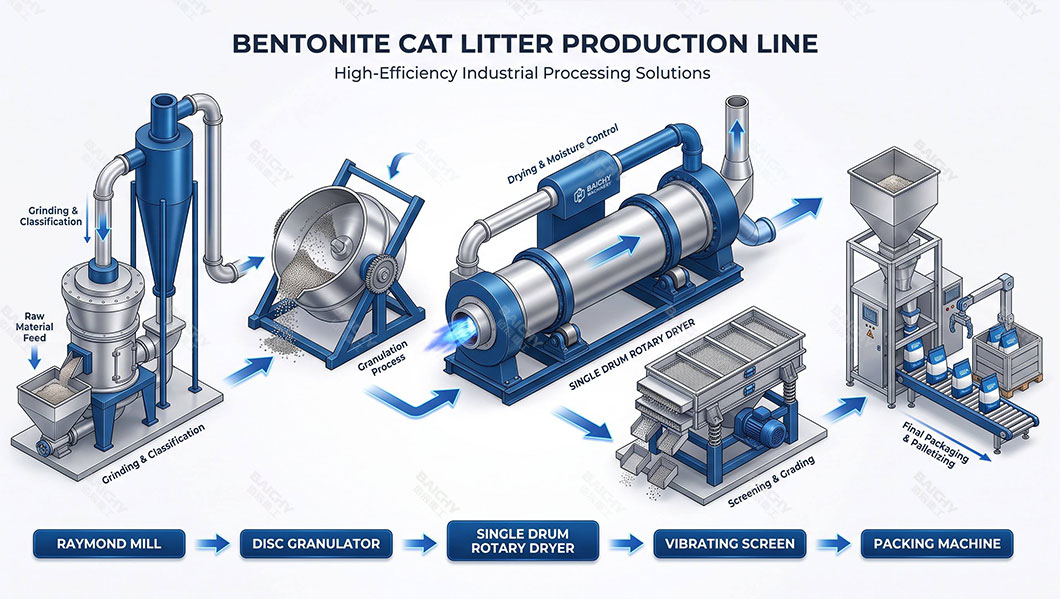
The 4-Step Core Process Overview
The manufacturing of bentonite cat litter follows four main stages: Crushing → Granulation → Drying → Screening & Packaging. Each stage requires specialized machinery to ensure the final product meets quality standards for absorbency, durability, and odor control.
Here is a step-by-step look at how raw bentonite becomes premium cat litter.
Step 1: Crushing & Activation (The Role of the Raymond Mill)
The journey begins with raw bentonite ore, which often contains moisture and impurities. Before it can be formed into pellets, the material must be processed into a fine powder.
The Chemical Addition:
The process starts by mixing the raw bentonite with 2% to 3% sodium carbonate (soda ash) . This is a critical step; the soda ash acts as a chemical activator, "sodium-activating" the bentonite. This significantly increases its swelling capacity and water absorbency, ensuring the litter will clump tightly when wet.
Key Equipment:
● Mixer/Feeder: Ensures the soda ash is evenly distributed throughout the bentonite.
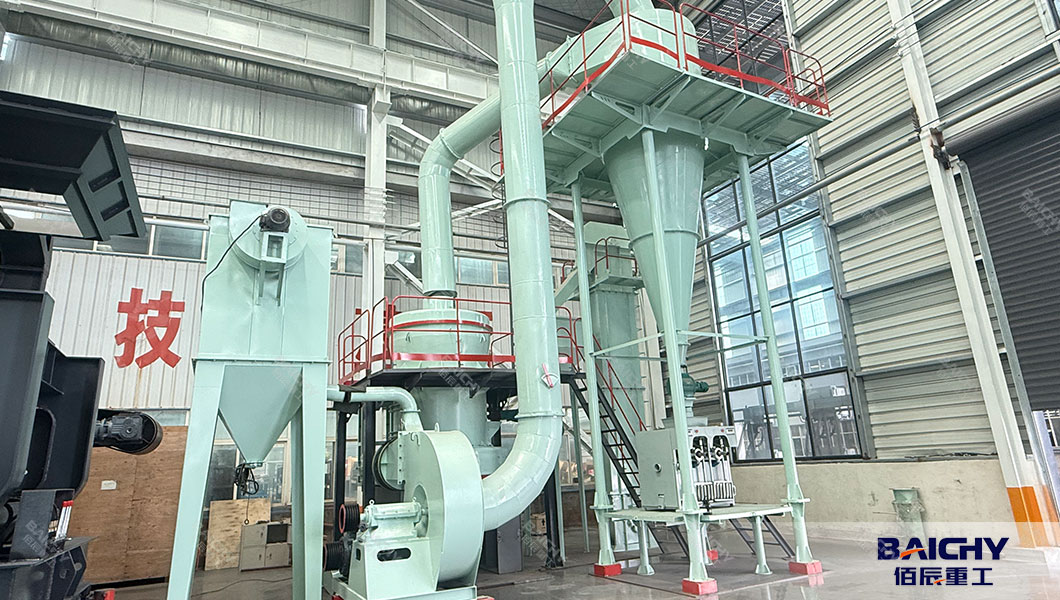
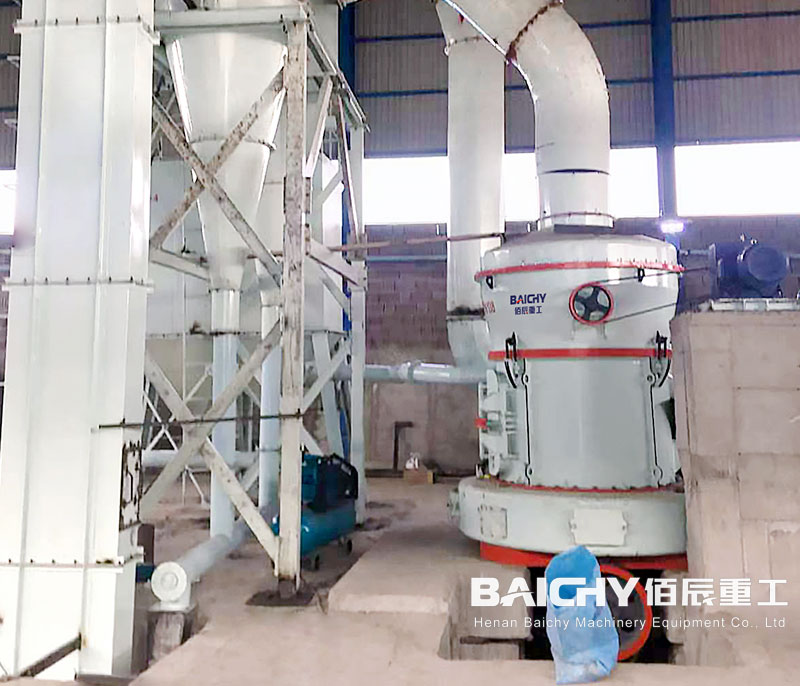
● Raymond Mill (Grinding Mill): This is the heart of the crushing stage. The mixed material is fed into the Raymond mill, which grinds it into a fine powder of approximately 200 mesh. A Raymond mill is preferred for bentonite because of its high efficiency, small footprint, and ability to handle materials with high moisture content.
Step 2: Granulation (Creating the Pellets)
Once the 200-mesh bentonite powder is ready, it moves to the granulation stage. Here, the fine dust is transformed into the hard, spherical pellets that cats and owners prefer.
Key Equipment:
● Granulator (Pan or Disc Granulator): The powdered bentonite enters the granulator along with specific additives to enhance performance:
● Potassium Permanganate Solution (0.2%): Added to provide disinfectant and antibacterial properties, reducing odors and keeping the litter box hygienic.
● Sodium Silicate Solution (Water Glass - 1%): This acts as a binder, increasing the cohesion and hardness of the granules so they don't break apart easily during packaging or use.
● Water Spray System: During granulation, water is atomized and sprayed onto the powder to help it aggregate. The granulator rotates to roll the powder into uniform spheres, typically aiming for a finished pellet size of 0.8 mm to 5.0 mm.
Step 3: Drying & Cooling (Controlling Moisture)
At this point, the litter pellets are "wet," with a moisture content of about 16%. Since the primary purpose of cat litter is absorption, this moisture must be extracted.
Key Equipment:
● Rotary Dryer (Drum Dryer): The wet pellets are fed into a large rotating drum heated by hot air. The dryer reduces the moisture content to below 6%. High temperatures ensure the pellets are hardened and cured.
● Cooling Conveyor/System: The hot pellets are then moved to a cooling area. Because bentonite is highly hygroscopic (it attracts water), it will absorb moisture from the air as it cools. The cooling process naturally brings the final moisture content back up to a stable level of 6% - 8%. This is the optimum range—dry enough to be absorbent but moist enough to avoid becoming brittle and dusty.
● Pro Tip: Drying to 6% before cooling is intentional. If the pellets were cooled to 8% directly, the structure would be weaker. The 2% moisture absorption during cooling helps improve the final product's texture.
Step 4: Screening & Packaging
The final stage ensures consistency and prepares the product for sale.
Key Equipment:
● Vibrating Screen: Used to separate any overly large pellets or fine dust (fines) from the desired size range. Oversized particles are usually crushed and returned to the process.
● Automatic Weighing & Packaging Machine: Because bentonite litter loses its effectiveness when exposed to ambient humidity for too long, the finished product is immediately weighed and sealed into moisture-proof bags. This ensures the litter remains fresh, dust-free, and retains its maximum absorbency until opened by the consumer.
Summary of Key Equipment
To run a successful bentonite cat litter plant, you typically need the following machinery lineup:
● Crushing Equipment: Jaw crushers (for raw ore) and Raymond Mills (for fine powder).
● Mixing Equipment: Double-shaft mixers for soda ash activation.
● Granulation Equipment: Disc granulators or rotary drum granulators.
● Drying Equipment: Rotary drum dryers with hot air furnaces.
● Screening Equipment: Multi-layer vibrating screens.
● Packaging Equipment: Automatic bagging scales and sewing machines.
Why Choose a Raymond Mill for Bentonite?
As highlighted by industry experts at Baichy Machinery, the Raymond Mill is the cornerstone of this production line. Unlike standard crushers, the Raymond mill excels at grinding non-flammable and non-explosive materials like bentonite. It provides precise grinding fineness (up to 200 mesh), ensures stable operation under continuous load, and offers energy-efficient solutions for large-scale manufacturing.
By following this established production flow—from chemical activation and fine grinding with a Raymond mill to precise granulation and controlled drying—manufacturers can produce high-quality bentonite cat litter that meets the demands of the booming pet care market.
Looking to set up your own production line? Contact a reliable equipment manufacturer like Baichy Machnery to customize your machinery based on your desired output capacity and the specific properties of your bentonite ore.




 2026-09-17





 86-15093113821
 86-15093113821