If you’ve spent any time around crushing and screening operations, you know there’s no shortage of crusher types: jaw crushers, cone crushers, gyratory crushers, roll crushers, and impact crushers. Each has a unique personality, and choosing the wrong one can cost you thousands in lost production and excessive wear. So what really sets an impact crusher apart? It’s not just the shiny rotor or the blow bars. The fundamental difference lies in how it breaks rock—and that difference ripples through everything from particle shape to wear costs to the types of material you can process efficiently.
In this guide, we’ll dig into the core principles that make impact crushers unique, compare them directly to jaw and cone crushers, and help you understand exactly where—and why—an impact crusher might be the right (or wrong) choice for your operation.
1. The Crushing Principle: Impact vs. Compression
Every crusher falls into one of two families: impact crushing or compression crushing. This single distinction drives nearly every other difference.
Impact Crushers: “Throw Rock at Steel (or Rock)”
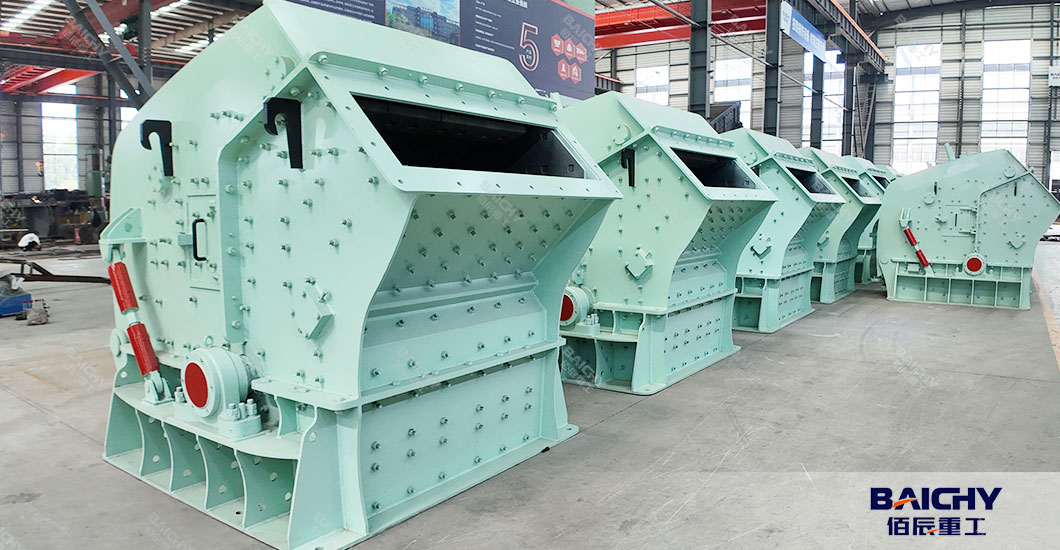
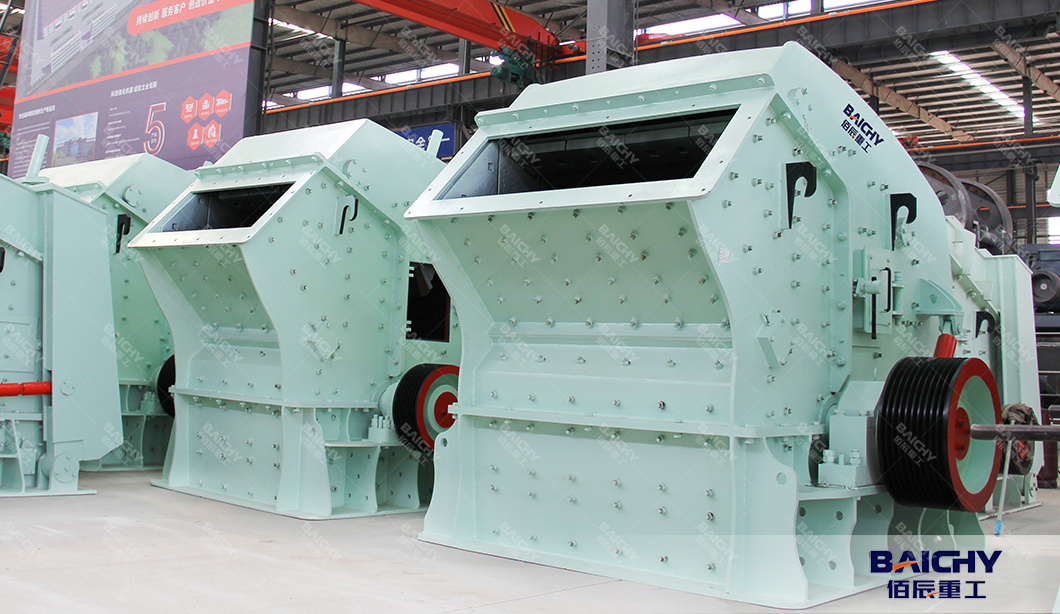
Impact crushers use high-speed rotors to throw material against crushing curtains or rock-lined chambers. The kinetic energy does the work. When the rotor spins (typically 400–800 RPM depending on size), the blow bars strike incoming material, shattering it instantly. The broken pieces then collide with impact plates or other rock, breaking further.
Think of it like throwing a dinner plate against a brick wall—the impact energy fractures the plate along natural stress lines.
Key characteristic: Impact crushers apply force rapidly (high strain rate), which exploits natural fracture planes. This produces excellent cubical shape but also generates more fines.
Compression Crushers: “Squeeze Until It Breaks”
Jaw crushers, cone crushers, and gyratory crushers work by slowly compressing rock between two hard surfaces. A jaw crusher has a fixed plate and a moving plate that opens and closes like a mouth. Material gets squeezed until it fractures.
Cone crushers work similarly, but with a rotating mantle inside a concave bowl. The gap narrows progressively, crushing material layer by layer.
Key characteristic: Compression applies force gradually, which is gentler on wear parts but produces more elongated or flat particles—especially in jaw crushers.
Why This Difference Matters
| Aspect |
Impact Crusher |
Compression Crusher (Jaw/Cone) |
| Breakage mechanism |
High-speed impact |
Slow compression |
| Force application |
Instantaneous (milliseconds) |
Gradual (seconds) |
| Particle shape |
Excellent cubical shape |
Jaw: poor cubical; Cone: good to very good |
| Fines generation |
Higher |
Lower (especially cone) |
| Moisture sensitivity |
Can clog with sticky material |
Handles wet/sticky better (jaw) |
| Abrasive material tolerance |
Poor (high wear) |
Excellent (low wear) |
2. Reduction Ratio: One Pass vs. Multiple Stages
Another major difference is how much size reduction a crusher can achieve in a single pass.
Impact Crushers: High Reduction Ratio
A well-configured impact crusher can achieve reduction ratios from 10:1 up to 20:1 or even higher. That means if you feed 500 mm rock, you can get 25–50 mm product in one pass. This aggressive reduction comes from the high energy of the impact and the ability to adjust multiple curtain gaps.
Compression Crushers: Lower Reduction Ratio
Jaw crushers: Typically 4:1 to 6:1. You need multiple stages (jaw to cone to cone) to reach fine aggregate sizes.
Cone crushers: 5:1 to 8:1 in proper secondary/tertiary applications.
Practical Implication
For a limestone quarry producing ¾-inch base material from run-of-quarry rock (say, 600 mm feed):
● Impact crusher route: One primary impact crusher (with large feed opening) → screen → finished product. Two machines total.
●Compression route: Jaw crusher (600 mm → 150 mm) → secondary cone (150 mm → 40 mm) → tertiary cone (40 mm → 19 mm) → screen. Four or more machines.
The impact crusher simplifies the flowsheet, reduces capital equipment costs, and cuts maintenance on multiple machines. However, it only works if the material is soft to medium-hard (compressive strength <180 MPa).
3. Rotor Design: The Heart of the Difference
No other crusher has a rotor quite like an impact crusher.
Open vs. Closed Rotors
●HSI (Horizontal Shaft Impactor) rotors are typically open, with 3 or 4 blow bars protruding from the rotor body. The rotor weight and diameter directly determine crushing force. Heavier rotors store more kinetic energy, which matters when you hit large or hard pieces.
●VSI (Vertical Shaft Impactor) rotors are often closed or semi-closed, with tungsten-tipped wear parts. They throw rock at high velocity into a rock-lined chamber (rock-on-rock) or against anvils (rock-on-steel).
What Makes Impact Crusher Rotors Different
Jaw crushers have no rotor. Cone crushers have a mantle that gyrates, but it doesn’t “strike” material—it compresses it. The only similar component might be a hammer mill rotor, but that’s a different class of machine.
The impact crusher rotor operates at high tip speeds (40–80 m/s). This speed, combined with rotor mass, delivers the crushing blow. No other crusher type relies on this “launch and impact” principle.
4. Particle Shape: Cubical vs. Flaky
If you sell aggregate to asphalt or concrete producers, particle shape is everything. Flaky or elongated particles don’t pack well and reduce workability.
Impact Crushers: King of Cubical Shape
Because impact crushers fracture rock along natural cleavage planes, the resulting particles are well-balanced in three dimensions. The high-velocity impact tends to break elongated pieces further. Many operators use an impact crusher specifically as a tertiary shaping stage even after primary jaw/cone crushing, just to improve particle shape.
Jaw Crushers: Poor Shape
Jaw crushers produce a high proportion of flat and elongated particles. The squeezing action tends to produce “slabby” pieces. That’s why jaw crushers are almost always followed by impact or cone crushers for final shaping.
Cone Crushers: Good to Very Good
Modern cone crushers with “cavity design” and choke feeding can produce excellent cubical shape—almost as good as an impact crusher for certain materials. However, they typically cannot match the impact crusher’s ability to “fix” poor shape from upstream crushing.
Real-world metric: Impact crushers often achieve a Flakiness Index (FI) below 15%, while jaw crushers may exceed 30%. Specifications for high-quality asphalt base often require FI < 20%, putting impact crushers in a clear lead.
5. Wear Part Design and Maintenance
How the crusher wears is another major differentiator.
Impact Crushers: High-Wear, Fast-Changing Parts
Blow bars (hammers) and impact plates wear relatively quickly. In abrasive materials (e.g., silica content >5%), blow bars might need changing every 200–400 hours. However, modern designs feature:
●Hydraulic opening for easy access
●Quick-change blow bar systems (some under 2 hours for a full set)
●Reversible rotors to use both sides of blow bars
Compression Crushers: Low Wear, But Time-Consuming Changes
Jaw crusher jaw dies can last 8,000–15,000 hours in hard rock. Cone crusher liners (mantle and concave) last similarly long. However, changing those heavy parts often requires more rigging and time—sometimes a full shift or more.
Which Is Better?
It depends. If you process highly abrasive rock daily, impact crusher wear costs will crush your margins (literally). If you process clean, soft-to-medium limestone or recycled concrete, impact crusher wear parts last well and are quick to change, leading to low cost per ton.
6. Material Suitability: The Deal-Breaker
This is perhaps the biggest practical difference. Not every crusher can handle every material.
Impact Crushers Excel At:
●Limestone, dolomite, chalk (soft to medium, low abrasion)
●Recycled concrete and asphalt (where rebar and mesh are removed)
●Construction and demolition waste (mixed materials)
●Secondary crushing of coal, gypsum, phosphate
Impact Crushers Struggle With:
●High-silica granite (wear parts erode rapidly; cost per ton skyrockets)
●Basalt with high compressive strength (possible but only with ceramic blow bars and reduced feed)
●Wet, sticky clay (builds up in the chamber, reduces throughput)
●Tramp metal (can destroy blow bars and rotor; magnetic separators are essential)
Compression Crushers Excel At:
●Granite, basalt, quartzite, iron ore (hard, abrasive)
●Any rock where wear cost must be minimized
●Wet or sticky material (jaw crushers handle this best)
The Bottom Line
Start with material testing. If your material’s compressive strength exceeds 180 MPa or silica content exceeds 7%, think twice before choosing an impact crusher. If it’s soft to medium with low abrasion, an impact crusher will outperform compression crushers in both product quality and total cost.
7. Energy Efficiency: kWh per Ton
Energy consumption varies significantly between crusher types.
●Impact crushers typically consume 0.5–2.0 kWh per ton for medium limestone. For harder materials, energy consumption climbs.
●Jaw crushers are generally more energy-efficient (lower kWh/ton) for primary crushing of hard rock because they apply force slowly and avoid the air resistance and throw losses of impactors.
●Cone crushers are also efficient in secondary/tertiary roles, often beating impact crushers on energy when making fine products.
However, energy efficiency alone doesn’t decide. If an impact crusher eliminates two additional crushers and screens from your circuit, the system energy could be lower overall.
8. Mobility and Footprint
●Mobile tracked crushers are common in both impact and jaw designs, but impact crushers have unique advantages in recycling applications.
●Mobile impact crushers are extremely popular in demolition and recycling because they can be moved directly to the job site, fed with an excavator, and produce saleable aggregate on the spot. Their high reduction ratio means fewer machines to haul.
●Mobile jaw crushers work well for primary hard rock in quarries but produce poorer shape and usually need a secondary cone on another track unit.
Side-by-Side Comparison Table
| Feature |
Impact Crusher (HSI) |
Jaw Crusher |
Cone Crusher |
| Crushing principle |
Impact (high speed) |
Compression (squeezing) |
Compression (layered) |
| Reduction ratio |
10:1 – 20:1 |
4:1 – 6:1 |
5:1 – 8:1 |
| Particle shape |
Excellent cubical |
Poor (flaky/elongated) |
Good to very good |
| Fines generation |
Moderate to high |
Low |
Low to moderate |
| Suitable material |
Soft to medium (≤180 MPa), low abrasion |
Hard to very hard, abrasive |
Hard to very hard, abrasive |
| Moisture sensitivity |
High (can clog) |
Low |
Medium |
| Wear part life (hours) |
200–800 (blow bars) |
8,000–15,000 (jaw dies) |
8,000–15,000 (liners) |
| Typical stage |
Primary (large feed) or secondary |
Primary |
Secondary/Tertiary |
| Cost per ton (rock dependent) |
Low for limestone; high for granite |
Low for hard rock |
Low for hard rock |
What makes impact crusher machines different from other crushers is their unique impact-crushing technology, which produces superior aggregate shape, higher reduction ratios, and greater flexibility in product sizing.
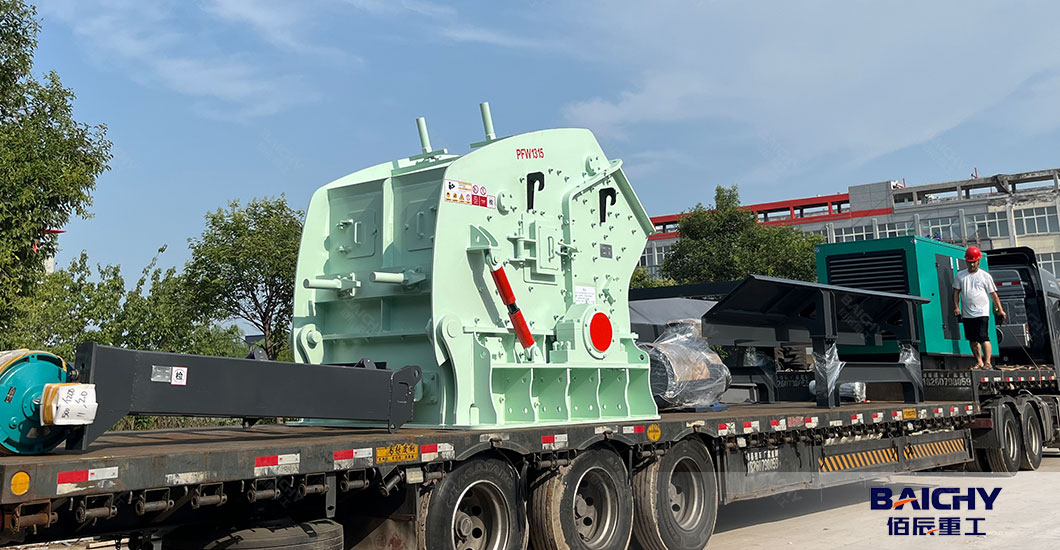
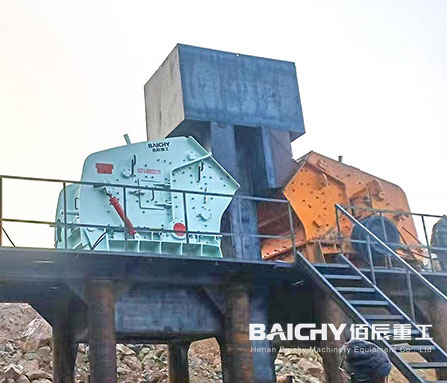
Baichy impact crushers are engineered to deliver reliable performance in quarry, mining, and recycling applications. With successful installations across Africa, Southeast Asia, South America, and the Middle East, Baichy provides complete support from equipment selection and plant design to installation and operator training.




 2026-10-22





 86-15093113821
 86-15093113821