Dry mix mortar, a cornerstone of modern construction, represents the future of building materials. It's a granular or powdered blend of precisely proportioned dry-screened aggregates (like quartz sand), inorganic cementing materials (like cement), and additives (like polymers). Delivered in bags or in bulk, it simply requires water on-site before immediate use. Also known as dry mortar mix, dry-mixed mortar, or pre-mixed mortar, its versatility is unmatched.
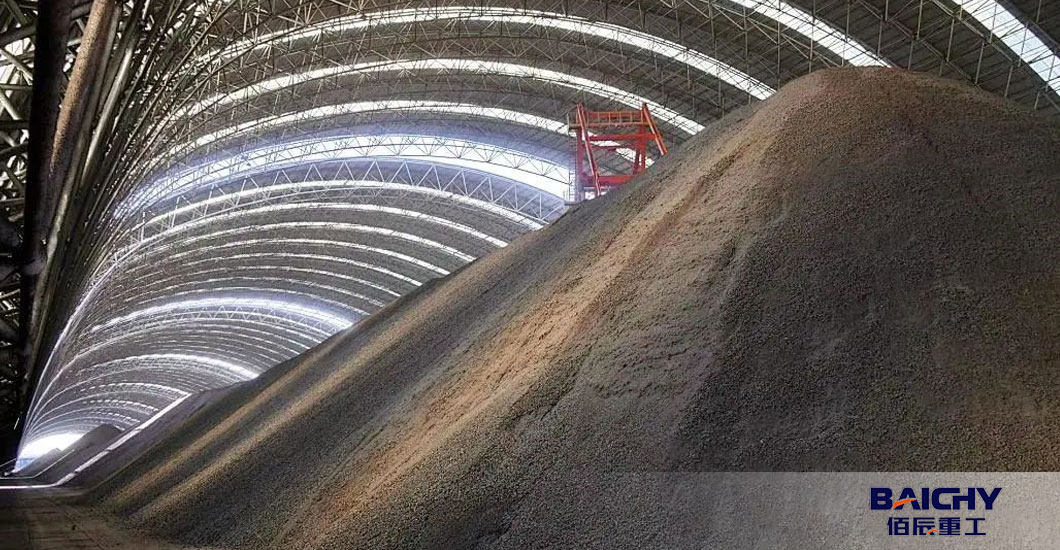
From masonry mortar, plastering mortar, and tile adhesives to grout, interior/exterior putties, waterproofing mortar, flooring mortar, self-leveling compounds, repair mortars, and even specialized insulation mortars and ready-mix concrete—dry mix mortar spans a vast array of applications in construction engineering. Standard dry mix mortars demand specific performance criteria including consistency, apparent density, water retention, setting time, flexural/compressive strength, tensile bond strength, and shrinkage. With the increasing shift towards mechanized application methods like plastering and spraying, the workability of the mortar becomes paramount. This places unique demands on manufactured sand, requiring precise control over its particle shape, powder content, fineness modulus, and gradation.
Requirements for manufactured sand used in dry-mixed mortar
1. The Critical Role of Particle Shape
Natural river sand has long been prized for dry mix mortar due to its smooth surface and predominantly spherical shape. These characteristics allow for excellent workability with minimal binder and mixing water, making well-graded river sand an ideal aggregate.
However, river sand's formation is a lengthy natural process, shaped by the continuous impact, erosion, and transportation of water, resulting in its rounded particle shape. In contrast, manufactured sand, produced by impact crushers, initially has a less rounded particle shape compared to river sand. Extensive experiments and practical applications have shown that manufactured sand can effectively replace river sand in dry mix mortar, provided its flakiness index (plate-like particle content) does not exceed 12%. Achieving this balance is crucial for high-performance mortar.
2. Fineness Modulus and Gradation: The Structural Backbone
The production of dry mix mortar is inextricably linked to the quality of sand making. Impact crushers are highly effective in reducing coarse particles larger than 2.36mm and increasing the proportion of fine sand (0.15-0.6mm). Coupled with advanced screening technology, the resulting manufactured sand can perfectly meet national standards, often falling within Zone II requirements for aggregate gradation.
Improved gradation enhances both the strength and fluidity of dry mix mortar, while simultaneously reducing the demand for cementing materials. This not only elevates mortar quality but also lowers production costs. For dry mix mortar applications, the fineness modulus of manufactured sand is typically controlled within the range of 2.3 to 2.8.
Furthermore, the type of rock used for sand production—be it granite, natural river pebbles, andesite, rhyolite, diorite, sandstone, or limestone—will influence the strength characteristics of the resulting manufactured sand, impacting the final mortar properties.
3. Controlling Powder Content: A Delicate Balance
When producing manufactured sand (below 2.36mm) from common limestone using impact crushers and vibrating screens, the resulting stone powder content typically ranges from 20-25%. Based on practical applications in dry mix mortar projects across the country, it's generally recommended to control the stone powder content in plastering mortar to within 10% (when the Methylene Blue value MB ≤ 1.4). For masonry mortar, a slightly higher stone powder content may be acceptable. Precise control is essential to prevent adverse effects on workability and strength.
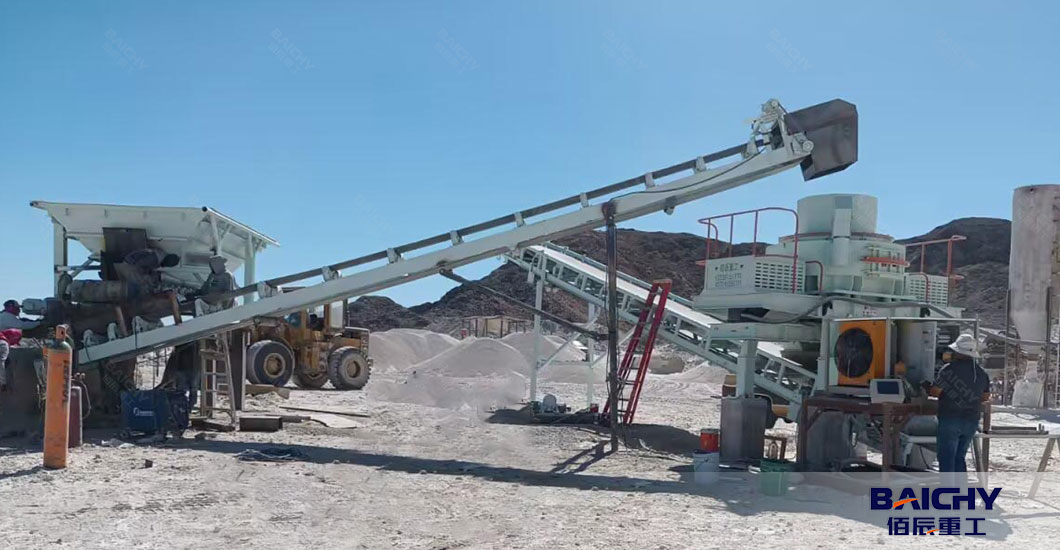
Recommended Equipment for Superior Manufactured Sand
To produce the high-quality manufactured sand required for advanced dry mix mortar, investing in the right equipment is paramount. Vertical Shaft Impact (VSI) Crushers are exceptionally well-suited for this task. They are designed to produce a cubic, well-shaped aggregate with an optimized gradation curve and controlled fines content. Their unique crushing action—stone-on-stone or stone-on-anvil—results in a more rounded particle shape, significantly reducing undesirable flaky particles.
1. VSI Sand Machine Advantages:
● Cubic Aggregate Shape (cubic, well-shaped aggregate):
This is one of the most significant advantages of VSI crushers. Unlike equipment such as jaw or impact crushers—which rely primarily on compression and direct impact for breakage—VSI crushers utilize a "stone-on-stone" or "stone-on-anvil" principle. This mechanism causes material to repeatedly collide within a high-speed rotating rotor, resulting in self-crushing. This method of crushing effectively improves the particle shape of the aggregate, rendering it closer to a cubic form and significantly reducing the proportion of needle-like or flaky particles. For dry-mix mortars, cubic or near-spherical aggregates can significantly enhance the mortar's workability and flowability, reduce the required water and cementitious material content, and simultaneously boost its compressive strength. The article also highlights the inherent advantage of natural river sand—namely, its rounded particle shape; VSI crushers serve as the key technology for artificially replicating this specific advantage.
● Optimized Gradation Curve:
VSI crushers allow for the adjustment of the product's particle size distribution within a certain range by fine-tuning parameters such as rotor speed and feed rate. The proportion of fine particles (0.15–0.6 mm) within the crusher's output is typically high, which helps satisfy the stringent gradation requirements for dry-mix mortars (e.g., meeting the criteria for "Zone II" sand under national standards, with a fineness modulus ranging from 2.3 to 2.8). This capability directly aligns with the point raised in the article regarding the need to "increase the proportion of fine sand in the 0.15–0.6 mm range."
● Controlled Fines Content:
During the sand-making process, VSI crushers inevitably generate a certain amount of stone dust (fines < 0.075 mm). Although the article notes earlier that the content of such fines requires careful regulation, the stone dust produced by VSI crushers typically possesses a superior particle shape; furthermore, its quantity can be precisely controlled through subsequent processing stages involving screening, air classification, or washing equipment. The article emphasizes that "VSI Crushers are exceptionally well-suited for this task," thereby underscoring their pivotal role in both particle shape optimization and gradation control.
● Unique Crushing Action (stone-on-stone or stone-on-anvil):
This distinct crushing principle constitutes the fundamental basis for the VSI crusher's ability to produce high-quality aggregate. It minimizes wear on metal components, thereby reducing production costs (particularly the cost of wear parts), and—most importantly—guarantees the superior particle shape of the final product. Reduction of Undesirable Flaky Particles (significantly reducing undesirable flaky particles): This serves as a reiteration of the VSI crusher's capability to improve particle shape, directly addressing the requirement mentioned earlier in the article that "the content of flaky particles in manufactured sand should not exceed 12%.
2. Recommended Auxiliary Equipment:
● Precision Vibrating Screens:
Rationale/Advantages: This constitutes an indispensable link in the manufactured sand production line. The material produced by the VSI crusher requires screening to meet the precise requirements regarding fineness modulus and gradation stipulated for dry-mix mortars. Precision vibrating screens are capable of classifying materials into different grain sizes based on varying mesh apertures, thereby ensuring that the gradation of the finished sand complies with established standards. As the article notes, "by incorporating advanced screening technology, the finished sand can be made to fully comply with the requirements of Zone II under national standards"—and vibrating screens are precisely the key to achieving this objective.
● Intelligent Sand Washing Plants / Air Classifiers:
Rationale/Advantages: The article previously emphasized the strict control required over stone powder content in dry-mix mortars (e.g., stone powder content in plastering mortar must be kept within 10%). While VSI crushers are capable of producing high-quality manufactured sand, their operation inevitably generates a certain amount of accompanying stone powder. When the stone powder content becomes excessive, sand washing machines or air classifiers are required to perform dedusting treatments in order to meet the production specifications for dry-mix mortars. The use of the term "intelligent" implies that modern sand washing equipment is capable of not only washing the sand but also effectively recovering and utilizing the stone powder, thereby minimizing resource waste.
3. Overall System Integration (Integrated Approach):
Rationale/Advantages: The article emphasizes that the VSI crusher "forms the core of an efficient and effective manufactured sand production line," and notes that "This integrated approach ensures consistent quality." This highlights the fact that modern manufactured sand production is not merely a matter of individual equipment units, but rather involves the optimization of the entire process flow and the synergistic interaction among various pieces of equipment. A complete manufactured sand production line typically encompasses multiple stages, including feeding, crushing (primary and secondary), sand making (VSI), screening, and washing/beneficiation (as required).
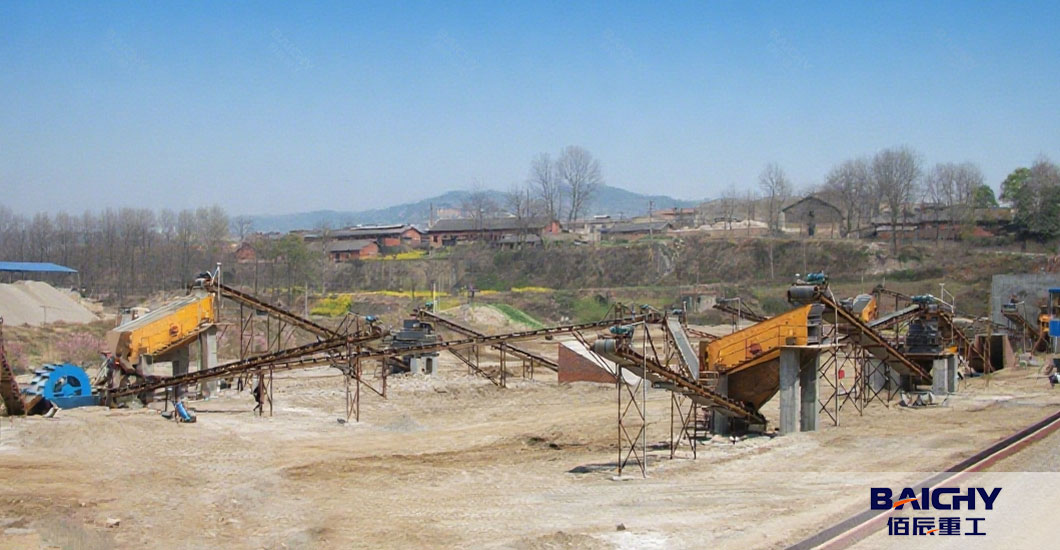
As the dry mix mortar industry increasingly transitions from manual to mechanized construction, the demand for superior aggregate characteristics—stable quality, optimal gradation, and ideal particle shape—continues to grow. With natural sand and gravel resources dwindling, the widespread adoption and utilization of high-quality manufactured sand are not just beneficial but crucial for the sustainable development and innovation of dry mix mortar.
Don't let inconsistent aggregate quality compromise your project's performance. Invest in advanced sand making technology and unlock the full potential of your dry mix mortar formulations. Contact us today to learn more about optimizing your manufactured sand production!




 2026-09-29





 86-15093113821
 86-15093113821