A ball mill is a crucial grinding device widely used in mining, cement, chemical, and metallurgical industries. It works by rotating a cylindrical drum filled with grinding media, such as steel balls, to crush and grind materials into finer particles. Despite its robust design, inefficient operation can lead to high energy consumption, inconsistent product quality, and frequent equipment wear.
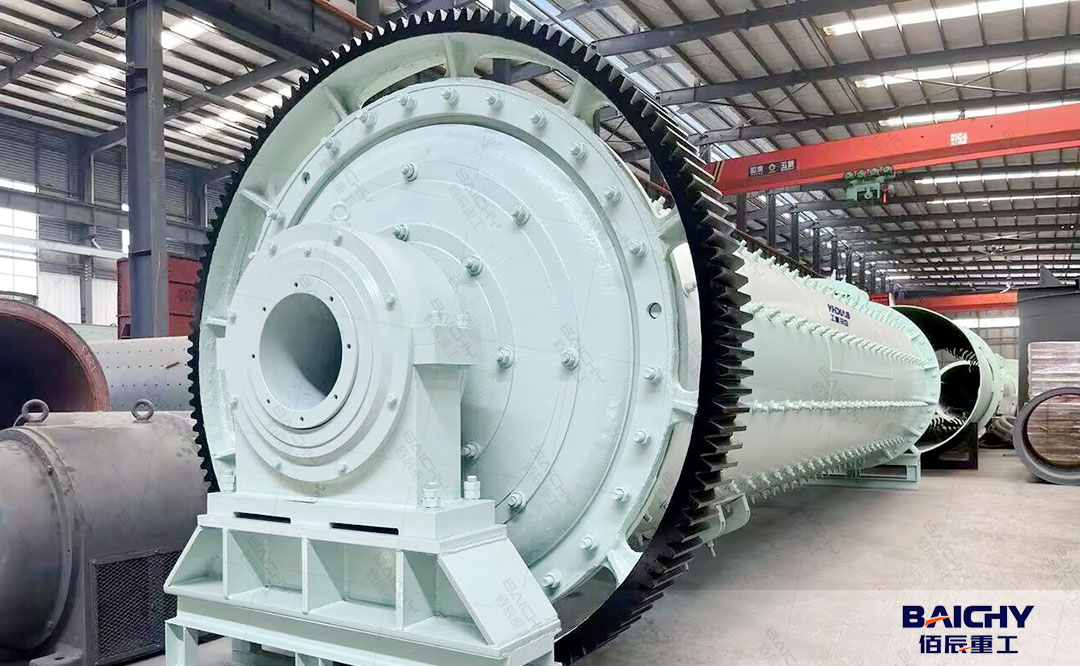
Optimizing ball mill performance is essential for both operational efficiency and cost-effectiveness. With targeted adjustments to operational parameters, smart media selection, proactive maintenance, and modern automation, proper optimization not only reduces energy costs but also prolongs the life of critical components, minimizes downtime, and ensures consistent particle size distribution. This guide explores practical strategies that can help operators maximize efficiency, improve throughput, and maintain long-term performance.
Foundational Principles: How Ball Mill Efficiency Works
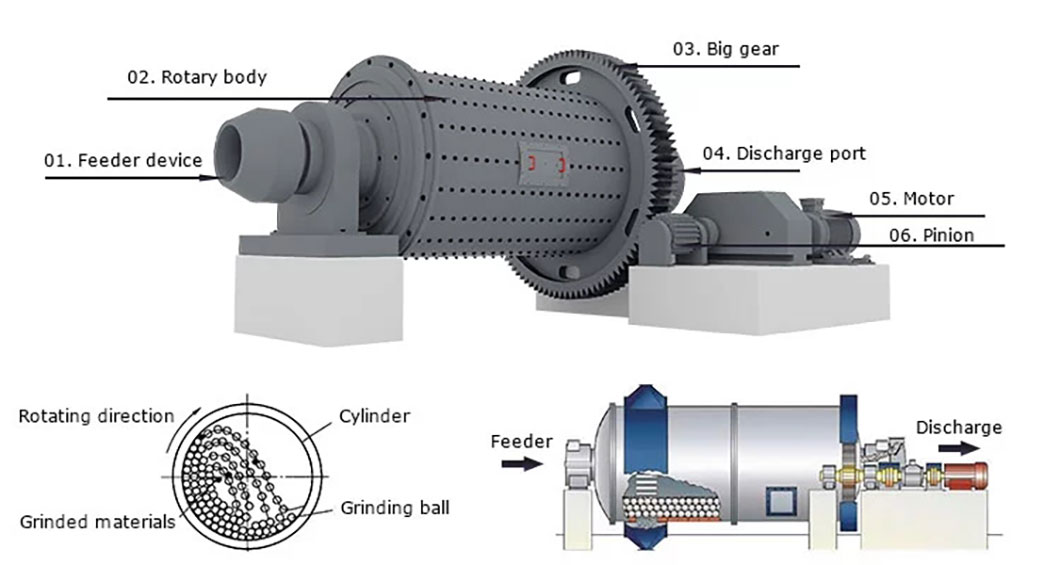
Before diving into optimization, it’s critical to understand the core mechanics that drive ball mill performance. Grinding efficiency depends on balancing two key mechanisms: impact (for breaking coarse particles) and abrasion (for refining fine powders) . The way your grinding media moves inside the mill directly dictates which mechanism dominates—and how effectively you process materials.
Media Motion Dynamics
Grinding media (balls, rods, or beads) move in three primary ways, depending on mill speed:
● Cascading (65-75% of critical speed): Media rolls down the mill wall in a controlled flow, ideal for fine grinding and abrasion-focused processes.
● Cataracting (75-85% of critical speed): Media is lifted higher and falls freely, delivering high-impact force for breaking hard, coarse materials.
● Centrifuging (above 85% of critical speed): Media sticks to the mill wall due to centrifugal force—grinding stops entirely, wasting energy.
The operational parameters (speed, media type, feed size) must align with your material’s properties (hardness, moisture content, desired particle size). So let’s start with the parameters you can adjust today.
Core Operational Parameters to Optimize (Data-Driven Adjustments)
1 Mill Speed & Critical Speed
The single most impactful adjustment you can make is optimizing mill speed relative to its critical speed—the rotational speed at which media centrifuges against the wall. Optimal Operation Range: 65-85% of critical speed. Here’s how to tailor it:
● For hard ores (e.g., granite, iron ore): Operate at 75-85% (cataracting) to maximize impact force.
● For fine grinding (e.g., cement clinker, limestone): Stick to 65-75% (cascading) to prioritize abrasion.
● Install a Variable Frequency Drive (VFD): VFDs reduce idle energy waste by adjusting speed to match load.
2 Grinding Media Optimization
The media’s size, material, and filling rate directly impact throughput and wear. Here’s how to optimize each:
● Size & Ratio
Use a multi-level media mix to cover all particle sizes. A proven ratio for general applications is Φ100mm:Φ80mm:Φ60mm = 3:4:3—this ensures coarse particles are broken by larger media, while fines are refined by smaller beads. Avoid single-size media, which leaves gaps in grinding efficiency.
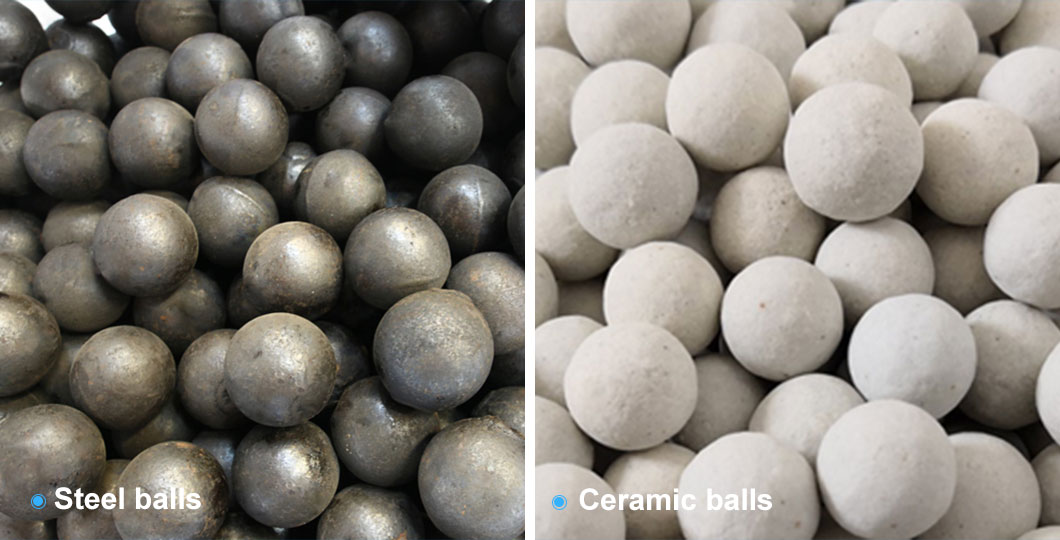
● Material Selection
| Parameter |
Steel Balls (High-Chrome) |
Ceramic Balls (Alumina/Zirconia) |
| Hardness (Mohs) |
5.0-6.5 |
~9.0 |
| Density |
7.6-7.8 g/cm³ |
3.6-3.9 g/cm³ |
| Impact Resistance |
Excellent (tough, no fracture) |
Poor (brittle, avoid coarse feeds) |
| Contamination Risk |
High (iron leaching) |
None (chemically stable) |
| Ideal Use Case |
Coarse grinding, hard ores |
Fine/ultra-fine grinding, purity-sensitive materials (e.g., lithium-ion batteries, food) |
| Long-Term Cost |
Higher (frequent replacement) |
Lower (5-10x longer lifespan) |
● Filling Rate
○ Wet grinding: 30-40% filling rate (prevents slurry overflow and ensures media movement).
○ Dry grinding: 40-60% filling rate (increases abrasion contact without overloading the motor).
Overfilling (above 60%) reduces media movement and increases energy draw; underfilling (below 30%) wastes capacity and lowers throughput.
3 Feed & Material Preparation
● Pre-Crushing Requirement
Limit feed size to ≤25mm for standard grinding. Pre-crushing reduces the mill’s workload and cutting energy consumption .
● Moisture Control
Dry grinding: Keep moisture ≤5% to avoid particle agglomeration and mill clogging.
Wet grinding: Maintain consistent slurry density (30-40% solids) to prevent mud formation, which slows grinding and increases wear.
Equipment Maintenance & Fault Resolution
Even with perfect parameter tuning, neglecting maintenance will erase efficiency gains. Here’s a proactive checklist and fault-fixing guide:
1. Routine Maintenance Checklist
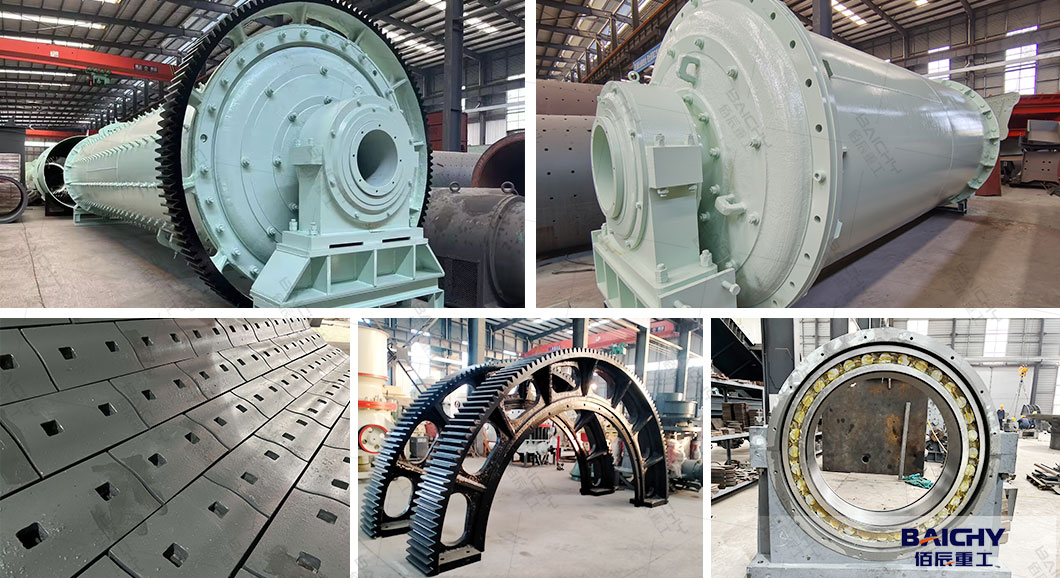
● Liner Inspection: Replace liners when wear exceeds 20%—worn liners reduce media movement and increase energy use. Corrugated or rubber liners enhance cascading motion to improve grinding efficiency.
● Bearing Care: Keep bearing temperature ≤70℃ (use lithium-based grease to reduce friction). Overheated bearings are the #1 cause of unplanned downtime—check lubrication levels weekly.
● Seal Optimization: Upgrade to mechanical seals to reduce leakage compared to packing seals. Leaks waste slurry, contaminate workspaces, and increase material costs.
2 Common Fault Fixes
● Abnormal Vibration: Tighten loose bolts (especially mill shell and motor mounts), replace unevenly worn media/liners, or adjust gear meshing.
● Reduced Output: First check feed size (is it larger than recommended?) then optimize media ratio (add more small/medium balls) and adjust filling rate .
● Overheating: Improve lubrication (replace old grease), align misaligned bearings, or enhance the cooling system (clean heat exchangers or upgrade to forced-air cooling).
Actionable Next Steps
Optimizing ball mill start with quick wins, then invest in long-term upgrades:
● Prioritize Quick Wins (1-2 Weeks):
○ Calculate your mill’s critical speed and adjust to 65-85% range.
○ Optimize media ratio (use the 3:4:3 mix for general applications).
○ Control feed size to ≤25mm and moisture to ≤5% (dry grinding).
● Invest in Long-Term Gains (1-3 Months):
○ Install a VFD to reduce idle energy waste.
○ Upgrade to smart sensors for predictive maintenance.
○ Integrate PLC control to sync mill with upstream/downstream equipment.
● Continuous Improvement:
○ Monitor key metrics: kWh/t (energy per ton), output rate, and particle size distribution (PSD).
○ Conduct monthly audits of media wear and liner condition.
○ Test grinding aids or media materials to find the best fit for your process.
By following these steps, you’ll transform your ball mill from an energy drain to a profit driver—reducing costs, boosting output, and gaining a competitive edge in your industry.




 2026-09-21





 86-15093113821
 86-15093113821