Grinding is a crucial particle size reduction process in industries such as metallurgy, ceramics, and mining. This process is roughly divided into two major categories: dry grinding and wet grinding. Understanding the differences between the two is essential for optimizing efficiency, reducing costs, and improving product quality.
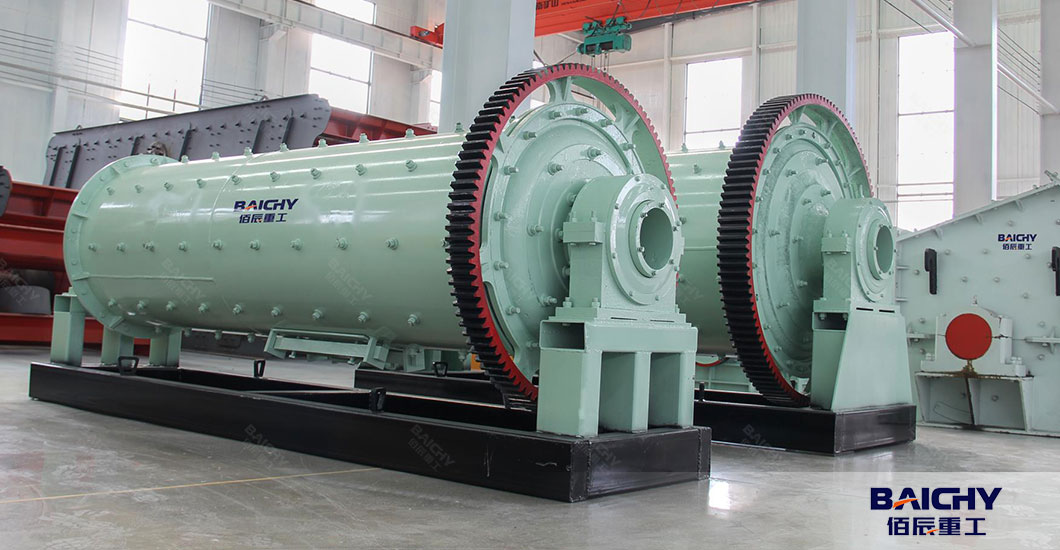
Ball grinding mill
What Is Dry Grinding?
Dry grinding is a grinding process carried out without adding water or other liquid media. The material enters the grinding mill and is reduced in size through impact, compression, and friction.
During operation, airflow or inert gas may be used to transport material, control temperature, or prevent oxidation. The final product is usually a dry powder that can be directly collected or sent to the next production step.
Dry grinding is commonly used when the material needs to remain moisture-free or when the final product must be obtained in dry form.
Typical equipment used for dry grinding includes dry ball mills, vertical mills, and air-swept grinding systems.
What Is Wet Grinding?
Wet grinding uses water or another liquid medium during the grinding process. The material is mixed with liquid to form a slurry, allowing particles to move more freely inside the grinding chamber.
The liquid reduces friction between particles, improves heat dissipation, and helps prevent fine particles from sticking together.
In mineral processing plants, wet grinding is commonly used because it can achieve finer particle sizes and works well with downstream processes such as flotation, magnetic separation, and leaching.
The final product from wet grinding is usually a slurry that requires further processing, such as filtration or drying.
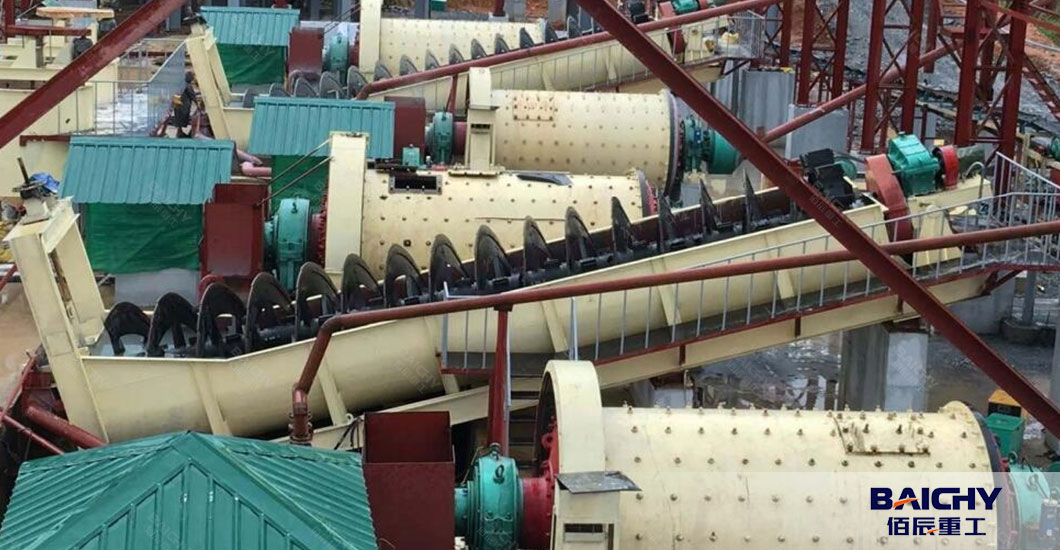
Wet grinding mill - mining ball mill
Advantages of Wet Grinding
1. Better Grinding Efficiency for Fine Products
Wet grinding is often preferred when very fine particle sizes are required. The liquid medium improves particle dispersion and reduces the tendency of fine particles to form agglomerates.
This makes wet grinding suitable for applications where strict particle size control is required.
2. Reduced Dust Generation
Because the material is processed in slurry form, wet grinding produces much less airborne dust compared with dry grinding.
This is especially important when handling fine mineral powders or materials that may create health or safety concerns.
3. Lower Grinding Temperature
During grinding, mechanical energy is converted into heat. The liquid medium absorbs and transfers this heat, helping control temperature inside the mill.
This advantage is important for heat-sensitive materials.
4. Suitable for Mineral Processing Plants
Many mining operations use wet ball mills because the slurry can be directly pumped to the next processing stage.
For example, in gold, copper, and iron ore processing plants, wet grinding is commonly integrated with flotation or separation systems.
Disadvantages of Wet Grinding
1. Additional Dewatering Requirements
Because the output is a slurry, additional equipment may be needed, including thickeners, filters, or dryers.
These extra steps increase system complexity and operating requirements.
2. Higher Equipment Investment
Wet grinding systems usually require pumps, piping, slurry handling equipment, and corrosion-resistant components.
The initial investment can be higher compared with a simple dry grinding system.
3. Water Consumption
Wet grinding requires a stable water supply. In areas where water resources are limited, this can become an important factor during project planning.
4. Slurry Handling
Operators need to manage slurry transportation, storage, and disposal. Poor slurry management may affect production efficiency and maintenance.
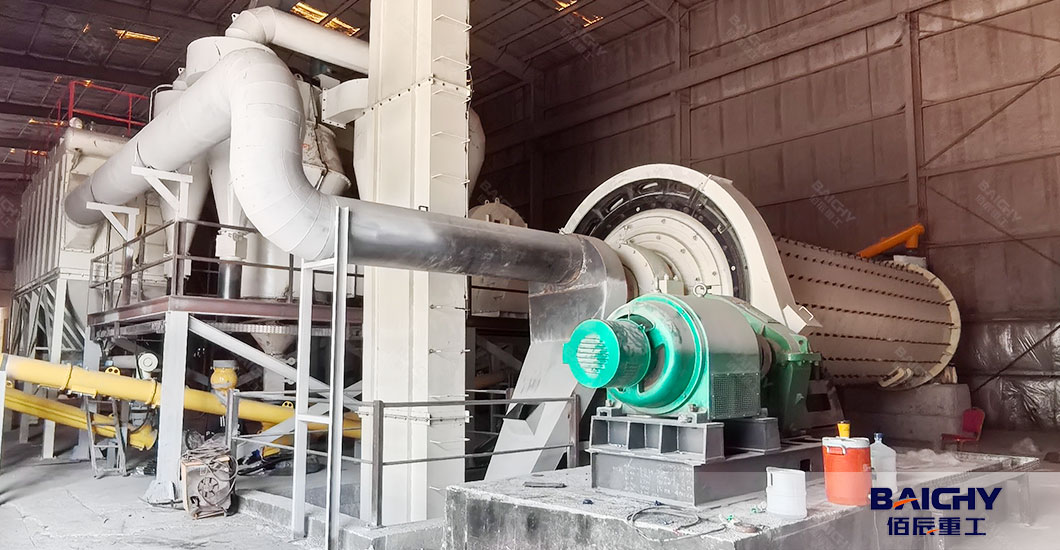
Dry grinding mill - ball mill plant
Advantages of Dry Grinding
1. Simple Production Process
Dry grinding produces a finished dry material without additional drying or dewatering steps.
This makes the process simpler, especially when the final product needs to remain dry.
2. Lower Water Requirement
Dry grinding does not require process water, making it suitable for areas with limited water resources.
This is one reason dry grinding is considered for some mining projects in arid regions.
3. Easier Material Handling
Dry powder can be transported, stored, and packaged more easily compared with slurry.
For some industries, this reduces the need for additional handling equipment.
4. No Slurry Management
Without liquid, there are no slurry pumps, pipelines, or wastewater treatment requirements.
This can simplify plant layout and maintenance.
Disadvantages of Dry Grinding
1. Dust Control Is Required
The biggest challenge of dry grinding is dust generation.
Mining and industrial plants normally require dust collectors, enclosed transfer points, and proper ventilation systems to maintain a safe working environment.
2. Higher Heat Generation
Without liquid cooling, friction heat can accumulate during grinding.
For heat-sensitive materials, temperature control becomes an important consideration.
3. Particle Agglomeration
Fine particles produced during dry grinding may stick together, affecting final particle size distribution.
Additional classification equipment may be required to achieve consistent product quality.
4. Higher Energy Consumption in Some Applications
Depending on the material and target fineness, dry grinding may require more energy because the particles have stronger interaction without liquid assistance.
Dry Grinding vs Wet Grinding in Mineral Processing
In mining applications, wet grinding is the more common choice because many beneficiation processes require slurry conditions.
For example, a typical iron ore or gold processing plant often uses wet ball mills because the ground slurry can directly enter separation equipment.
However, dry grinding may be considered when:
● Water supply is limited
● The material reacts with water
● The final product must remain dry
● Dust control systems are available
The choice should be based on the complete process design rather than the grinding stage alone.
How to Choose Between Dry and Wet Grinding
Before selecting a grinding method, consider the following factors:
● Material Characteristics
Check whether the material is moisture-sensitive, heat-sensitive, abrasive, or reactive with water.
● Required Particle Size
If ultra-fine grinding is required, wet grinding is often more suitable.
● Downstream Process
Consider what happens after grinding. Processes such as flotation usually require slurry, while some powder applications require a dry product.
● Water Availability
In areas with limited water resources, dry grinding may provide operational advantages.
● Total Operating Cost
The evaluation should include:
○ Equipment investment
○ Energy consumption
○ Maintenance requirements
○ Water usage
○ Waste handling costs
A pilot test is often recommended before selecting a large-scale grinding system.
Frequently Asked Questions
1. What is the main difference between dry grinding and wet grinding?
The main difference is whether liquid is added during grinding. Dry grinding processes material without liquid, while wet grinding uses water or another liquid medium to form a slurry.
2. Which grinding method produces finer particles?
Wet grinding generally achieves finer particle sizes because the liquid helps prevent particle agglomeration and improves grinding conditions.
3. Is wet grinding better for mining applications?
For many mineral processing plants, wet grinding is preferred because the slurry can be directly used in downstream separation processes. However, the final choice depends on the specific ore and plant design.
4. Is dry grinding cheaper than wet grinding?
Dry grinding may have lower water-related costs, but it may require stronger dust control systems and can consume more energy in some applications. The total cost depends on the complete process.
5. Can the same ball mill be used for dry and wet grinding?
Some ball mills can be designed for both applications, but the equipment configuration is different. Factors such as liners, discharge design, sealing, and auxiliary systems must be considered.




 2026-10-16





 86-15093113821
 86-15093113821