The era of dredging river sand is ending. With stricter environmental regulations and resource depletion, the construction industry faces a massive shortage of quality aggregate. The solution lies in artificial sand (manufactured sand) —but not all artificial sand is created equal. Simple crushed stone dust is often rejected by concrete batching plants because the particles are flaky and rough, which increases cement consumption and compromises concrete quality. To produce quality artificial sand that commands a higher price, you need more than just a sand stone crusher; you need a specialized shaping and processing system.
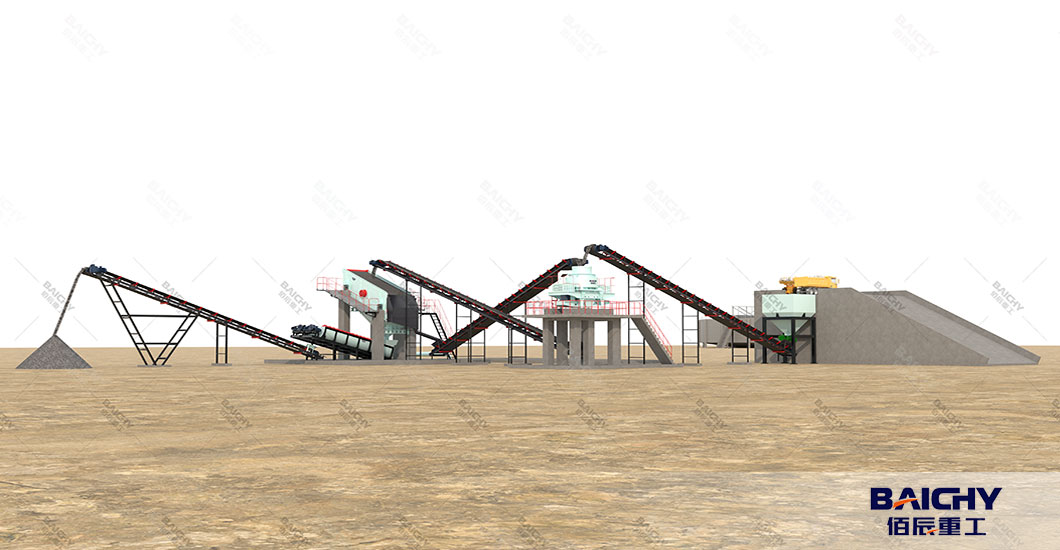
At Baichy Machinery, we help quarry owners transition from simple crushing to high-value sand making. Our engineered solutions ensure that every particle meets the strict standards of modern concrete production, turning environmental challenges into profitable opportunities. Here is the professional guide to the equipment that defines your profit margin.
1. The Core: VSI Sand Maker (The "Shaper")
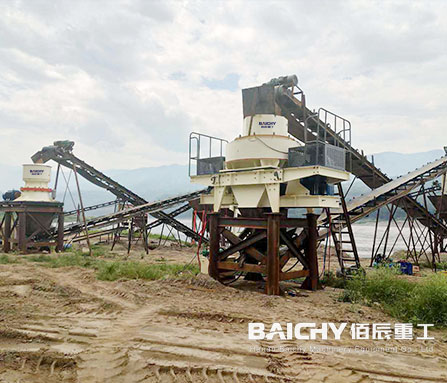
To produce premium sand that meets high-strength concrete standards, the VSI (Vertical Shaft Impact) Crusher is essential. Unlike simple hammer crushers that often produce flaky particles, the VSI utilizes a "stone-on-stone" principle, accelerating rock to high speeds to smash against a bed of other rocks inside the chamber.
This self-impact eliminates sharp edges, transforming needle-like particles into perfect cubes. Cubical sand significantly improves flowability in concrete mixers, enhancing workability (slump) while reducing the amount of expensive cement paste required to fill voids.
2. Hard Rock vs. Soft Rock Configuration
Selecting the right pre-crushing equipment depends entirely on raw material hardness. For abrasive hard rocks like Granite or Basalt, a Cone Crusher is essential as the secondary stage. It reduces wear costs by breaking the rock down to <40mm before it enters the VSI; feeding hard rock directly into impact-style machines would destroy wear parts rapidly.
Scenario A: Hard Rock (Granite, Basalt, River Pebble)
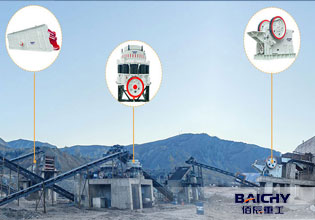
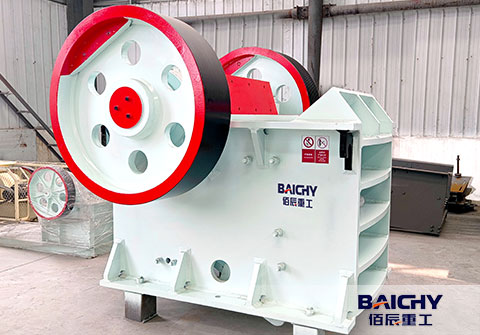
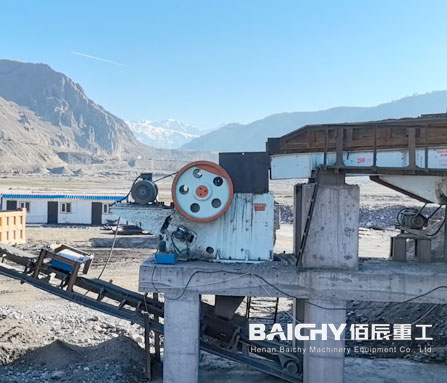
● Primary: Jaw Crusher (Coarse crushing).
● Secondary: Cone Crusher (Essential for reducing wear costs).
● Tertiary: VSI Sand Maker (Shaping).
● Why: You must use a Cone Crusher to reduce the rock to <40mm before it enters the VSI. Feeding big, hard rocks directly into a VSI will destroy the rotor tips.
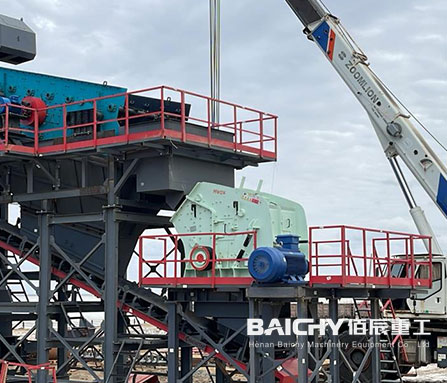
Conversely, for softer, non-abrasive materials like Limestone, a standard Impact Crusher or Heavy Hammer is the smart choice. This configuration handles the workload efficiently with lower capital investment, ensuring the VSI receives the optimal feed size without unnecessary operational expense.
Scenario B: Soft Rock (Limestone)
● Primary: Jaw Crusher.
● Secondary: Impact Crusher or Heavy Hammer.
● Tertiary: VSI Sand Maker.
● Why: Since limestone is less abrasive, Impact crushers can handle the workload cheaper than Cones.
3. The "Cleanliness" Factor: Dry vs. Wet Process
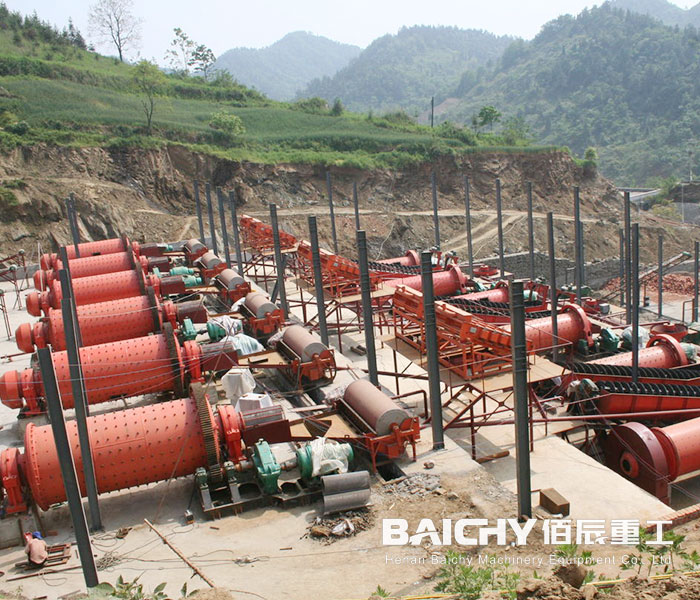
Controlling the "stone flour" (fines) content is critical for quality. The traditional Wet Process uses a Wheel or Spiral Sand Washer to flush away mud and excess dust. While this produces visually clean sand, it requires massive water usage and complex settling ponds to manage wastewater. In contrast, the modern Dry Process utilizes a Powder Separator (Air Classifier). This system uses air currents to precisely remove excess dust from the sand curtain without using a single drop of water. This method is increasingly becoming the industry standard for eco-friendly plants facing strict environmental regulations.
Option 1: The Wet Process (Sand Washer)
●Equipment: Wheel Sand Washer or Spiral Washer.
●How it works: Uses water to wash away the mud and excess dust.
●Pros: Very clean sand; looks good visually.
●Cons: Requires massive water usage; needs settling ponds; hard to get environmental permits.
Option 2: The Dry Process (Powder Separator)
●Equipment: Vibrating Screen + Air Classifier (Powder Separator).
●How it works: Uses air currents to suck the excess dust out of the falling sand curtain.
●Pros: Zero water usage; environmentally friendly; retains a controlled amount of fines (which helps concrete cohesion).
●Baichy Recommendation: For modern eco-friendly plants, the Dry Process is becoming the industry standard.
4. Screening: Controlling the Gradation
Concrete batching plants demand precise gradation, known as the Fineness Modulus. A High-Frequency Vibrating Screen acts as the quality gatekeeper, filtering the VSI output to ensure only qualified sand (typically 0-5mm) passes to the finished stockpile.
Any oversized material is automatically returned to the VSI for re-crushing in a closed circuit. Baichy screens are engineered with large vibration amplitudes to prevent the mesh from blinding (clogging), ensuring that the final product consistently meets the strict specifications required for high-grade construction projects.
The difference between "Stone Dust" (waste) and "Manufactured Sand" (product) comes down to the equipment you use. A hammer crusher produces flaky, unusable dust that concrete plants reject—while a VSI-based shaping system turns the same rock into premium sand that meets the strict standards of C60+ high-strength concrete. Investing in a proper artificial sand processing line isn't just an equipment upgrade—it's the difference between selling cheap fill and commanding top dollar for quality manufactured sand.
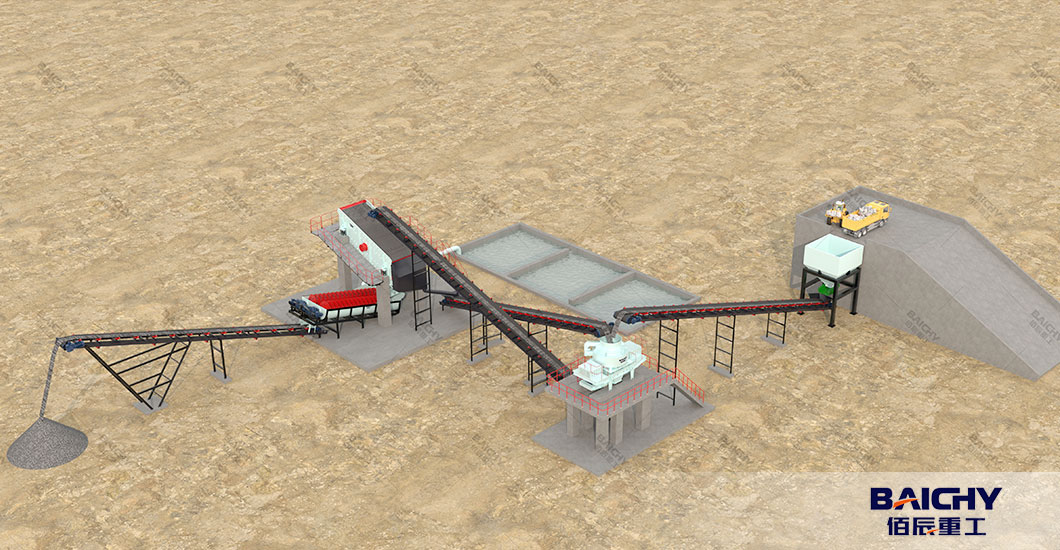
Ready to build your sand empire? Whether you're processing granite or limestone, and whether you need a wet or dry system, Baichy engineers are ready to help. Send us your raw material and capacity requirements, and we'll provide a complete flow chart and ROI analysis tailored to your operation.
Contact Baichy Machinery today to Get Your Customized Sand Plant Design.
FAQ: 3 Common Questions About Sand Making
1. Can I use a Cone Crusher to make sand?
Answer: A Cone Crusher is designed for size reduction, not shaping. While it produces some fines, the shape is often flaky (needle-like). To produce high-quality concrete sand, you must add a VSI (Vertical Shaft Impact) Crusher after the Cone to "shape" the particles into cubes.
2. What is the best raw material for artificial sand?
Answer: River Pebbles, Granite, and Basalt are the best materials because they have high compressive strength, producing sand that makes very strong concrete. Limestone can also be used but is typically reserved for lower-grade construction applications due to its lower hardness.
3. Is the Dry Process better than the Wet Process?
Answer: In 2024, the Dry Process is often preferred due to strict environmental regulations regarding wastewater. By using a Powder Separator, you can precisely adjust the fines content (e.g., keeping it at 5-10%) without using a single drop of water, making it ideal for water-scarce regions.




 2026-10-16





 86-15093113821
 86-15093113821