1. What Is a Sand Dryer and Why Do You Need One?
A sand dryer is an industrial drying machine designed to remove excess moisture from wet sand using controlled hot air. It is widely used in silica sand processing plants, quartz sand production, construction sand manufacturing, foundries, dry-mix mortar plants, and other industrial applications. In many sand processing plants, washing is necessary to remove clay, silt, and other impurities. However, washed sand often contains considerable moisture, making it difficult to transport, store, screen, or use in downstream production. High moisture content can create several production problems:
-
Transportation costs: Wet sand contains additional water weight, increasing the amount of material transported per ton of dry product.
-
Material sticking: Damp sand tends to stick to conveyor belts, screening equipment, and storage bins.
-
Unstable product quality: Excessive moisture can affect the accuracy of dry-mix mortar, glass manufacturing, and foundry sand preparation.
-
Storage difficulties: Wet sand may form lumps, block discharge systems, and create material handling problems.
-
Production interruptions: Inconsistent moisture levels can reduce the efficiency of downstream processing equipment.
An industrial sand drying machine solves these problems by reducing moisture to a controlled level, improving material flowability and providing a more consistent feed for subsequent production processes. The right sand dryer should not simply remove moisture. It should match your production capacity, incoming moisture content, final product requirements, fuel availability, and operating budget.
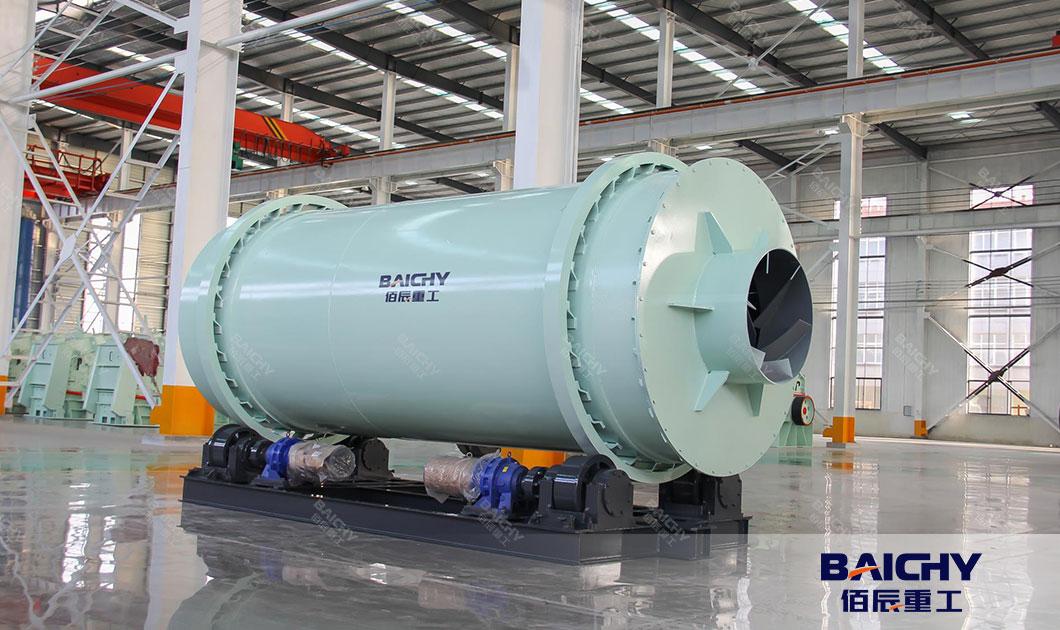
2. What Are the Best Types of Sand Dryers Available?
When purchasing a new sand dryer, buyers generally need to compare three drying technologies: single-drum rotary dryers, triple-pass rotary dryers, and fluidized bed dryers.
Each design has different advantages. The best choice depends on the characteristics of the sand and the production requirements.
2.1 Single-Drum Rotary Sand Dryer
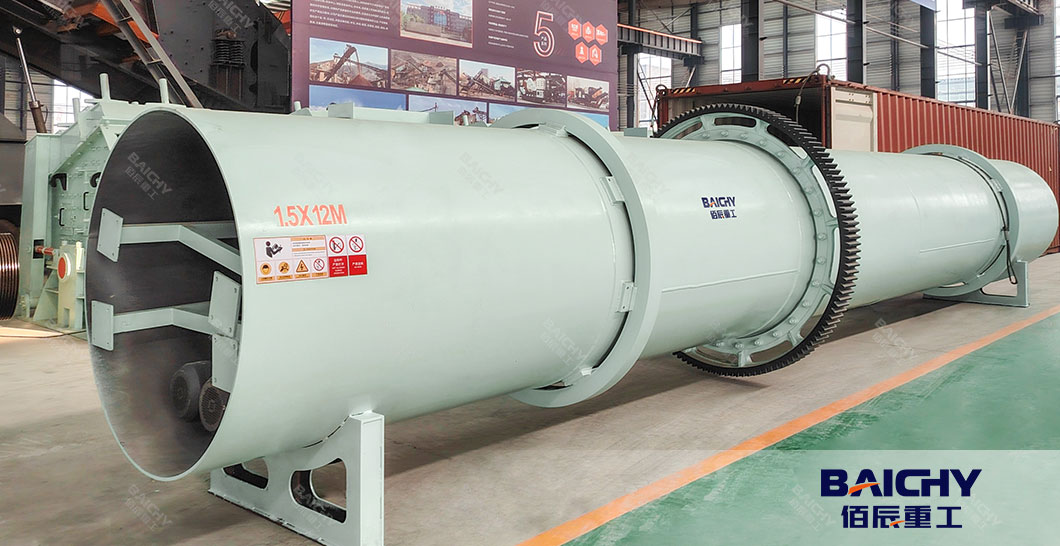
A single-drum rotary dryer consists of a rotating cylindrical drum, lifting flights, a heating system, and a dust collection system.
Wet sand enters one end of the drum. As the cylinder rotates, internal lifting plates continuously lift and scatter the material into the hot air stream. Moisture evaporates as the sand moves toward the discharge end.
Main advantages:
-
Simple mechanical structure and relatively straightforward maintenance.
-
Suitable for different granular materials, including sand, quartz, slag, and mineral materials.
-
Can be customized for different moisture contents and material characteristics.
-
Suitable for continuous industrial production.
-
Internal lifting plates can be designed to improve material dispersion and heat transfer.
Best applications: Sand processing plants with relatively large material volumes, variable feed moisture, or applications requiring a straightforward and robust drying structure.
2.2 Triple-Pass Rotary Sand Dryer
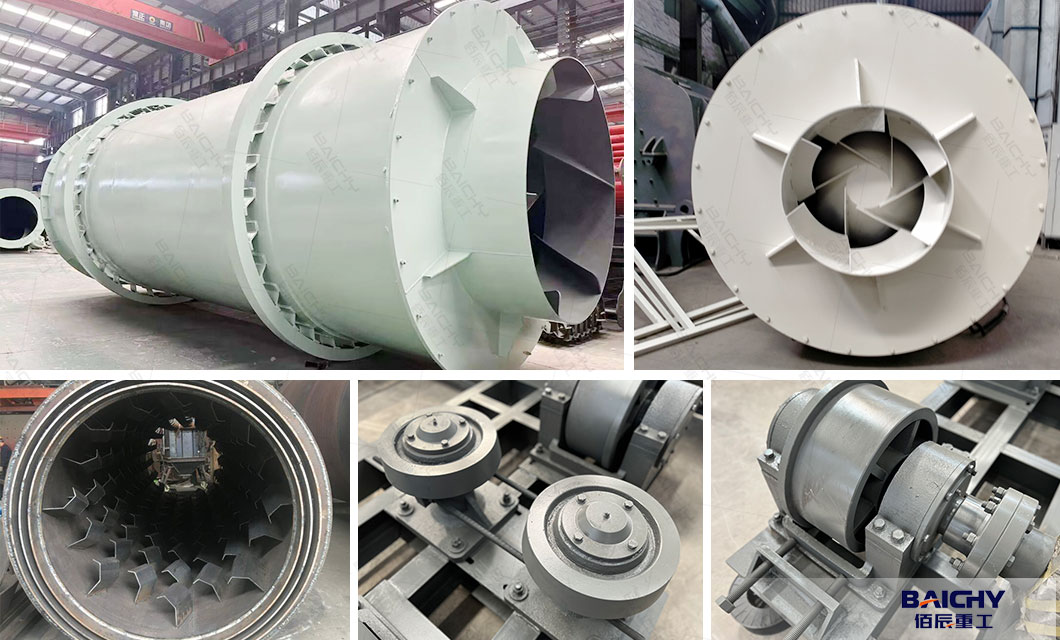
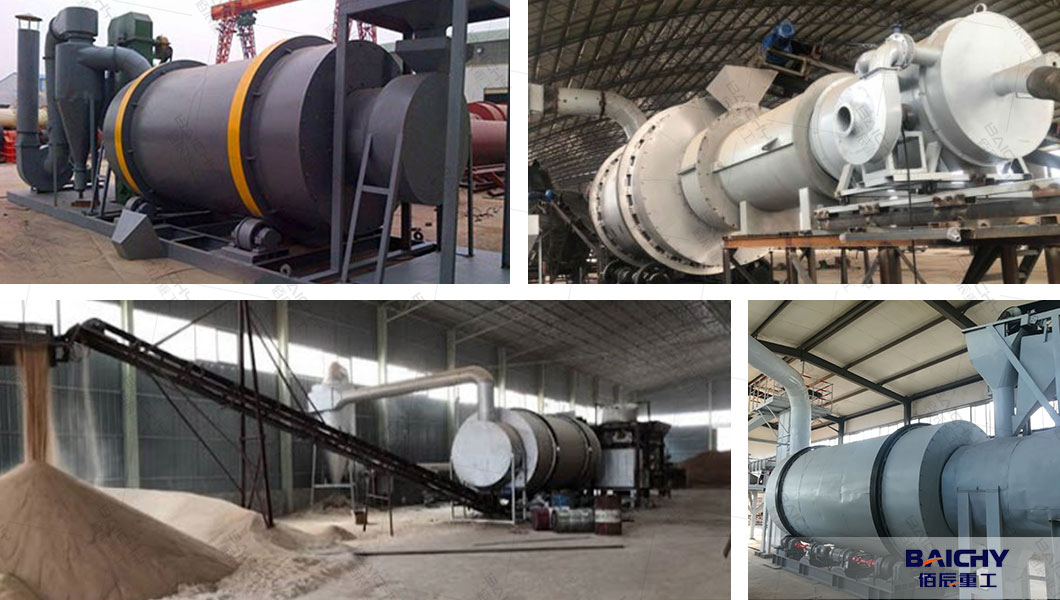
A triple-pass rotary dryer, also called a three-cylinder rotary dryer, uses three concentric cylinders to extend the drying path within a compact structure.
Wet sand passes through multiple drying sections while exchanging heat with the hot gas. This arrangement increases the effective heat transfer area and reduces the external heat-loss area compared with a conventional long single-drum design.
Main advantages:
-
Compact structure and smaller installation footprint.
-
Improved heat utilization through a multi-pass drying arrangement.
-
Continuous drying with relatively high processing efficiency.
-
Suitable for washed silica sand, quartz sand, and other granular materials.
-
Particularly practical for small and medium-sized sand drying production lines.
Best applications: Silica sand producers, washed sand processing plants, dry-mix mortar manufacturers, and industrial users seeking a compact continuous drying solution.
For many 8–30 TPH sand drying projects, a properly designed triple-pass rotary dryer is a practical option worth evaluating.
2.3 Fluidized Bed Sand Dryer
A fluidized bed dryer uses upward-flowing hot air to suspend and mix sand particles within a drying chamber.
The particles come into close contact with the heated air, allowing moisture to evaporate efficiently. This technology can provide relatively uniform drying when the feed material has suitable particle size and flow characteristics.
Main advantages:
-
Effective heat and mass transfer.
-
Relatively uniform drying under stable operating conditions.
-
Suitable for controlled drying of properly graded granular materials.
-
Can be integrated with material cooling and screening systems.
Limitations: Particle size distribution, air velocity, feed uniformity, and dust entrainment require careful engineering. It may be less suitable for irregular, highly variable, or heavily contaminated sand without appropriate pretreatment.
Best applications: Specialized industrial sand operations requiring controlled drying conditions and consistent particle quality.
Sand Dryer Comparison
| Dryer Type |
Main Advantages |
Limitations |
Recommended Applications |
| Single-drum rotary dryer |
Simple structure, flexible configuration, easy maintenance |
Generally larger installation footprint |
Large-volume sand and mineral drying |
| Triple-pass rotary dryer |
Compact design, good heat utilization, continuous operation |
Requires proper feed and airflow design |
Silica sand, washed sand, medium-capacity plants |
| Fluidized bed dryer |
Effective heat transfer, uniform drying under suitable conditions |
Sensitive to particle size and airflow conditions |
Specialized, properly graded industrial sand |
Which sand dryer is the best?
For most buyers processing washed silica sand at approximately 10–30 TPH, a triple-pass rotary dryer is a strong option because it combines continuous operation, compact installation, and effective heat utilization.
For larger-volume operations or more variable feed conditions, a single-drum rotary dryer may be more appropriate. Fluidized bed technology is worth considering when precise drying control and uniform particle treatment are important.
There is no universally best sand dryer. The correct selection should be based on actual material testing and production requirements.
3. What Equipment Is Included in a Complete Sand Drying Plant?
For most industrial applications, purchasing an integrated sand drying plant is more practical than purchasing a rotary dryer alone.
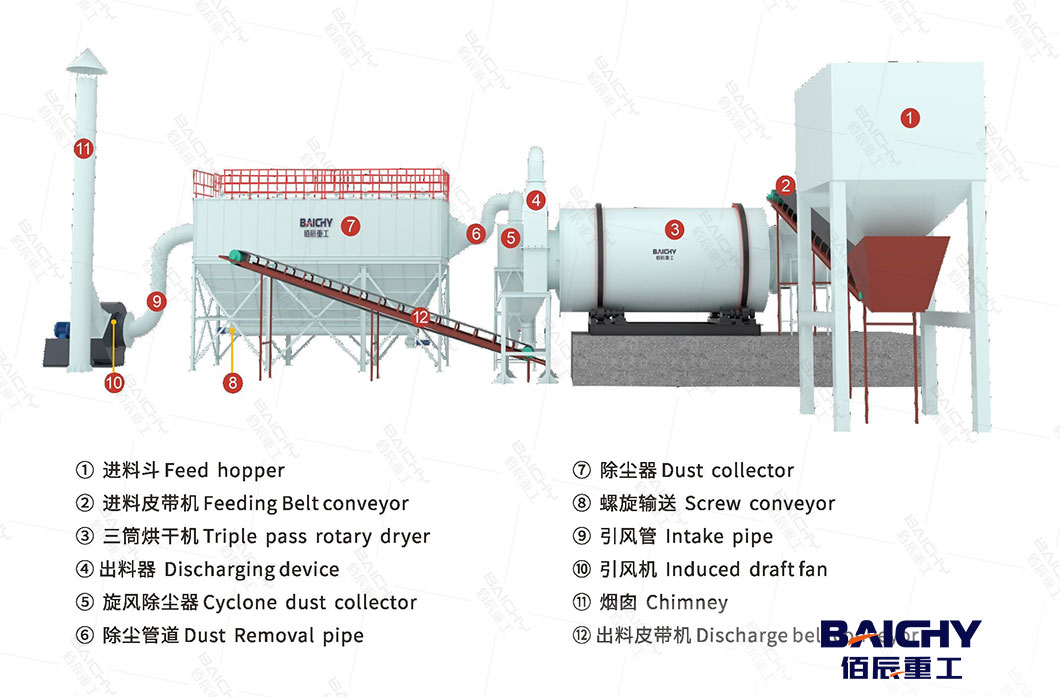
A complete sand drying system typically includes the following equipment:
| Equipment |
Main Function |
| Feed hopper |
Stores and supplies wet sand |
| Belt conveyor |
Delivers wet sand to the dryer |
| Rotary sand dryer |
Removes moisture through hot-air drying |
| Heating furnace or burner |
Supplies the required thermal energy |
| Induced draft fan |
Maintains the required airflow |
| Cyclone dust collector |
Separates larger dust particles |
| Bag filter |
Collects fine dust from exhaust gas |
| Discharge conveyor |
Transfers dried sand to the next process |
| Control system |
Monitors and adjusts operating parameters |
Typical Sand Drying Process Flow
Wet Sand → Feeding Hopper → Belt Conveyor → Rotary Sand Dryer → Dust Collection System → Finished Sand Conveyor → Storage or Screening
The heating furnace supplies hot air to the rotary dryer. During operation, wet sand is continuously lifted and dispersed inside the rotating drum, allowing moisture to evaporate.
The exhaust gas passes through the dust collection system before being discharged according to applicable environmental requirements.
If the dried sand requires different particle sizes, a vibrating screen can be installed after drying to separate the finished products.
The complete configuration should be customized according to the raw material, site layout, production capacity, and downstream processing requirements.
4. Baichy Malaysia Project: 10 TPH Silica Sand Drying Plant
A practical reference for buyers considering a new sand dryer is Baichy's 10 TPH silica sand drying project in Malaysia. The Malaysian customer was engaged in silica sand processing. After washing, the sand retained excess moisture, creating difficulties in transportation, storage, and subsequent industrial processing. The customer needed a continuous drying solution that could handle washed silica sand and provide a reliable supply of dry material for downstream production. The main requirements included:
-
Processing capacity of approximately 10 tons per hour.
-
Continuous drying of washed silica sand.
-
A suitable heating system for stable moisture removal.
-
Effective dust collection during operation.
-
An integrated equipment arrangement for material feeding and discharge.
After evaluating the production requirements, Baichy supplied a triple-pass rotary drum dryer for the Malaysian silica sand processing project. The main equipment specification was:
| Item |
Technical Specification |
| Equipment |
Triple-Pass Rotary Drum Dryer |
| Model |
2.0 × 4.0 m |
| Outer Cylinder Diameter |
2.0 m |
| Outer Cylinder Length |
4.0 m |
| Drum Volume |
12.56 m³ |
| Rotation Speed |
4–10 r/min |
| Maximum Air Flow Temperature |
600–750°C |
| Rated Capacity Range |
8–15 TPH |
| Motor Power |
2 × 5.5 kW |
| Application |
Silica Sand Drying |
| Project Location |
Malaysia |
The complete drying system was configured around the rotary dryer, heating system, dust collection equipment, and material conveying system.
Why Was a Triple-Pass Rotary Dryer Selected?
For this project, the triple-pass design offered several practical advantages.
1. First, its three-cylinder structure provided a longer effective material and hot-air contact path within a compact installation footprint.
2. Second, the multi-pass arrangement helped improve heat utilization, which is important for continuous sand drying operations where fuel consumption directly affects production costs.
3. Third, the system could be integrated with feeding, heating, dust collection, and discharge equipment to form a complete drying line rather than relying on an individual dryer.
The 10 TPH triple-pass rotary dryer was delivered to Malaysia for the customer's silica sand processing application in December 2024. This project demonstrates how equipment selection should be based on actual material characteristics, required production capacity, and the complete drying process. For silica sand producers facing excessive moisture after washing, a properly configured rotary drying system can provide a practical solution for improving material handling and maintaining a more stable downstream supply.
Baichy Machinery provides industrial drying equipment and customized production line solutions for sand and mineral processing applications. Instead of recommending the same dryer configuration for every customer, the engineering team evaluates the customer's production requirements and material characteristics before preparing an equipment proposal. Whether you are upgrading an existing silica sand washing plant or establishing a new dry sand production line, the equipment should be selected according to your required capacity, initial moisture, final moisture, and available fuel. A properly designed drying system helps reduce moisture-related production problems while improving the consistency of the finished sand. Send us your material type, capacity, initial moisture, target moisture, and available fuel. Our engineers can prepare a customized sand dryer proposal for your project.
5. Frequently Asked Questions About Sand Dryers
Q1: What is the best sand dryer for silica sand?
A triple-pass rotary dryer is a practical choice for many small and medium-sized silica sand processing plants because of its compact structure, continuous operation, and effective heat utilization. Single-drum rotary dryers and fluidized bed dryers may be more suitable for other material and production requirements.
Q2: What moisture content can a sand dryer achieve?
The achievable final moisture depends on the initial moisture, particle size, material properties, temperature, airflow, and residence time. Many industrial sand drying applications target approximately 0.5–1% or lower, but the actual specification should be confirmed through engineering calculations and material testing.
Q3: Can a sand dryer process washed sand directly?
Yes. Rotary sand dryers are commonly used to process washed sand. However, the feed moisture, particle size, clay content, and feeding consistency must be evaluated. Excessive free water may require mechanical dewatering before thermal drying.
Q4: How much capacity does an industrial sand dryer have?
Sand dryers are available in different capacities, from small production lines to large industrial installations. For example, Baichy's published triple-pass dryer models cover approximately 8–100 TPH. Actual output depends on the moisture content and characteristics of the feed material.
Q5: What fuel can be used in a sand drying machine?
Depending on the heating system design, industrial sand dryers can use natural gas, diesel, coal, or suitable biomass fuels. Fuel selection should consider local availability, energy costs, combustion control, and environmental regulations.




 2026-11-16






 86-15093113821
 86-15093113821