A client in Brazil operates a sand and gravel deposit equipped with an in-house crushing and screening plant, currently supplying the construction market with sand-gravel mixtures, sand, gravel, and crushed aggregates. As part of their business expansion, the development of a new sand and stone washing production line has become a key priority. Baichy has proposed a process solution that deeply integrates the crushing system with a washing system, ensuring that all final products undergo a washing process to meet the construction market's quality requirements for clean aggregates.
The primary technical challenge for this project lies in the heterogeneity of the raw material. The gravel content varies significantly across different strata of the deposit, with clay and silt content fluctuating between 5% and 12%. This presents two main issues: material with high clay content, if fed directly into the crushing or screening stages, can cause blockages, screen blinding, and excessive clay content in the final products. Conversely, material with low gravel content requires the crushing system to be sufficiently flexible to prevent an overabundance of natural sand, which would otherwise lead to underutilization of the manufactured sand production capacity. Consequently, the core strategy of the proposed solution is to screen before crushing, maximize washing, and implement separate washing lines for natural and crushed products.
II. Process Route Design
2.1 Overall Process Logic
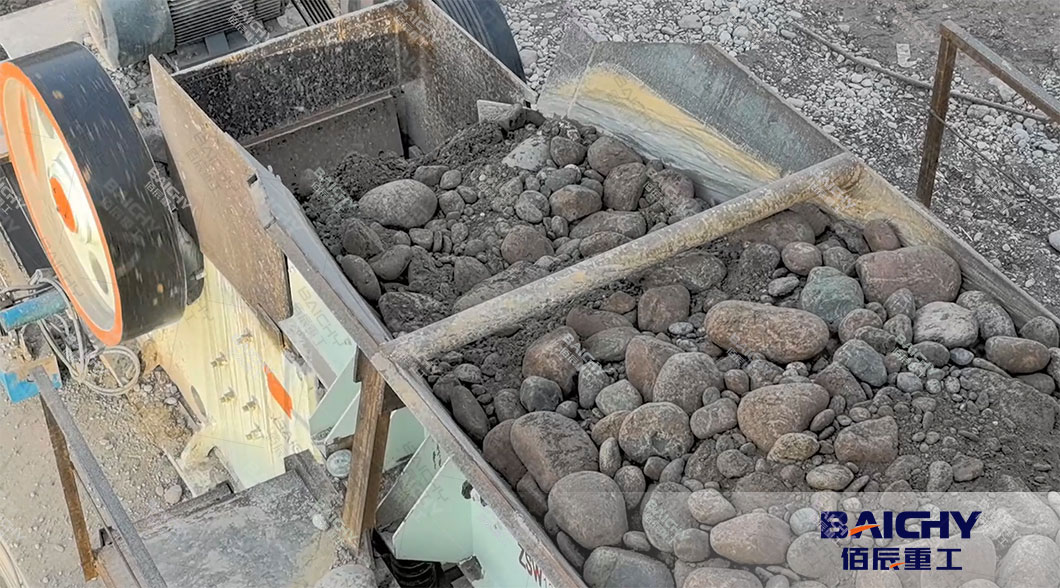
The raw material, processed at a rate of 250–300 t/h, first enters the primary crushing stage. The objective here is to break up cemented clusters within the sand-gravel mixture, facilitating the effective liberation of clay and silt during subsequent screening and washing phases. Following primary crushing, the material is fed into a two-deck vibrating screen, which serves as the critical junction in the overall process:
Material passing through the screens (undersize): 0–4 mm natural sand and 4–16 mm natural gravel are directed to a sand washer, resulting in clean, natural final products.
Material retained on the screens (oversize): Fractions larger than 16 mm are sent to a secondary crushing system. The crushed material then undergoes washing and classification to produce manufactured sand and crushed aggregates. The key to this design lies in processing natural aggregates and crushed aggregates separately—or via dedicated washing lines—during the water-washing stage. This prevents fine silt present in natural sand from compromising the cleanliness of manufactured sand, while also allowing for the adjustment of washing intensity based on the specific silt content of each material type.
2.2 Natural Aggregate Washing Line
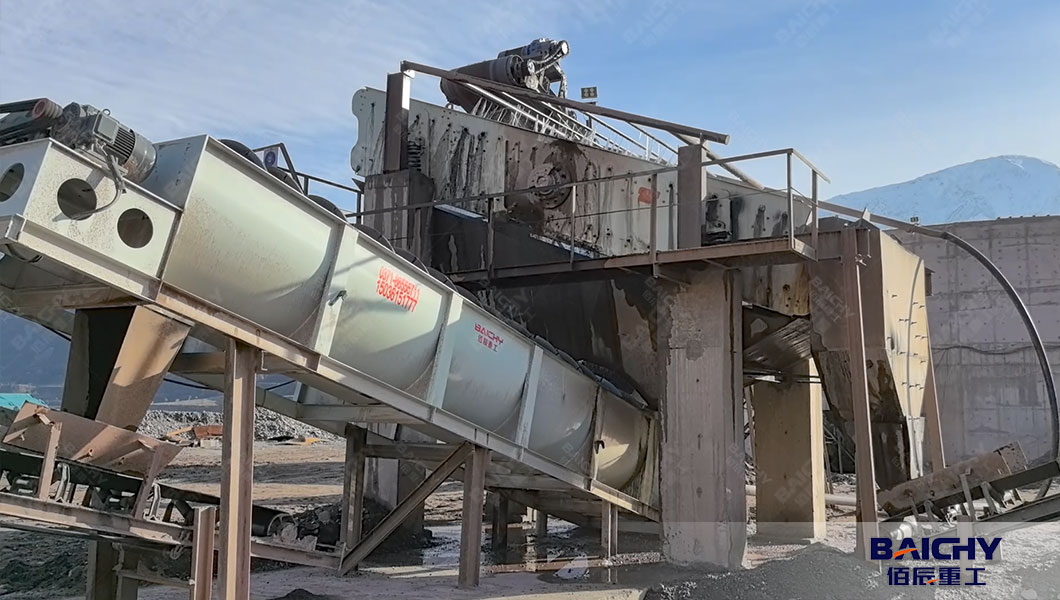
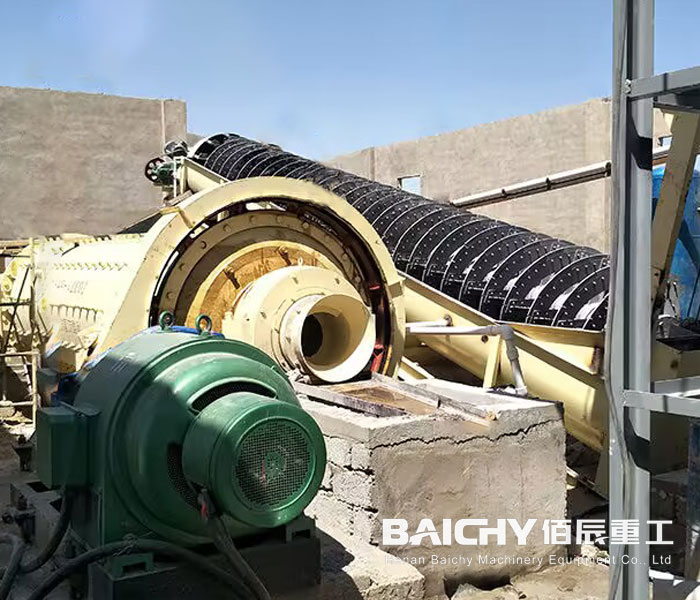
Natural sand (0–4 mm) and natural gravel (4–16 mm), discharged from the lower deck of a two-layer screen, are fed into a sand-washing machine. Given that the raw material may contain up to 12% silt/fine particles, the selected washing equipment must be capable of handling high silt loads. For 4–16 mm natural gravel, either a spiral washer or a bucket-wheel washer is suitable; the primary objective is to remove clay films adhering to the gravel surfaces. For 0–4 mm natural sand, a bucket-wheel washer combined with a fine-sand recovery unit is recommended to ensure effective cleaning while minimizing the loss of fine particles.
The products from the natural aggregate line—"washed natural sand" and "washed natural gravel"—typically command a higher market value than equivalent crushed aggregates; therefore, controlling material loss during the washing process is particularly critical.
2.3 Crushed Aggregate Washing Line
Material larger than 16 mm proceeds to secondary crushing. Depending on the lithological characteristics of the gravel deposit (typically consisting of river pebbles, granite, or basalt), the choice of crushing equipment may vary: a cone crusher is a safer, more robust option for highly abrasive gravel, whereas an impact crusher or a vertical shaft impact (VSI) crusher is better suited for materials of medium hardness where superior particle shape is required. Following crushing, the material enters a washing and classification stage, yielding three product specifications:
0–4 mm washed manufactured sand: The fine fraction resulting from crushing is processed through a sand-washing machine to ensure that silt and stone-dust content remain within the standards for construction-grade sand.
4–8 mm and 8–16 mm washed crushed aggregates: After screening, these fractions are fed into gravel-washing equipment to ensure that the surfaces of the particles are clean. When configuring washing equipment for a crushed aggregate production line, one detail warrants special attention: manufactured sand (crushed sand) tends to have a more angular shape, making it more difficult to detach fine particles during the washing process compared to natural sand. Consequently, the sand-washing machine should allow for adjustments in both immersion time and agitation intensity to accommodate fluctuations in the clay/silt content of the crushed product, which may vary depending on the specific mineral stratum being mined.
2.4 Considerations for Water Treatment and Fine Sand Recovery
A clay and silt content of 5%–12% implies a significant load of suspended solids in the wash water. The system design should incorporate a fine sand recovery unit to capture fine particles that would otherwise be lost in the wastewater; this not only reduces resource waste but also alleviates the burden on downstream wastewater treatment systems. When processing material from strata with high clay content, the wash-water circulation system must provide sufficient settling and clarification capacity to prevent high turbidity in the circulating water, which could otherwise compromise the washing efficiency. Although this component does not directly yield a final product, it serves as the fundamental safeguard ensuring that the entire production line can consistently meet cleanliness standards.
III. Equipment Configuration Summary and Selection Rationale
Separate washing line from manufactured sand to avoid cross-contamination
Manufactured sand washing
XL1120-7.5 Spiral Sand Washer
40–120 t/h, 18.5 kW
Independent adjustment of washing intensity
Gravel/aggregate washing
XL1500-9 / XL1120-7.5
100–170 / 40–120 t/h
Configured separately for natural and crushed aggregates
Fine sand recovery
HX350 / HX500
100–150 m³/h
Recovers fine particles, reduces water treatment load
The parameter table above serves as a reference for preliminary equipment selection. During the final design phase, Baichy will verify and adjust the specific equipment models and quantities based on client-provided data—including the distribution of gravel content across various mineral layers, lithological analysis reports for the gravel, and the required cleanliness standards for the final product. For a multi-layer deposit spanning 141 hectares, where gravel content may fluctuate significantly, key engineering measures—such as installing a buffer hopper at the primary crushing feed stage and incorporating provisions to adjust washing intensity during the sand-washing process—are essential to ensure the stable production of clean, high-quality material, even when raw material conditions vary.
IV. Key Equipment Configuration and Integration Advantages
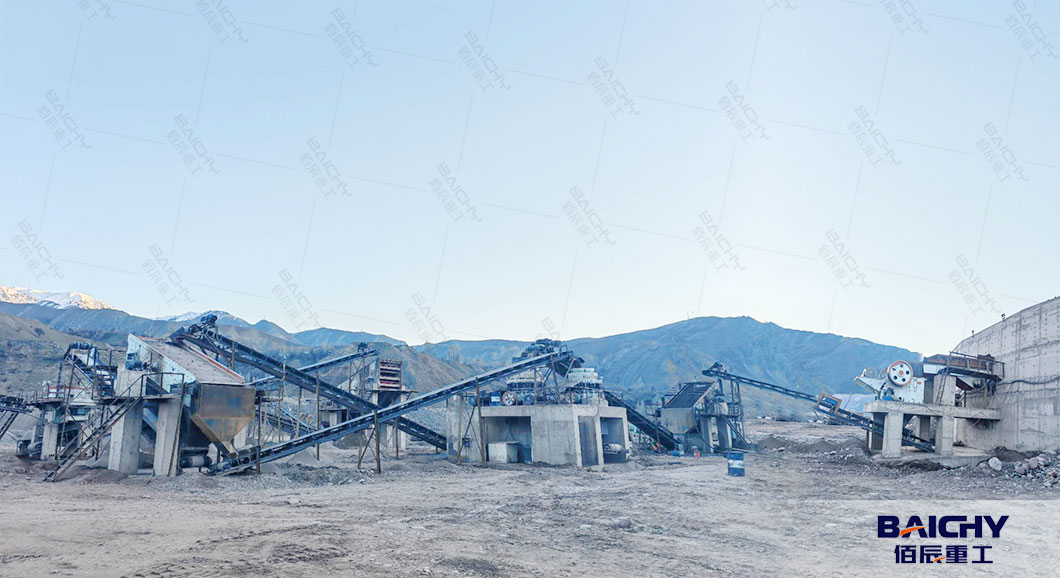
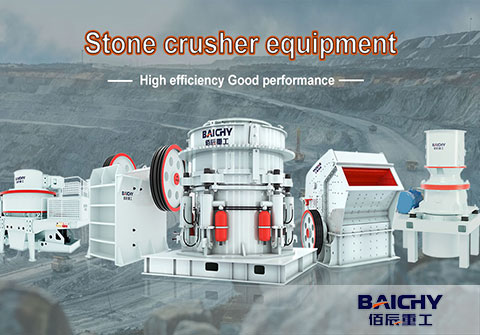
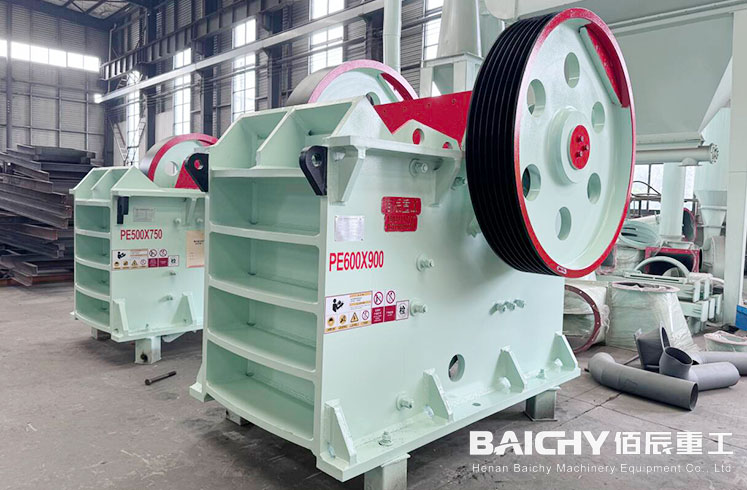
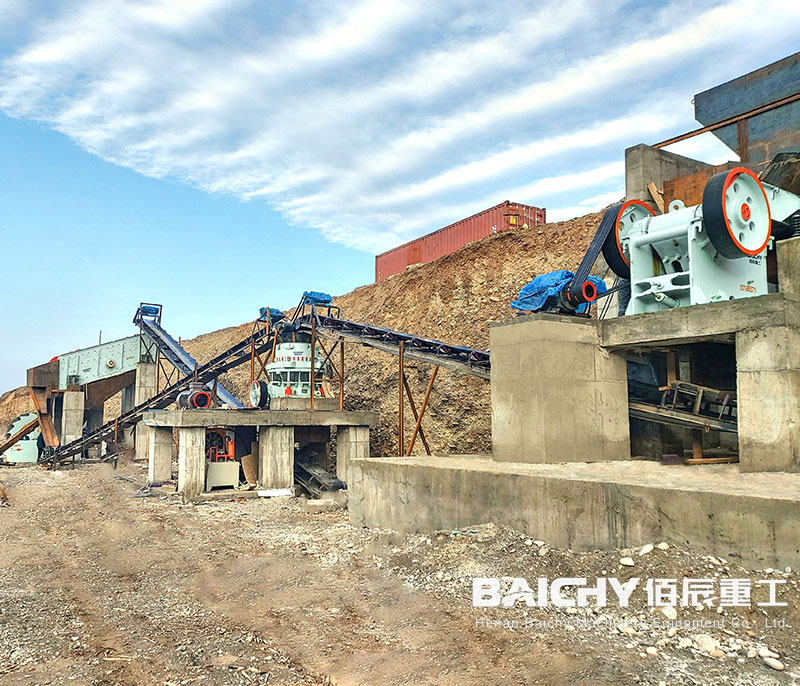
Baichy possesses a mature product portfolio for integrated stationary crushing, screening, and washing systems, with jaw crushers, cone crushers, impact crushers, vibrating screens, and sand/stone washing equipment all capable of being incorporated into a unified design. For this specific project, the proposed solution highlights the following integration advantages:
1. A compact interface between primary crushing and screening. Given that the raw material contains clay and fluctuating levels of gravel, the chute design connecting the primary crusher discharge to the double-deck screen must be engineered to prevent clogging by wet, sticky material. Furthermore, the use of anti-clogging polyurethane screen panels is recommended.
2. Independent start-stop capability for the natural aggregate and crushed aggregate washing lines. In scenarios where a specific mineral stratum has an exceptionally high natural sand and gravel content—obviating the need for the crushing system to operate at full capacity—the crushed aggregate washing line can be throttled down or paused, while the natural aggregate line continues to operate. This flexibility offers significant operational value for mining across multiple strata within a 141-hectare deposit.
3. Cconsistent control over the cleanliness of the final products. Whether dealing with natural or crushed aggregates, the washed final products must pass through a final inspection screen before reaching the storage yard; any oversized particles or those with excessive silt content are routed back to the appropriate processing stage. All finished products meet the delivery standards for "washed aggregates," ensuring that customers do not need to distinguish between natural and crushed materials during the sales process.
VI. Summary of Solution Applicability
Tailored to the specific raw material conditions of a client in Brazil, this solution utilizes a process framework—"crushing all feed material before screening, with separate washing lines for natural and crushed materials"—to achieve a stable output of five distinct types of clean aggregates at a capacity of 250–300 t/h. For sand and gravel deposits characterized by significant fluctuations in gravel content and moderate silt levels, the strength of this integrated approach lies not in the performance limits of individual machines, but in the flexibility of the overall process: the washing system can intensify cleaning when silt content is high, the crushing line can dynamically adjust its load when gravel content is low, and both natural and manufactured aggregates maintain independent quality control channels. Baichy’s extensive engineering experience with stationary crushing and screening plant solutions ensures comprehensive support for the project, from process design through to equipment commissioning.
Contact Baichy Machinery to discuss your raw material characteristics and target product sizes. Our engineering team can develop a project-specific process flow and equipment proposal for your sand and gravel washing project.
Not sure which machine fits your material?
Our engineers can analyze your raw stone size, hardness, and output requirements to design the perfect crushing line for you.




 2026-10-28






 86-15093113821
 86-15093113821