For crushing line operators, the most difficult trade-off is rarely "can it crush?" but "it crushes too much." When your target product is 3–10 mm aggregate and the 0–3 mm fines are treated as worthless waste, the core logic of equipment selection must shift from "pursuing a high reduction ratio" to "precisely controlling the upper particle size limit." Under the working conditions of 10–50 mm feed and 100–120 t/h capacity, the smooth double roller crusher is the most suitable solution in current industrial practice for minimizing over-crushing while maintaining output in the target range. Its value lies not in "smashing" the material, but in "cracking" it through controlled compression.
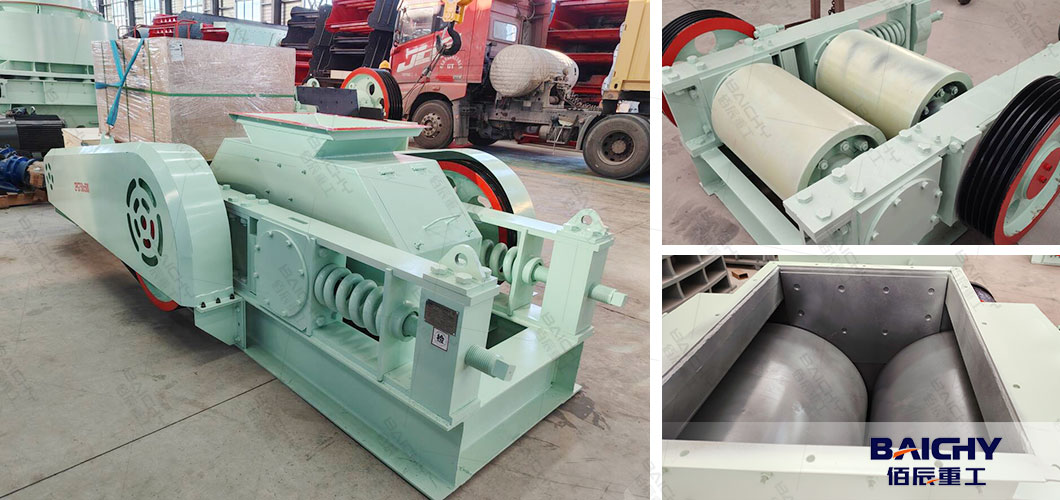
smooth double roller crusher
Why Impact Crushers Are the Wrong Choice Here
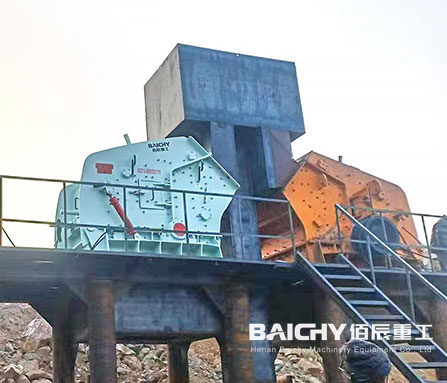
To understand the advantage of the smooth double roller crusher, we first need to see the inherent drawback of impact crushers or hammer crushers. Impact crushers rely on high-speed rotating hammers or blow bars to shatter material. They offer a high reduction ratio and good particle shape, but the price is a consistently high fines generation rate. Industry data shows that the fine powder proportion produced by impact crushers in tertiary and subsequent crushing stages can reach as high as 40%. For a 10–50 mm feed, using an impact crusher to obtain 3–10 mm product means a large amount of material will be reduced to micro-fines below 3 mm under high-speed impact—directly pushing up the waste rate and eating into profit.
The smooth double roller crusher takes a completely different path. After material enters the gap between the two rolls, it is subjected to pure compressive force rather than impact. The two counter-rotating smooth roll surfaces "bite" the material in and crush it by squeezing, and the crushed product falls naturally through the roll gap. This low-speed, high-pressure, low-impact action mechanism naturally suppresses excessive fines generation.
Is a Smooth Double Roller Crusher Guaranteed to Minimize Fines?
No crushing machine can guarantee zero fines when processing real-world materials. Some particles may naturally break into sizes below 3 mm because of their original size, internal fractures, moisture conditions, or mechanical properties. For double roller crusher, it has below advantages:
1. Controlled Crushing and Reduced Over-Crushing
Compared with impact-based crushing methods, a smooth double roller crusher relies primarily on compression rather than repeated high-energy impacts.
For suitable materials, this can help limit excessive particle breakage and reduce the generation of unwanted fines. However, the actual reduction in the 0–3 mm fraction depends on material properties, roll gap, roll speed, and feed conditions.
2. Adjustable Discharge Size
The roll gap is one of the main factors affecting the discharge size. A properly selected and adjusted gap helps the operator control the crushing process and work toward the required 3–10 mm product range.
Because the feed contains particles from 10 mm to 50 mm, the crusher must be configured according to the actual feed distribution. A single gap setting does not automatically guarantee that every discharged particle will fall between 3 mm and 10 mm.
A screening test and, where necessary, a closed-circuit arrangement can help improve product-size control.
3. Suitable for High-Volume Production
For a target throughput of 100–120 TPH, the crusher must be selected based on the material's crushability, bulk density, maximum feed size, and required product grading.
The nominal capacity alone is not enough. The selected model should demonstrate that it can maintain the required throughput without creating an unacceptable proportion of fines.
Before confirming the model, Baichy Machinery recommends evaluating:
-
Material type, hardness, and abrasiveness.
-
Feed-size distribution within the 10–50 mm range.
-
Moisture content and the presence of clay or sticky material.
-
Required percentage of 3–10 mm product.
-
Available installation space, power supply, and downstream screening equipment.
A material sample test or a review of representative operating data can provide a more reliable basis for equipment selection.
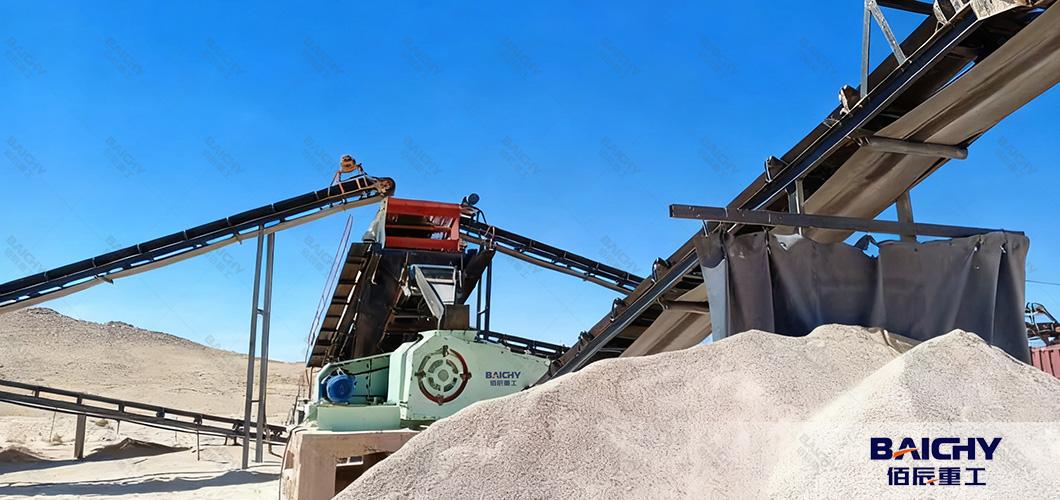
Roller crusher for sand-making
A common selection pitfall is treating all double roller crushers as one and the same. In reality, the roll surface profile determines how the machine behaves. Toothed roller crushers rely on the splitting and shearing action of teeth—stronger crushing capability, but a higher tendency to generate fines. The smooth roll surface is designed specifically to achieve "gentle" size reduction in secondary and fine crushing stages. For your 10–50 mm feed and 3–10 mm output requirement, a smooth roll surface can, while maintaining capacity, set the roll gap near the upper limit of the target size, allowing most material to pass through in a single pass at the required size—reducing secondary pulverization caused by circulating loads.
In terms of equipment parameters, smooth double roller crushers have mature models covering the medium capacity range. For example, the 2PG-900×500 model has a maximum feed size of 40 mm, an adjustable output range of 3–40 mm, and a capacity of 60–125 t/h—falling exactly within your 100–120 t/h target range. This means you don't need to oversize the equipment to match your capacity requirement, while retaining flexibility in roll gap adjustment.
Three Operating Points to Drive the Waste Rate to a Minimum
Choosing the right equipment is only the first step—process configuration also determines the final fines ratio.
1. Set the roll gap based on the upper target limit. Since 3–10 mm is the target range, the roll gap should be set near 8–10 mm, not 3 mm. The crushing characteristics of smooth rolls produce a relatively concentrated product size distribution. The closer the roll gap is to the upper target limit, the higher the one-pass qualification rate, the lower the circulating load, and the lower the fines—naturally.
2. Pre-screen to remove native fines before feeding. The 10–50 mm feed will inevitably contain some material below 3 mm. If this fines portion is not screened out before entering the double roller crusher, it will mix directly into the product and create a "cushioning" effect in the crushing chamber, reducing crushing efficiency and forcing the operator to tighten the roll gap to compensate—ironically increasing the risk of over-crushing. The cost of a pre-screening step is far lower than the loss caused by fines waste.
3. Feed evenly across the roll width to avoid localized overload. A smooth double roller crusher requires material to be distributed evenly along the full length of the roll surface. If feed is concentrated on one side, it will cause uneven localized roll wear, while the actual throughput on the other side of the roll gap will be insufficient—leading to reduced overall capacity and fluctuating particle size. Configuring a feeder with a matching width to ensure material enters the roll gap in a thin, evenly spread layer is the fundamental condition for maintaining a stable, low fines rate.
Parameters to Confirm with the Supplier During Selection
When finalizing the model, it is recommended to verify the following:
| Item to Verify |
Recommended Requirement |
| Roll surface material and hardness |
Prefer high-manganese steel or wear-resistant alloy roll surfaces; the wear uniformity of smooth rolls directly affects roll gap stability |
| Roll gap adjustment method |
Shim-type adjustment has limited precision; wedge or hydraulic adjustment is better for precisely controlling the 8–10 mm range |
| Actual capacity calibration |
Require the supplier to provide measured capacity data for the same model with similar material (hardness, size distribution), not theoretical values |
| Overload protection |
Confirm that the spring or hydraulic retraction device is sensitive and reliable, to prevent roll surface damage when uncrushable material enters |
Contact Baichy Machinery to discuss your material and production targets. Share the material type, hardness, moisture content, and acceptable fines percentage, and our team can help evaluate a suitable crushing solution for your existing production line.




 2026-10-27






 86-15093113821
 86-15093113821