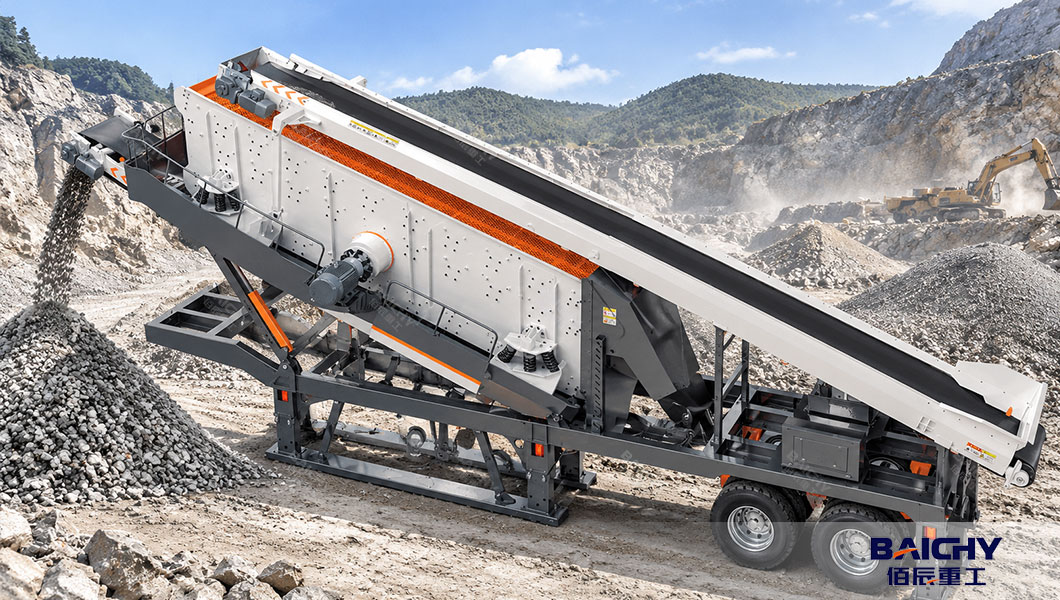
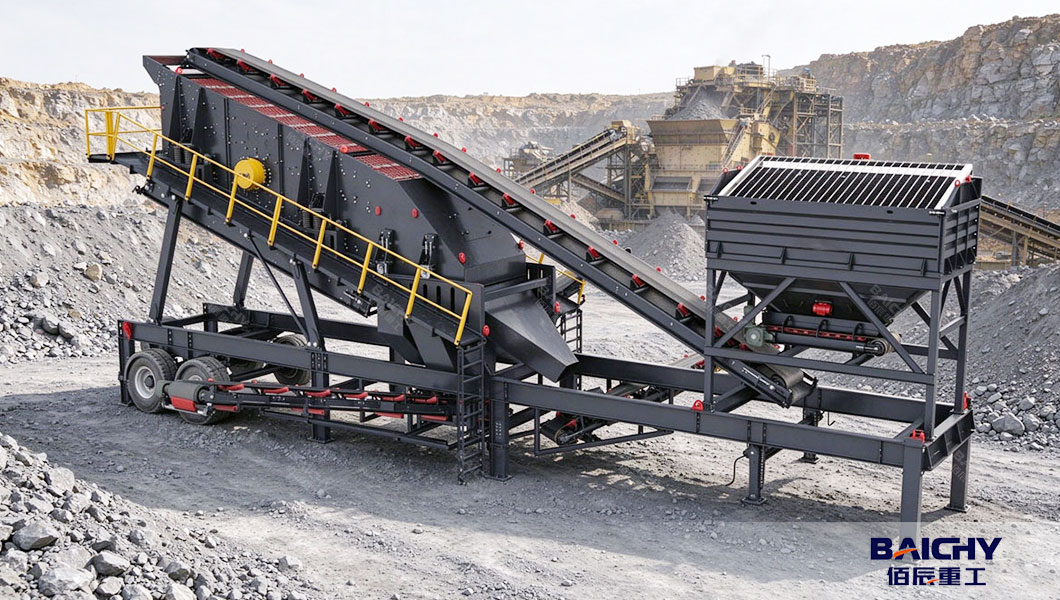
A wheel-type mobile screening plant is a portable screening system designed to separate bulk materials into different sizes. Mounted on a wheeled chassis, it can be moved between suitable job sites and integrated into crushing and screening operations. Compared with a fixed screening plant, a wheel-mounted unit can reduce the need for permanent foundations and make relocation between projects more convenient. It is commonly considered for aggregate production, quarry operations, construction waste recycling, and temporary screening jobs. However, mobility alone does not determine whether a plant is suitable. Material characteristics, required output sizes, processing capacity, and site access all affect equipment selection.
How Does a Wheel-Type Mobile Screening Plant Work?
The screening process typically follows four steps:
-
Feeding: A feeder or loading equipment delivers material to the screening system.
-
Screening: A vibrating screen separates the feed according to the installed screen mesh sizes.
-
Discharge: Conveyors or discharge chutes direct separated materials into different stockpiles.
-
Relocation: The chassis is prepared for transport to another suitable site when the job is completed.
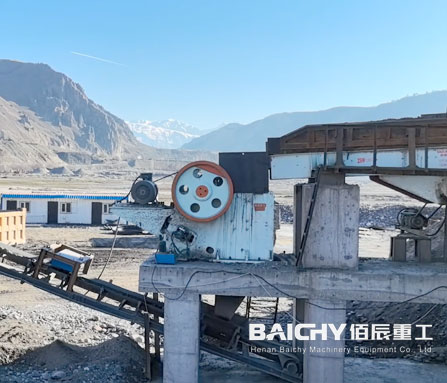
For a crushing and screening operation, the mobile screen can work with a separate crusher. Oversized material may return to the crusher for further size reduction if the circuit is designed for closed-circuit operation.
The exact configuration depends on the material, target product sizes, and whether the project requires screening alone or a complete crushing and screening line.
5 Practical Advantages of a Wheel-Type Mobile Screening Plant
1. Easier Relocation Between Job Sites
A wheeled chassis is useful for contractors who need to move screening equipment between projects. When transport access is suitable, the plant can be relocated without dismantling an entire fixed screening structure.
Before choosing this design, check towing requirements, transport dimensions, road restrictions, and the preparation needed at each site.
2. Less Permanent Site Infrastructure
A mobile screening plant can reduce the need for permanent foundations and fixed conveyor structures. This is particularly useful for temporary aggregate production, short-term construction projects, and operations where the processing location changes.
The actual installation requirements still depend on the machine design and ground conditions.
3. Flexible Material Screening
With suitable screen decks and mesh sizes, a mobile screening plant can separate materials such as crushed stone, gravel, sand mixtures, and selected construction waste.
Screening performance depends on feed gradation, moisture content, particle shape, screen area, and the required separation sizes. Wet or sticky materials may need additional consideration because they can block screen openings.
4. Integration with Existing Crushing Equipment
A wheel-mounted screen can be incorporated into an existing crushing line when its capacity and discharge arrangement match the upstream crusher.
For example, a quarry producing several aggregate sizes may use a mobile screen to separate crushed material into saleable fractions. If the screen cannot handle the crusher's output, however, material may accumulate and restrict overall plant production.
Always evaluate the complete processing circuit rather than selecting the screen based on capacity alone.
5. Practical for Temporary and Multi-Site Projects
Contractors working on road construction, infrastructure projects, or temporary aggregate production may benefit from equipment that can be moved as project requirements change.
The financial benefit depends on relocation frequency, transport costs, setup time, labor, and equipment utilization. A mobile plant is not automatically cheaper than a stationary system for every operation.

What Are the Limitations of a Wheel-Type Mobile Screen Plant?
Wheel-type screening equipment also has limitations that buyers should consider.
● Transport and access: The plant needs suitable transport arrangements and sufficient access space. Narrow roads, weight restrictions, and difficult site entrances may create logistical problems.
● Ground conditions: The machine must be positioned on suitable ground according to its installation requirements. A wheeled chassis does not eliminate the need for stable positioning.
● Screening capacity: Production depends on the screen's effective area, feed characteristics, screen configuration, and required separation efficiency. A mobile unit may not be the right choice for every high-volume application.
● Material moisture: Wet, clay-rich, or sticky feed can reduce screening efficiency and cause mesh blockage. Material testing and appropriate screen selection can help identify potential problems before purchase.
● Process complexity: Some projects require several screening stages, multiple conveyors, or a recirculating crushing circuit. A single mobile screen may not provide the complete solution.
Wheel-Type vs. Tracked Mobile Screening Plant
Both designs provide mobility, but they suit different working conditions.
| Comparison |
Wheel-Type Screen |
Tracked Screen |
| Relocation |
Suitable when towing and transport access are available |
Can move around the job site using its crawler system |
| Working terrain |
Requires suitable access and positioning conditions |
Often more practical on uneven job-site terrain, within machine limits |
| Transport |
Requires appropriate towing or transport arrangements |
Transport requirements depend on machine size and road regulations |
| Typical use |
Contractors moving between accessible sites |
Quarries, construction sites, and operations requiring on-site mobility |
| Main selection factor |
Transport logistics and site access |
Terrain, on-site movement, and operating conditions |
Which one should you choose? Consider a wheel-type plant when regular relocation between accessible sites is important. Consider a tracked plant when frequent movement around uneven working areas is a major requirement.
Neither design is universally better. Compare the actual machine specifications, transport costs, and site conditions before making a decision.
Wheel-Type Mobile Screening Plant for Bluestone Aggregate
A wheel-type mobile screening plant can help aggregate producers separate crushed bluestone into different commercial sizes. In a typical quarry operation, the screen receives crushed material from a jaw crusher or impact crusher and separates it into the required size fractions, such as 0–5 mm, 5–10 mm, and 10–20 mm, depending on local market demand.
For efficient bluestone screening, match the screen mesh sizes to the target products and ensure the feed rate stays within the plant's capacity. Feeding too much material can reduce screening efficiency and cause finished products to mix.
Before operation, check that the plant is positioned on stable ground, the conveyors are correctly aligned, and the screen meshes are suitable for the feed. Monitor material buildup and moisture, as damp or clay-rich bluestone can block screen openings.
A wheel-mounted design is particularly useful when the screening plant needs to move between accessible working areas or different aggregate projects. However, confirm transport access, setup requirements, and ground conditions before selecting the equipment.
For quarry operators, the key is not simply to screen more material, but to produce consistent aggregate sizes with minimal re-screening and unnecessary handling.
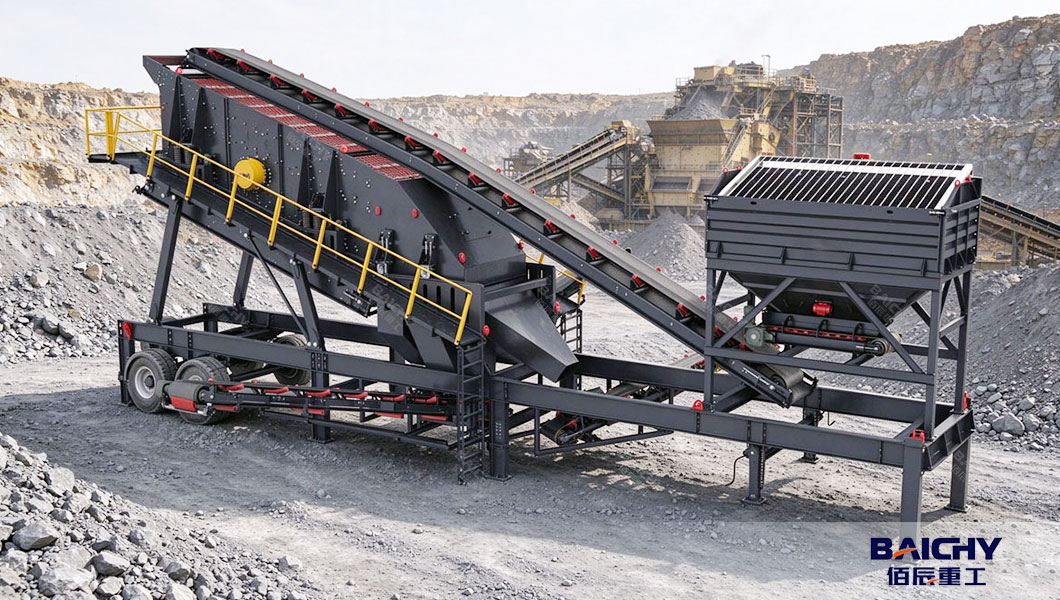
A wheel-type mobile screening plant is worth considering when a project needs flexible screening, convenient relocation, and less permanent site infrastructure. Its suitability depends on feed characteristics, required product sizes, production targets, and transport conditions.
Before purchasing, compare wheel-mounted and tracked designs and confirm that the selected screen can handle the expected feed and deliver the required products. A well-matched screening system can help reduce bottlenecks and make aggregate production easier to manage. Baichy Machinery provides crushing and screening equipment for aggregate production and mineral processing. Buyers can use their project requirements to request a suitable equipment configuration rather than choosing a machine based on price or mobility alone.
Frequently Asked Questions
1. What materials can a wheel-type mobile screening plant process?
Depending on its configuration, it can screen crushed stone, gravel, sand mixtures, and selected construction and demolition materials. Feed size, moisture, particle shape, and screen mesh selection affect performance.
2. Does a mobile screening plant need a separate crusher?
Not always. A mobile screen can process material that is already within the required feed-size range. If oversized rock needs further reduction, a separate crusher or an integrated crushing and screening system may be necessary.
3. How do I choose the right screen mesh size?
Start with the required final product sizes and the feed gradation. The mesh opening, wire or panel design, screen inclination, and material characteristics all influence separation performance. Trial screening may be necessary for difficult materials.
4. Is a wheel-type mobile screening plant suitable for wet materials?
It can be suitable for some wet-material applications, but sticky feed and high moisture content can cause blinding or blockage. Evaluate the material before selecting the screen and consider whether additional washing or specialized screening equipment is needed.
5. Is a mobile screening plant cheaper than a stationary plant?
It depends on project duration, transport frequency, installation costs, labor, and expected production. Mobile equipment may reduce permanent infrastructure requirements, while a stationary plant may be more economical for a long-term, high-volume operation.




 2026-10-30







 86-15093113821
 86-15093113821