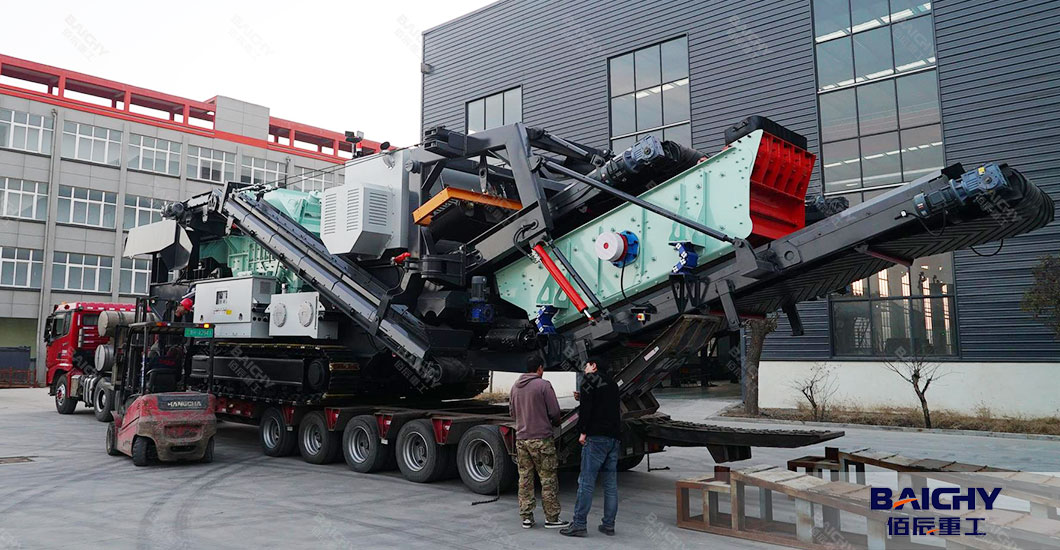
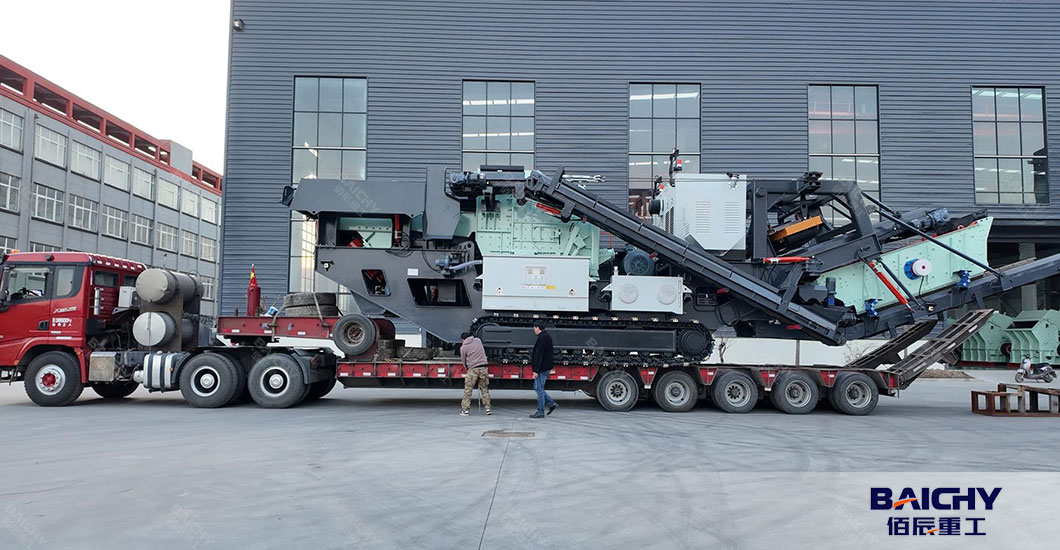
Due to its large size, high weight and special structure, the export shipment of a crawler mobile cushing plant is a complex process that requires professional planning and operation. Recently, we successfully exported a crawler crushing and screening station to the Philippines. The following are the detailed steps and key points to note for the entire export process of this shipment:
I. Preparations Before Export (Most Crucial)
1-1 Product Status Confirmation:
● Transportation Status: Determine whether to transport as a whole or disassemble and transport in modules. This depends on the equipment's size, weight, and the loading and unloading capabilities of the destination port. We are using whole transportation for this crawler mobile station.
● Dimensions and Weight: Accurately measure the length, width, height, and weight of all goods (either as a whole or in modules). This is the basis for all subsequent logistics plans.
● Center of Gravity and Lifting Points: Clearly mark the center of gravity and standard lifting points of each module to ensure safe loading and unloading.
● Detachable Components: Usually, the tracks (or some of the idler wheels), conveyor belts, high discharge ports, and long boom arms are disassembled and packaged separately to reduce transportation height and volume.
1-2 Packaging and Protection:
● Sturdy Base: The main body of the equipment must be fixed on a specially designed heavy-duty transport base (sliding shoes) or pallet for easy rolling or hoisting.
● Waterproof and Rustproof: Electrical cabinets, hydraulic interfaces, and precision components should be wrapped with waterproof materials (oiled paper, plastic film, waterproof cloth, etc.). Exposed metal parts should be coated with anti-rust grease.
● Clear Markings: Hang international standard labels such as "Center of Gravity", "Lifting Point", "Fragile", "This Side Up". The shipping mark information (consignee, destination port, item number, etc.) must be clear and firmly attached.
● Accessories in Boxes: Disassembled parts, tools, spare parts, and manuals should be packed in wooden boxes with inner padding for fixation. Detailed lists should be affixed to the box surfaces.
1-3 Document Preparation:
● Commercial invoice, packing list, foreign trade contract.
● Technical parameters of equipment, photos, drawings (for logistics plan design and customs clearance in some countries).
● Certificate of origin, quality inspection report, etc.
● Maritime bill of lading, goods transportation condition appraisal certificate (proving non-hazardous goods).
II. Mode of Transportation Selection
Based on the equipment size and destination, the following two modes are mainly selected:
2-1 Roll-on/Roll-off ship transportation (preferred):
● Applicable: Ideal for the transportation of entire units or large modules. Tracked equipment can drive onto or off of roll-on/roll-off ships either on its own or with the aid of flatbed trucks.
● Advantages: High loading and unloading efficiency, minimal restrictions on cargo size, capable of bearing greater weight, and less damage from cargo vibration.
Process: The equipment drives onto the roll-on/roll-off ship via a tailboard or gangplank and is secured in an international standard parking space or a designated area on the deck.
2-2 Container ship transportation:
Applicable: When fully disassembled into modules within standard container dimensions or for loading accessory boxes.
● Options:
○ 40-foot high cube container: Suitable for smaller mobile stations or main modules.
○ 40-foot open top container: Facilitates top loading with cranes.
● Frame container: No roof or side walls, suitable for super-wide and super-high heavy modules that cannot be rolled on.
● Disadvantages: High costs for disassembly and assembly, and fixed internal space.
2-3 General cargo vessel / heavy lift vessel transportation:
● Applicable: Extra-large, indivisible modules, or project cargo, engineering logistics.
● Method: Equipment is hoisted onto the vessel's deck or cargo hold and requires professional lashing and securing.
III. Core Operating Procedures
3-1 Entrust Professional Freight Forwarders:
● It is strongly recommended to seek out professional international freight forwarders with experience in "major project logistics" or "construction machinery exports". They can offer end-to-end solutions.
● Logistics solution design: The freight forwarder plans the optimal transportation route (port of departure, port of destination), mode of transportation, and shipping schedule based on your cargo data.
● Design detailed loading and unloading plans (including the tonnage of cranes and flatbed trucks to be used) and binding and reinforcement plans.
● Calculate all expenses (ocean freight, terminal charges, document fees, insurance premiums, etc.).
3-2 Inland transportation:
● The equipment will be transported from the factory to the port terminal by heavy-duty low-bed transporters.
● It is necessary to apply for an oversize transportation permit from the traffic management department in advance, and it may be necessary to arrange a pilot vehicle.
3-3 Port operations:
● Before loading: Complete the export customs declaration (usually handled by a freight forwarder or customs broker).
● Loading: At the wharf, the equipment is hoisted onto the ship by a huge quay crane or ship crane, or it is rolled onto the ship by itself.
● Securing and reinforcement: The ship's crew or professional workers firmly fix the equipment to the deck with steel wire ropes, chains, and deck bells, etc., to prevent it from shifting due to the sea's turbulence.
3-4 Maritime Transport and Insurance:
● Purchase All Risks coverage for sea transportation and consider adding War Risk and Strike Risk, etc. Insurance is of vital importance for high-value equipment.
● Destination Port Clearance and Delivery:
● The freight forwarder's destination port partner assists the consignee in handling customs clearance and paying taxes and fees (such as customs duties and value-added tax).
● Arrange for unloading from the ship and inland transportation to the final construction site.
● Provide destination unpacking, positioning and assembly services (DAP/DPU terms).
IV. Key Considerations and Challenges
● Regulatory Compliance: Strictly adhere to the export regulations of China and the import regulations of the destination country. Some countries have specific requirements for used mechanical and electrical products, environmental protection, and safety, which need to be confirmed in advance.
● Lashing and reinforcement: With large waves and strong winds at sea, professional lashing is the lifeline for a safe arrival.
● Port capacity: Confirm whether the port of departure and the port of destination have the corresponding lifting capacity, roll-on/roll-off facilities or heavy-duty berths.
● Time reservation: The entire process is complex and sufficient time should be reserved (usually from stocking up to delivery takes 1 to 3 months or even longer).
● Costs: In addition to the basic freight charges, the costs for oversized transportation, special hoisting, port miscellaneous fees, insurance, etc. may be very high and require detailed budgeting.
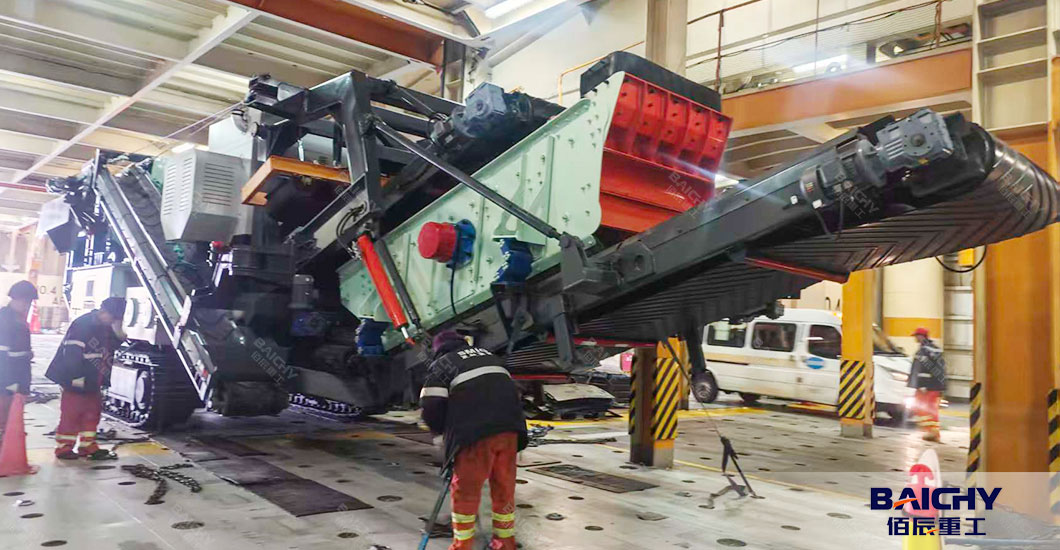
Our crawler-mounted crushing and screening station has now arrived at the customer's port. The above is our operation process and precautions for this export of heavy, non-disassemblable goods. If you want to know more about the price of crawler-mounted mobile equipment and freight details, please click on "Contact Us", and we will provide you with a more professional solution.




 2026-09-09






 86-15093113821
 86-15093113821