Home About us
Products
News
Solution
Video Service Contact us
Home  /  News

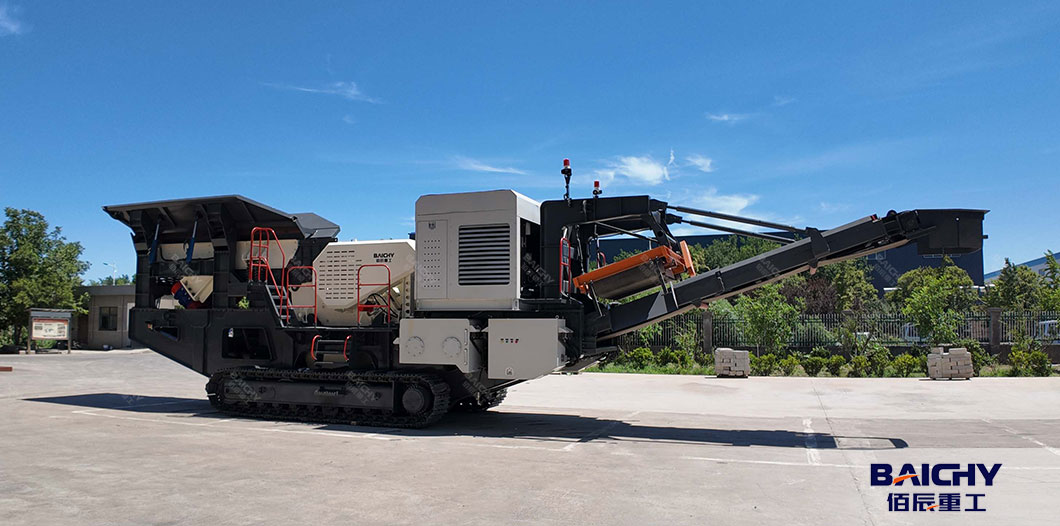
A tracked jaw crusher is a mobile primary crushing machine that combines a jaw crusher (for coarse crushing) with a crawler (tracked) chassis. It’s designed to crush large raw materials (rock, construction waste, ore) directly at job sites—eliminating the need for fixed crushing plants and reducing material transportation costs.


What-is-Tracked-Jaw-Crusher-01.jpg


Core Components & How It Works

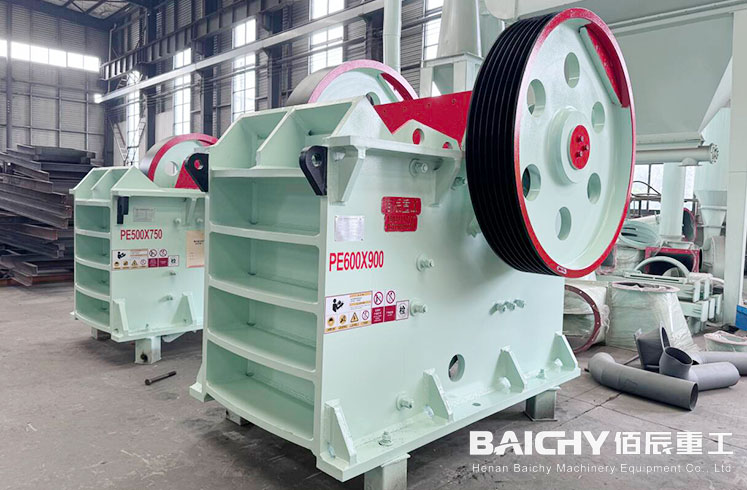
Jaw Crusher Unit: The core crushing component with two jaws (one fixed, one moving). It uses compressive force to break down large materials (max feed size up to 500mm) into 100–150mm coarse aggregates.
● Crawler Chassis: Equipped with heavy-duty rubber tracks (instead of wheels) for mobility. It can navigate rough terrain (quarries, construction sites, mines) and access remote areas.
● Auxiliary Systems: Includes a vibrating feeder (to regulate material flow), conveyor belt (to transport crushed material), diesel engine (for power supply), and hydraulic system (to adjust the crusher’s discharge gap).


Key Features

● Mobility: Tracks enable movement on uneven ground, mud, or gravel—no need for concrete foundations.
● Versatility: Crushes hard/soft materials (granite, limestone, concrete debris, ore) for construction aggregates, mining, or waste recycling.
● Compact Design: Integrates crushing, feeding, and conveying functions in one unit—saves space and setup time.
● Easy Operation: Equipped with a control panel for adjusting crusher settings, starting/stopping, and monitoring performance.


Advantages Over Fixed Jaw Crushers

● On-Site Crushing: Reduces transportation costs (no need to haul raw materials to fixed plants).
● Quick Deployment: Can be moved and set up in hours, ideal for temporary projects (road construction, demolition).
● Flexibility: Adapts to changing job sites and material types without major modifications.
● Reduced Downtime: Tracks distribute weight evenly, minimizing damage to job sites and improving stability during operation.


Typical Applications

● Quarrying: Crushing large rock into coarse aggregates for concrete/asphalt.
● Construction Waste Recycling: Processing demolished concrete, bricks, or asphalt into reusable materials.
● Mining: Primary crushing of ore (gold, iron, copper) at mine sites.
● Infrastructure Projects: On-site crushing for highways, bridges, or building foundations.


Want a detailed specification sheet for popular tracked jaw crusher models (e.g., 50tph, 100tph capacity) or a comparison of top brands? We can compile key parameters like feed size, capacity, power, and weight to help you choose the right one.  Click here now to get your crushing plant solution and price list.


People Also Frequently Asked For - FAQ

1. What is the world's largest jaw crusher?

The Jonsson L160 Jaw Crusher is one of the world's largest crushing plants, weighing in at 185 tonnes.


2. How to choose the right mobile crusher?

●Power Source. 
●Throughput (Tons Per Hour) of Compact Crushers.
●Input Size, Output Size & Jaw Adjustability.
●Availability of Spare Parts - Choose Machinery Partner for Exceptional Service and Support.


3. What crusher is best for hard rock?

Many rock quarries crush hard rock. In these applications we highly recommend a jaw crusher as the primary crusher, which reduces the rock down to 3-4”, and then a cone crusher as the secondary crusher to further reduce down to the desired size.


Maybe you are interested in