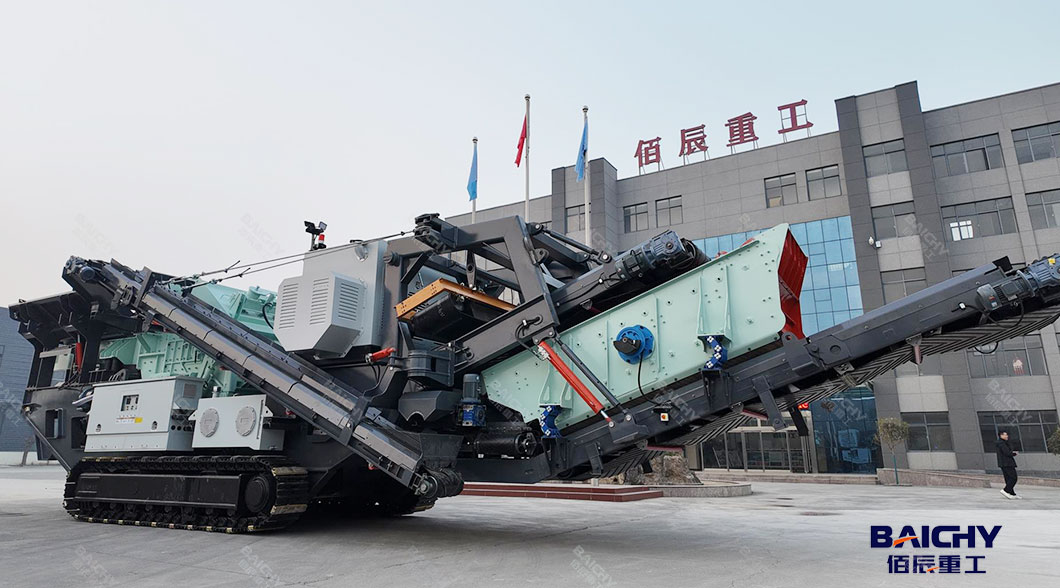
Crawler Type Mobile Impact Crusher is a fully integrated mobile crushing and screening plant equipped with a Vibrating Feeder, a Large Opening Impact Crusher, and a Vibrating Screen, this track-mounted powerhouse is designed to turn waste into profit instantly. In this guide, we break down why this specific configuration is taking over the recycling and soft-rock quarrying industries.
What is a Crawler Mobile Impact Crusher?
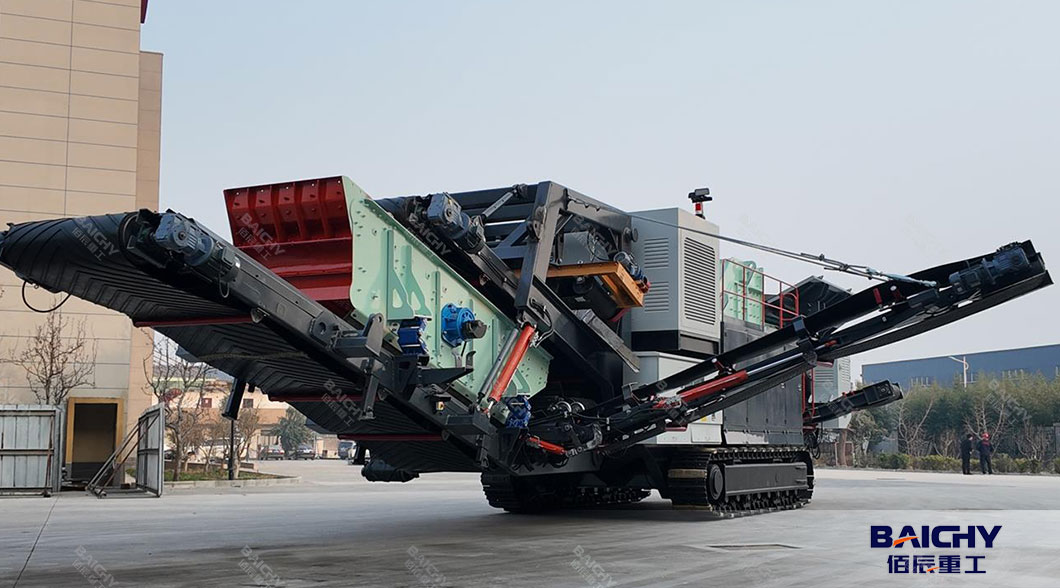
A Crawler Mobile Impact Crusher is a track-mounted crushing station driven by a hydraulic or diesel-electric system. Unlike fixed plants that require concrete foundations, this machine can move freely on rugged terrain, climb slopes, and start working within minutes of arrival. To maximize efficiency, the most popular mobile impactors feature three core components on a single chassis:
● Vibrating Feeder (with Pre-Screening): It feeds rock evenly into the crusher. The "grizzly bars" pre-screen small dirt and fines, bypassing the crusher to reduce wear and increase capacity.
● Large Opening Impact Crusher: The heart of the machine. A large feed opening allows it to swallow massive chunks of concrete with rebar or large limestone boulders without clogging.
● Vibrating Screen: A mounted screen that separates the crushed material. It ensures only the correct size product leaves the machine, sending oversized rock back to the crusher (Closed Circuit).
4 Key Advantages of Crawler Mobile Impact Crusher Plant
Why are operators switching from Jaw Crushers to Mobile Impactors for recycling?
1. High Reduction Ratio
The Impact Crusher works by striking rock with high-speed blow bars. This energy shatters the rock along natural fissures. It can turn a 500mm boulder into 20mm aggregate in a single pass. A Jaw crusher often needs a second stage to achieve this.
2. Perfect Product Shape
If you are producing aggregate for road base or concrete, shape matters.[5][6] The impact action produces a cubical product (not flaky), which meets high-quality construction standards.[7]
3. "Rebar-Friendly" Design
For demolition contractors, steel is a nightmare. Mobile Impact Crushers are designed with a large discharge opening and an optional Overband Magnetic Separator. When crushing reinforced concrete, the impactor shatters the concrete and liberates the steel, which the magnet then removes automatically.
4. Zero Transport Costs
The machine goes to the material, not the other way around.[3][8] By crushing on-site, you eliminate the cost of trucking raw debris to a processing center.
Working Principle: How It Works
The workflow is a seamless loop of efficiency:
● Feeding: An excavator loads raw material (e.g., concrete debris or limestone) into the hopper. The Vibrating Feeder moves it forward, screening out small dirt particles.
● Crushing: The material enters the Impact Crusher. Rapidly spinning blow bars strike the rock, throwing it against impact plates (curtains). This cycle repeats until the rock shatters.
● Screening: The crushed material lands on the main conveyor and travels to the Vibrating Screen.
○ Under-Screen: Sized material (e.g., 0-20mm) is discharged as a final product.
○ Over-Screen: Oversized material is returned to the crusher via a Return Conveyor for another round of crushing.
Ideal Application Scenarios
This machine is not a "one size fits all," but it is the "master" of these specific domains:
● Construction & Demolition (C&D) Recycling: Turning demolished buildings, road asphalt, and concrete chunks into reusable road base.
● Soft to Medium-Hard Rock Quarrying: Ideal for Limestone, Coal, Gypsum, and Calcium Carbonate. (Note: For very hard rock like Granite, a Jaw+Cone setup is preferred to reduce wear costs).
● Urban Infrastructure: Its compact footprint and mobility make it perfect for crushing inside tight city construction zones.
The Crawler Type Mobile Impact Crusher is the ultimate tool for contractors and quarry owners who demand flexibility. By combining feeding, crushing, and screening into one mobile unit, it reduces operational complexity and boosts profitability. If you are dealing with recycling projects or soft-rock quarrying, stop hauling waste. From 100 TPH to 400 TPH, we have the right configuration for your project. Contact us today for a quote and technical specifications.
People Also Frequently Asked For - FAQ
1: Can I use this machine to crush hard rock like Granite or Basalt?
A: While it can crush hard rock physically, we generally do not recommend it as a primary solution. Impact crushers work best on soft-to-medium hard materials (Limestone, Concrete, Coal). If you crush abrasive hard rock (like Granite or River Stone), the high-chrome blow bars will wear out very quickly, causing your operating costs to skyrocket. For hard rock, a Mobile Jaw Crusher + Mobile Cone Crusher combination is the most economic choice.
2: Does it run on Diesel or Electricity?
A: We offer Dual Power (Hybrid) solutions. Standard models run on a powerful onboard diesel engine (Caterpillar or Cummins) for total mobility. However, Hybrid models allow you to "plug in" to an external electric grid when available. This gives you the best of both worlds: the freedom to work in remote areas using diesel, and the ability to switch to electricity to slash fuel costs by up to 50% when working near a power source.
3: How does the machine handle steel rebar in concrete? Will it damage the crusher?
A: No, it is designed for this. The Impact Crusher has a large internal clearance and uses impact force (not compression), so steel rebar passes through the crushing chamber without damaging the rotor. Once the concrete is shattered and the steel is liberated, the optional Overband Magnetic Separator (a magnet belt suspended over the discharge conveyor) automatically pulls the steel out and piles it to the side for recycling.
4: How difficult is it to transport between job sites?
A: It is extremely easy. The machine is designed with a wireless remote control. One operator can simply drive the crusher up onto a low-bed trailer (lowboy) without needing a crane. Once it arrives at the new site, you drive it off, unfold the conveyors hydraulically, and can start crushing in less than 30 minutes. No concrete foundations or complex assembly are required.




 2026-09-28





 86-15093113821
 86-15093113821