1. Project Overview: 10 TPH Cement Grinding Plant
A 10 TPH cement grinding plant is designed for cement producers who need a compact production system with a capacity of approximately 10 tons per hour. This project adopts a closed-circuit cement grinding system, in which the cement mill works together with a high-efficiency powder separator. The system separates qualified cement from coarse particles and returns the oversized material to the mill for further grinding.
Compared with an open-circuit grinding system, closed-circuit grinding provides better control over cement fineness and reduces unnecessary over-grinding. The complete plant integrates material feeding, cement grinding, powder classification, finished product conveying, and cement storage. It is suitable for small and medium-sized cement producers, regional cement suppliers, and investors planning to establish an independent cement grinding facility.
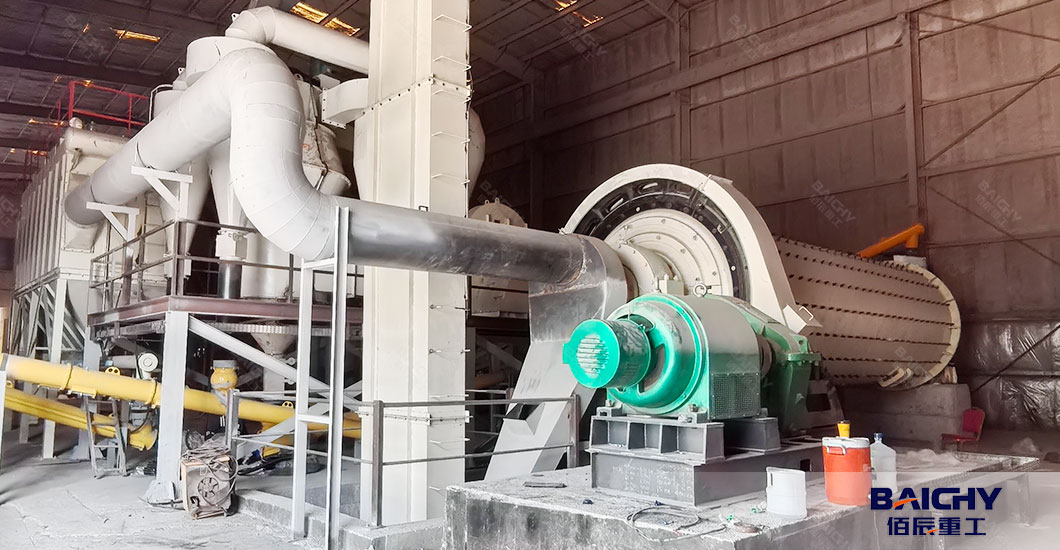
2. Closed-Circuit Cement Grinding Process
The 10 TPH cement grinding plant uses a circulating grinding process to achieve the required cement fineness.
The main production stages include:
Step 1: Raw Material Feeding
Clinker, gypsum, and other permitted cement additives are stored separately and fed into the grinding system according to the required cement formulation.
A controlled feeding system maintains a stable material flow into the cement mill.
Step 2: Cement Grinding
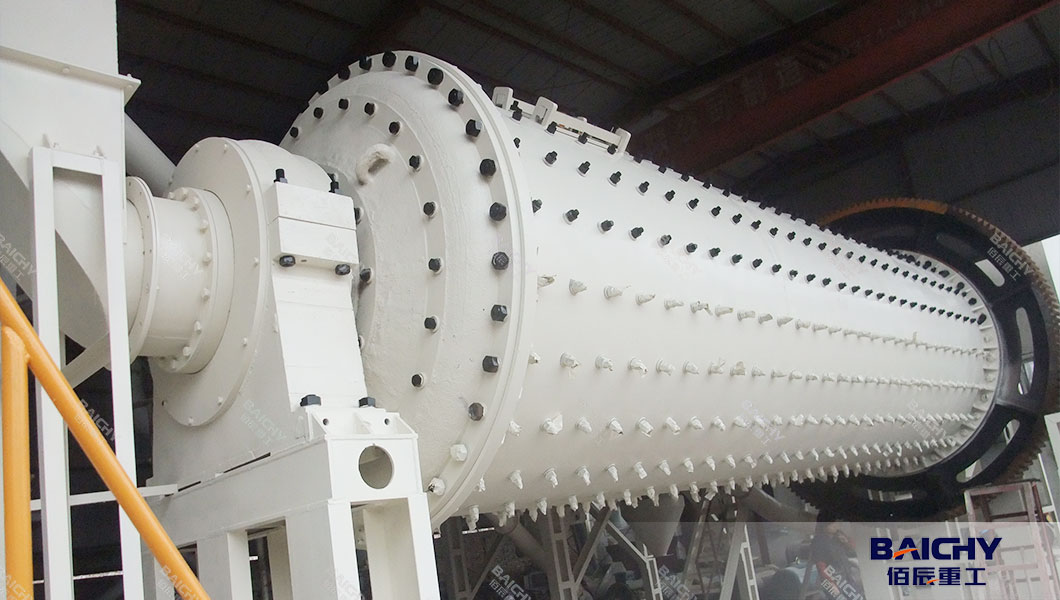
The mixed materials enter the cement ball mill, where steel grinding media reduce the particle size through impact and friction.
The grinding process determines the final cement fineness and influences the production capacity.
Step 3: Powder Classification
The ground material is transferred to a powder separator.
The separator divides the material into two streams:
-
Fine particles: Qualified cement products are collected and transferred to the finished cement handling system.
-
Coarse particles: Oversized particles are returned to the cement mill for additional grinding.
-
Step 4: Finished Cement Collection
Qualified cement passes through a dust collection system, such as a bag filter, before entering the finished cement conveying system.
The finished product can then be transported to cement silos for storage.
Step 5: Cement Packing and Dispatch
Depending on the plant configuration, finished cement can be supplied in bulk or packed into bags using an automatic or semi-automatic packing machine.
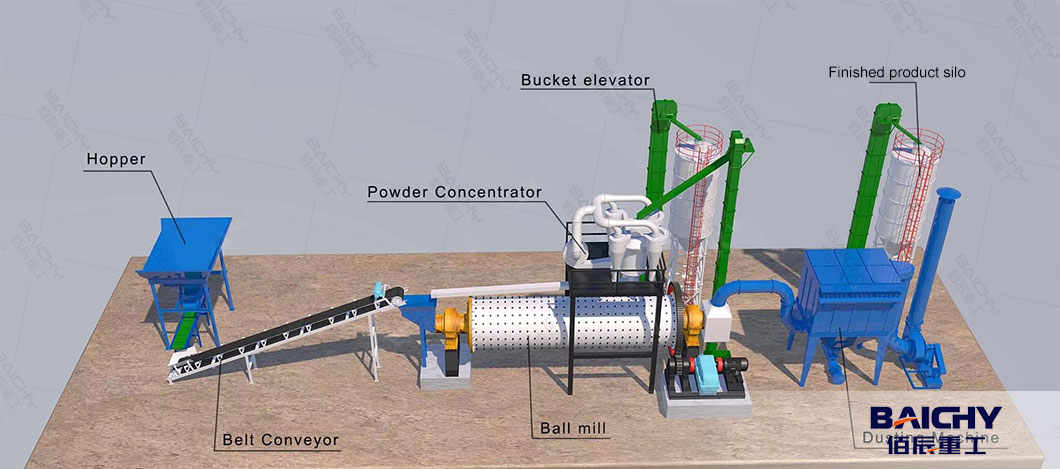
3. Main Equipment for a 10 TPH Cement Grinding Plant
A complete cement grinding plant requires coordinated equipment for material feeding, grinding, classification, dust collection, and product handling.
| Production Stage |
Main Equipment |
Function |
| Material Feeding |
Feed hoppers and belt conveyors |
Feed clinker, gypsum, and additives |
| Grinding |
Cement ball mill |
Grind raw materials into cement powder |
| Classification |
Powder separator |
Separate fine and coarse particles |
| Material Circulation |
Air slides and bucket elevators |
Convey and return grinding materials |
| Dust Collection |
Bag filter and fan |
Collect cement dust and control emissions |
| Cement Storage |
Cement silo |
Store finished cement |
| Packing |
Cement packing machine |
Pack cement into bags |
The final equipment configuration depends on clinker properties, gypsum content, target cement fineness, and the required production capacity.
4. Why Choose a Closed-Circuit Cement Grinding System?
For a 10 TPH cement grinding plant, the closed-circuit configuration offers several practical advantages.
1. Better Control of Cement Fineness
The powder separator controls the particle size distribution of the finished cement. Coarse particles return to the mill instead of entering the final product.
2. Reduced Over-Grinding
Without effective classification, already-fine particles may remain inside the grinding mill and consume additional grinding energy.
The separator removes qualified fine particles from the grinding circuit, helping reduce unnecessary grinding.
3. Flexible Product Adjustment
By adjusting separator operation and grinding conditions, operators can control the finished cement fineness according to different product requirements.
4. Continuous Material Circulation
The closed-loop process maintains continuous grinding and classification, supporting stable production when the equipment is properly configured and operated.
5. Key Factors Affecting 10 TPH Cement Grinding Capacity
A 10 TPH cement grinding plant does not achieve its rated capacity simply by installing a mill with a particular motor power.
Several factors determine actual production performance:
-
Clinker grindability: Harder clinker generally requires more grinding energy.
-
Cement fineness: Higher Blaine fineness or a finer particle-size distribution usually reduces mill output.
-
Grinding mill configuration: Mill dimensions, grinding media, internal structure, and motor power affect grinding performance.
-
Separator efficiency: Poor classification increases circulating load and can reduce system efficiency.
-
Material moisture: Excessive moisture may cause material coating and affect grinding and conveying.
-
System operation: Stable feeding, ventilation, and dust collection are important for continuous operation.
Therefore, equipment selection should be based on the actual raw material properties and target cement quality rather than capacity alone.
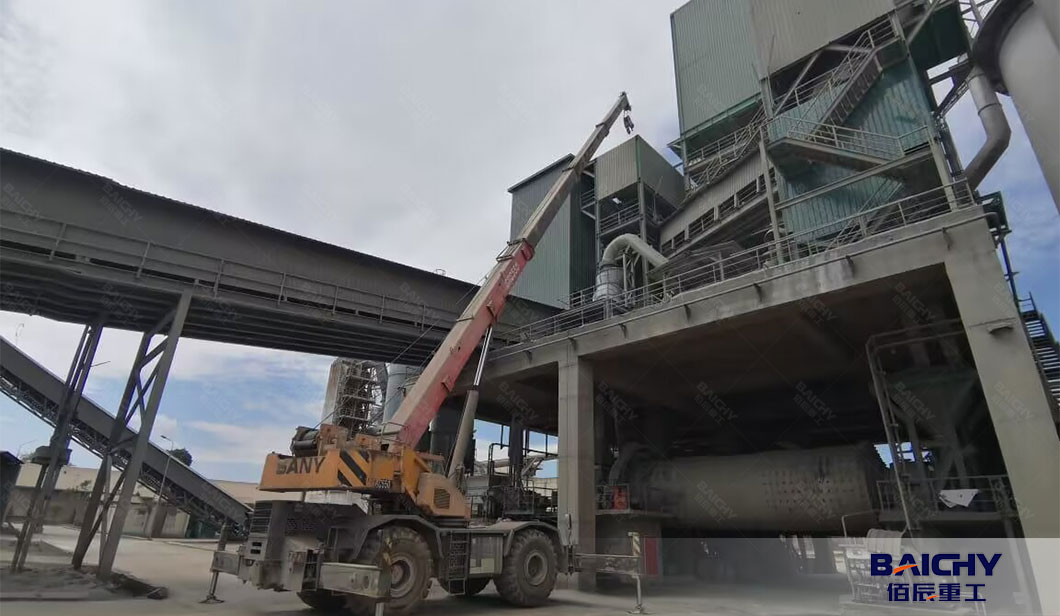
6. What Information Is Needed to Design a Complete Cement Grinding Plant?
Before selecting equipment for a 10 TPH cement grinding project, the following information should be confirmed:
| Design Parameter |
Required Information |
| Production Capacity |
10 tons per hour |
| Main Material |
Portland cement clinker |
| Additives |
Gypsum, limestone, or other permitted additives |
| Cement Type |
Required cement grade and standard |
| Target Fineness |
Blaine specific surface area or particle-size requirements |
| Operating Schedule |
Daily operating hours |
| Finished Product |
Bulk cement or bagged cement |
| Installation Conditions |
Available land, building, and local power supply |
These details help engineers determine the cement mill specifications, separator capacity, conveyor sizes, dust collection system, and electrical configuration.
7. Complete Cement Grinding Plant Solution from Baichy Machinery
For investors planning a 10 TPH cement grinding project, Baichy Machinery can provide equipment selection and system configuration based on the required production capacity and material characteristics.
The engineering scope can cover:
-
Cement grinding system configuration.
-
Cement ball mill selection.
-
Powder separator matching.
-
Material feeding and conveying equipment.
-
Dust collection system.
-
Cement storage and packing equipment.
-
Equipment layout and installation guidance.
A complete solution should consider the entire grinding circuit rather than selecting the cement mill independently.
The objective is to achieve the required cement output and fineness while maintaining stable operation and reasonable energy consumption.
8. Frequently Asked Questions
Q1: What is a 10 TPH cement grinding plant?
It is a cement grinding facility designed to produce approximately 10 tons of finished cement per hour. Its configuration generally includes material feeding, a cement ball mill, a powder separator, dust collection, and finished product handling equipment.
Q2: What is the difference between open-circuit and closed-circuit cement grinding?
An open-circuit system passes material through the grinding mill without a separate classification and return loop. A closed-circuit system uses a powder separator to remove fine cement and return coarse particles for further grinding.
Q3: What equipment is required for a complete cement grinding plant?
The main equipment includes feed hoppers, conveyors, a cement ball mill, a powder separator, bucket elevators, dust collectors, cement silos, and optionally a cement packing machine.
Q4: Can a 10 TPH cement grinding plant produce different cement grades?
Yes. The grinding system can be adjusted for different cement formulations and fineness requirements. However, the final product must meet the applicable cement quality standards.
Q5: How much space is required for a 10 TPH cement grinding plant?
The required installation area depends on the mill dimensions, equipment arrangement, silo capacity, packing system, and site conditions. A plant layout should be prepared after the equipment configuration is determined.
Q6: How much does a 10 TPH cement grinding plant cost?
The investment depends on the cement mill specifications, separator type, auxiliary equipment, automation level, storage capacity, and installation scope. A detailed quotation requires the project's material and product specifications.
Conclusion
A complete 10 TPH closed-circuit cement grinding plant combines a cement ball mill, powder separator, material conveying system, and dust collection equipment into one integrated production system. The closed-circuit configuration allows qualified cement to leave the grinding circuit while coarse particles return for further grinding.
For a successful project, equipment matching, clinker grindability, target cement fineness, and the overall grinding circuit should all be considered during the design stage. Contact Baichy Machinery to discuss your 10 TPH cement grinding plant requirements and obtain a customized equipment configuration.




 2026-11-02







 86-15093113821
 86-15093113821