In the mineral processing industry, grinding is a critical stage that determines the efficiency of downstream ore recovery. If you are setting up a grinding circuit, you will inevitably come across three main types of equipment: SAG Mills, and Ball Mills. AG Mills, . While they may look somewhat similar on the outside—all being large rotating cylinders used to crush and grind rocks—their internal working principles, physical dimensions, and applications are quite different. So, what exactly is the difference between a Ball mill, a SAG mill, and an AG mill? Here is the complete breakdown.
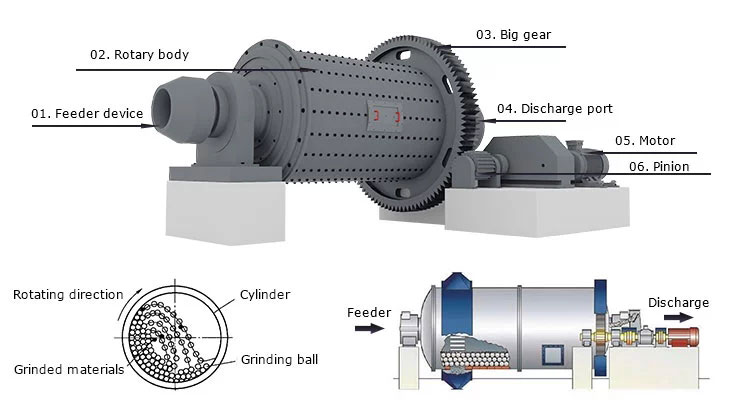
What is SAG mill?
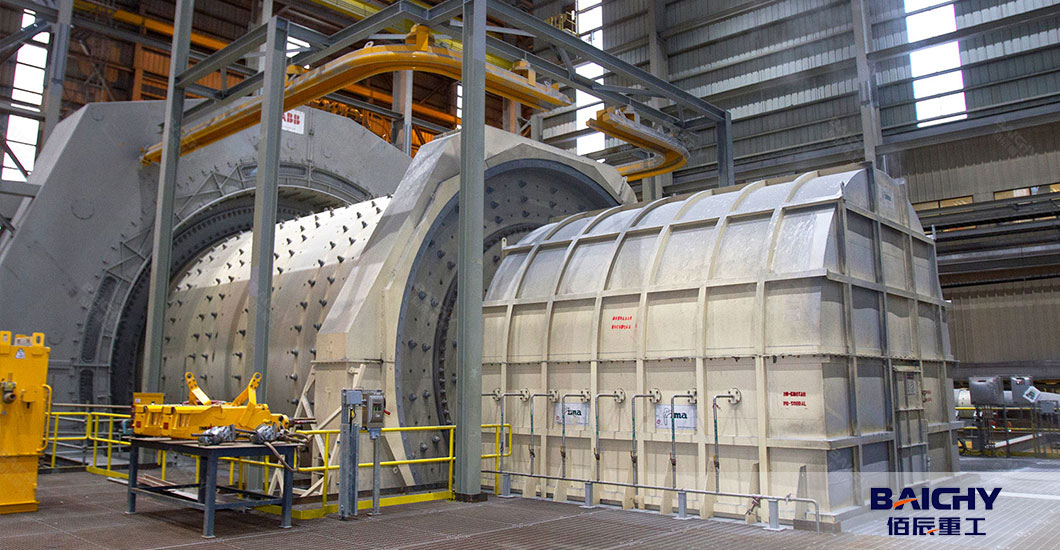
A SAG Mill (Semi-Autogenous Grinding mill) is a cornerstone of modern high-capacity mineral processing. Unlike a traditional ball mill that relies entirely on steel balls, a SAG mill uses a "hybrid" approach to break down large rocks into smaller particles. The mill uses large lumps of the incoming ore as the primary grinding media. The Sag mill uses lifting plates along the interior of the drum, which lift material throughout the rotations, causing them to fall onto one another to promote crushing. To handle harder ores and increase throughput, a small charge of steel balls (typically 8% to 15% of the mill volume) is added to assist the "rock-on-rock" impact.
SAG Mill Key Parameters:
Feed size: Typically accepts Run-of-Mine ore up to 400mm.
Product size: Produces particles in the range of 1-5mm for further grinding.
Length-to-Diameter Ratio: Typically 0.25-0.50:1 (similar to AG mills, short and wide).
Grinding Media: Steel balls (5-18% filling) + ore particles. Ball size up to 150mm diameter.
Typical Power Range: Up to 20-25 MW for mega mills (e.g., 12.2m diameter units). (Source: Metso/Outotec equipment specifications).
Unit Power Consumption: Higher than AG mills due to steel media addition; typical range 6-20 kWh/t depending on ore competence.
How Does a Sag Mill Work?
The mill consists of a large-diameter, short-length rotating drum lined with lifter bars.
● Feeding: Large rocks (up to 200-300mm), water, and steel balls are fed into the mill.
● Lifting: As the drum rotates, internal lifters carry the mixture of ore and balls toward the top of the shell.
● The Drop (Impact vs. Attrition):
○ Cataracting (Impact): At higher speeds, the material is thrown from the lifters and falls in a parabolic arc, hitting the "toe" of the charge at the bottom. This high-energy impact shatters large rocks (ideal for coarse grinding).
○ Cascading (Attrition/Abrasion): The material rolls down the surface of the charge. The rubbing action between rocks and balls grinds the finer particles further.
● Discharge: Once the ore reaches a specific fineness, it mixes with water to form a slurry. This slurry passes through a discharge grate at the end of the mill, while larger "pebbles" and steel balls are retained for further grinding.
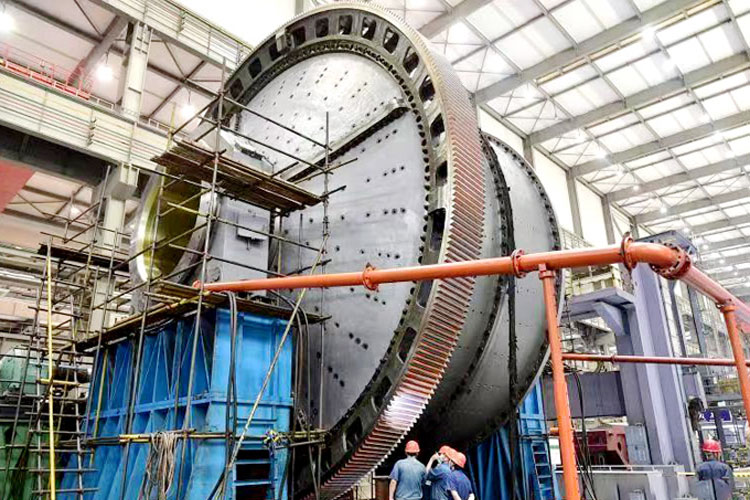
What is AG mill?
An AG Mill, or Autogenous Grinding Mill, is essentially a giant rotating drum that uses the ore itself as the grinding media, completely eliminating the need for steel balls. As the drum rotates, large chunks of ore are lifted and then cascaded down, fracturing and grinding the smaller particles in their path. This makes AG mills a cost-effective option because there’s no steel to consume, but they are highly dependent on the feed material having enough large, competent pieces to facilitate effective grinding. While this reliance on the ore's natural properties can make the process less efficient or predictable for some materials, it offers a significant advantage in operations where reducing steel consumption and associated costs is a top priority.
AG Mill Key Parameters:
Feed size: Typically accepts Run-of-Mine ore up to 400mm in diameter.
Product size: Produces particles in the range of 1-10mm for downstream processing.
Length-to-Diameter Ratio: Typically 0.25-0.50:1 (short and wide drum).
Grinding Media: 0% steel balls (uses ore itself).
Mill Filling Rate: Ore charge occupies approximately 25-30% of mill volume.
Typical Power Range: Up to 8-10 MW for large industrial units.
Unit Power Consumption: Generally lower than SAG mills; however, exact figures depend heavily on ore hardness, feed size, and mill operating speed (Source: SME Mineral Processing Handbook).
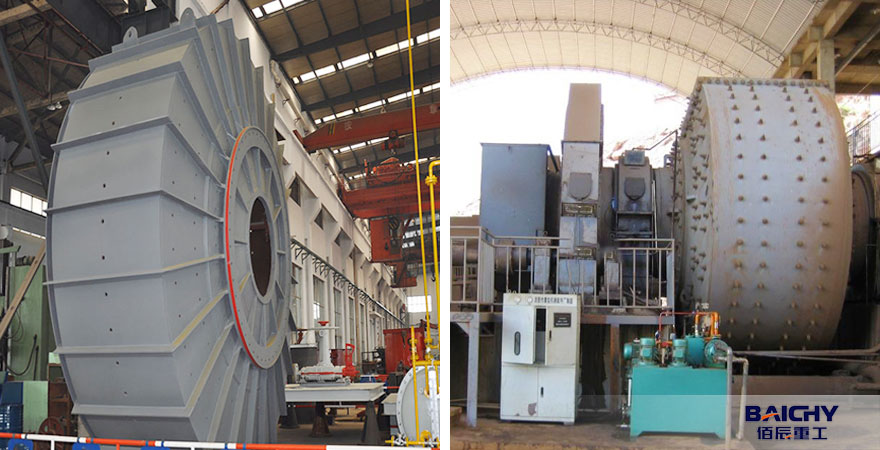
What is Ball Mill?
A ball mill has many steel or porcelain balls put in a drum to grind the feed between balls and between the balls and drum inner wall as the drum rotates. This mill is capable of grinding lumps whose size is tens of millimeters into a product tens of microns or even several microns. The ball mill can grind various ores and other materials with dry type and wet type. There are two kinds of ball mill, grate type and overfall type due to different ways of discharging material.
Ball Mill Key Parameters:
Feed size: Typically ≤25mm (requires prior crushing/AG/SAG grinding).
Product size: 0.074mm (200 mesh) for standard products; can reach 0.01mm (1250 mesh) for ultra-fine grinding.
Length-to-Diameter Ratio: Typically 1.4-1.8:1 (longer than diameter, allowing longer retention time).
Grinding Media: Steel or ceramic balls (25-40% filling). Ball size up to 50mm diameter.
Typical Power Range: From hundreds of kW up to 8 MW depending on model.
Unit Power Consumption: Higher fine grinding efficiency per unit volume than SAG mills for fine particles.

SAG mill vs Ball mill
| Feature |
SAG Mill |
Ball Mill |
| Grinding Media |
Ore + 8-15% Steel Balls |
30-40% Steel Balls |
| Feed Size |
Coarse (up to 300mm) |
Fine (usually <20mm) |
| Circuit Position |
Primary (after the crusher) |
Secondary (after the SAG mill) |
| Main Advantage |
Reduces crushing stages |
Precise control of final fineness |
1.Appearance
Both sag mill and ball mil are cyclinder type grinding mill. SAG mills usually have a larger diameter than length. While ball mills have a larger length than diameter, so that there can be more grinding time and finished material could be more finer.
2.Crushing stage
SAG and ball mills grind material through different actions and are usually applied in different stages of the process.
● SAG mill is the primary tool for grinding and it is used before the other mills. The SAG mills are generally used in pre-processing of any type of material in grinding process. SAG mills are also known as first stage grinders. These mills are one of the most used and necessary equipment in grinding.
● Ball mill is a secondary fine powder grinder and it is used after the SAG mill. A horizontal rotating cylinder which is filled partially with steel balls, or ceramic balls to grind raw material into the powder-like material, And if extreme fineness and refinery are required then rotation go on continue.
3.Grinding ball filling rate
These two types of mills are filled with varying compositions of grinding media. SAG mills contain balls of up to 150mm in diameter that occupy 5%-18% of mill chamber volume. Ball mills, conversely, contain grinding media up to 50mm in diameter, occupying between 25% - 40% of mill chamber volume. To effectively reduce material size, each type of mill needs to generate different charge load actions, or the type of motion characterised by the mill’s contents. SAG mills generate higher levels of impact reduction and ball mills higher levels of abrading action.
4.Different size of finished product
● SAG mill is used for grinding large fragments into small pieces. Pieces are then used for further processing. SAG mill does not create pulverized form of matter. These heavy output SAG mills are usually powered by electricity. As requirements and needs in grinding field are enhanced. Improved SAG mills came in trend, which gives highly rated production.
● Ball mill is a fine powder grinding mill with material feeding size less than 25mm. The final powder size is 0.074mm ( 200mesh), even could get ultrafine powder 0.01mm( 1250mesh). The finished size from ball mill is usually as final product to be sold, or in benefication plant. Ball mill could create pulverized form of matter.
5.Different application
● SAG mills are very important equipment of industrial mining. SAG mills are commonly used in mining fields. From mined coal, it separates out some precious metals. In the mining, some precious metals found are like gold, silver, nickel, and copper etc.
● Ball mill machine is a kind of mining and cement milling equipment with the highest application ratio in the industrial field. According to production mode: dry ball mill (without adding water) and wet ball mill. According to the process used: dryer mill, superfine ball mill, open-circuit mill, closed-circuit grinding mill, etc. According to raw materials: raw mill, cement ball mill, coal ball mill, steel slag ball mill, slag ball mill, quartz ball mill, aluminum ash ball mill, etc.
AG mill vs SAG mill
AG and SAG mills are two types of grinding equipment used in mineral processing. Both mills are designed to grind ore into smaller particles, but they operate differently. Here we will explore the differences between SAG and AG mills to help how to select the right mill properly.
SAG mills, or Semi-Autogenous Grinding mills, use a combination of steel balls and rock particles to grind ore. They are larger in size and are capable of grinding larger quantities of ore than AG mills. SAG mills are often used in conjunction with a ball mill or pebble mill to achieve the desired grind size. SAG mills are primarily used in the mining industry, particularly in the processing of gold, copper, and platinum group metals.
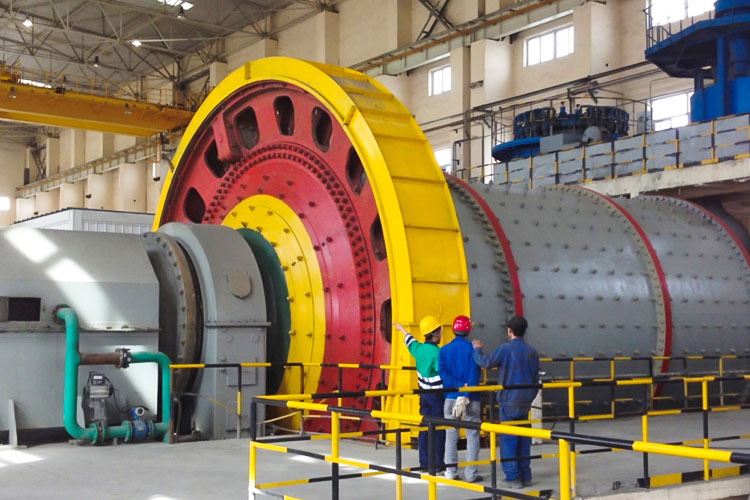
SAG mills and AG mills are both commonly used in mineral processing operations, but they operate in different ways and have unique characteristics. In this section, we’ll explore the main differences between SAG and AG mills, including their definition, operation, design, and applications.
1.Design and Components
SAG mills and AG mills also differ in their design and components. SAG mills have larger diameter and length ratios than AG mills, and are typically equipped with rubber or steel liners to protect the mill shell. AG mills, in contrast, have smaller diameter and length ratios, and are often lined with rubber to protect the mill shell from wear and tear. Both types of mills may also have different motor types and gearing systems. Understanding the design and components of each mill is important for optimizing performance and reducing maintenance costs.
2.Differences in Grinding Media
● SAG mills use a combination of steel balls and rock particles as grinding media. The addition of rock particles to the SAG mill feed allows the mill to break larger rocks, thus increasing the grinding efficiency. However, the use of rock particles can also lead to increased wear of the mill liners and decreased efficiency.
● AG mills use only steel balls as grinding media. The use of steel balls leads to a more uniform grinding process and reduced wear on the mill liners compared to SAG mills. However, the lack of rock particles in the mill feed can lead to reduced grinding efficiency, especially when processing softer ores.
● The type of grinding media used in a mill can have a significant impact on the grinding efficiency. SAG mills typically have higher grinding efficiencies compared to AG mills, but this can vary depending on the ore characteristics and the operating conditions of the mill. In some cases, AG mills may outperform SAG mills due to the lack of rock particles in the mill feed.
3.Power Consumption
The power consumption of SAG and AG mills depends on several factors, such as the ore type, feed size, mill speed, and grinding media. However, in general, AG mills have a lower power consumption than SAG mills. SAG mills and AG mills differ in their power consumption, which is an important factor to consider when selecting between the two.
● SAG mills typically have a higher power consumption than AG mills due to their larger diameter and longer length. The power consumption of SAG mills is also influenced by the ore hardness, feed size, and mill speed.
● AG mills generally have a lower power consumption than SAG mills, as they have a smaller diameter and length. AG mills also use a fraction of the energy needed for SAG mills to grind the same amount of ore.
4.Cost and Maintenance
Cost and maintenance are also important considerations when selecting a mill. SAG mills are generally more expensive to operate and maintain due to the need for a high level of power and the larger grinding media. AG mills, on the other hand, are generally less expensive to operate and maintain due to their smaller size and lower power requirements.
In conclusion, selecting the right mill for a particular application requires careful consideration of several factors, including the material characteristics, process requirements, and cost and maintenance considerations. By understanding the differences between SAG and AG mills, it is possible to make an informed decision and select the mill that best meets the needs of the application.
If you want to choose suitable ball mill machine for your mineral ore processing plant, welcome to contact us by email: hnbc@baichy.com . Our professional engineer give you instant response .
People Also Asked For -FAQ
1. Do sag mills use water?
Even though the first commercially successful autogenous mills were operated dry, almost all autogenous (AG) and semi-autogenous (SAG) mills in use today are operated with water and ore fed to the mill in a more or less fixed ratio. The water forms a slurry with fine ore particles.
2. What is a sag mill used for?
A SAG mill, or semi-autogenous grinding mill, is defined as a type of grinding mill that utilizes a small amount of steel balls along with large lumps of ore to assist in the size reduction of hard ores, employing a combination of impact, attrition, and abrasion forces during rotation.
3. How to make the sag mill faster?
Like most Ender IO machines, the SAG Mill requires at least a Basic Capacitor to be installed to function. Better capacitors increase the machine's maximum energy usage rate and thus processing speed, as well as the internal energy buffer.
4. What is SAG mill control?
SAG mill control boils down to managing the mill load (and power) and the density of the slurry being processed. This can be effectively achieved using advanced regulatory control techniques




 2026-10-24





 86-15093113821
 86-15093113821