Project Overview
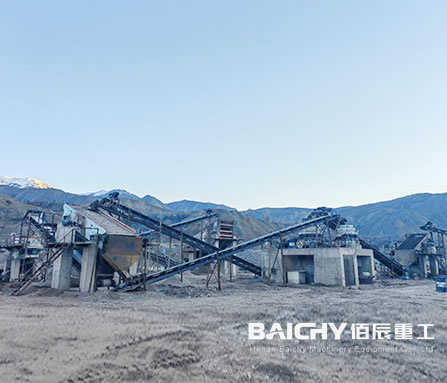
A coal processing customer in Karaganda, Kazakhstan, needed a stationary coal screening plant with a capacity of 200–300 TPH. The main challenge was not simply achieving the required throughput. The customer wanted to preserve the original coal particle sizes, particularly the commercially valuable 10–30 mm fraction, while minimizing additional fines during screening and material handling. After reviewing the customer's technical requirements, Baichy Machinery developed a customized screening solution based on a two-stage screening process. The proposed configuration separates raw coal into four marketable size fractions without introducing an unnecessary crushing stage. The customer recognized and approved Baichy's proposed process design, which addressed the key requirements for product separation, gentle material handling, moisture management, and winter operation.
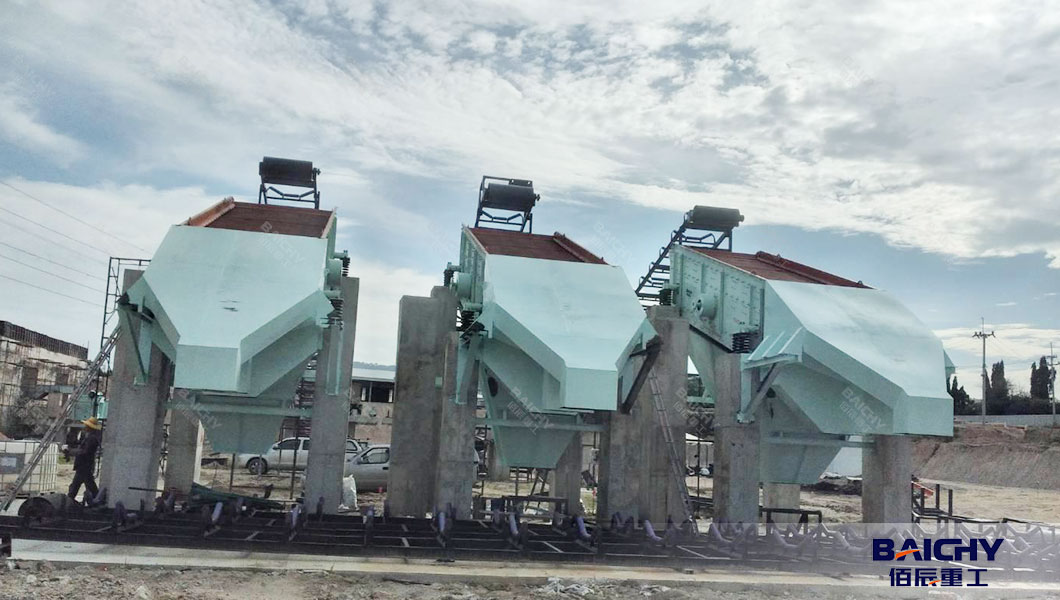
1. Customer Requirements: 300 TPH Coal Screening Plant
The customer processes fragile coal with a maximum feed size of 300 mm. Because coal can break during transportation, feeding, and screening, controlling material impact was a major consideration in the plant design. The main technical parameters provided by the customer were:
| Parameter |
Requirement |
| Project Location |
Karaganda, Kazakhstan |
| Material |
Fragile Coal |
| Maximum Feed Size |
300 mm |
| Total Moisture |
10–14% |
| Design Capacity |
300 TPH |
| Operating Capacity |
200–300 TPH |
| Main Priority |
Preserve 10–30 mm Coal |
| Crushing Requirement |
No Crushing Required |
| Final Products |
0–10 mm, 10–30 mm, 30–60 mm, +60 mm |
The customer's raw coal size distribution was approximately:
-
0–10 mm: 30%
-
10–30 mm: 25%
-
Above 30 mm: 45%
Four separate finished products were required: 0–10 mm, 10–30 mm, 30–60 mm, and +60 mm.
The 10–30 mm fraction was the highest-priority commercial product. Therefore, the screening process needed to recover as much of the original 10–30 mm material as possible without generating excessive additional fines.
The customer proposed three performance targets:
-
Recovery of original 10–30 mm particles: at least 95%.
-
Purity of the 10–30 mm product: at least 95% by mass.
-
Additional generation of 0–10 mm fines: no more than 2 percentage points of feed mass.
These were target values for technical evaluation and acceptance testing, rather than automatically guaranteed performance figures.
2. Baichy's Customized Coal Screening Solution
After evaluating the feed characteristics and production requirements, Baichy proposed a two-stage screening process. Instead of using a conventional crushing and screening line, the solution focuses on separating coal by particle size while reducing unnecessary mechanical impact. The proposed process includes:
-
Controlled raw coal feeding.
-
Primary screening at 60 mm and 30 mm.
-
Secondary fine screening at 10 mm.
-
Separate collection and transportation of four finished products.
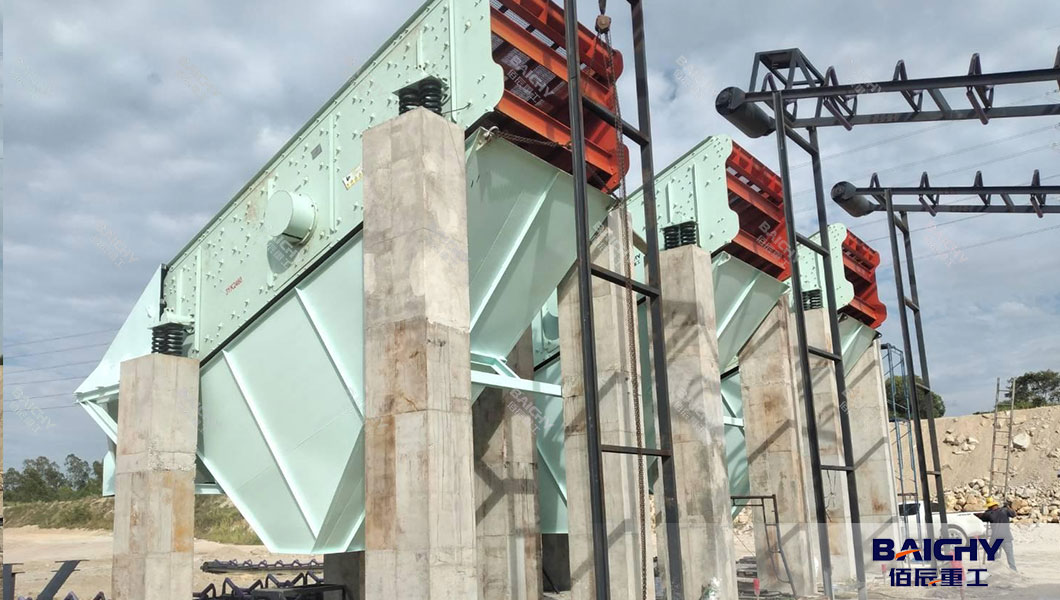
Proposed Equipment Configuration
| Processing Stage |
Main Equipment |
Function |
| Feeding |
Controlled Belt Feeder |
Maintain stable and uniform feeding |
| Primary Screening |
Heavy-Duty Double-Deck Vibrating Screen |
Separate +60 mm, 30–60 mm and -30 mm coal |
| Secondary Screening |
Flip-Flow or Equivalent Anti-Blinding Screen |
Separate 0–10 mm and 10–30 mm coal |
| Conveying |
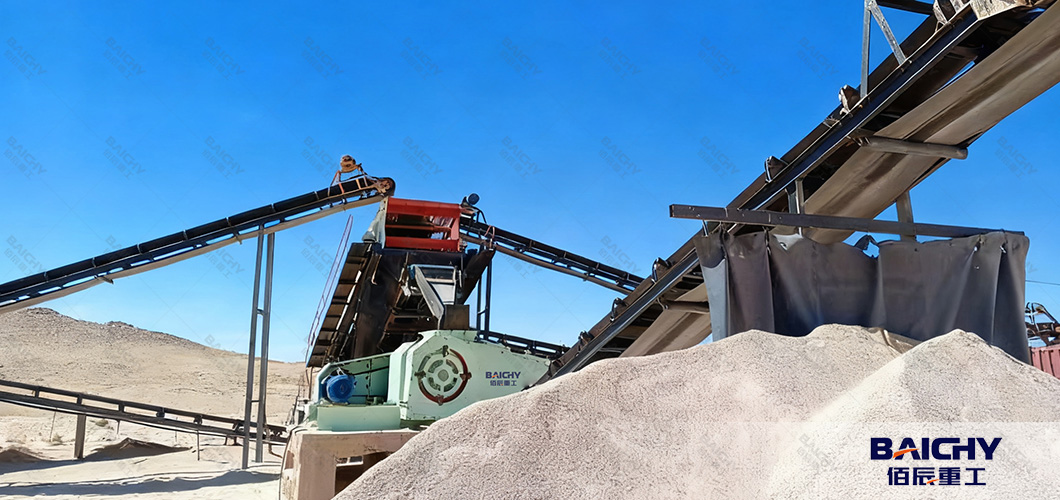
Belt Conveyors |
Transport and discharge four products |
| Material Transfer |
Lined Chutes |
Reduce impact and coal breakage |
| Electrical Control |
Central Control System |
Coordinate feeding and screening operations |
The final equipment models, screen areas, screen media, and motor specifications are subject to detailed engineering and representative coal sample testing.
Stage 1: Gentle Primary Screening
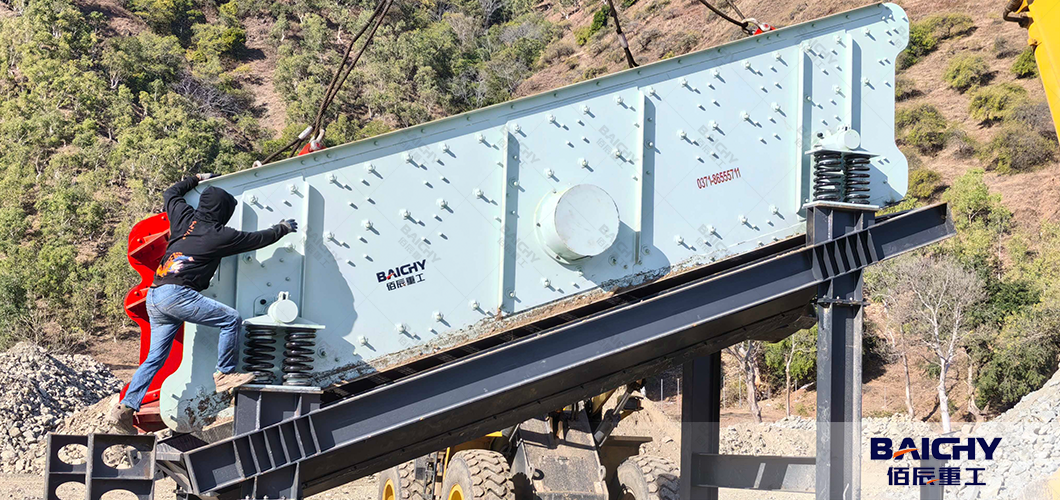
The first screening stage uses a heavy-duty double-deck vibrating screen with 60 mm and 30 mm screening apertures.
Raw coal enters the screen through a controlled feeding system. The screen separates the material into three streams:
-
+60 mm coal: discharged as the oversize product.
-
30–60 mm coal: collected as the middle-size product.
-
0–30 mm coal: transferred to the secondary screening stage.
The primary screening stage must accept feed particles up to 300 mm. Therefore, the screen structure, feeding arrangement, and screening media need to be selected according to the actual feed characteristics.
An important design consideration is controlling the impact of coal when it enters the screen. Appropriate feeding height, chute angles, and wear-resistant lining help reduce unnecessary collisions and particle degradation.
Stage 2: Fine Coal Screening at 10 mm
The secondary screening stage separates the 0–30 mm material into two final products:
For this stage, Baichy proposed a flip-flow screen or equivalent anti-blinding screening technology.
This arrangement is particularly relevant because the customer's coal has a moisture content of 10–14%. Moist coal can adhere to conventional screen surfaces, reducing effective open area and screening efficiency. Flexible screening media and suitable vibration parameters can help reduce screen blinding and maintain stable fine-particle separation. The selection of the final screening media and operating parameters should be verified through testing with representative coal samples at different moisture levels.
3. How the Design Protects the Valuable 10–30 mm Coal Fraction
Preserving the original 10–30 mm coal is the most important technical requirement of this project. In a conventional screening plant, coal may experience repeated impacts at feeding points, transfer chutes, screen surfaces, and discharge locations. These impacts can break larger particles into smaller sizes, increasing the proportion of fines and reducing the quantity of commercially valuable coal.
Baichy's proposed design addresses this issue through several measures.
Controlled feeding: A controlled feeding system helps maintain a stable material flow and avoid unnecessary impact from uncontrolled feeding.
Reduced transfer height: The layout should minimize unnecessary material drops between screening stages and conveyors.
Lined transfer chutes: Suitable chute lining helps reduce direct impact between coal particles and steel surfaces.
Optimized screening parameters: Adjustable vibration frequency and amplitude allow the screening process to be evaluated and optimized according to coal characteristics.
Reduced unnecessary handling: The two-stage screening arrangement separates the required particle sizes without adding an unnecessary crushing process.
These measures are intended to reduce additional particle breakage and improve the recovery of the original 10–30 mm fraction.
4. Handling 10–14% Moisture and Winter Operation in Kazakhstan
Coal screening becomes more challenging when the feed contains significant moisture.
At 10–14% total moisture, fine coal particles may stick together or adhere to conventional screen media. This can cause screen blinding, unstable material flow, and reduced separation efficiency.
For this project, Baichy considered moisture management and winter operation as important parts of the screening system design.
The proposed technical considerations include:
-
Anti-blinding screen media for fine coal separation.
-
Suitable screen openings and screening surface selection.
-
Adjustable vibration parameters to improve material movement.
-
Controlled feeding to avoid overloading the screen surface.
-
Appropriate equipment protection and winterization measures for the local operating environment.
The customer also requested capacity and performance evaluations at 10%, 12%, and 14% moisture. These conditions should be included in the equipment selection and acceptance-testing plan.
5. Target Performance and Acceptance Testing
For a 300 TPH coal screening plant, equipment capacity alone does not determine whether the project meets the customer's commercial requirements.
The actual performance must be evaluated through product recovery, product purity, and additional fines generation.
The following indicators were established as the project's target acceptance criteria:
| Performance Indicator |
Customer's Target |
| Design Throughput |
300 TPH |
| 10–30 mm Coal Recovery |
≥95% |
| 10–30 mm Product Purity |
≥95% by Mass |
| Additional 0–10 mm Fines Generation |
≤2 Percentage Points of Feed Mass |
Baichy considers representative coal sample testing an important step before confirming final performance guarantees.
The testing program should evaluate:
-
Screening capacity under different moisture conditions.
-
Particle-size distribution of each finished product.
-
Recovery of the original 10–30 mm fraction.
-
Purity of the 10–30 mm product.
-
Additional fines generated during feeding and screening.
The final guaranteed values should be established based on the test results, agreed feed characteristics, and clearly defined acceptance conditions.
6. Complete Stationary Coal Screening Plant Supply
In addition to individual screening equipment, Baichy can provide an integrated stationary screening plant according to the customer's project requirements.
The complete supply scope for this project was structured around the following equipment and services:
-
Primary and secondary screening equipment.
-
Controlled feeding equipment.
-
Belt conveyors for material transportation.
-
Transfer chutes and supporting structures.
-
Electrical control system.
-
Recommended spare parts.
-
Installation supervision and commissioning support.
A complete equipment arrangement helps coordinate the feeding, screening, and conveying stages, reducing the risk of production bottlenecks caused by mismatched equipment capacities.
For the Kazakhstan project, the customer also required technical documentation covering screen models, screening area, deck arrangement, motors, vibration parameters, equipment dimensions, weight, and foundation loads.
These details are essential for equipment installation, foundation design, and long-term maintenance planning.
7. Why the Customer Approved Baichy's Proposal
The customer's original inquiry focused on preserving coal quality rather than simply purchasing a high-capacity vibrating screen.
Baichy approached the project from the perspective of the complete production process.
The proposed two-stage screening configuration directly addressed the customer's four main concerns:
First, product separation. The 60 mm, 30 mm, and 10 mm screening stages provide a process route for producing four separate coal size fractions.
Second, particle preservation. The design avoids unnecessary crushing and incorporates controlled feeding, reduced transfer heights, and lined chutes to minimize additional breakage.
Third, moisture adaptation. The secondary fine screening stage considers anti-blinding technology for coal containing 10–14% moisture.
Fourth, operational reliability. Equipment selection, maintenance planning, spare parts, and winterization requirements are considered as part of the complete stationary plant.
The customer approved Baichy's proposed process solution because it addressed the actual production challenges specified in the RFQ, rather than offering a standard screening equipment package.
Conclusion: A Customized 300 TPH Coal Screening Solution
A successful coal screening plant must do more than achieve its nominal production capacity. It must also maintain product quality, control particle degradation, and deliver stable separation under actual operating conditions. For the Karaganda project in Kazakhstan, Baichy developed a customized two-stage screening solution designed for 200–300 TPH fragile coal processing, with a priority on preserving the valuable 10–30 mm fraction. The proposed process combines controlled feeding, primary heavy-duty screening, secondary fine screening, anti-blinding technology, and an integrated conveying system. If you are planning a stationary coal screening plant or upgrading an existing coal processing facility, Baichy can evaluate your feed size, moisture content, required capacity, and final product specifications to develop a suitable screening solution. Contact Baichy Machinery for a customized coal screening plant proposal.




 2026-11-11






 86-15093113821
 86-15093113821