The global demand for gold remains steadfast, and while mega-mining corporations dominate the headlines, a significant portion of the world's gold is actually extracted by artisanal and small-scale gold mining operations. For independent miners and junior mining companies, investing in a small scale gold processing plant offers a low-barrier, high-ROI entry into the gold mining industry.
Whether you are upgrading from manual panning or setting up a brand-new hard rock mining operation, having the right processing setup is the difference between failure and profitability. Small-scale gold processing plants are a low-risk, high-potential investment—offering flexibility, lower upfront costs, and the ability to tap into small ore deposits or remote mining sites. Unlike large-scale CIP/CIL plants that require millions in capital, small-scale units are modular, portable, and designed to process 5-100 tons of ore per day. In this comprehensive guide, we will break down the essentials of small scale gold processing plants.
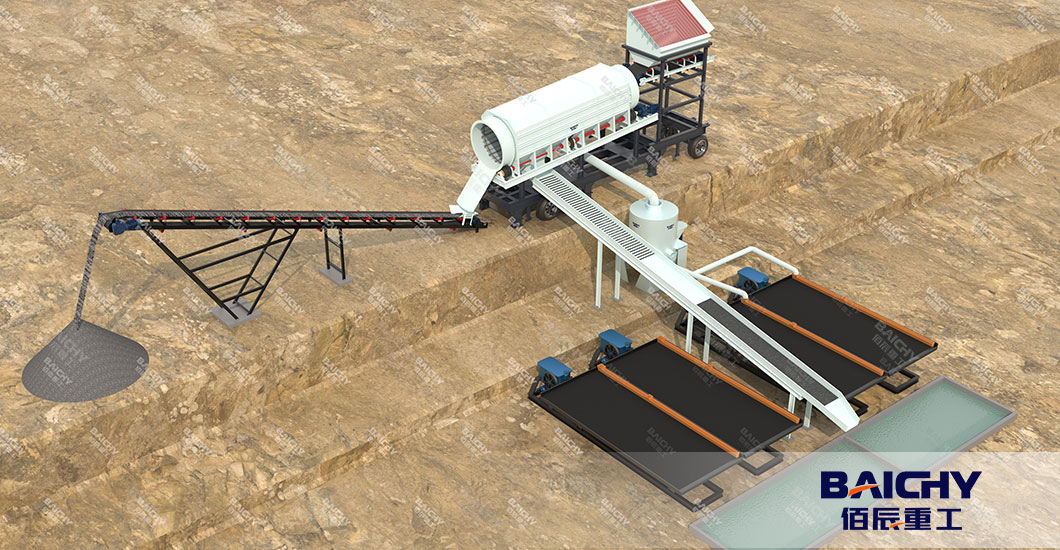
Understanding Small-Scale Gold Processing Plants
A small scale gold processing plant is a compact, often modular, mineral processing facility designed to handle smaller volumes of ore—typically ranging from 5 to 100 Tons Per Day (TPD) or roughly 1 to 10 Tons Per Hour (TPH). Unlike massive industrial operations that require hundreds of millions of dollars and years of infrastructure development, small-scale plants are built for agility. They are highly favored by independent miners because they require significantly lower capital investment, have a much shorter setup time, and can often be relocated if a gold deposit is exhausted.
These plants are engineered to extract gold from either placer deposits (loose river sands) or hard rock deposits (gold trapped inside quartz or other rocks), maximizing the recovery of fine gold particles while keeping operational costs manageable.
Key Components and Technologies
The efficiency of a small scale gold processing plant relies entirely on its equipment. To build an optimized plant, several key technologies must work in harmony:
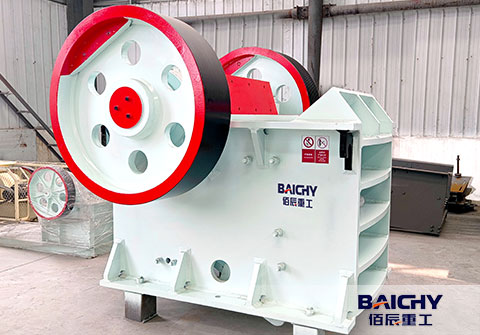
● Crushers (Jaw & Hammer): The first line of defense in hard rock mining. Jaw crushers break down massive boulders into manageable sizes, while hammer mills further reduce the rocks into gravel.
● Grinding Mills (Ball Mills & Wet Pan Mills): Grinding is essential for "liberation"—freeing the microscopic gold trapped inside the rock. A Ball Mill uses tumbling steel balls to grind ore into a fine, muddy slurry.
● Centrifugal Concentrators: A game-changer for modern small scale mining. These machines spin at high speeds, using G-force (centrifugal force) to catch heavy gold particles while washing away the lighter waste rock. They are incredibly efficient at capturing fine gold without the use of chemicals.
● Shaking Tables: Often used as a secondary concentration step. The slurry is fed onto a vibrating, slanted table covered in water. The heavy gold settles into grooves and forms a visible "gold line" that can be collected.
● Smelting Furnaces: Small, high-temperature furnaces used to melt the final gold concentrate along with fluxes (like borax) to pour pure gold bullion bars.
Process Flow: How Small Scale Gold Processing Plants Work
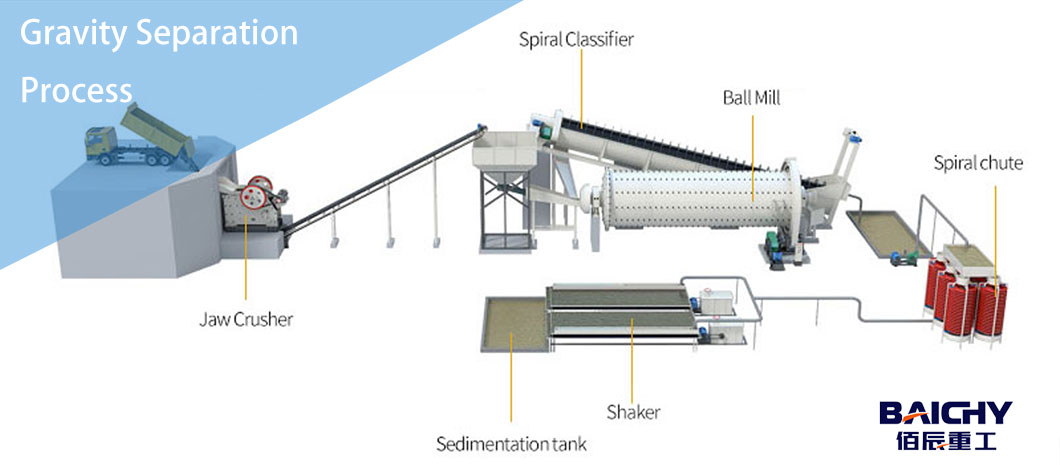
While every mine site requires a customized approach based on an ore test, a standard hard rock small scale gold processing plant follows a logical, step-by-step process flow:
● Crushing (Size Reduction): Raw ore extracted from the mine is fed into a Jaw Crusher to reduce large rocks down to 20mm or smaller.
● Grinding (Liberation): The crushed ore is fed into a Ball Mill along with water. The mill rotates, crushing the rock into a fine powder (slurry). This step ensures the gold is physically separated from the surrounding waste minerals.
● Concentration (Gravity Separation): The slurry exits the ball mill and is pumped into a Centrifugal Concentrator. Because gold is much denser than regular rock, the concentrator captures the heavy gold particles.
● Upgrading (Fine Separation): The concentrate produced by the centrifugal machine is passed over a Shaking Table, which perfectly separates the pure gold dust from the remaining heavy impurities (like iron sands).
● Refining (Smelting): The final gold dust is dried, mixed with borax, and melted in a smelting furnace. The pure molten gold is poured into a mold to create a gold doré bar.
Real-World Success: A 5 TPH Gold Processing Plant in Zimbabwe
To understand how this process works in the real world, let’s look at a highly successful project we recently deployed in Zimbabwe.
The Challenge: A local mining client in Kadoma, Zimbabwe, owned a hard-rock quartz gold mine. Initially, they relied on rudimentary stamp mills and mercury amalgamation. Their recovery rate was terribly low (around 40%), meaning more than half of their gold was being washed away into the tailings dump. Furthermore, the use of mercury posed severe health and environmental risks.
The Solution: After analyzing their ore samples, our engineers designed a compact, highly efficient 5 Ton Per Hour (TPH) Gravity Separation Plant. The custom flowsheet included:
● A primary Jaw Crusher to handle the tough quartz rock.
● A secondary Hammer Crusher to further reduce the rock size to under 5mm.
● A Ball Mill (Model 1200x2400) to grind the ore into a fine slurry (200 mesh).
● A water-jacketed Centrifugal Concentrator to capture the liberated fine gold.
● A 6-S Shaking Table to upgrade the concentrate.
The Results: Recovery Rate Skyrocketed: The new plant increased their gold recovery rate from 40% to over 85%.
100% Mercury-Free: By utilizing pure gravity separation (Centrifugal Concentrator + Shaking Table), the client completely eliminated toxic chemicals from their operation.
Fast ROI: Thanks to the increased gold yield and low operating costs, the client recouped their entire equipment investment within the first three months of operation.
This 5 TPH plant perfectly demonstrates how upgrading to modern, modular equipment can transform a struggling mine into a highly profitable enterprise.
Challenges and Environmental Management
Operating a small scale gold processing plant is not without its hurdles. Miners must navigate several operational and environmental challenges:
1. The Mercury Problem: Historically, small-scale miners relied heavily on mercury amalgamation to capture fine gold. Modern plants must actively pivot away from mercury to comply with the global Minamata Convention. Equipment like centrifugal concentrators makes chemical-free gold recovery highly profitable.
2. Water and Power Scarcity: Gold processing requires constant water flow and a stable electricity supply (especially to start heavy Ball Mills). Remote plants must often invest in robust diesel generators and implement tailings water recycling systems to survive dry seasons.
3. Tailings Management: "Tailings" are the waste mud left over after gold extraction. Poorly managed tailings can pollute local ecosystems. Responsible small-scale plants utilize tailings ponds lined with impermeable membranes or use filter presses to create stackable "dry" waste.
Comparison Table: Traditional vs. Innovative Small Scale Gold
The industry is rapidly modernizing. Here is a look at how traditional artisanal methods compare to today’s innovative small scale processing plants:
| Feature |
Traditional Methods |
Innovative Small Scale Plants |
| Gold Recovery Rate |
Low (30% - 50%) |
High (70% - 95%+) |
| Primary Technology |
Sluice boxes, manual panning, stamp mills |
Centrifugal Concentrators, Ball Mills, Shaking Tables |
| Environmental Impact |
High (Heavy use of toxic Mercury) |
Low (Gravity separation, Mercury-free processes) |
| Setup & Structure |
Disorganized, manual labor intensive |
Modular, skid-mounted, continuous automated flow, less labors |
| Operational Safety |
Poor (exposure to toxic fumes, dust) |
High (enclosed machinery, mechanized material handling) |
| Long-term Profitability |
Low (wastes a lot of fine gold) |
High (maximizes yield from every ton of ore) |
Transitioning from manual mining to a mechanized Small Scale Gold Processing Plant is the smartest move you can make to skyrocket your gold recovery rates while protecting the environment. As proven by our 5 TPH project in Zimbabwe, the right equipment pays for itself in record time.
However, there is no "one-size-fits-all" solution in mining. The most profitable plants are built based on precise ore testing and custom engineering. Don't leave precious gold in your tailings! Contact our team of expert mineral processing engineers today. We provide comprehensive services ranging from professional ore testing and custom flowsheet design to the manufacturing and installation of turnkey, mercury-free gold processing equipment. Drop a comment below or Click Here to Contact Us for a free consultation and equipment quote!




 2026-10-16





 86-15093113821
 86-15093113821