1. What Is a Symons Cone Crusher?
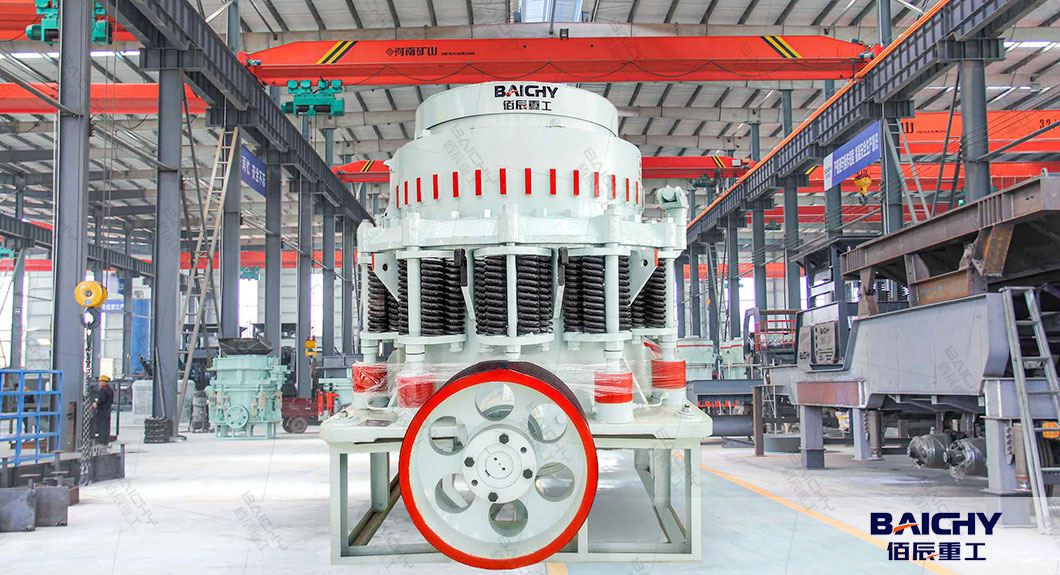
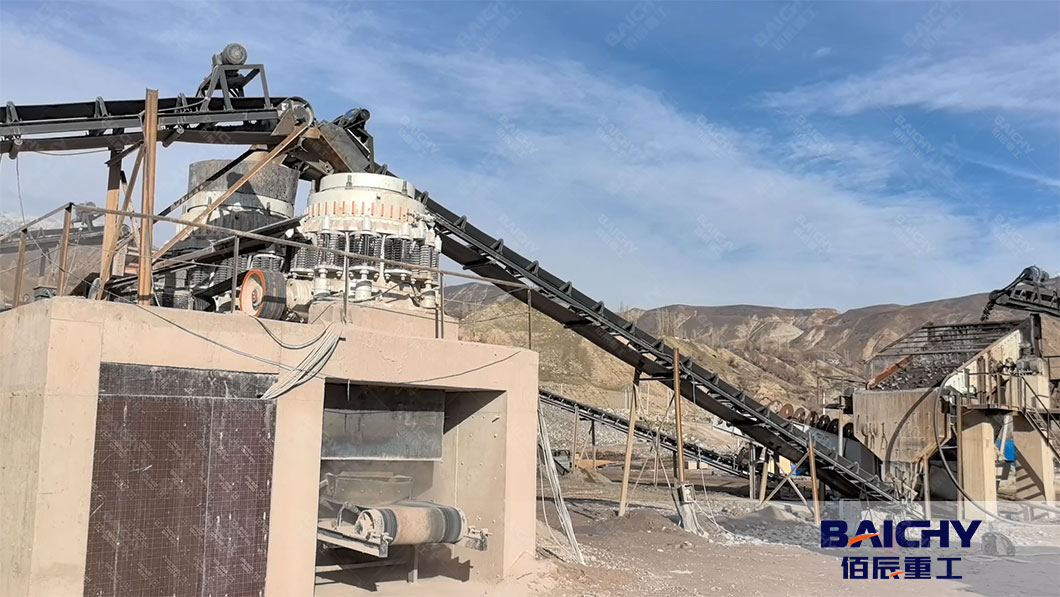
The Symons cone crusher is a compression-type crushing machine widely used in secondary and tertiary crushing. It reduces rock size by compressing material between a stationary concave liner and a moving mantle.
It is commonly used for processing hard and abrasive materials such as granite, basalt, river stone, and iron ore.
One reason for its continued use is its relatively simple mechanical structure and established maintenance practices. Its interchangeable wear parts and multiple chamber configurations also allow operators to adjust the machine to different feed sizes and product requirements.
When reviewing Symons cone crusher models, buyers should focus on four factors:
These factors determine whether a standard or short-head model is suitable for a specific production line.
2. Symons Cone Crusher Models: Standard vs. Short Head
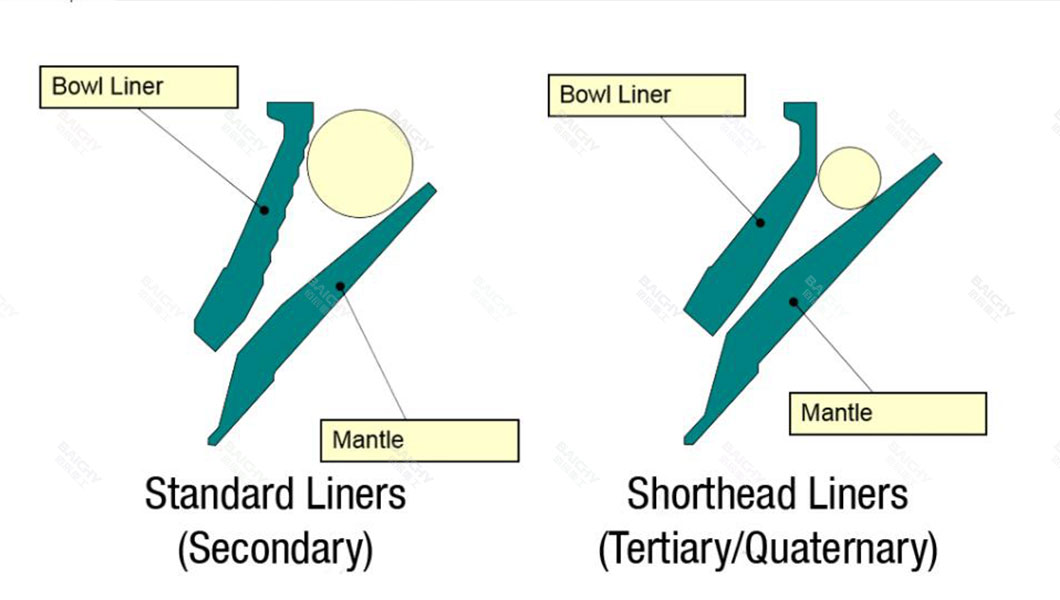
Symons cone crushers are generally available in two main chamber configurations: standard and short head.
They serve different stages of the crushing process.
| Comparison |
Standard Cone Crusher |
Short Head Cone Crusher |
| Main application |
Secondary crushing |
Tertiary crushing |
| Feed size |
Relatively larger |
Relatively smaller |
| Crushing chamber |
Coarser chamber |
Finer chamber |
| Product size |
Medium-sized aggregates |
Fine aggregates |
| Typical position |
After primary crushing |
After secondary crushing |
Standard Symons Cone Crusher
The standard model is designed for secondary crushing. It accepts larger feed material from jaw crushers and reduces it to a smaller size for subsequent screening or further crushing.
It is suitable for medium and large aggregate plants where production capacity and consistent crushing performance are important.
Short Head Symons Cone Crusher
The short-head model is designed for finer crushing. Its chamber configuration allows it to process smaller feed material and produce finer output.
It is commonly installed after a standard cone crusher or another secondary crushing machine.
For aggregate producers targeting multiple finished sizes, the short-head configuration can help improve the efficiency of the tertiary crushing stage.
3. Review of Common Symons Cone Crusher Models
Symons cone crushers are available in different sizes, with model selection generally related to feed opening, crushing chamber, and required capacity.
The following models are commonly encountered in the market.
| Model |
Typical Configuration |
Main Application |
| 2 ft |
Standard / Short Head |
Small crushing plants |
| 3 ft |
Standard / Short Head |
Small to medium plants |
| 4 ft |
Standard / Short Head |
Medium aggregate production |
| 4.25 ft |
Standard / Short Head |
Medium to large plants |
| 5.5 ft |
Standard / Short Head |
Large crushing operations |
| 7 ft |
Standard / Short Head |
Large-scale mining and aggregate plants |
Note: Model naming, chamber availability, feed openings, and performance specifications vary by manufacturer and equipment generation. Buyers should verify the actual technical datasheet rather than rely on model names alone.
2 ft Symons Cone Crusher
The 2 ft model is a compact option for small-scale crushing operations.
It may be suitable for small quarries, pilot plants, and operations with relatively low production requirements.
Before purchasing, check the minimum and maximum feed size and whether the machine can achieve the required output without excessive recirculation.
3 ft Symons Cone Crusher
The 3 ft model provides a larger crushing capacity than smaller configurations, depending on the chamber and operating conditions.
It can be considered for small and medium aggregate plants processing limestone, granite, or other suitable rock materials.
4 ft Symons Cone Crusher
The 4 ft model is commonly considered for medium-capacity crushing operations.
It can work as a secondary or tertiary crusher depending on its chamber configuration, feed material, and required product size.
4.25 ft Symons Cone Crusher
The 4.25 ft model is an option for plants requiring higher throughput than smaller configurations.
It is worth evaluating for medium-to-large quarries where the primary crusher and screening system can supply sufficient material.
5.5 ft Symons Cone Crusher
The 5.5 ft model is designed for larger crushing operations.
It can be used in aggregate production and mining applications where higher processing capacity is required. A suitable feeding system and screening arrangement are important to maintain stable operation.
7 ft Symons Cone Crusher
The 7 ft model is a large cone crusher configuration used in large-scale mining and aggregate processing.
It is generally considered for operations with substantial feed volumes and demanding production schedules.
Its foundation, motor power, lubrication system, installation space, and maintenance requirements should be carefully evaluated before purchase.
4. What Affects Symons Cone Crusher Capacity?
A model's nominal size does not directly determine its actual production capacity.
Several operating conditions affect the tons per hour (TPH) a Symons cone crusher can achieve.
1. Material Hardness and Abrasiveness
Granite and basalt generally require more crushing energy and cause greater wear than softer limestone.
Hard and abrasive materials may reduce throughput and increase liner replacement frequency.
2. Feed Size and Distribution
Oversized feed can cause unstable operation, while an inconsistent feed distribution can reduce crushing efficiency.
A properly designed feeder should distribute material evenly into the crushing chamber.
3. Crushing Chamber Selection
A standard chamber is generally used for secondary crushing, while a short-head chamber is more suitable for finer crushing.
Choosing the wrong chamber can lead to poor product grading or unnecessary recirculation.
4. Closed-Side Setting (CSS)
The CSS controls the discharge opening and has a direct influence on product size.
A smaller CSS generally produces finer material but may reduce throughput and increase power consumption.
5. Screening and Circulating Load
In a closed-circuit crushing plant, oversize material returns to the crusher.
The screening efficiency and circulating load therefore influence the actual fresh-feed capacity of the system.
5. How to Choose the Right Symons Cone Crusher Model
Choosing a cone crusher based only on its model number is not a reliable purchasing method.
A practical selection process should consider the complete crushing line.
| Selection Factor |
Information Required |
| Raw material |
Granite, basalt, limestone, iron ore, etc. |
| Maximum feed size |
Largest incoming rock size in mm |
| Capacity |
Required production in TPH |
| Final product |
Target particle size in mm |
| Installation stage |
Secondary or tertiary crushing |
| Operating conditions |
Continuous operation, available power, and maintenance requirements |
For example:
-
A quarry processing granite with relatively large feed material may need a standard cone crusher for secondary crushing.
-
A plant producing fine aggregate may need a short-head cone crusher for tertiary crushing.
-
A large mining operation should evaluate motor power, feed distribution, liner life, and maintenance access in addition to rated capacity.
The best model is the one that matches the actual material characteristics and production targets, not necessarily the largest available machine.
6. Symons Cone Crusher vs. Modern Cone Crusher Designs
When purchasing a new cone crusher, buyers may also compare Symons-type machines with modern hydraulic cone crushers.
| Feature |
Symons-Type Cone Crusher |
Modern Hydraulic Cone Crusher |
| Operating system |
Traditional mechanical design |
Hydraulic adjustment and protection |
| Discharge setting |
Depends on the adjustment mechanism |
Hydraulic adjustment on applicable models |
| Overload protection |
Depends on machine configuration |
Hydraulic protection on applicable models |
| Maintenance |
Established maintenance practices |
Model-dependent maintenance requirements |
| Application |
Secondary and tertiary crushing |
Secondary, tertiary, and other crushing duties |
Symons-type crushers remain relevant in many crushing operations, particularly where operators value familiar mechanical structures and established spare-parts supply.
Modern hydraulic cone crushers may offer easier adjustment and more convenient overload protection, depending on their design.
However, the choice should also consider initial investment, spare-parts availability, operating costs, and the technical support available in the local market.
7. What Should You Check Before Buying a Symons Cone Crusher?
Before placing an order, ask the manufacturer to provide the following information:
-
Complete technical specifications: Confirm feed opening, maximum feed size, motor power, weight, and overall dimensions.
-
Capacity under actual conditions: Request capacity data based on your material, chamber, and discharge setting.
-
Wear-part availability: Check the cost and delivery time of mantles, concaves, and other replacement components.
-
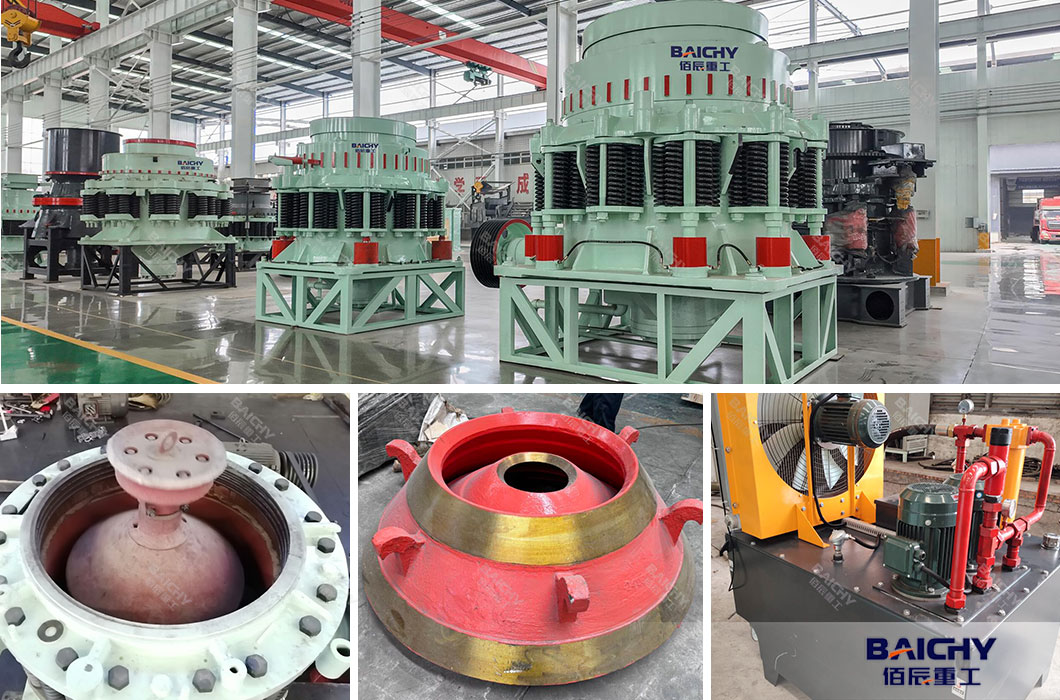
Lubrication system: Confirm the oil supply, cooling, filtration, and protection arrangements.
-
Installation requirements: Review foundation drawings, electrical requirements, and auxiliary equipment.
-
After-sales support: Check whether the supplier can provide installation guidance, spare parts, and technical assistance.
For used Symons cone crushers, also inspect the main shaft, eccentric assembly, bowl liner, hydraulic or adjustment components, and lubrication system before purchase.
Symons cone crusher models cover a wide range of crushing requirements, from small aggregate plants to large mining operations. The key to selecting the right machine is to match its chamber configuration, feed opening, capacity, and discharge setting with the actual production target.
Before making a purchase, compare the complete technical specifications and evaluate the crusher as part of the entire crushing and screening system. Looking for a cone crusher for your aggregate or mining project? Baichy Machinery can help evaluate your material, feed size, required capacity, and finished product specifications to recommend a suitable crushing configuration.
Frequently Asked Questions
Q1: What are the common Symons cone crusher models?
Common model sizes include 2 ft, 3 ft, 4 ft, 4.25 ft, 5.5 ft, and 7 ft. Actual specifications and chamber configurations depend on the manufacturer.
Q2: What is the difference between a standard and a short-head Symons cone crusher?
A standard cone crusher is mainly used for secondary crushing with relatively larger feed material. A short-head model is designed for finer crushing and smaller feed material.
Q3: What materials can a Symons cone crusher process?
It can process various hard and medium-hard materials, including granite, basalt, limestone, river stone, and some metal ores, subject to machine specifications and material conditions.
Q4: How do I determine the capacity of a Symons cone crusher?
Capacity depends on the model, crushing chamber, feed size, material hardness, CSS, and operating conditions. Always request a capacity estimate based on your actual project parameters.
Q5: Is a Symons cone crusher suitable for granite crushing?
Yes. Symons-type cone crushers are commonly used for secondary and tertiary granite crushing. Proper chamber selection, feed distribution, and wear-part selection are important for stable production.
Q6: Should I choose a Symons cone crusher or a hydraulic cone crusher?
Choose according to your budget, production requirements, maintenance preferences, spare-parts availability, and expected operating costs. Hydraulic models may offer more convenient adjustment and overload protection, while traditional Symons-type machines have established operating and maintenance practices.




 2026-11-03






 86-15093113821
 86-15093113821