Limestone is one of the most versatile raw materials in industry, serving as the backbone of cement production, construction aggregates, flue gas desulfurization (FGD), and high-value fillers for plastics and paper. To unlock its full potential, limestone must be ground into fine or ultra-fine powder, and the ball mill remains the most reliable and widely used equipment for this task. Unlike other grinding machines, limestone ball mills excel at handling hard materials, delivering consistent particle sizes, and operating continuously in harsh industrial environments. This article will break down how limestone ball mills work—with a deep dive into the high-efficiency closed-circuit setup—their key advantages, practical applications, and how to choose the right system for your needs. Whether you’re in cement manufacturing, environmental protection, or mineral processing, understanding limestone ball mills will help you boost efficiency and reduce production costs.
What Is a Limestone Ball Mill?
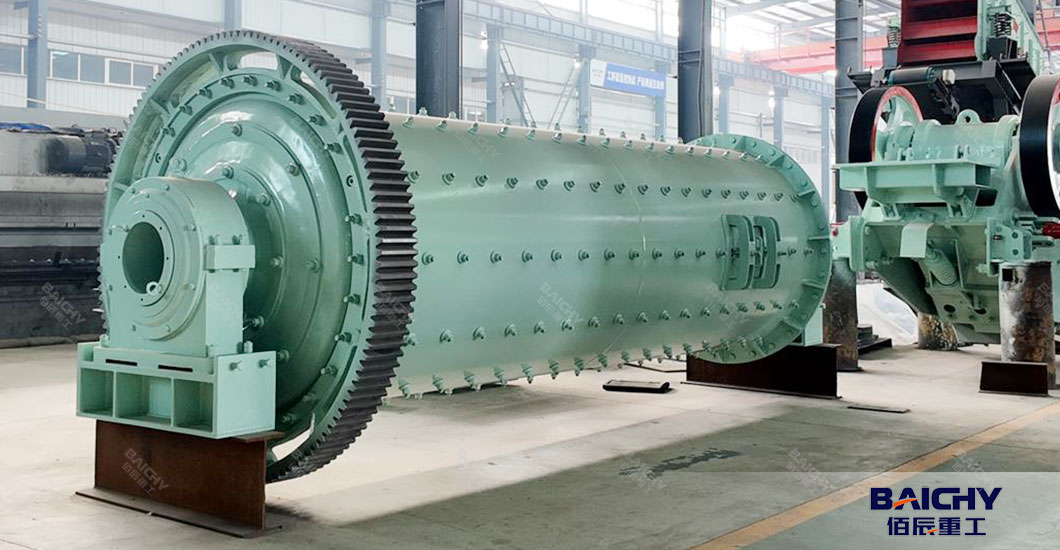
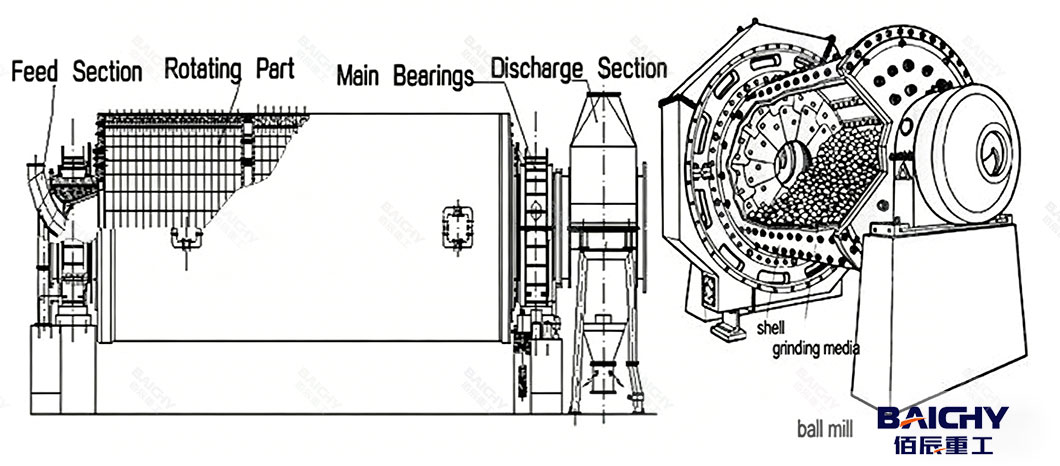
A limestone ball mill is a heavy-duty grinding machine designed to reduce crushed limestone rocks into fine powder using the combined force of impact and friction. Its core structure includes a rotating cylindrical shell (lined with wear-resistant materials like alumina ceramic to minimize contamination), steel balls or rods as grinding media, a drive system to rotate the shell, and inlet/outlet mechanisms for material flow. Unlike Raymond mills or vertical roller mills, ball mills are built for ruggedness—they can operate 24/7 in quarries, cement plants, and mines without frequent breakdowns. The simplicity of their design means lower maintenance requirements, while their flexibility allows them to handle a wide range of feed sizes and produce powders from 80 mesh to ultra-fine 1250 mesh. Modern models also feature advanced seals and negative-pressure operation to reduce dust and noise, making them more environmentally friendly than older versions. Whether used alone or as part of a closed-circuit system, limestone ball mills are a cornerstone of efficient powder production.
How Does a Limestone Ball Mill Work?
1. Basic Working Principle
The operating principle of a limestone ball mill is straightforward yet effective. When the cylindrical shell rotates (driven by a motor and gear system), the steel balls inside are lifted by centrifugal force and then fall back onto the limestone material. This repeated impact, combined with the friction between the balls and the shell lining, crushes and grinds the limestone into smaller particles. The speed of the shell is carefully calibrated—too slow, and the balls won’t lift enough to generate impact; too fast, and they’ll stick to the shell instead of falling. As the material grinds down, it moves toward the outlet end of the mill, where it exits as powder. The fineness of the final product can be adjusted by changing the size and quantity of steel balls, adjusting the mill speed, or modifying the residence time of the material inside the shell. This basic mechanism has been refined over decades, making ball mills a trusted choice for consistent limestone grinding.
2. Closed-Circuit Flow & Equipment Configuration
While open-circuit grinding (where material passes through the mill once) is simpler and cheaper upfront, it often leads to over-grinding, inconsistent particle sizes, and higher energy consumption. For this reason, most industrial operations use closed-circuit flow, which adds classification equipment to separate fine particles from coarse ones and return the latter to the mill for re-grinding.
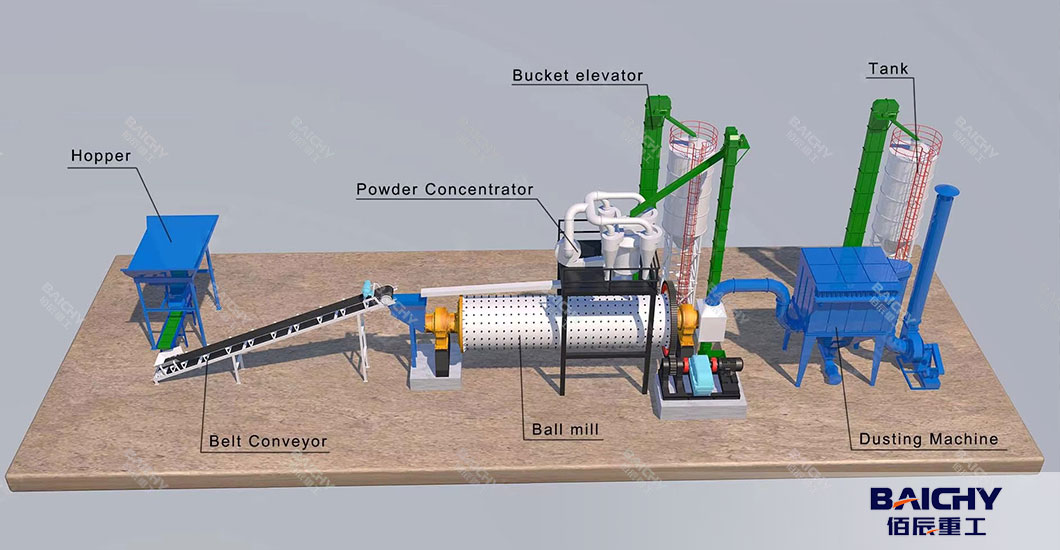
The key equipment components of a closed-circuit limestone ball mill system work in seamless coordination to optimize efficiency. First, the ball mill grinds the limestone into a mix of fine and coarse particles, which are then transported via belt conveyors or slurry pumps to classification equipment. The two most common classifiers are dynamic air classifiers (like turbo or rotor classifiers) and hydrocyclones. Dynamic air classifiers use centrifugal force and airflow to separate particles—rotating blades block coarse particles (above the target size, e.g., D97 10μm) and send them back to the ball mill, while fine particles pass through to the collection system. Hydrocyclones, by contrast, use fluid dynamics: slurry enters the cyclone tangentially, creating a high-speed vortex that pushes coarse particles to the walls and out the bottom (to be re-ground), while fine particles rise in the inner vortex and exit through the top.
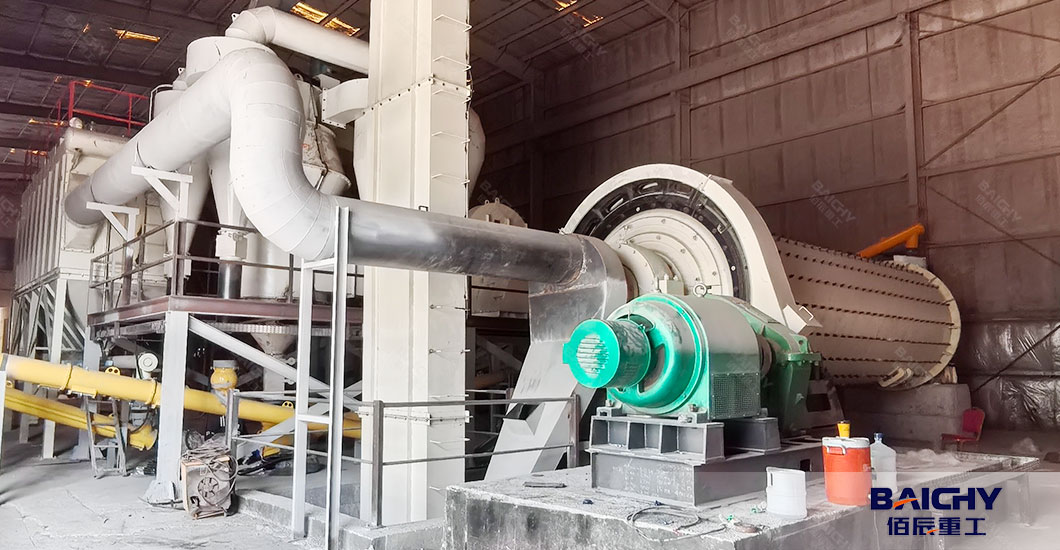
To ensure smooth operation, the system also includes auxiliary equipment: bucket elevators to transport material between the mill and classifier, cyclone separators or bag filters to collect finished powder, and PLC control systems to adjust parameters like classifier speed or hydrocyclone pressure. This configuration reduces over-grinding by 30-40%, cuts energy use by 25-40%, and produces powder with uniform particle size distribution—critical for applications like FGD or high-end fillers.
Key Technical Specifications of Limestone Ball Mill
When selecting a limestone ball mill, you need to look at several key numbers. These specifications directly affect your production capacity and costs. Below are the most important parameters to consider.
1. Capacity Range
Industrial limestone ball mills typically handle 15 to 100 tons per hour. Smaller units for laboratories can process 200 to 500 pounds per hour. Your choice depends on your production goals. A 15 t/h mill is suitable for a small processing plant. Larger operations often choose 50 t/h or even 100 t/h models. Always match the capacity to your upstream crushing system and downstream storage.
2. Feed and Discharge Size
The mill accepts limestone pieces up to 25 mm in size. After grinding, you can achieve a fineness from 200 mesh to 325 mesh. Some models go even finer for special applications. The discharge size is adjustable by changing the ball charge, rotation speed, or using different separators. This flexibility makes the ball mill useful for many industries, from power generation to paint manufacturing.
3. Power and Speed
Motor power ranges from 55 kW up to 800 kW for large industrial mills. The rotation speed is typically 15 to 25 revolutions per minute. Slower speeds are used for finer grinding. Faster speeds increase throughput but may reduce fineness. You should also check the grinding media load. A typical mill might carry 10 to 40 tons of steel balls. Heavier loads produce more fine powder but consume more energy.
Main Advantages of Using a Ball Mill for Limestone
Many manufacturers choose ball mills over other grinding equipment. There are good reasons for this. First, ball mills offer excellent control over particle size. You can produce very consistent powder, which is critical for applications like flue gas desulfurization. Second, modern ball mills are energy efficient. Some models save 30 to 40 percent compared to older designs. This directly lowers your electricity bill. Third, these machines are sealed and run under negative pressure. This means very little dust escapes into the air. Your workplace stays cleaner, and you comply with environmental rules. Fourth, noise levels are relatively low. Operators do not need special hearing protection in most cases. Fifth, ball mills are durable and easy to maintain. With proper care, a mill can run for decades. Finally, ball mills handle wet or dry grinding. This gives you flexibility depending on your raw material and final product requirements.
Common Applications of Limestone Ball Mill
Limestone powder produced by ball mills serves many industries. Below are the most common uses.
1. Power Plant Desulfurization (FGD)
Coal-fired power plants use limestone powder to remove sulfur dioxide from exhaust gases. The powder is mixed with water to form a slurry. This slurry sprays into the flue gas. The sulfur dioxide reacts with the limestone and is captured. A limestone ball mill typically produces 200 to 325 mesh powder for this application. This is one of the largest markets for limestone grinding equipment.
2. Building Materials
Limestone powder is a key ingredient in dry mortar, putty, and asphalt fillers. It improves workability and adds strength. In cement production, limestone is used as a clinker substitute. This reduces CO2 emissions and lowers costs. Many construction material plants operate their own ball mills to control quality and supply.
3. Agriculture and Chemical Industries
Farmers use ground limestone to correct acidic soil. The fine powder dissolves quickly and raises the pH level. This creates better conditions for crops. In the chemical industry, limestone powder becomes calcium carbonate. This is used in plastics, paints, rubber, and paper coatings. The ball mill's ability to produce very fine and pure powder makes it ideal for these high-value applications.
Limestone Ball Mill vs. Other Grinding Equipment
Many buyers ask how a ball mill compares to other machines. Here is a simple breakdown.
| Comparison Factor |
Ball Mill |
Raymond Mill |
Vertical Roller Mill |
Hammer Mill |
| Final Fineness |
200–325 mesh (can be finer) |
80–325 mesh |
100–300 mesh |
< 5mm (dust-like, not fine powder) |
| Capacity |
15–100 t/h |
1–20 t/h |
10–200 t/h |
5–50 t/h (only coarse crushing) |
| Energy Consumption |
Moderate (traditional higher; energy-saving models 30-40% lower) |
Relatively high |
Low (30-40% more efficient than ball mill) |
Moderate |
| Initial Investment |
Moderate |
Low |
High |
Very low |
| Floor Space |
Large |
Moderate |
Small |
Small |
| Operation & Maintenance |
Simple, easy media replacement |
Complex, worn roller replacement |
Complex, requires professional maintenance |
Simple, easy hammer replacement |
| Suitable Materials |
Limestone, calcite, marble (medium hardness below 7 Mohs) |
Non-metallic minerals with Mohs < 7 |
Limestone, slag, cement raw meal |
Brittle materials, coarse crushing only |
| Dust Control |
Good (fully sealed + negative pressure) |
Moderate |
Excellent |
Poor |
| Recommended Use Case |
Fine powder of 200 mesh or above; small to medium production lines |
Medium-coarse powder of 80-200 mesh; small capacity |
Large scale, high fineness, high energy efficiency requirements |
Pre-crushing or coarse crushing; not for powder making |
How to Choose the Right Limestone Ball Mill
Choosing the right ball mill starts with three questions. First, how much powder do you need per hour? Second, how fine must the powder be? Third, what is your available power supply and space? Let us go through each one. For production under 15 t/h, a small ball mill or even a laboratory mill is enough. For 15 to 50 t/h, a medium-sized industrial mill works well. Above 50 t/h, you need a large model with high power. For fineness, 200 mesh is standard for most industrial uses. 325 mesh is for high-end applications like FGD or paper coating. Also check your limestone's hardness and moisture. Wet grinding is better for moisture above 3 percent. Dry grinding is simpler for dry materials. Finally, ask the supplier for a process flow diagram and a list of included components. This helps you compare total cost, not just the mill price.
Frequently Asked Questions (FAQ)
Here are answers to the most common questions about limestone ball mills.
H3: Does a limestone ball mill produce a lot of dust?
No. Modern ball mills are sealed and run under negative pressure. This means dust is sucked away from the outlet. Very little dust escapes into the room. This is a major improvement over old open designs.
H3: What is the typical capacity of a limestone ball mill?
Small laboratory mills process 200 to 500 pounds per hour. Industrial mills range from 15 to 100 tons per hour. Always confirm capacity with the manufacturer because actual output depends on feed size and target fineness.
H3: How fine can the limestone powder be?
Most mills easily reach 200 to 325 mesh. With advanced separation systems, you can go to 600 mesh or finer. However, finer powder requires more energy and reduces throughput.




 2026-10-22





 86-15093113821
 86-15093113821