In the gold mining industry, the equipment you choose determines your recovery rate. Crushers take larger rock and break them down to smaller rocks, and then they are processed through an impact mill to reduce the ores to a finer particle. This is the key stage in the gold process of gravity separation or chemical leaching. But with so many choices,which machine is right for your operation?
In this guide, we compare the three most popular choices: the Hammer Mill, the Ball Mill, and the Wet Pan Mill.
1. The Hammer Mill: The High-Speed Crusher
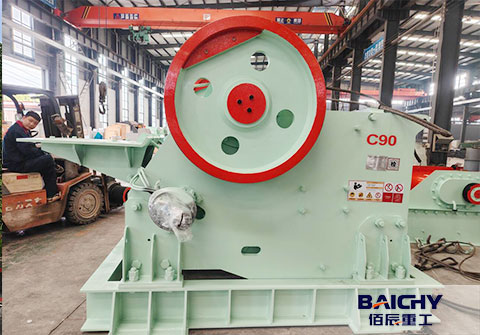
The Hammer Mill is often the first line of defense in the grinding circuit for small-to-medium operations. It works on the principle of impact at high speed.
● How it Works: A rotating shaft filled with free-swinging hammers pulverizes the material against its outer walls while at the same time, grinding it through a perforated screenon the bottom of the housing. The hammers impact on the ore and crushit until the pieces are small enough to pass through a discharge screen.
● Best Application: It is best used as a secondary crusher or a coarse grinder. Its specialty reduction is reducing gravel-sized rocks (50mm) down to sand size (1-10mm), for capacity of 30t/h, and even can be up to 50t/h.
● Pros:
○ Low Cost: Generally cheaper than ball mills.
○ Versatile: Can handle dry or wet material (though mostly used dry).
○ Discharge Control: You can control the particle size simply by changing the screen size.
○ Verdict: Choose a Hammer Mill if you need a portable, budget-friendly machine to prepare ore for a finer grinding stage or for coarse gravity recovery.

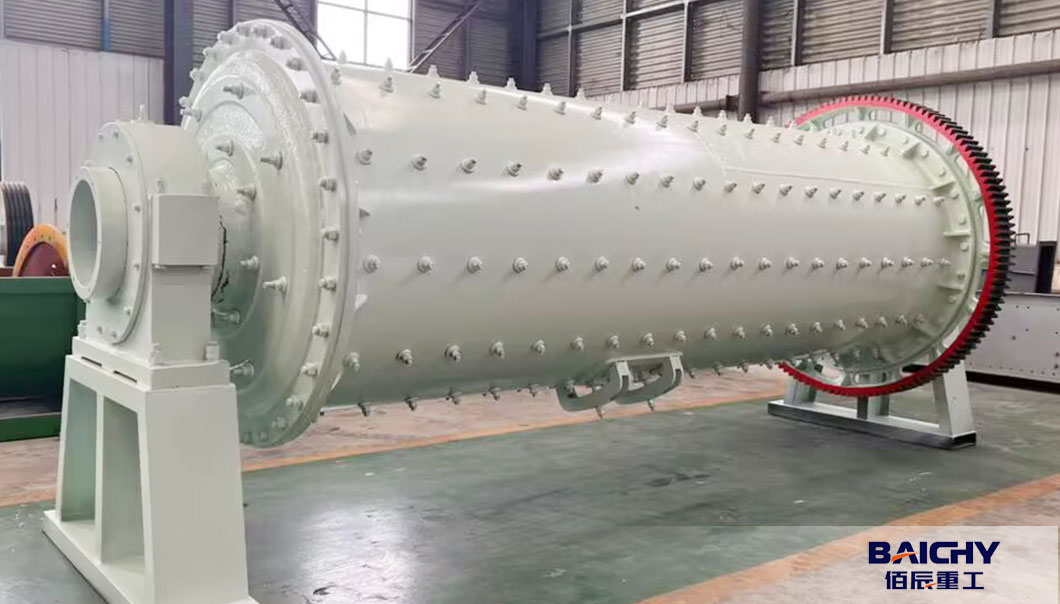
2. The Ball Mill: The Industrial Standard
When professional miners talk about "grinding," they are usually talking about the Ball Mill. It is the most widely used machine in the world for fine grinding.
● How it Works: The mill is a large revolving cylinder containing steel balls that is then mixed with ore. As the cylinder rotates, the balls cascade and tumble, crushing the ore against the liners and other balls through impact and attrition.
● Best Application: Operations requiring ultra-fine grinding of 200 mesh or finer. This level of fineness is required for flotation and cyanide leaching (CIL/CIP) plants.
● Pros:
○ High Efficiency: Capable of continuous, 24/7 operation.
○ Scalability: Available in sizes ranging from small lab mills to massive industrial units.
○ Uniformity: Produces a very consistent particle size, which improves gold recovery rates.
○ Verdict: Choose a Ball Mill if you are running a commercial plant and require maximum recovery through chemical extraction or flotation.
3. The Wet Pan Mill: The "Gold Runner"
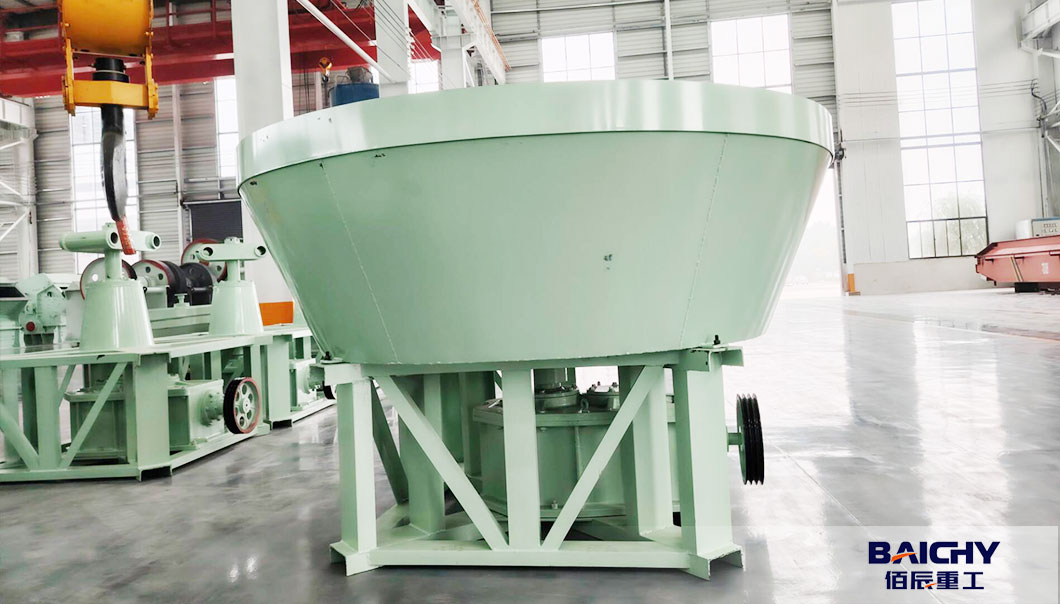
The Wet Pan Mill (known as one of the best milling) is a favorite among artisanal and small-scale miners, particularly in Africa and Southeast Asia.
● How it Works: It consists of two large wheels, made of concreteor iron, turning around a central basin (pan). Wheels grind the ore crushing it further into particles and also mix with water.
● Best Application: It is designed for batch grinding and is excellent for liberating free gold. It is often used to grind and amalgamate gold in a single step (where local regulations permit).
● Pros:
○ User-Friendly: Very simple to operate and repair.
○ Cost-Effective: It is one of the cheapest fine-grinding machines available for its capacity.
○ Liberation: The rubbing action of the wheels flattens malleable gold, making it easier to catch in gravity traps.
○ Verdict: Choose a Wet Pan Mill if you have a limited budget, a small-scale operation, and are processing ore with free/visible gold.
The choice between ball mills, hammer mills, and wet pan mills ultimately depends on your specific ore characteristics, operational scale, and recovery targets. Ball mills represent the industrial standard for achieving the fine grinds necessary for high recovery rates from complex ores. Hammer mills offer an efficient solution for primary crushing and processing of more coarsely liberated gold deposits. Wet pan mills continue to serve the unique needs of artisanal and small-scale miners, particularly in remote locations with limited capital.
By understanding the strengths and limitations of each grinding technology, gold mining operations can make right decisions for maximize recovery in gold ore processing plant.
People Also Frequently Asked For - FAQ
1. Can a Hammer Mill replace a Ball Mill?
Generally, no. A hammer mill is efficient at crushing rock down to sand, but it struggles to consistently produce the "flour-like" powder (200 mesh) that a ball mill achieves. For maximum gold recovery, a hammer mill is often used before a ball mill to reduce the rock size first.
2. Which machine is best for hard rock gold ore?
The Ball Mill is the best choice for hard rock. Hard quartz can cause excessive wear on the hammers of a hammer mill and the rollers of a wet pan mill. Ball mills use hardened steel balls and liners designed specifically to withstand the abrasion of hard rock.
3. How fine should I grind gold ore?
For most gold recovery methods, especially chemical leaching (cyanidation), the standard is 200 mesh (74 microns). At this size, roughly 70-80% of the ore is fine enough to pass through a 200-mesh screen, ensuring the gold particles are fully exposed.
4. How much water should I add during wet grinding?
The ideal water-to-solids ratio in a ball mill is typically around 1:3 to 1:4 by weight. This creates a slurry concentration of roughly 65-75% solids. Too much water flushes the ore out before it is ground; too little causes the machine to clog.




 2026-09-25





 86-15093113821
 86-15093113821