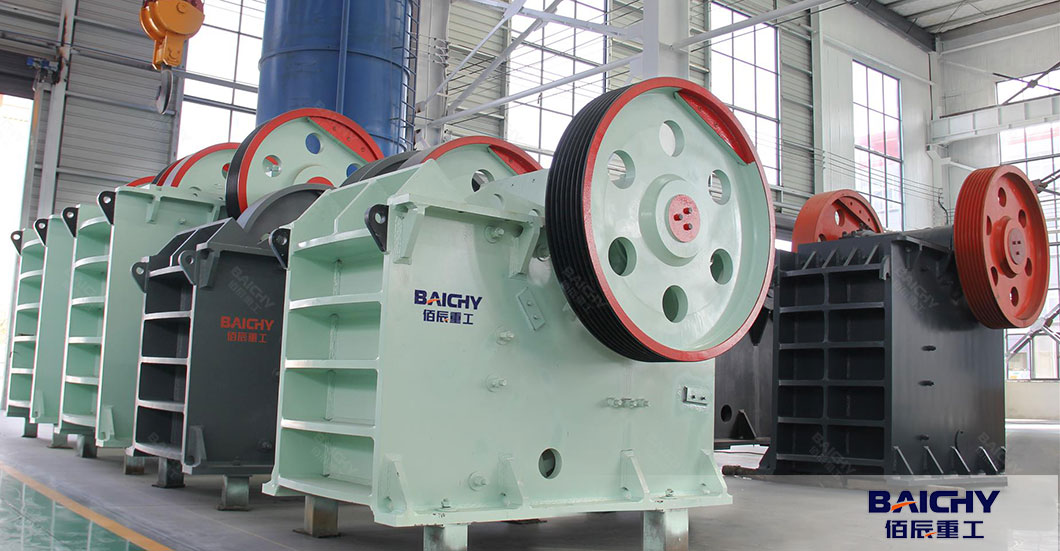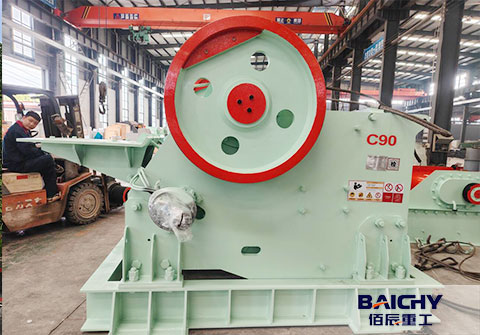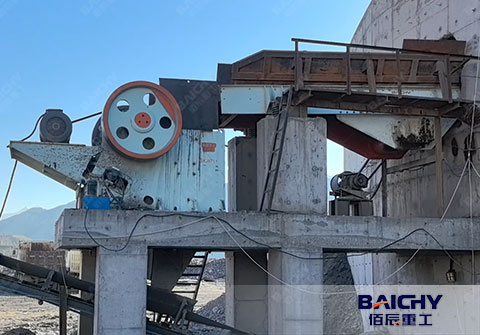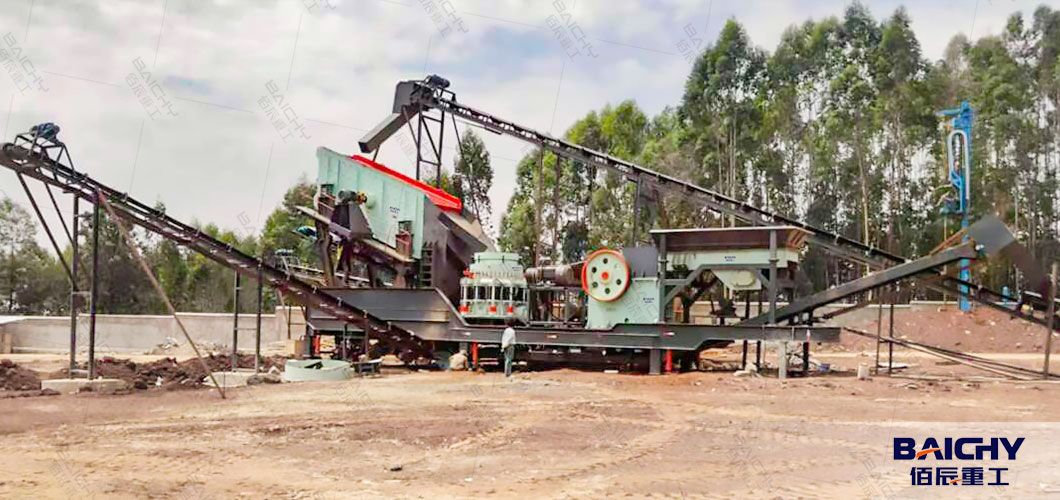
In the mining and construction industries, jaw crushers are the primary crushing equipment. While these machines are robust and durable, their immense crushing force can pose serious safety risks if operated improperly. Whether you're a new operator or a site manager responsible for training, this step-by-step guide will ensure your crushing equipment runs smoothly, safely, and efficiently.

Safety begins before the motor starts. Never skip pre-start checks. A 5-minute check can prevent failures or injuries.
● Check the crushing chamber: Ensure the crushing chamber is completely empty. Never start the jaw crusher under load (with material in the chamber). This can cause motor burnout or toggle plate breakage.
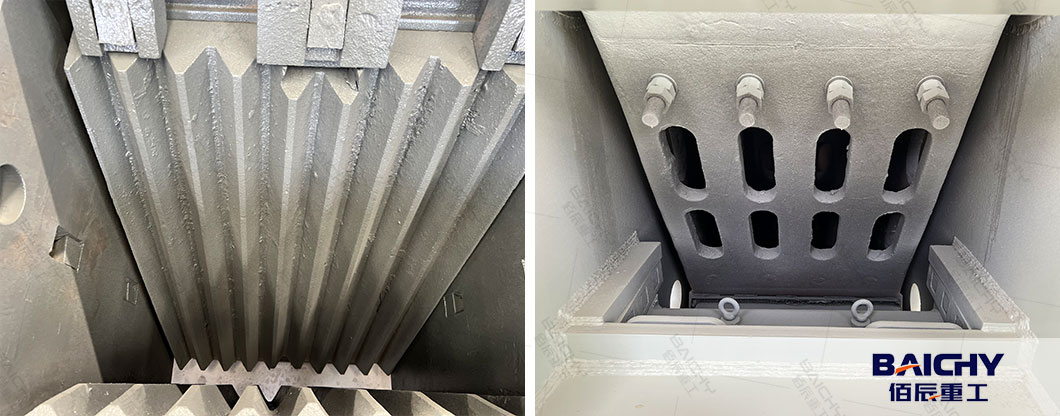
● Check wear parts: Inspect the jaw plates (liners) for loose bolts or excessive wear. Tighten all fastening bolts on the frame and toggle plate seat.
● Lubrication status: Confirm that the toggle plate, bearings, and movable jaw are properly lubricated. Insufficient lubrication can lead to overheating and seizing.
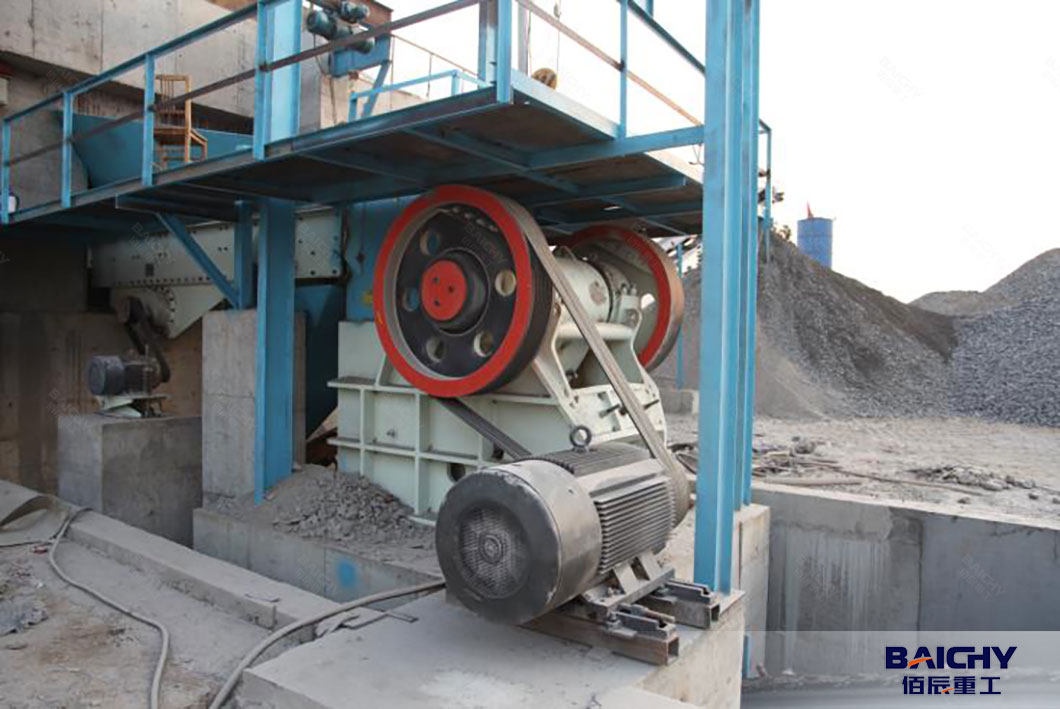
● Drive system: Check the tension and wear of the V-belts. Ensure the safety guards around the flywheel and belts are securely in place.
● Clear the area: Ensure no personnel are standing near the machine or on maintenance platforms during startup.
Follow the "downstream to upstream" principle. To prevent material blockage, you must start the equipment in the reverse order of material flow.
1. Start the discharge conveyor (the belt that carries material away from the crusher).
2. Start the jaw crusher motor. Allow the machine to reach its rated speed. Note any unusual knocking sounds or excessive vibration.
3. Once the crusher is running smoothly, start the feeder (vibrating feeder or belt feeder).

Efficiency lies in stability.
● Even feeding: The most common operating mistake is uneven feeding. The goal is to maintain a continuous flow of material.
○ Tip: Use a vibrating feeder to ensure a steady supply of material.
● Avoid overloading: While jaw crushers operate best with "full chamber feeding" (keeping the crushing chamber full of material), do not overfill to the point of material spillage. Pay attention to foreign objects: Ensure that unbreakable materials (steel drill bits, shovel teeth) do not enter the crushing chamber. Although the toggle plate acts as a safety fuse, metal entering the jaw crusher can cause dangerous flying debris or structural damage.
● Monitor bearings: Closely monitor bearing temperature. If the temperature rises sharply (usually above 60°C/140°F), stop the machine immediately for inspection.
Empty the crushing chamber before cutting off the power supply. Incorrect shutdown procedures can cause the crusher to jam the next day.
1. Stop the feeder first. Stop the supply of raw materials.
2. Wait. Allow the jaw crusher to process all remaining material in the crushing chamber until it is completely empty.
3. Stop the jaw crusher motor.
4. After the crusher stops, turn off the discharge conveyor.

To ensure a "zero harm" work environment, strictly follow these rules:
● LOTO (Lockout/Tagout): Never attempt to clear blockages, adjust the closed side setting (CSS), or perform maintenance without isolating the power supply and locking it out.
● Personal Protective Equipment (PPE) is mandatory: Operators must wear a hard hat, safety glasses, steel-toed safety boots, and hearing protection. Jaw crushers produce high decibel noise when operating.
● Never look from above: Never look directly into the crushing chamber without a safety guard while the machine is running. Rocks can be ejected upwards with lethal force (flying debris).
● Use tools, not your hands: If a rock is stuck, never use your hands or feet to remove it. Use a pry bar or a specialized hook, and only do so after the machine has been locked out.
Safe operation of a jaw crusher requires discipline and standardized operating procedures. Following this step-by-step guide will not only protect your employees from injury but also protect your investment from costly repairs and downtime. Remember: a safe plant is an efficient plant. If you need a detailed jaw crusher manual, click it and get it online.
1. How do we analyze a jaw crusher machine?
2. How to Measure the Jaw Crusher Gap (CSS)?
3. How to operate a jaw crusher?
4. How to adjust jaw crusher gap?
5. Stone Jaw Crusher Machine: 6 Problems You Could Face
6. What Are The Parts Of Jaw Crushers?
7. What Are The Different Models And Specifications Of The Jaw Crusher
8. What are skills to buy jaw crusher
9. 3 Jaw Crusher Machine Alternatives
Save Time! Get A Detailed Quotation Quickly.