Choosing a jaw crusher is not about picking the model with the biggest number on a spec sheet. It is about matching the machine's motion characteristics, frame design, and wear-part strategy to your actual feed material, throughput target, and maintenance capacity. This guide compares four widely reviewed jaw crusher models—CJ European Version, HD German Version, PE, and PEX—using criteria that matter on site: how they behave with different rock hardness, what they cost to maintain, and where each design creates the most value.
The comparisons below draw on publicly available technical specifications, field reports from aggregate and mining operations, and common failure points reported by maintenance teams. Where a trade-off exists, it is stated plainly rather than glossed over.
Comparison at a Glance
| Criterion |
CJ European Version |
HD German Version |
PE |
PEX |
| Frame design |
Non-welded, detachable |
Welded, heavy-duty |
Welded |
Welded or cast |
| Best crushing stage |
Primary |
Primary / secondary |
Primary (small–medium) |
Secondary / fine |
| Feed size |
Very large |
Large |
Medium |
Medium |
| Crushing ratio |
High |
High |
Moderate–high |
High (fine output) |
| Maintenance cycle |
Long |
Long |
Moderate |
Short–moderate |
| Relative capital cost |
High |
High |
Low |
Low |
| Ideal for |
Hard rock, large tonnage |
Hard rock, high reduction |
Limestone, quartzite, small plants |
Sand/stone lines needing fine product |
CJ European Version Jaw Crusher
Best for: Large-scale hard-rock primary crushing where transport and uptime are critical.
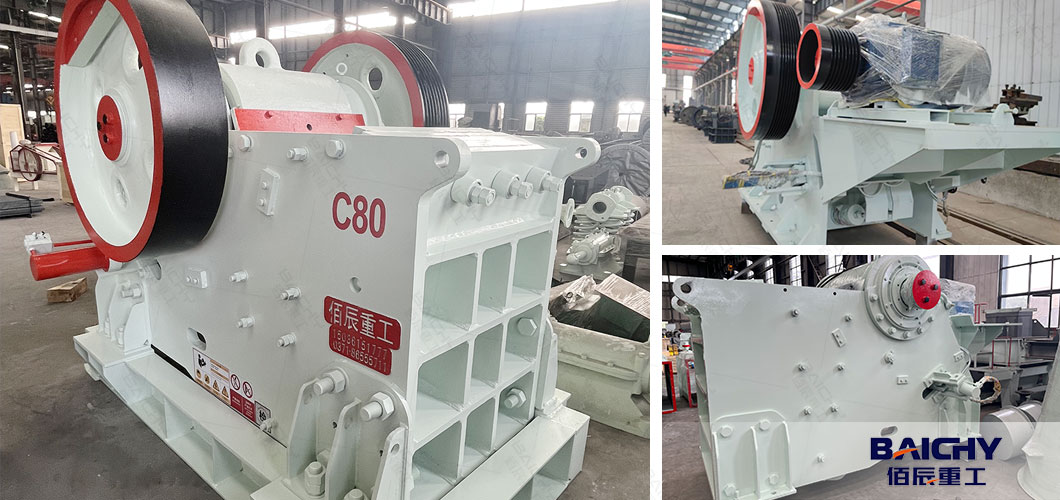
The CJ series jaw crusher uses a non-welded, detachable frame. In practice, this matters in two situations: underground operations where the crusher must be lowered in sections, and remote sites where a cracked welded frame would mean weeks of downtime. The bolted design allows frame sections to be replaced individually rather than scrapping the entire body.
The motion parameters are the more consequential difference. The CJ's crushing cavity is designed so material begins breaking in the upper chamber, while the lower chamber has a longer stroke. The result is a higher reduction ratio per pass and better nip capacity with slabby or elongated feed. For granite, basalt, and cobblestone—materials that resist fracture and wear jaw plates quickly—this translates to fewer passes and less recirculation.
Trade-offs to consider: The CJ's higher throughput and heavier bearing design come at a higher capital cost than a PE of comparable opening. The modular discharge adjustment reduces downtime, but the hydraulic option adds cost and a hydraulic system that needs its own maintenance schedule. For operations with clean, consistently sized feed and modest tonnage, the CJ's advantages may not justify the premium.
Field note: Operations processing abrasive rock report that the CJ's wear-resistant jaw plates last longer than standard manganese in the same application, but the benefit is most pronounced when feed is screened and fines are removed before the crusher.
HD German Version Jaw Crusher
Best for: Primary or secondary crushing of high-hardness ore where crushing force and reliability are the priority.
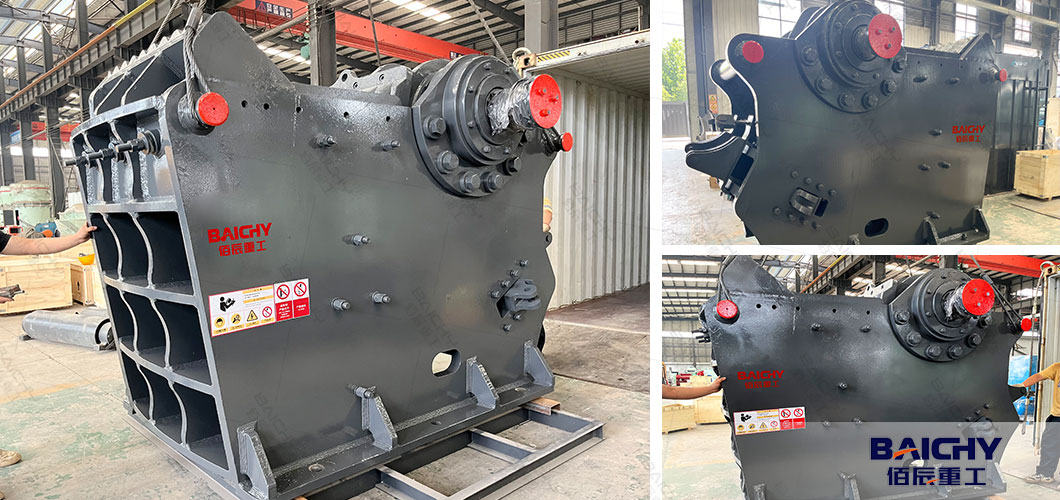
The HD series jaw crusher is built around force transmission. Oversized bearings and a forged spindle allow it to absorb the peak loads that occur when an uncrushable or exceptionally hard piece enters the chamber. The low-hanging motion mechanism increases the crushing ratio, which is useful when the HD is used as a secondary crusher ahead of a cone—it can reduce ore to a size the cone can handle without requiring a separate intermediate stage.
High-wear-resistant tooth plates extend the maintenance interval. This is a real cost saving in mines where jaw plate changes require confined-space entry and production stops. The optimized toggle and frame geometry also produce a low failure rate in continuous duty, which is why the HD is common in primary crushing stations that run 20+ hours per day.
Trade-offs to consider: The HD's large crushing force is an advantage with hard ore but can over-crush softer, friable material, generating excess fines. If your feed is limestone or a soft mineral, a PE or PEX may produce a more saleable product with less power draw. The HD also carries a higher capital cost and requires more robust foundation and feed arrangements than a PE.
Field note: In mine primary crushing, HD units are often paired with a hydraulic discharge adjustment to compensate for jaw plate wear without shutting down. Without this option, the discharge setting drifts as the plates wear, changing product size over a shift.
Ordinary PE Jaw Crusher
Best for: Small to medium stone processing plants and construction sites where simplicity and low maintenance cost matter most.
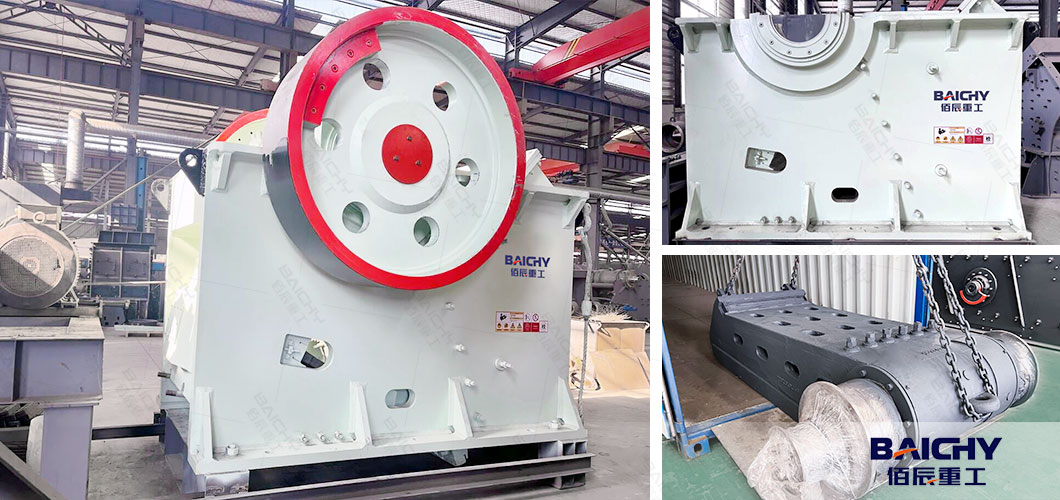
The PE jaw crusher is the workhorse of the category. Its welded frame is firm and reliable, and the specially designed flywheel reduces vibration—a meaningful benefit on portable or skid-mounted plants where excessive vibration accelerates structural fatigue. The shim-based discharge adjustment is simple, reliable, and field-serviceable without special tools.
The deep-cavity crushing design eliminates dead zones in the chamber, improving feeding capacity and output. This is particularly relevant when feed contains a high proportion of fines or when the crusher is fed by an excavator rather than a controlled vibratory feeder. The PE also produces a relatively uniform product size, which reduces screening inefficiency downstream.
Trade-offs to consider: The PE's welded frame is not detachable. If a frame crack occurs—rare, but possible under uncrushable ingress—repair is difficult and may require replacing the frame. The shim adjustment, while simple, is slower than hydraulic adjustment and requires manual labor. For high-tonnage operations, the time cost of shim adjustments adds up.
Field note: PE crushers are frequently chosen for limestone and quartzite because these materials fracture readily and do not demand the extreme crushing force of an HD. In these applications, a PE can match the throughput of a more expensive crusher at lower capital and power cost.
PEX Fine Jaw Crusher
Best for: Secondary crushing in stone and sand production lines where a fine, uniform product is required at low capital cost.
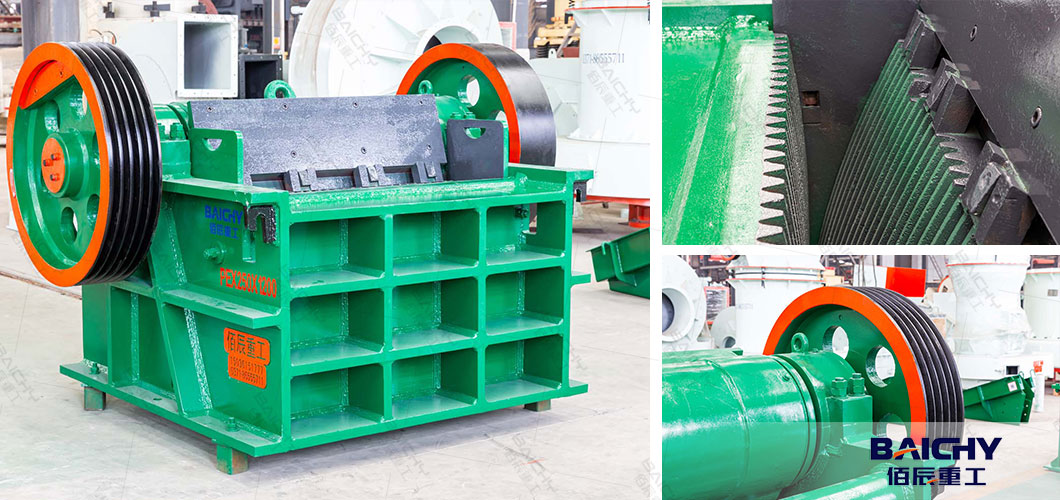
The PEX fine jaw crusher is distinguished by its finer-toothed jaw plates, which produce a smaller final product size than a standard jaw crusher. It can handle medium-hard to hard materials and is relatively affordable, which is why many operators use it as a second crusher instead of a cone crusher or impact crusher in stone or sand lines.
The frame is available in welded or cast construction, both firm and reliable. The cast option offers better vibration damping and dimensional stability, but at higher cost and longer lead time.
Trade-offs to consider: The PEX's finer output comes with a narrower feed opening and lower throughput than a primary jaw. It is not a substitute for a primary crusher—it is a reduction stage. The finer tooth profile also wears faster than a standard corrugated jaw plate, particularly with abrasive feed, so maintenance intervals are shorter. In hard-rock applications, a cone crusher may ultimately be more cost-effective per ton despite the higher purchase price, because the PEX's wear parts consume more steel per ton crushed.
Field note: PEX units are commonly deployed in sand lines where the goal is to produce a specific fine aggregate gradation. Operators report that the PEX's uniform output reduces the load on vibrating screens, but that feed must be controlled to avoid packing in the finer chamber.
How to Choose: A Decision Framework
Step 1 — Define your crushing stage. If you are reducing run-of-mine rock to a size a conveyor can handle, you need a primary crusher (CJ, HD, or PE). If you are reducing already-blasted rock to a fine product, you need a secondary or fine crusher (PEX, or HD in secondary configuration).
Step 2 — Match the crusher to your rock. Hard, abrasive rock (granite, basalt) favors the CJ or HD, whose heavier bearings and wear-resistant plates reduce downtime. Softer rock (limestone, quartzite) can be handled efficiently by a PE at lower cost.
Step 3 — Quantify maintenance capacity. If your site has limited maintenance staff or operates in a remote location, the CJ's detachable frame and the HD's extended wear life reduce the frequency and difficulty of interventions. If you have skilled staff and easy access to parts, the PE's simplicity is an advantage rather than a limitation.
Step 4 — Calculate cost per ton, not purchase price. A cheaper crusher with shorter wear life and more frequent adjustments may cost more per ton produced. Request wear-part consumption data and maintenance interval estimates from suppliers, and compare those against your production target.
Step 5 — Verify with recent customer feedback. Ask suppliers for references from operations processing material similar to yours. Ask those references specifically about: actual throughput versus rated capacity, jaw plate life in hours, unplanned downtime causes, and the accuracy of the discharge setting over time.
The right choice depends on your feed material, required product size, tonnage target, and maintenance resources. Use the comparison table and decision framework above to narrow the field, then validate with site visits and reference checks before committing capital.
Frequently Asked Questions About Stone Jaw Crushers
1. How do I choose the right jaw crusher capacity?
Size the crusher 15–25% above your target finished tonnage. This buffer covers feed variation and the capacity drop as jaw plates wear. Also ensure your largest feed piece is no more than 80% of the feed opening width.
2. How long do jaw plates last?
In abrasive rock like granite, 600–1,200 hours. In softer rock like limestone, over 2,000 hours. Wear life depends mainly on rock abrasiveness, feed size, and even feed distribution—not brand alone.
3. Jaw crusher or cone crusher for secondary crushing?
For medium-hard rock (limestone, quartzite) at modest tonnage, a PEX fine jaw is a low-cost, effective choice. For hard, abrasive rock (granite, basalt) at high tonnage, a cone crusher costs more upfront but lasts longer and costs less per ton.
4. What maintenance does a jaw crusher need?
● Daily: check discharge setting, inspect jaw plates, verify lubrication.
● Weekly: grease bearings, check toggle plate and belt tension.
● Monthly: measure jaw plate wear, inspect frame bolts.
The most common cause of premature failure is uneven or overly fine feed—keep the crushing chamber full and evenly fed.




 2026-09-25





 86-15093113821
 86-15093113821