A sand sieving and washing machine is an essential equipment in modern aggregate and construction material production. It is used to separate fine particles, remove impurities such as clay and dust, and produce clean, high-quality sand for concrete, road construction, and industrial applications. A sand sieving and washing machine has a simple structure. However, small design details can greatly affect its performance, reliability, and output quality. If you ignore a few critical details—hopper angle, conveyor length, screen mesh size, and machine stability—you’ll end up with slow production, clogged screens, or a machine that wobbles itself apart.
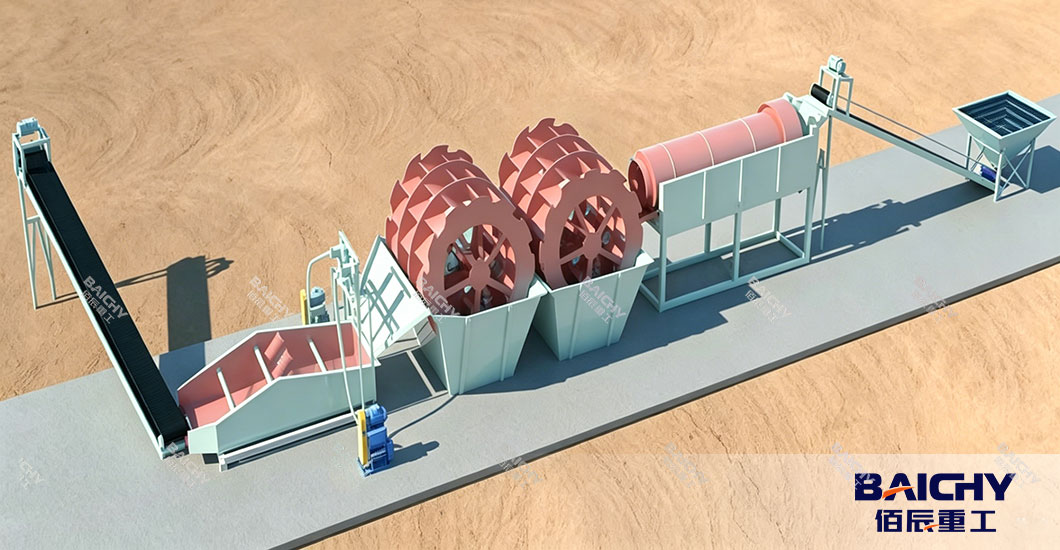
In this guide, we’ll break down exactly what matters. Plus, we’ll show you how a custom-designed machine can solve your specific site problems.
1. Hopper Angle Controls Sand Flow Into the Machine
The hopper is where sand enters the system. Its angle of inclination determines whether sand flows smoothly onto the conveyor belt. If the hopper angle is too shallow, wet or clay-rich sand will stick to the walls and stop flowing. Workers must then poke the material down manually, which wastes time and slows production. If the hopper angle is too steep, sand rushes down too quickly and overloads the screen. This reduces washing quality and can damage the mesh. The correct hopper angle typically ranges from 45 to 60 degrees, depending on the moisture content of your sand. A custom design adjusts this angle to match your specific material.
2. Conveyor Belt Length Affects Screening Efficiency
The conveyor belt carries sand from the hopper outlet to the screen deck. The length of this conveyor is not arbitrary. If the conveyor is too short, sand drops onto the screen with excessive force. This impact can tear the screen mesh and push material through before it is properly washed. If the conveyor is too long, the machine becomes unnecessarily large, and sand may lose momentum, causing pileups at the feed end of the screen. The ideal conveyor length is usually between 1.5 and 3 meters. However, the exact length depends on belt speed and the desired material flow rate. A properly sized conveyor allows sand to spread evenly across the full width of the screen, improving both sieving and washing.
3. Screen Mesh Size Determines Final Sand Quality
The screen mesh is the part that separates sand by size. Choosing the correct mesh size is essential for meeting your product specifications. A finer mesh catches more small particles but screens more slowly and clogs more easily, especially with wet sand. A coarser mesh allows higher throughput but may let oversize material contaminate your final product. Common mesh sizes include 0.5 to 2 mm for fine plastering sand, 2 to 5 mm for general construction sand, and 5 to 10 mm for coarse sand or small gravel. For many operations, a single screen deck is not enough. Using two or three screen layers allows the machine to produce multiple sand grades simultaneously. This is a standard feature in well-designed custom machines.
4. Machine Stability Prevents Downtime and Safety Risks
A sand sieving and washing machine generates significant vibration during operation. The screen shakes, the conveyor runs, and water adds dynamic weight. If the machine is not stable, several problems occur. The screen frame may twist, allowing oversize material to leak into the product. Welds and bolts may loosen over time, leading to structural failure. Most importantly, an unstable machine can tip or shift during operation, creating a serious safety hazard for workers. A stable machine has a wide, heavy base frame, anti-vibration rubber mounts under the screen box, a low center of gravity, and adjustable screw jacks or outriggers for uneven ground. If your worksite has uneven terrain, you must inform your supplier so they can add appropriate supports.
Customer Case: Low Efficiency Solved by Custom Design
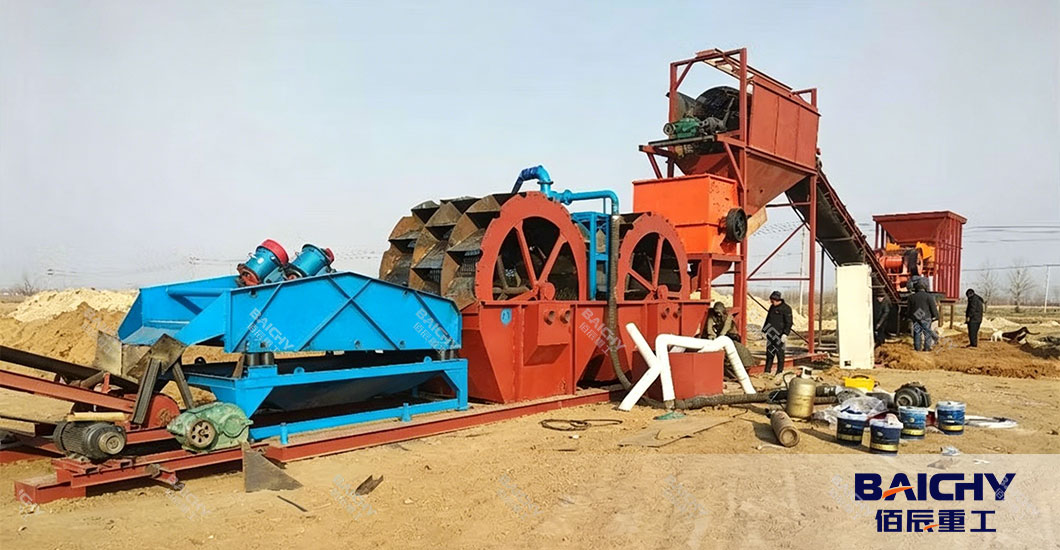
A local construction contractor in Malaysia required a small–medium capacity sand washing and screening solution (50–100 m³/h) for producing clean river sand used in residential and road construction projects. The main challenges were unstable sand grading, high clay content, and inconsistent output from natural river sand.
Baichy provided a customized sand sieving and washing machine system equipped with a hopper, belt conveyor, trommel screen, and wheel-type sand washer. The design was optimized for limited site space and included a diesel engine power system, ensuring stable operation even in areas without reliable electricity supply. After commissioning, the system successfully achieved stable 50–100 m³/h output, producing clean and well-graded sand that fully met construction standards. The optimized screen mesh size improved sand classification accuracy, while the washing system effectively removed impurities and clay content.
The customer reported that the biggest improvement was consistent sand quality and reduced manual cleaning work, which significantly improved overall production efficiency. They also highlighted that the diesel-driven design made the system highly reliable for remote project sites.
Baichy’s flexible customization capability allowed the plant to match real project conditions, making it a practical and cost-effective solution for small to medium-scale sand production projects.
How to Order a Custom Sand Sieving and Washing Machine
To design the right machine for your operation, we need five pieces of information. First, your required capacity in tons or cubic meters per hour. Second, your material type, including moisture content and whether it contains clay or silt. Third, your desired output sizes, and whether you need one or multiple sand grades. Fourth, your discharge distance, meaning how far the finished sand must travel to your stockpile. Fifth, your power availability, specifically whether you have electricity on site or need a diesel engine. With this information, we can provide a custom design drawing and quotation. Every machine is built to match your specific sand, site, and budget.
Tell us your capacity, material type, power availability, and discharge distance. We will send you a custom design and price quote within 48 hours. Contact us today.




 2026-09-17





 86-15093113821
 86-15093113821