Home About us
Products
News
Solution
Video Service Contact us
Home  /  News

Many powder processing operations require a specific fineness—and achieving 200 mesh with a 95%+ passing rate demands equipment with precise particle size control. Standard raymond mills often fall short for high-specification applications because their classifiers cannot consistently deliver the required sharpness in particle size distribution. The high pressure raymond mill, particularly the YGM series, is designed to meet this exact challenge.


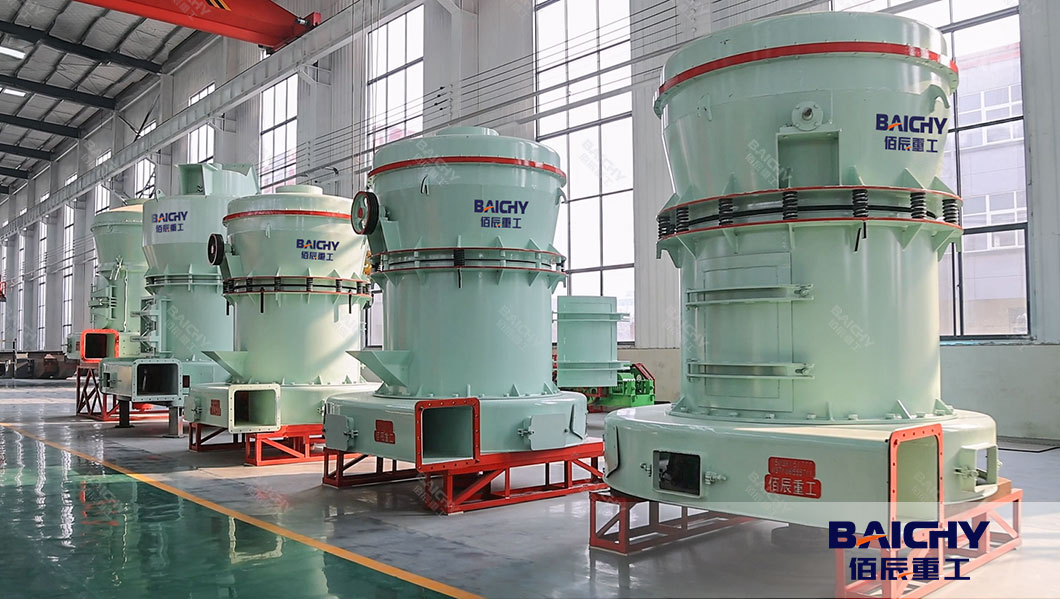
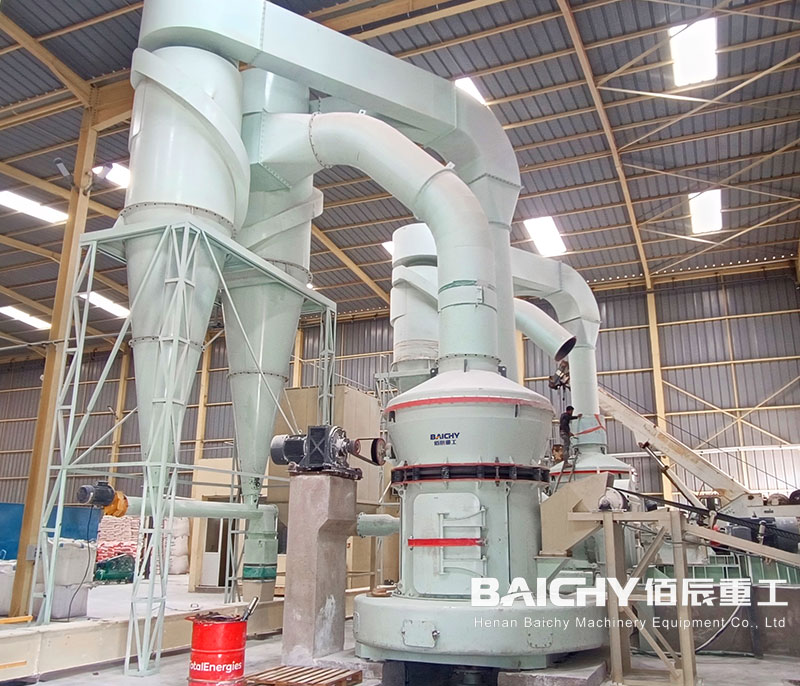
High-pressure-raymond-mill-01.jpg


What Is a High Pressure Raymond Mill?

The high pressure raymond mill (also known as YGM series high-pressure suspension roller mill) is an upgraded version of the traditional R-type raymond mill . The key difference lies in the grinding mechanism: a high-pressure spring system generating 1000-1500 kg of pressure on the grinding roller hanger, increasing rolling pressure by 1.2 times compared to standard raymond mills .


This enhanced grinding force enables the mill to handle materials with Mohs hardness up to 9.3 (versus 7 for standard raymond mills) while producing finer powder with higher screening rates . 


Technical Advantages for Fine Powder

1. Increased Grinding Force: The high-pressure spring increases the centrifugal pressure of the rollers on the ring by 1.2 to 1.5 times. This ensures that even harder materials are pulverized thoroughly into fine particles.
2. Precise PSD Control: Unlike ball mills which can produce a wide range of "stray" particle sizes, the YGM mill uses a vertical air-flow system that immediately removes particles once they reach the target fineness.
3. Energy Efficiency: By applying more pressure mechanically rather than relying solely on centrifugal force, the mill consumes less power while producing finer output.
4. Adjustable Classifier Speed:The classifier impeller speed can be adjusted to control particle size precisely. Higher speeds produce finer powder, lower speeds yield coarser product .


How to Control Particle Size Distribution (PSD) Exactly?

To meet the strict requirement of a 95%+ passing rate at 200 mesh, the "brain" of the machine—the Classifier (Analyzer)—must be highly accurate.

1. The Cage-Type Classifier
For precision control, we recommend the Cage-Type Classifier over traditional blade analyzers. Its design allows for a more uniform air field. The rotating "cage" creates a precise centrifugal force that rejects oversized particles with 99% accuracy, ensuring only the 200-mesh particles pass through.


2. Variable Frequency Drive (VFD) Control

By using a VFD on the classifier motor, operators can adjust the rotation speed in real-time.

Higher Speed: Results in a finer cut (e.g., shifting toward 325 mesh).
Optimal Speed for 200 Mesh: Can be "locked in" to ensure the particle distribution curve is narrow and steep, meaning most of the powder is exactly the size you need, not just "smaller than" 200 mesh.


If your operation requires 200 mesh powder with 95%+ passing rate, a high pressure raymond mill with an advanced classifier is the proven solution. The YGM series raymond mill delivers the combination of grinding power and classification precision needed for consistent, specification-grade powder production. Ready to optimize your powder production? Contact Baichy Experts for a customized technical proposal on High Pressure Grinding solutions.


Maybe you are interested in