Choosing a limestone impact crusher requires more than matching a machine to a target capacity. Feed size, limestone abrasiveness, required aggregate sizes, and screening efficiency all affect plant performance. For production targets from 50 to 500 tons per hour (TPH), an impact crusher can serve as a secondary crusher or, under suitable conditions, a primary crusher. The right configuration depends on the material and finished product requirements. This guide explains how to select an impact crusher, when to add a jaw crusher, and how to build an efficient limestone crushing plant.
1. How Does a Limestone Impact Crusher Work?
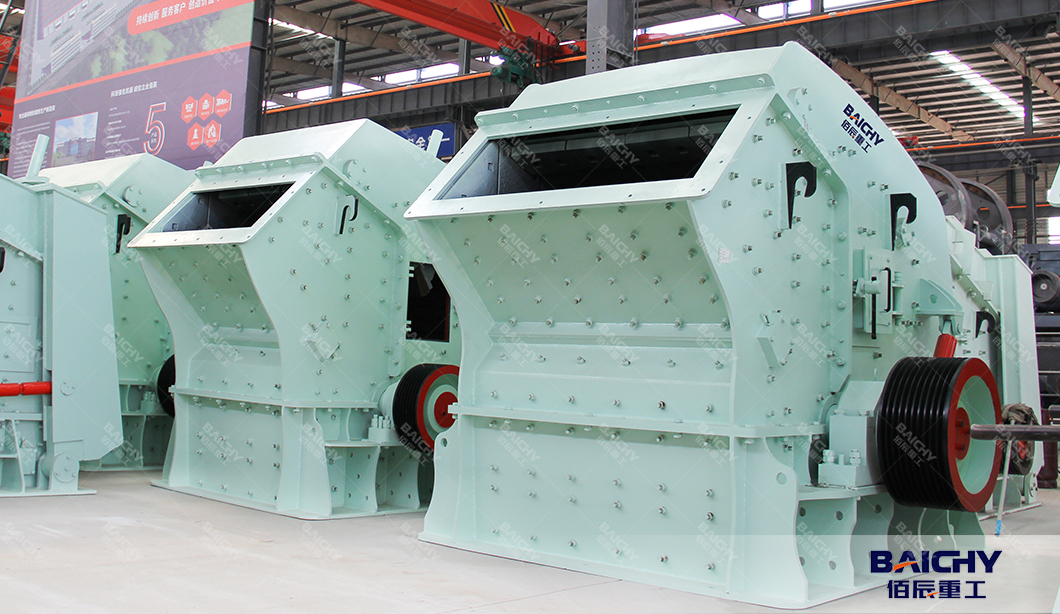
An impact crusher uses a high-speed rotor fitted with blow bars to strike limestone against impact plates, breaking it into smaller pieces. This process can produce well-shaped aggregates suitable for concrete, road construction, and general building applications.
Impact crushers work well with many types of limestone, but material properties matter. Abrasive impurities can accelerate wear, while oversized feed may reduce throughput or cause blockages.
Before selecting a model, confirm:
-
Maximum feed size and feed distribution.
-
Required finished aggregate sizes.
-
Target capacity and operating hours.
-
Limestone abrasiveness, moisture, and clay content.
-
Available power, installation space, and maintenance resources.
-
2. Limestone Impact Crusher Options for 50–500 TPH
The following table provides a preliminary selection framework. Actual equipment selection must be confirmed against the material properties, feed size, product grading, and required sustained output.
| Target capacity |
Preliminary configuration |
Main consideration |
| 50 TPH |
Small impact crusher with feeding and screening equipment as needed |
Control feed size and avoid oversized equipment |
| 100 TPH |
One suitably sized impact crusher, often after a jaw crusher |
Match primary and secondary crushing capacity |
| 200 TPH |
One larger unit or multiple crushers in parallel |
Compare throughput, maintenance, and product grading |
| 300 TPH |
Larger impact crusher or a multi-unit configuration |
Balance crushing, screening, and conveying |
| 500 TPH |
Complete crushing line with primary crushing and secondary impact crushing |
Maintain stable production across the entire system |
50 TPH: Small Limestone Plants
A 50 TPH plant may suit a small quarry or a local aggregate supplier. If the raw limestone contains large blocks, a jaw crusher is usually needed before the impact crusher. Smaller, pre-crushed feed may allow a simpler setup if it meets the machine's feed specifications.
At this scale, check the expected output at your required discharge size rather than relying solely on the manufacturer's maximum rated capacity.
100 TPH: Balanced Secondary Crushing
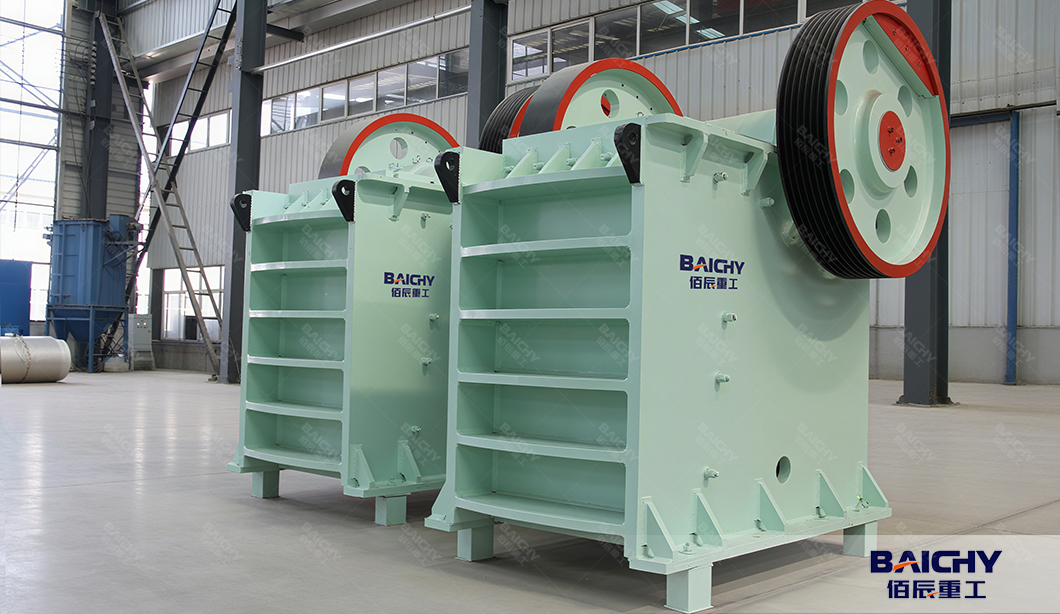
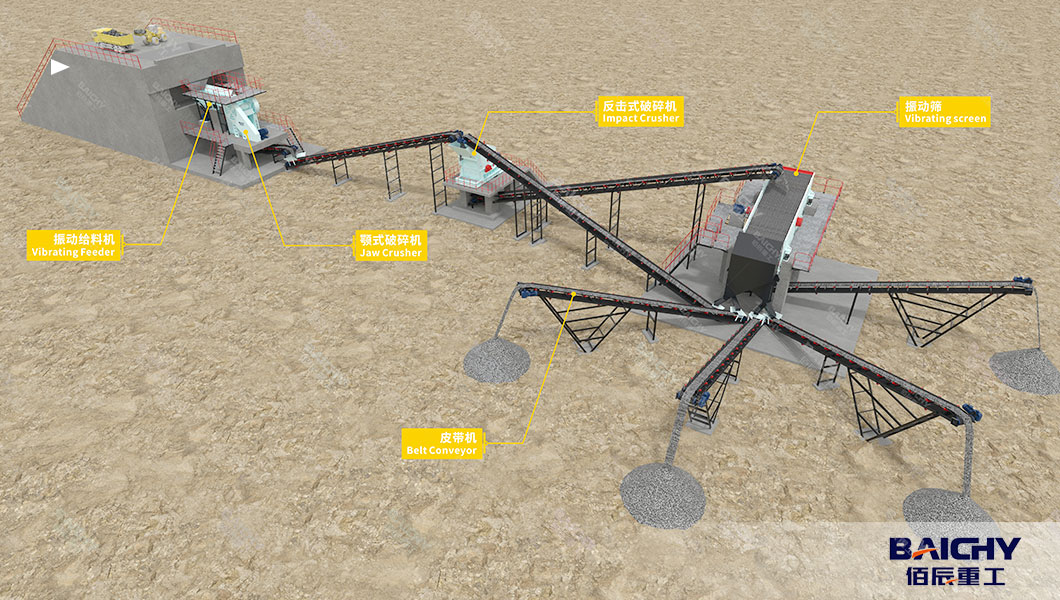
A typical 100 TPH configuration includes a vibrating feeder, jaw crusher, impact crusher, vibrating screen, and belt conveyors.
The jaw crusher reduces large limestone blocks, while the impact crusher produces the required aggregate sizes. The screen separates finished products and can return oversized material for further crushing.
A single impact crusher may be sufficient, but its actual output depends on feed conditions, crusher settings, and circulating load.
200 TPH: Single Crusher or Parallel Units?
For a 200 TPH plant, a single large impact crusher may simplify the layout, while two smaller units can provide greater operating flexibility. The best option depends on the product mix, maintenance requirements, and total operating cost.
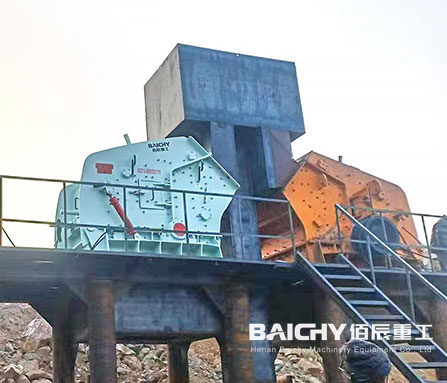
Baichy's published 200 TPH limestone aggregate plant provides a practical reference. The project uses a PE750×1060 jaw crusher for primary crushing and two PF1214 impact crushers in parallel. The case reports a combined impact crusher capacity of approximately 200–230 TPH under its specified conditions.
This example also demonstrates why total crusher discharge and finished saleable aggregate output are not necessarily the same.
Read more in the 200 TPH Limestone Aggregates Production Plant case study.
Use the project as a reference, not a universal equipment formula. Different feed sizes and finished product requirements may require different configurations.
300 TPH: Balance the Entire Production Line
At 300 TPH, the impact crusher, primary crusher, vibrating screen, and conveyors must operate as a coordinated system.
A larger impact crusher may reduce the number of machines, while parallel units may offer greater flexibility. Selection should consider required product sizes, installed power, wear-part consumption, and maintenance access.
The screening system must handle the total material load, including any oversized material returned to the crusher. Otherwise, the plant may fall short of its production target even when the impact crusher's rated capacity appears adequate.
500 TPH: Design for Continuous Production
A 500 TPH limestone plant typically requires coordinated primary crushing, secondary crushing, screening, and conveying.
Baichy's published Indonesian limestone project provides a practical example:
-
Target capacity: 500 TPH.
-
Maximum feed size: 600 mm.
-
Primary crusher: PE1000×1200 jaw crusher.
-
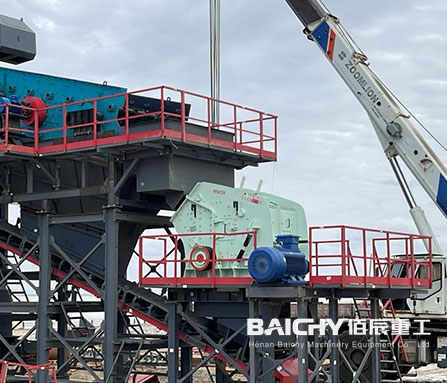
Secondary crushers: Two PF1320S impact crushers.
-
Screening equipment: 3YK2460 vibrating screen.
-
Finished products: 0–5 mm, 10 mm, 20 mm, and 31.5 mm size categories, as described in the project article.
The project shows how multiple secondary crushers and a screening system can support large-scale production of several aggregate sizes.
See the500 TPH Limestone Crusher Plant in Indonesia case study.
The final configuration must still be checked against the required product proportions, circulating load, and site conditions.
3. When Do You Need a Jaw Crusher Before an Impact Crusher?
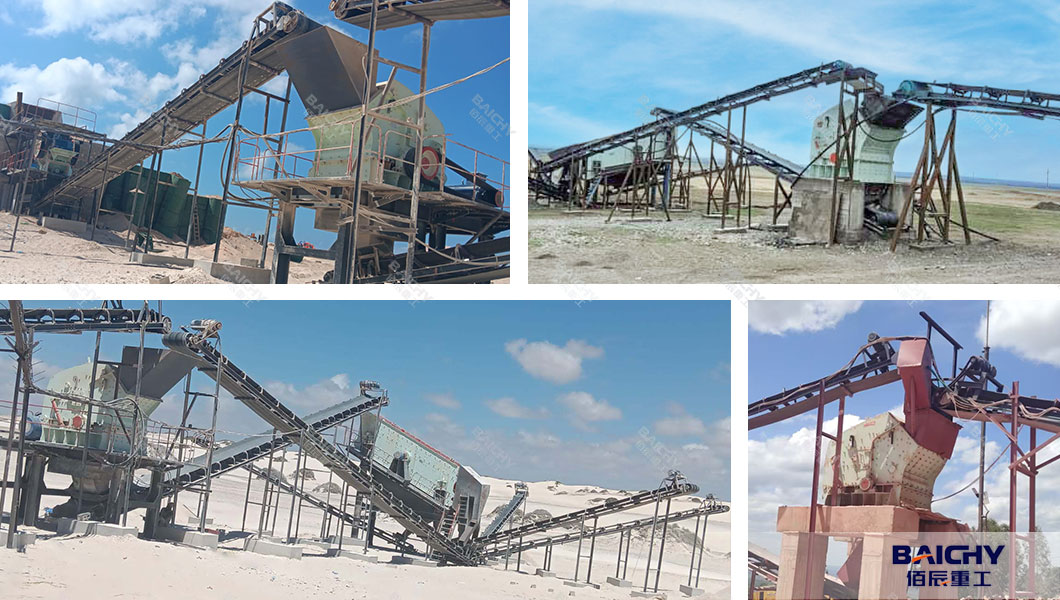
When quarry limestone arrives as large blocks, a jaw crusher is commonly used for primary size reduction before impact crushing.
A typical process is:
Raw limestone → Vibrating feeder → Jaw crusher → Impact crusher → Vibrating screen → Finished aggregates
Oversized material can return to the impact crusher for further reduction. Pre-screening may also help remove soil and fine material when the feed contains excessive impurities.
An impact crusher can perform primary crushing when the feed size and material properties fall within its operating limits. However, large blocks and abrasive impurities must be evaluated before eliminating the jaw crusher.
The objective is to achieve the required product sizes with stable output and reasonable wear costs.
4. What Factors Affect Crusher Selection?
Feed size: The maximum feed size must remain within the selected crusher's permitted limits. Oversized rocks can cause blockages, uneven feeding, and excessive wear.
Finished product sizes: The required proportions of fine and coarse aggregates affect crusher settings, screen selection, and whether a closed-circuit system is necessary.
Limestone abrasiveness: Abrasive impurities can increase blow bar and liner consumption. Evaluate the material before choosing wear parts and estimating maintenance costs.
Moisture and clay content: Wet, clay-rich feed can cause buildup and screening problems. Feed preparation and suitable screening arrangements may be necessary.
Actual production requirements: Rated capacity does not guarantee the same output under every operating condition. Confirm whether the target refers to total crusher discharge or finished saleable product.
5. How to Reduce Limestone Crushing Costs
The total cost of a limestone crushing plant includes equipment investment, electricity, wear parts, labor, maintenance, and downtime.
-
Control energy use: Match the primary crusher, impact crusher, and screen to avoid unnecessary recirculation.
-
Manage wear parts: Estimate blow bar and liner consumption based on actual limestone abrasiveness and operating hours.
-
Improve screening efficiency: Select suitable screen area and deck openings to reduce excessive recirculation and product contamination.
-
Plan maintenance: Ensure easy access to wear parts and establish regular inspection schedules.
-
Track saleable output: Measure the quantity of aggregate that meets specifications rather than relying only on gross crushing throughput.
When comparing quotations, request the proposed configuration, installed power, capacity assumptions, wear-part recommendations, and expected maintenance requirements.
6. What Information Is Needed for a Limestone Crusher Quote?
To obtain a suitable equipment recommendation, prepare the following details:
-
Target capacity: 50, 100, 200, 300, or 500 TPH.
-
Raw material: Limestone properties, abrasiveness, and moisture content, if known.
-
Feed size: Maximum block size and feed size distribution.
-
Finished products: Required aggregate sizes and approximate proportions.
-
Operating conditions: Daily operating hours, power supply, and site limitations.
These details help determine the appropriate jaw crusher, impact crusher model and quantity, screening equipment, and conveyor configuration.
Get a Limestone Crushing Plant Proposal
The right limestone impact crusher depends on capacity, feed conditions, finished product sizes, and operating costs. A 50 TPH plant and a 500 TPH plant require different equipment-selection approaches.
Baichy Machinery provides crushing equipment and complete crushing plant solutions. Share your feed size, target capacity, required aggregate sizes, and site conditions to request a project-specific recommendation.
Contact Baichy Machinery to discuss your limestone crushing plant requirements.
Frequently Asked Questions
Is an impact crusher suitable for limestone?
Yes. It is suitable for many limestone applications, especially when well-shaped aggregates are required. The final choice depends on feed size, abrasiveness, product grading, and operating conditions.
Can one impact crusher produce 200 TPH?
Potentially, depending on the machine model and feed conditions. However, the capacity must be verified for the required discharge size. Baichy's published 200 TPH case uses two PF1214 impact crushers in parallel.
How many impact crushers are needed for 500 TPH?
The number depends on the model, material properties, product requirements, and circulating load. Baichy's Indonesian project uses two PF1320S impact crushers after a PE1000×1200 jaw crusher.
Does a limestone impact crusher need a vibrating screen?
Most aggregate plants need screening to separate finished product sizes. A closed-circuit system can return oversized material for further crushing, depending on the required grading.
How can I reduce impact crusher wear?
Use suitable blow bars and liners, maintain consistent feeding, remove tramp metal, and inspect wear parts regularly. Tracking actual wear rates helps estimate replacement costs more accurately.




 2026-10-30






 86-15093113821
 86-15093113821