An inclined vibrating screen is one of the most commonly used screening machines in mining, quarrying, and aggregate production. It separates materials into different sizes by using vibration and an inclined screen surface. The combination of vibration force and gravity allows materials to move smoothly across the screen deck while fine particles pass through the screen openings.
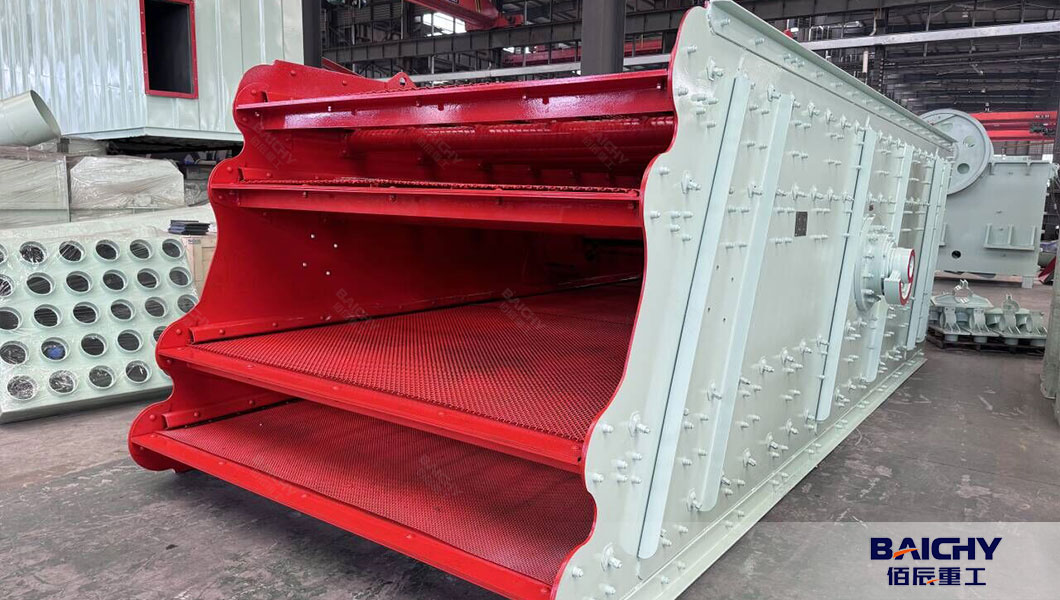
In stone crushing plants, an inclined vibrating screen is usually installed after crushers to classify crushed materials into different grades. It helps improve product quality, increase production efficiency, and create multiple finished aggregate sizes for construction applications. Choosing the right inclined vibrating screen requires understanding its working principle, structure, capacity, and application conditions. This guide explains the key points you need to know before selecting a screening solution.
What Is an Inclined Vibrating Screen?
An inclined vibrating screen is a type of screening equipment installed at an angle, usually between 15° and 30°. It uses a vibrating motion to move materials along the inclined screen surface while separating them according to particle size. Compared with flat or horizontal screens, the inclined design uses gravity to assist material movement. When the screen vibrates, materials are lifted and thrown forward repeatedly. This action helps smaller particles pass through the screen mesh while larger particles continue moving toward the discharge end.
Inclined vibrating screens are widely used because they offer high screening capacity, simple structure, and reliable performance in demanding environments such as quarries, mines, and aggregate processing plants.
How Does an Inclined Vibrating Screen Work?
Circular Vibrating Motion and Material Separation
The working principle of an inclined vibrating screen is based on circular vibration. The vibration mechanism generates a repeated upward and forward movement of the screen box. This motion creates material stratification, where smaller particles move downward through larger particles and reach the screen surface.
During operation, raw material enters the upper part of the screen deck. The vibration force spreads the material evenly and moves it along the inclined surface. Particles smaller than the screen opening fall through the mesh, while oversized materials are discharged from the end of the screen.
The combination of vibration and inclination improves screening efficiency, especially when processing large quantities of aggregates or mining materials.
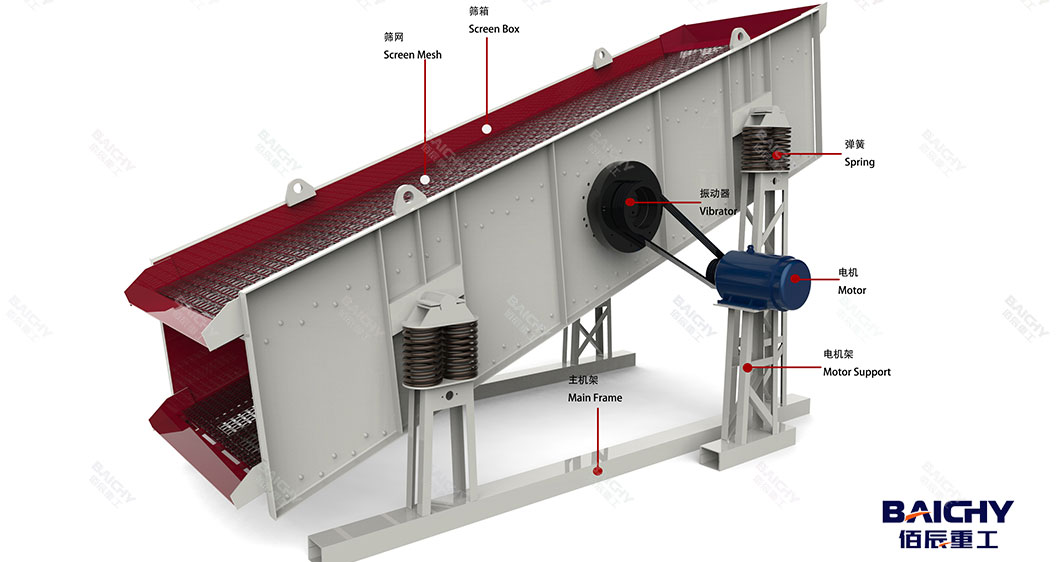
Main Components of an Inclined Vibrating Screen
1. Screen Box
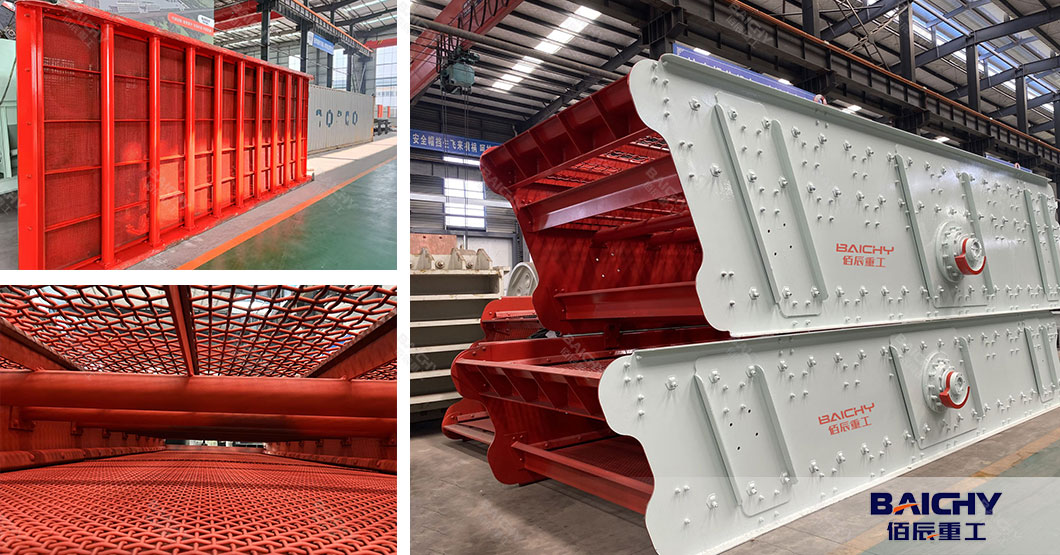
The screen box is the main structure that supports the screen decks and carries the vibration force. It is usually made from heavy-duty steel to withstand continuous operation under high loads.
A strong screen box design improves equipment stability and extends service life, especially when processing hard and abrasive materials such as granite, basalt, and iron ore.
2. Vibrating Mechanism
The vibrating mechanism is the core component that creates the screening motion. It normally includes an eccentric shaft, bearings, and vibration exciter.
The vibration frequency and amplitude directly affect screening performance. Proper adjustment helps achieve better separation efficiency while reducing energy consumption.
3. Screen Deck and Screen Media
The screen deck contains the screening surface where material separation takes place. Depending on production requirements, an inclined vibrating screen can have one, two, or three decks.
Different screen media, such as wire mesh, polyurethane panels, or rubber screens, can be selected according to material characteristics and final product requirements.
4. Drive System and Support Structure
The drive system provides power for the vibration mechanism, while springs or other support components absorb vibration and maintain stable operation.
A reliable drive and support system reduces maintenance requirements and ensures continuous production.
Types of Inclined Vibrating Screens
1. Single Deck Inclined Vibrating Screen
A single deck vibrating screen is designed for simple material classification. It is suitable for applications that only require separation into two sizes, such as removing oversized particles or screening final products.
It is commonly used in small and medium-sized aggregate production lines.
2. Double Deck Inclined Vibrating Screen
A double deck screen uses two screening layers to produce multiple material sizes in one operation. It is one of the most popular choices for stone crushing plants because it can efficiently produce several aggregate specifications.
For example, a crushing plant can separate materials into different sizes such as 0-5 mm, 5-10 mm, and 10-20 mm.
3. Triple Deck Inclined Vibrating Screen
A triple deck vibrating screen provides higher classification flexibility. It is suitable for large-scale operations that require multiple finished products.
This type of screen is commonly used in large quarries, mining operations, and commercial aggregate production plants.
Factors Affecting Inclined Vibrating Screen Performance
1. Material Characteristics
The type of material has a direct impact on screening efficiency. Moisture content, hardness, particle shape, and density all influence how materials move across the screen.
Wet or sticky materials may require special screen designs to prevent blockage.
2. Screen Size and Deck Configuration
The screen area and number of decks determine production capacity and product sizes. Larger screens generally provide higher processing capacity.
Selecting the correct deck configuration helps achieve the required final products efficiently.
3. Vibration Parameters
Amplitude and vibration frequency must match the material characteristics. Incorrect settings may reduce screening efficiency or increase equipment wear.
How to Choose the Right Inclined Vibrating Screen?
Selecting an inclined vibrating screen depends on several important factors.
First, consider the material type and hardness. Different materials require different screen designs and wear-resistant components.
Second, determine the required capacity. The screen size should match the expected production rate, such as 50 TPH, 100 TPH, or 200 TPH.
Third, consider the number of final products required. A single deck screen may be enough for simple separation, while multi-deck screens are better for producing several aggregate sizes.
Finally, consider the complete plant layout. The vibrating screen should work efficiently with crushers, conveyors, and other processing equipment.
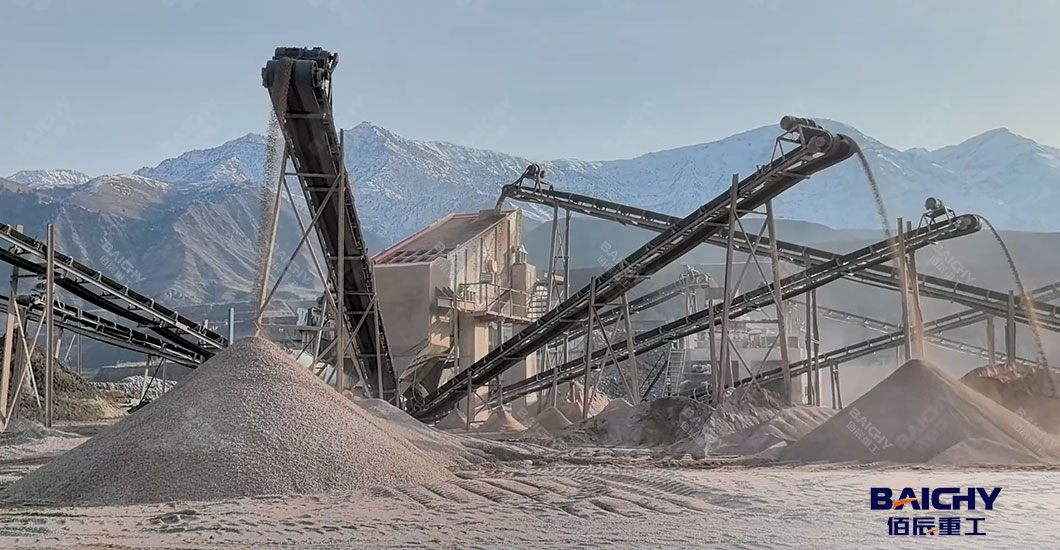
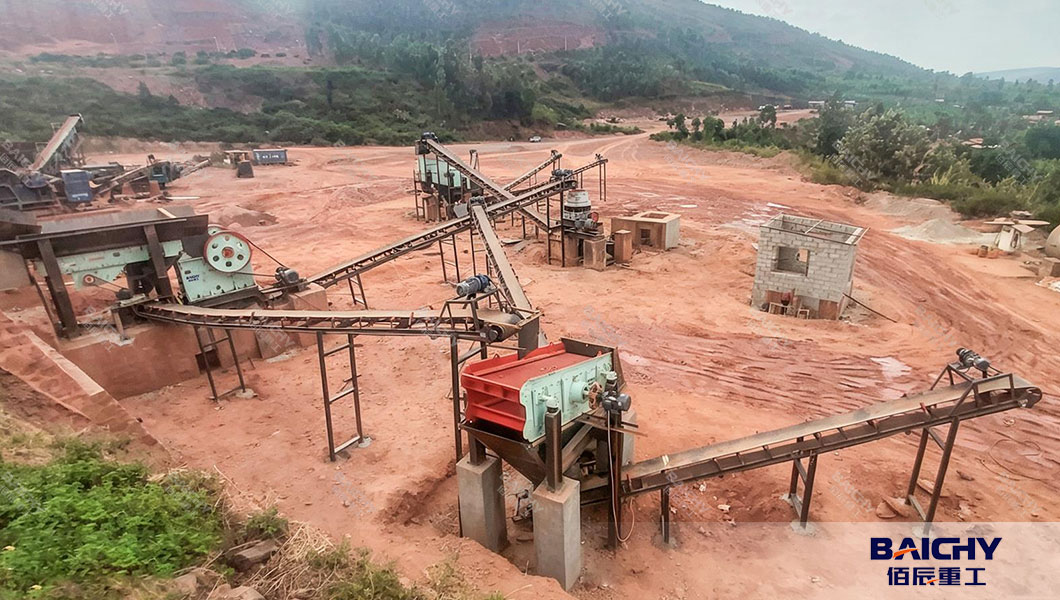
Inclined Vibrating Screen in Stone Crusher Plants
In aContact Baichy Machinery for a customized aggregates crushing and screening production line flow chart and a detailed ROI analysis now., the inclined vibrating screen plays an important role in the final classification process. A typical crushing and screening process includes:
Jaw Crusher → Cone Crusher/Impact Crusher → Inclined Vibrating Screen → Finished Aggregate
After crushing, mixed-size materials enter the vibrating screen. The screen separates them into different grades and sends oversized materials back for further crushing if necessary. A properly designed screening system improves production efficiency and ensures consistent final product quality.
An inclined vibrating screen is a reliable and efficient solution for separating materials in mining, quarrying, and aggregate production.Baichy Machinery provides customized inclined vibrating screen solutions for crushing and screening plants. With professional equipment design and engineering support, Baichy helps customers build efficient and reliable aggregate and mining production systems. Contact Baichy Machinery for a customized aggregates crushing and screening production line flow chart and a detailed ROI analaysis now.




 2026-09-21





 86-15093113821
 86-15093113821