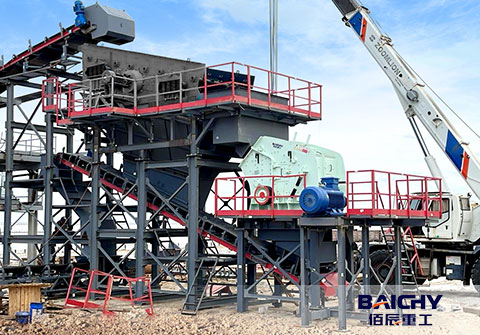
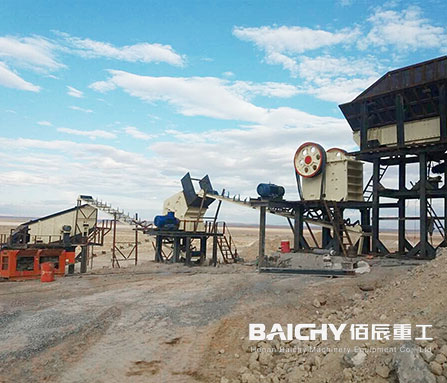
A limestone processing project in Russia required a crushing solution with a target capacity of 100 TPH. The customer selected a PF1214 impact crusher for secondary crushing, working with a jaw crusher in the production line. The jaw crusher handles the initial size reduction, while the PF1214 impact crusher further reduces the material to the required aggregate size. This two-stage arrangement provides a practical solution for limestone processing when the feed conditions and final product specifications are suitable for impact crushing. Baichy Machinery supplied the PF1214 impact crusher for the project. The equipment was subsequently installed at the customer's site in Russia.

Why Choose the PF1214 Impact Crusher for Limestone?
Limestone is commonly processed into aggregates for concrete production, road construction and other building applications. The crushing equipment must match the feed size, required output, material properties and target production capacity. The PF1214 impact crusher uses a high-speed rotor and impact plates to break material through repeated impact. This crushing method can produce relatively well-shaped aggregate particles, making it a suitable option for many limestone crushing applications.
For this Russian project, the PF1214 was selected as secondary crushing equipment rather than as a replacement for the primary jaw crusher. Before selecting an impact crusher, operators should evaluate limestone hardness, abrasiveness, feed size and the required product grading. These factors affect throughput, wear-part consumption and operating costs.
100 TPH Limestone Crushing Plant Configuration
The confirmed equipment arrangement for this project includes a jaw crusher for primary crushing and a PF1214 impact crusher for secondary crushing.
The process follows a straightforward sequence:
Limestone feeding → Jaw crushing → PF1214 impact crushing → Subsequent screening or material handling, according to the plant configuration.
The jaw crusher reduces the incoming limestone to a smaller size suitable for the next crushing stage. The PF1214 then further processes the material to meet the required aggregate specifications.
The actual feed size, discharge setting and screening arrangement should be determined according to the project requirements. A 100 TPH plant's actual output depends on the complete system, including material characteristics, feed consistency, equipment settings and downstream handling capacity.
For a new project, Baichy recommends confirming the maximum feed size, target output sizes and required hourly production before finalizing the equipment configuration.
PF1214 Impact Crusher: Key Selection Considerations
When evaluating the PF1214 for a limestone crushing plant, buyers should focus on operating conditions rather than model numbers alone.
● Feed size and crushing ratio: The incoming material must fall within the machine's permitted feed range. Oversized or unsuitable feed can reduce performance and increase the risk of blockages or equipment damage.
● Final aggregate size: The required product grading determines the crusher settings and whether additional screening or recirculation is necessary. Impact crusher settings should be selected based on the target product and actual material properties.
● Wear-part consumption: Impact crushing involves wear on components such as blow bars and impact plates. Limestone abrasiveness, operating conditions and feed characteristics influence replacement frequency and maintenance costs.
● Capacity matching: The primary crusher, impact crusher, screens and conveyors should be matched to the plant's target throughput. A bottleneck in any stage can limit the output of the entire production line.
These checks help buyers assess whether a PF1214 is appropriate for their limestone project and reduce the risk of selecting equipment based only on nominal capacity.
For detailed model information, including available specifications and selection guidance, see Baichy's PF1214 impact crusher specification article. You can also explore the impact crusher product page for more information about the equipment.
Installation at the Customer's Site in Russia
The PF1214 impact crusher was successfully installed at the Russian customer's site. The project demonstrates the use of an impact crusher as a secondary crushing unit in a limestone processing plant.
During commissioning, the operating team should check the rotor and blow bars, impact plate clearances, lubrication system, drive components and safety guards before starting production. Feed should be introduced gradually, with attention to vibration, abnormal noise, material flow and motor load.
Routine inspection and timely replacement of worn parts help maintain stable operation. Operators should always follow the equipment manual and isolate the power supply before carrying out maintenance.
Actual production results depend on the site's operating conditions. Buyers evaluating a similar project should request a configuration based on their own feed material, target capacity and finished aggregate specifications.
Selecting a suitable impact crusher involves more than choosing a model. The primary crushing stage, feed conditions, finished aggregate requirements and equipment maintenance costs all affect the performance of the complete plant.
If you are planning a limestone crushing project or upgrading an existing production line, contact Baichy Machinery to discuss your requirements. Share your raw material, feed size, target capacity and required output sizes, and our team can help evaluate a suitable crushing solution for your project.
Frequently Asked Questions
1. Is the PF1214 impact crusher suitable for limestone?
The PF1214 can be suitable for limestone crushing when the material's feed size, hardness, abrasiveness and required product grading fall within the machine's operating range. The final selection should be based on the actual working conditions.
2. Why use an impact crusher after a jaw crusher?
A jaw crusher performs primary size reduction, while an impact crusher further processes the material and can produce well-shaped aggregates. This combination is commonly considered when a plant requires two-stage crushing.
3. Can a PF1214 impact crusher support a 100 TPH crushing plant?
The PF1214 was used as secondary crushing equipment in the Russian project described above, which was identified as a 100 TPH limestone crushing plant. Actual plant output depends on feed conditions, equipment settings and the capacity of the complete production system.
4. What information is needed to select an impact crusher?
Provide the material type, maximum feed size, required hourly capacity, target discharge sizes and operating conditions. These details help determine the appropriate crusher model and the supporting equipment required.




 2026-10-30







 86-15093113821
 86-15093113821