The Symons cone crusher 4 1/4' is a widely used medium-sized cone crusher for secondary and tertiary crushing applications. It is popular in aggregate production, mining, and quarrying industries because of its reliable performance, stable operation, and ability to produce high-quality crushed stone. When choosing a 4 1/4 cone crusher, buyers usually focus on several key factors, including feed size, output capacity, discharge size, crusher type, wear parts cost, and long-term maintenance requirements. Understanding these specifications and application conditions helps investors select the right equipment and improve production efficiency.
This guide explains the main features, specifications, applications, parts, maintenance requirements, and purchasing considerations of a 4 1/4 cone crusher.
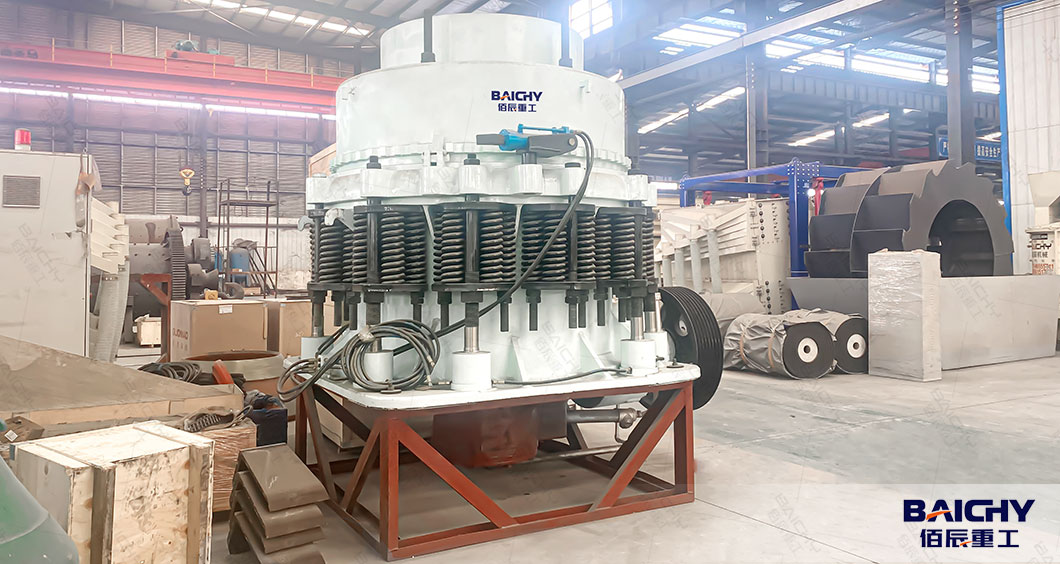
What is a 4 1/4 Cone Crusher?
A 4 1/4 cone crusher is a type of spring cone crusher with a crushing chamber diameter of approximately 4.25 feet. It uses a rotating mantle and a fixed concave to compress and crush materials through continuous squeezing action.
The cone crusher works by using an eccentric motion. The main shaft drives the mantle to move in a circular path, reducing the size of materials between the mantle and concave. Compared with impact crushers, cone crushers provide better control of product shape and are especially suitable for hard and abrasive materials. The 4 1/4 cone crusher is commonly installed in medium-scale crushing plants as a secondary crusher after jaw crushers. It can efficiently process materials such as granite, basalt, limestone, river pebble, and various metal ores.
Technical Parameters:
| Model |
Cavity
type
|
Cone
dia(mm)
|
Discharge Opening
range(mm)
|
Max feeding size
(mm)
|
Capacity
(t/h) |
Motor
(kw) |
Overall size
(mm) |
| CS160 |
C |
1295 (4 1/4') |
19-51 |
205 |
172-349 |
160 |
2983×1866×3156 |
| CS160 |
M |
1295 (4 1/4') |
16-38 |
178 |
132-253 |
160 |
2983×1866×3156 |
| CS160 |
F |
1295 (4 1/4') |
13-31 |
115 |
109-181 |
160 |
2983×1866×3156 |
The actual production capacity depends on many factors:
● Material hardness and abrasiveness
● Moisture content
● Feeding size distribution
● Crusher cavity type
● Closed-side setting (CSS)
● Screening efficiency
For example, hard granite requires a different configuration compared with softer limestone. Proper equipment selection can significantly improve throughput and reduce operating costs.
Cone Crusher Features:
● The "Cone" Design: At its heart is a large rotating mantle (like a spinning cone) that gyrates inside a stationary bowl-shaped concave. The rock enters at the top and is crushed between the mantle and the concave as it moves down. The 4 1/4 ft measurement refers to the diameter of the crushing bowl, indicating its size and capacity.
● Proven & Reliable Technology: This design, originally patented in the early 20th century, is known for its simplicity, durability, and effectiveness. It's a workhorse in many quarries and mines around the world.
● Versatile Crushing: It's excellent for secondary, tertiary, and quaternary crushing stages. This means it takes rocks that have already been broken down once by a primary jaw crusher and crushes them further to the desired final product size.
● Product Quality: A key advantage of a cone crusher like this is its ability to produce a well-shaped, cubic product. This is very important for high-quality concrete and asphalt
● Multiple Cavities: By using different crushing concave liners and mantles (referred to as different "cavities"), the same crusher can be set up for either finer crushing or for higher tonnage output of coarser material.
4 1/4 STD vs Short Head Cone Crusher
The 4 1/4 cone crusher is usually available in two main crushing chamber designs: Standard (STD) and Short Head (SH).
4 1/4 Standard Cone Crusher
The standard cone crusher has a larger feed opening and a relatively coarse crushing cavity. It is mainly used for secondary crushing after primary crushing equipment.
● Features:
○ Larger feed size capability
○ Higher processing capacity
○ Suitable for producing medium-sized aggregates
○ Commonly used after jaw crushers
Typical applications include producing road base materials, construction aggregates, and mining intermediate products.
4 1/4 Short Head Cone Crusher
The short head cone crusher has a steeper crushing chamber and smaller feed opening. It is designed for finer crushing and better control of final product size.
● Features:
○ Smaller feed size
○ Finer discharge material
○ Better particle shape control
○ Suitable for tertiary crushing
Short head models are often used in aggregate plants that require high-quality manufactured sand or fine crushed stone.
Main Components of 4 1/4 Cone Crusher
A 4 1/4 cone crusher consists of several important components that work together to achieve efficient crushing.
● Main Shaft: The main shaft supports the mantle and transfers crushing force. It is designed to withstand heavy loads during continuous operation.
● Mantle and Concave:The mantle and concave are the main wear parts. Materials are crushed when they are compressed between these two components.
The quality of these parts directly affects:
○ Crushing efficiency
○ Product size stability
○ Maintenance frequency
● Eccentric Assembly: The eccentric mechanism creates the rotating movement of the mantle. It determines the crushing stroke and directly influences production performance.
● Hydraulic and Lubrication System: The lubrication system reduces friction between moving parts and helps maintain stable operation. Hydraulic systems are used for adjustment, overload protection, and easier maintenance.
● Frame and Drive System: The heavy-duty frame provides structural support, while the drive system transfers power from the motor to the crushing mechanism.
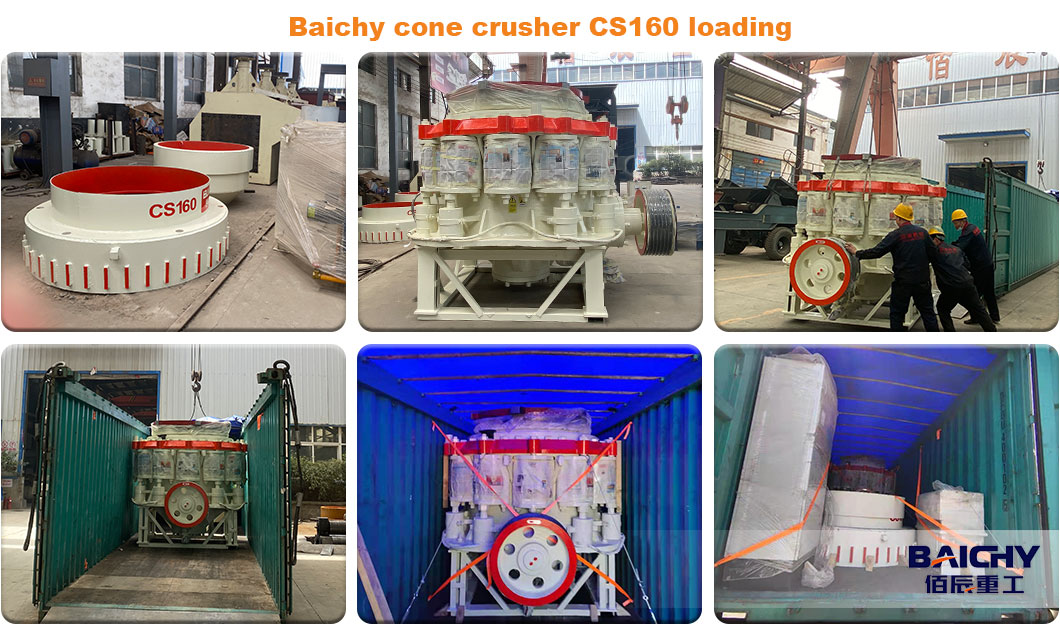
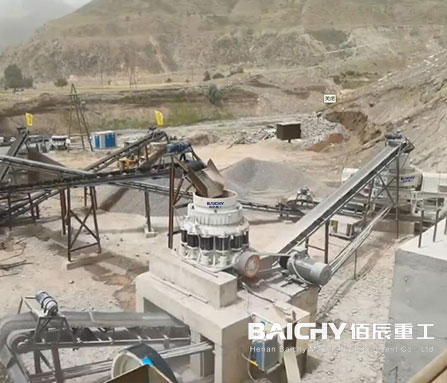
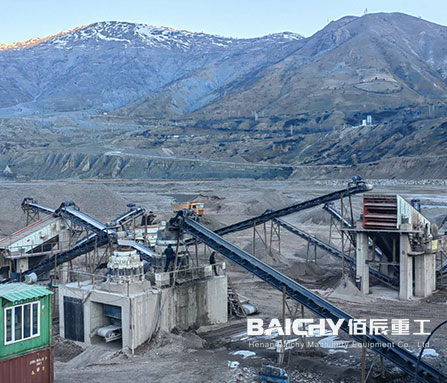
Application: Cone crusher CS160 for Granite Crusher Plant 200tph
Material: granite
Input Size: 0-630mm
Output Sizes: 0-5mm, 5-15mm, 15-31.5mm
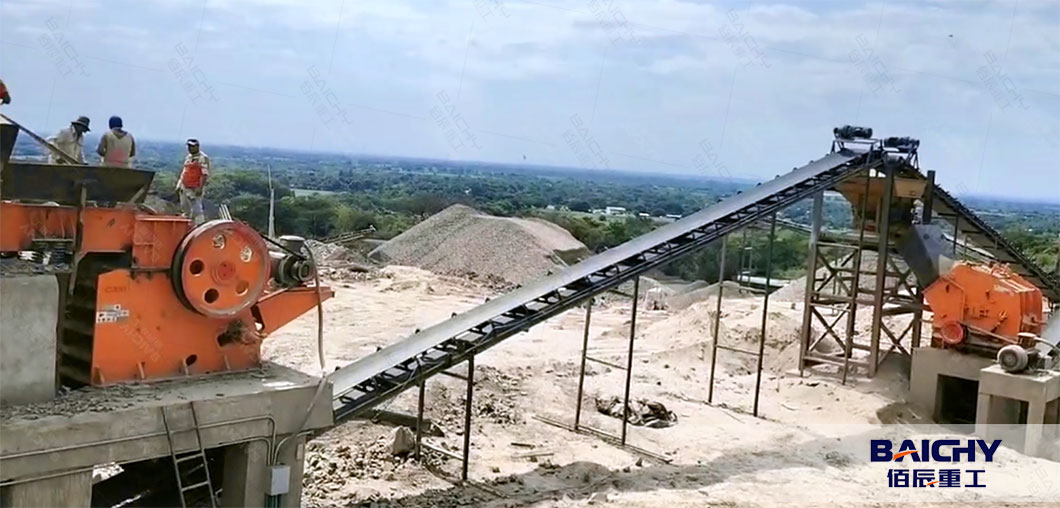
It is configured with hopper, vibrating feeder ZSW1149, primary jaw crusher PE-750X1060, cone crusher CS160, vibrating screen 2YK2160, VSI 1142, 3-layer vibrating screen 3YK2160, and belt conveyors.
Processing:
1. The truck unloads the stones into the hopper, the stone enters the vibrating feeder from the lower part of the hopper. The vibrating feeder feeds the stones evenly to the primary jaw crusher;
2. The crushed output materials from the primary jaw crusher will be transported to the secondary cone crusher.
3. The crushed output materials from the secondary cone crusher will be transported to the two-layer vibrating screen;
4. After screening by the two-layer vibrating screen, will get 0-5mm, 5-35mm, +35mm materials, 0-5mm materials will be transported out by a belt conveyor to stockpile, 5-35mm materials will be transported to VSI Crusher, +35 materials will be transported back to cone crusher for re-crushing.
5. 5-35mm materials will be crushed and shaped by VSI crusher, the output materials will be transported to the second vibrating screen;
6. After the screening, will get 0-5mm, 5-15mm, 15-31.5mm materials, the +31.5mm materials will be transported back to VSI crusher.
People Also Frequently Asked For - FAQ
What is the difference between cone crusher and VSI?
In general, impact crushers both vertical shaft (VSI) and horizontal shaft (HSI), the main difference from the cone crusher is the type of crushing force. The impact crusher crush by material impacting another object.
What is the capacity of a 4 1/4 cone crusher?
The capacity of a cone crusher 4 1/4 is usually around 110–250 TPH, depending on material properties, cavity type, and discharge setting.
How often should cone crusher wear parts be replaced?
Replacement frequency depends on material hardness, operating hours, and production conditions. Regular inspection is necessary to determine replacement timing.




 2026-10-24





 86-15093113821
 86-15093113821