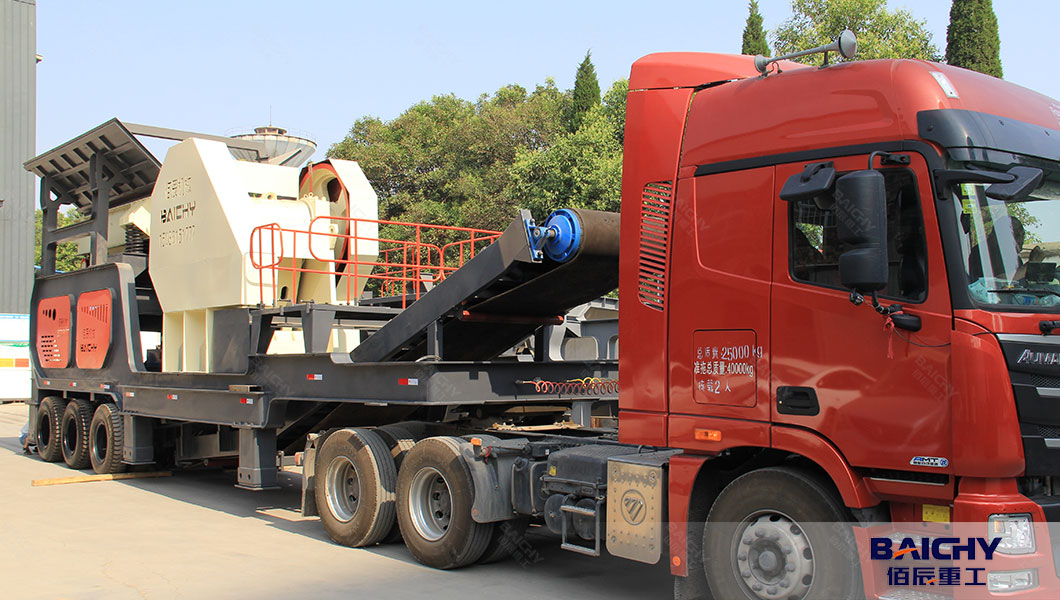
A mobile crushing and screening plant is a flexible and efficient solution for processing rocks, minerals, and construction materials directly at the job site. Unlike traditional fixed crushing plants, mobile plants can be transported between different locations and quickly installed for production. They are widely used in quarrying, mining, road construction, recycling, and infrastructure projects where mobility and fast setup are important.
The working principle of a mobile crushing and screening plant is simple: large raw materials are fed into the crusher, reduced into smaller sizes through crushing stages, and then separated into different sizes by vibrating screens. The entire process is completed on a movable chassis, allowing the plant to operate close to the material source and reduce transportation costs.
What Is a Mobile Crushing and Screening Plant?
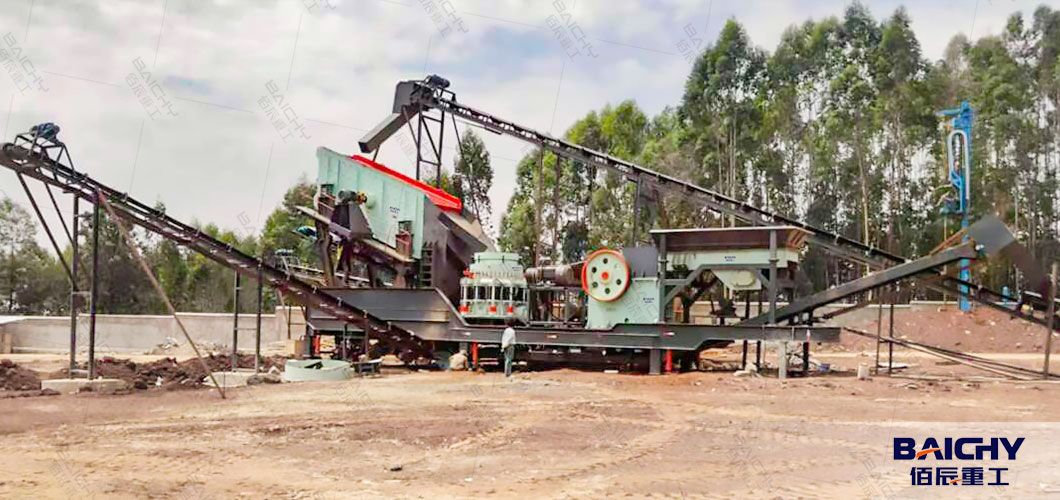
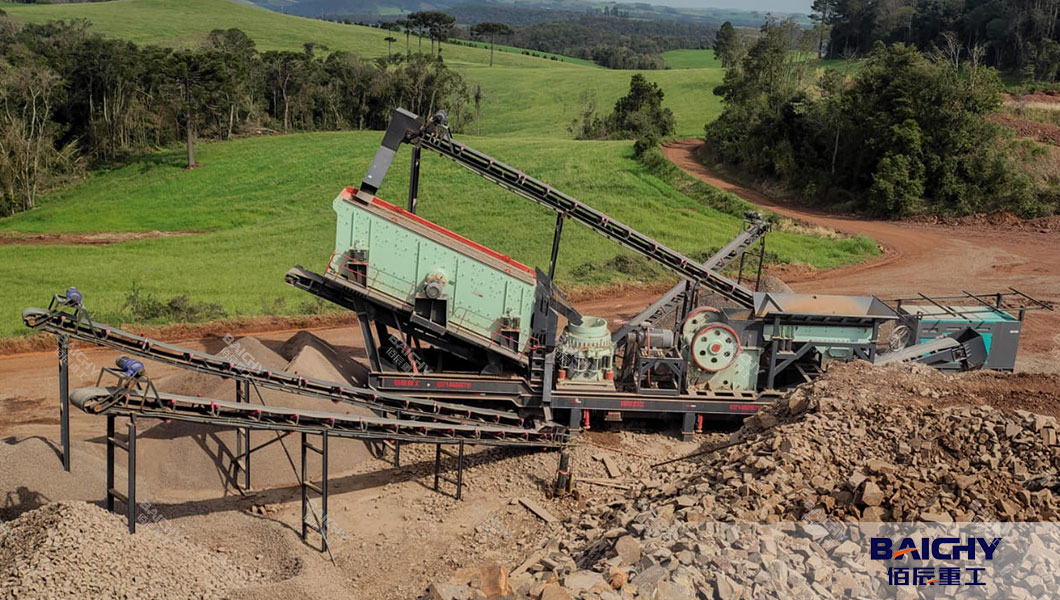
A mobile crushing and screening plant is a complete processing system that integrates crushing, screening, conveying, and sometimes feeding equipment on a crawler or trailer-mounted platform. It is designed to transform large rocks into high-quality aggregates of different sizes.
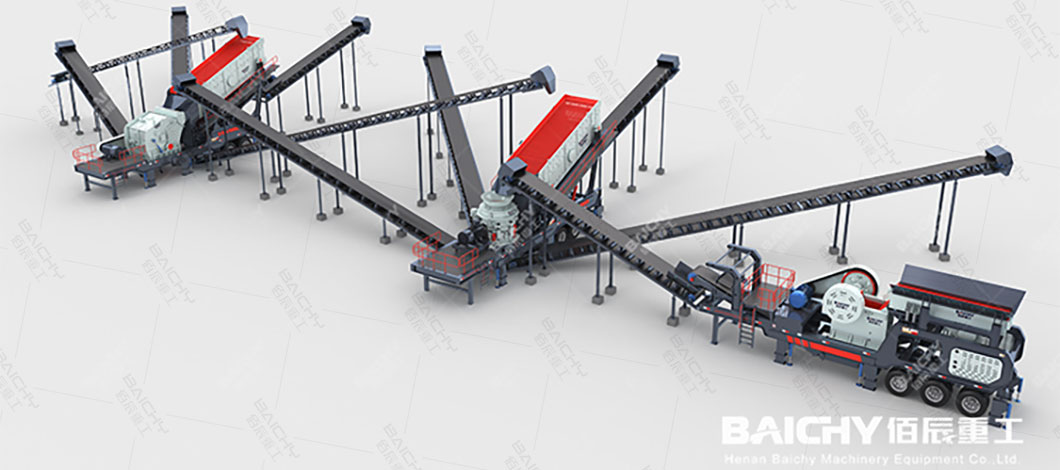
A typical mobile crushing plant consists of several main components, including a vibrating feeder, primary crusher, secondary crusher, vibrating screen, belt conveyors, and control system. Depending on the application, the plant can be equipped with jaw crushers, impact crushers, cone crushers, or vertical shaft impact crushers.
The combination of different equipment allows the mobile plant to process various materials such as granite, basalt, limestone, river stone, construction waste, and metallic ores.
How Does A Mobile Crushing Plant Work?
The operation of a mobile crushing and screening plant usually includes four main stages: feeding, crushing, screening, and conveying.
1. Feeding Stage: Delivering Raw Materials Into The Crusher
The process starts when excavators or loaders feed raw materials into the vibrating feeder. The feeder controls the feeding speed and ensures a stable supply of material to the crusher.
The vibrating feeder also removes small particles and soil before crushing, which helps improve crushing efficiency and reduce equipment wear. For large rocks, a grizzly feeder is commonly used to separate fine materials from oversized stones.
2. Crushing Stage: Reducing Rock Size
After feeding, the material enters the crusher for size reduction. The crushing method depends on the type of crusher installed in the mobile plant.
A jaw crusher is usually used as the primary crusher because it can handle large feed sizes and strong materials. It uses compressive force between a fixed jaw and a moving jaw to break large rocks into smaller pieces.
For producing better-shaped aggregates, impact crushers or cone crushers can be added as secondary crushing equipment. Impact crushers use high-speed impact force to break materials, while cone crushers use compression between the mantle and concave to produce more uniform particles.
A multi-stage crushing process helps achieve the required output size for different applications, such as road base, concrete aggregate, and manufactured sand.
3. Screening Stage: Separating Different Sizes
After crushing, the material is transported by belt conveyors to the vibrating screen. The screen separates crushed materials according to their particle size.
For example, a mobile crushing and screening plant may produce several final products such as:
0-5 mm fine aggregate
5-10 mm crushed stone
10-20 mm construction aggregate
Oversized materials returned for further crushing
The screening process ensures that the final products meet customer requirements and industry standards.
4. Conveying Stage: Moving Finished Products
Belt conveyors transfer finished materials from the screen to stockpiles or loading areas. In a mobile plant, conveyors are designed for quick installation and easy transportation.
Some advanced mobile crushing plants use integrated conveyors and automatic control systems to improve production efficiency and reduce manual operation.
Main Types of Mobile Crushing and Screening Plants
Different projects require different crushing solutions. Based on the crushing equipment used, mobile plants can be divided into several types.
Mobile Jaw Crusher Plant
A mobile jaw crusher plant is mainly used for primary crushing. It is suitable for processing hard and abrasive materials such as granite, basalt, and iron ore.
Its advantages include large crushing capacity, strong feeding ability, and simple maintenance. It is commonly used in mines, quarries, and large infrastructure projects.
Mobile Impact Crusher Plant
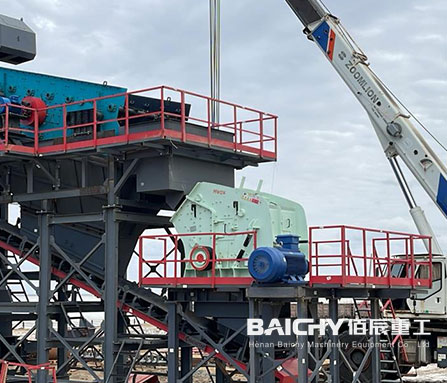
A mobile impact crusher plant is designed for producing high-quality aggregates with excellent cubic shape. It is widely used in limestone crushing, construction waste recycling, and medium-hard rock processing.
The impact crushing process improves particle shape, making the final products suitable for concrete and asphalt production.
Mobile Cone Crusher Plant
A mobile cone crusher plantis commonly used for secondary and tertiary crushing. It provides high crushing efficiency and stable product size, especially when processing hard rocks.
It is often combined with mobile jaw crushers to create complete multi-stage crushing systems.
Mobile Screening Plant
A mobile screening plant is mainly responsible for separating materials into different sizes. It can work independently or together with mobile crushers to form a complete crushing and screening line.
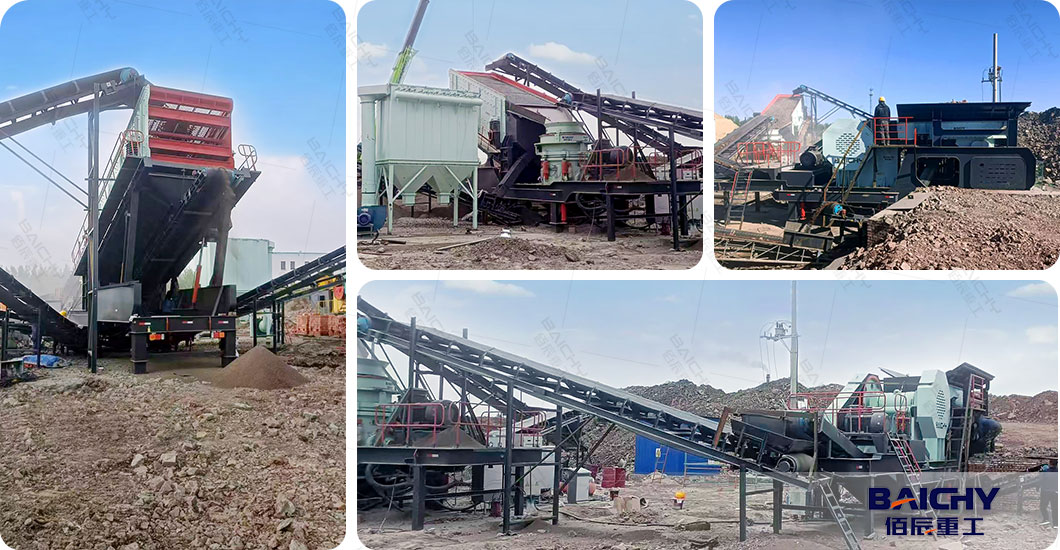
A mobile crushing and screening plant works by combining feeding, crushing, screening, and conveying processes into one flexible system. It can efficiently transform large rocks into different sizes of usable materials while offering mobility, lower transportation costs, and fast installation.
With continuous improvements in automation, energy efficiency, and environmental protection, mobile crushing plants have become an important solution for modern mining, quarrying, and construction industries. For businesses looking for a flexible aggregate production solution, selecting a reliable mobile crushing and screening plant manufacturer is essential to achieving stable operation and long-term production efficiency. Baichy Machinery Company is headquartered in Zhengzhou, Henan. As a manufacturer specializing in the production of mobile stone crushers for more than 20 years, it has a good reputation in the industry. If you have any questions about jaw crushers, please click on the online customer service, which will answer you 24 hours a day.
FAQ
1. What materials can a mobile crushing and screening plant process?
A mobile crushing and screening plant can process many types of materials, including granite, basalt, limestone, river stone, iron ore, copper ore, concrete waste, and asphalt.
2. What is the capacity of a mobile crushing plant?
The capacity depends on the equipment configuration and material characteristics. Mobile crushing plants can range from small-scale units of less than 100 tons per hour to large systems exceeding 500 tons per hour.
3. What is the difference between a mobile crusher and a stationary crusher?
The main difference is mobility. A mobile crusher can be transported and operated at different locations, while a stationary crusher requires a permanent foundation and fixed installation.
4. How long does it take to install a mobile crushing plant?
Most mobile crushing plants require much less installation time than fixed plants. Depending on the model and site conditions, production can often begin shortly after transportation and setup.




 2026-09-21





 86-15093113821
 86-15093113821