Jaw crushers are indispensable equipment in mining, construction, and stone processing industries, with a diverse range of models and specifications tailored to meet varied crushing requirements. Understanding the classification and key parameters of these crushers is crucial for selecting the optimal equipment. Below is a detailed breakdown of common jaw crusher types, their core specifications, and application scenarios.
1.By Feed Opening Width and Length
The feed opening width and length are core indicators defining a jaw crusher’s handling capacity for raw material size.
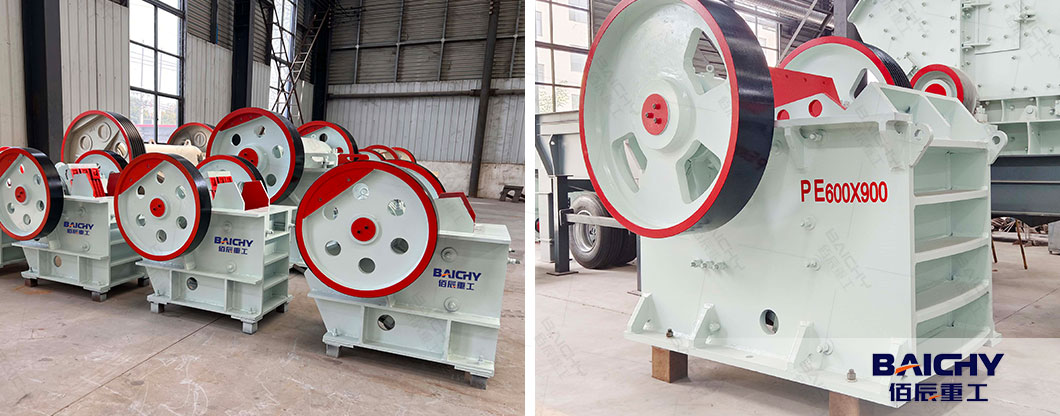
● PE Series (Traditional Model): Represented by the classic jaw crusher PE250×400, where "250" denotes a 250mm feed opening width and "400" a 400mm length. With a processing capacity of 5-20t/h, it is ideal for small-scale stone processing plants or projects with low output demands, offering reliable performance and straightforward operation.
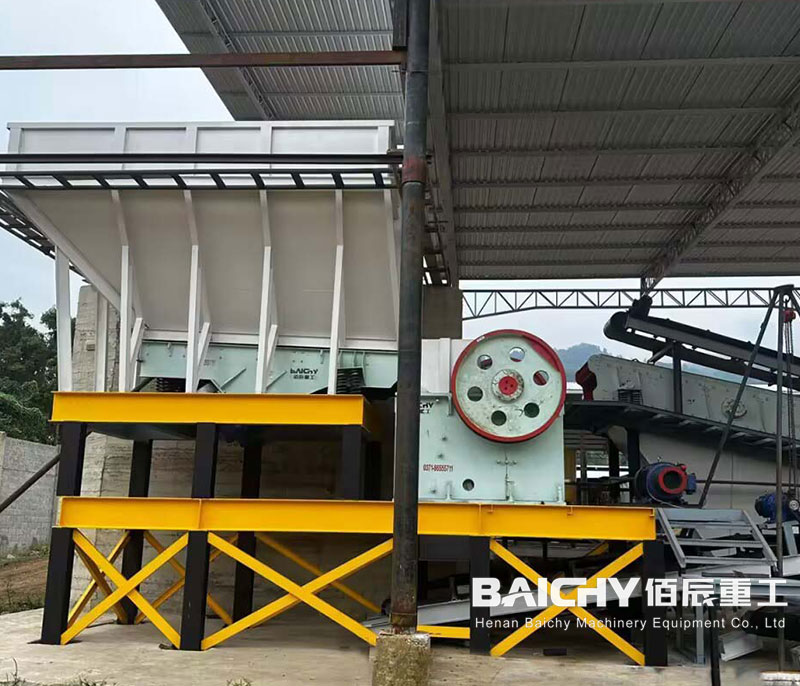
● Jaw crusher PE-600×900 Model: Boasting a 600mm×900mm feed opening, this model delivers a processing capacity of 90-180t/h. Designed to handle large-sized stone materials, it is widely utilized in medium-scale mining operations and construction stone processing, balancing efficiency and durability for bulk crushing tasks.
2. Classified by Moving Jaw Motion Characteristics
The motion trajectory of the moving jaw directly influences crushing efficiency and particle size output.
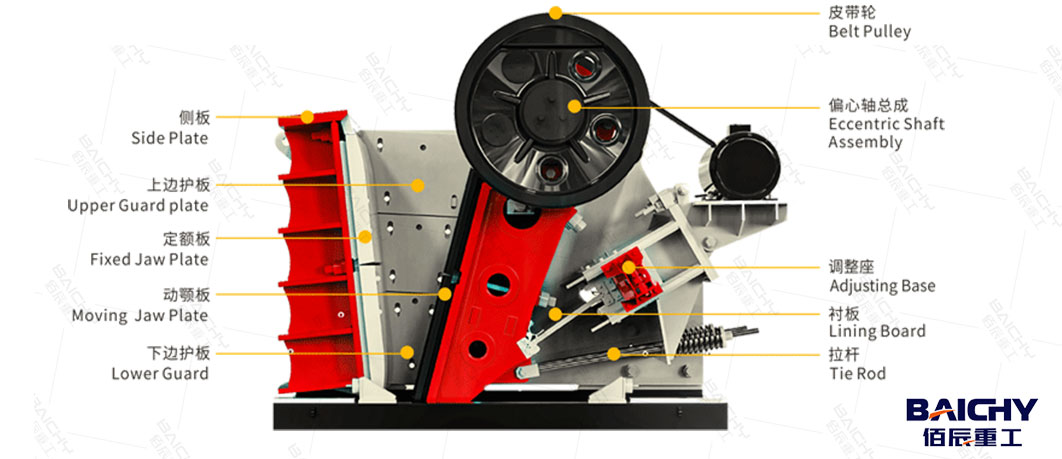
● Simple Swing Type: This type of jaw crusher has a simple structure, and the motion trajectory of the moving jaw is approximately an arc centered on the suspension shaft. For example, the traditional PE - series simple - swing jaw crusher, its working principle is that the rotation of the eccentric shaft drives the moving jaw to swing periodically, thus realizing the crushing of materials. Its crushing ratio (the ratio of the maximum particle size before crushing to the maximum particle size after crushing) is generally between 3 - 6, and it is suitable for coarse crushing operations and can initially crush large pieces of ore, rock and other raw materials into smaller particles.
● Complex Swing Type: The motion trajectory of the moving jaw is more complex, with not only up - and - down swings but also left - and - right movements. Like the PEX - series complex - swing jaw crusher, its crushing ratio is relatively large, up to 4 - 8 or so, and it can crush materials more effectively into finer particles. This model of crusher has a better crushing effect when dealing with some materials with high hardness and large particle size, and the production efficiency is higher than that of the simple - swing type.
3. Classified by Application and Industry
Jaw crushers are specialized to meet the unique needs of different crushing stages and industries.
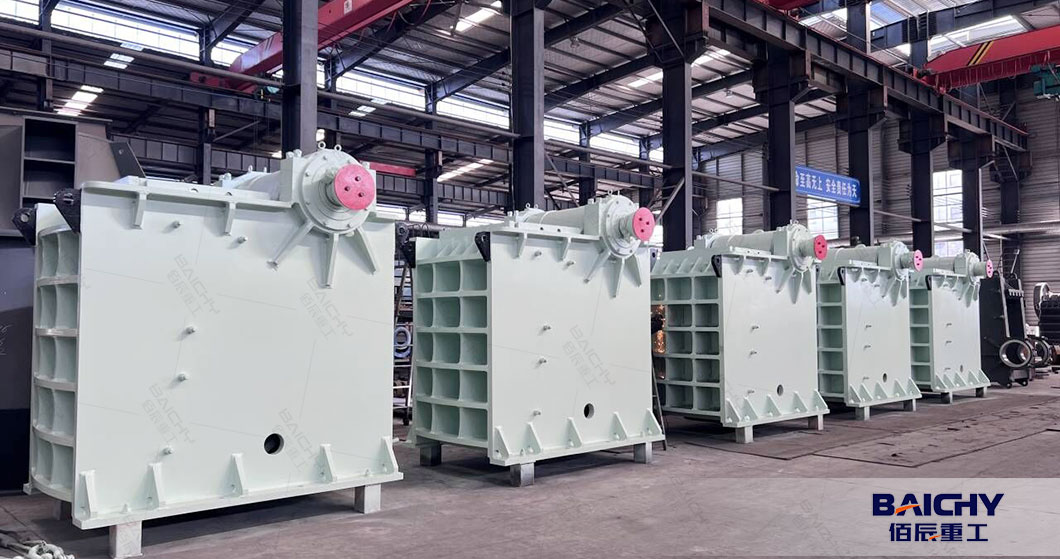
● Coarse-Crushing Type: Featuring a large feed opening and high crushing force, it is primarily used for primary crushing in mining. For instance, the C-series coarse-crushing jaw crusher adopts an advanced crushing cavity design, adapting to the coarse crushing of various hard ores (e.g., granite, iron ore). It delivers robust processing capacity, efficiently reducing large ore blocks to sizes suitable for secondary crushing equipment.
● Medium-and-Fine-Crushing Type: With a smaller feed opening, it focuses on producing finer particle sizes. The PEX-series jaw crusher is widely applied in medium-and-fine crushing of construction stones, further processing coarsely crushed materials into small particles that meet the strict particle size requirements of the construction industry—such as for high-quality concrete aggregates.
4. Classified by Driving Method
The driving system determines the operational stability, control precision, and protection capabilities of jaw crushers.
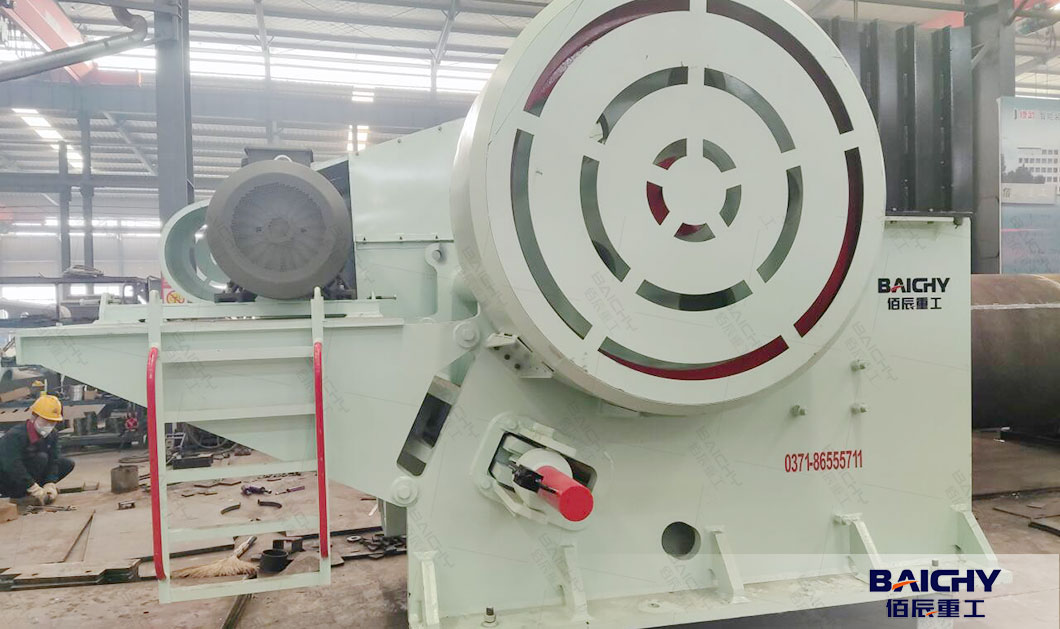
● Electric-Motor-Driven Type: The most common driving method, where a motor powers pulleys and an eccentric shaft to drive the moving jaw. Advantages include stable power output, easy control, and convenient maintenance. Most PE-series crushers use this method, with motor power ranging from several kW to hundreds of kW to accommodate different production scales.
● Hydraulic-Driven Type: Utilizes a hydraulic system to drive the moving jaw, enabling precise motion control. Some new-generation intelligent jaw crushers adopt this design, allowing flexible adjustment of moving jaw parameters based on material properties and crushing requirements. Additionally, if an uncrushable object enters the crushing cavity, the hydraulic system automatically retracts the moving jaw to prevent equipment damage, providing excellent overload protection.
Each jaw crusher model offers unique advantages and is tailored to specific application scenarios. When selecting equipment, key factors to consider include the type and hardness of the material to be crushed, required production capacity, operating conditions, and budget. To ensure you invest in the most efficient and cost-effective solution for your project, consult with professional equipment suppliers to discuss your specific needs and receive personalized recommendations. Don’t compromise on performance—choose the right jaw crusher to elevate your crushing operations today!
Frequently Asked Questions (FAQs)
Q1: What do the numbers in a jaw crusher model, such as PE-600×900, mean?
Answer: The numbers represent the physical dimensions of the crusher’s feed opening in millimeters. For example, in the PE-600×900 model, "600" is the width and "900" is the length of the opening. Knowing these dimensions helps you determine the maximum rock size the machine can accept and estimates its overall processing capacity.
Q2: What is the main difference between simple swing (double-toggle) and complex swing (single-toggle) jaw crushers?
Answer: The difference lies in how the moving jaw operates. A simple swing crusher moves the jaw in a basic arc, making it extremely durable and ideal for the initial crushing of very hard, massive rocks. A complex swing crusher moves the jaw both up-and-down and left-and-right. This more aggressive motion yields a higher crushing ratio and better production efficiency for standard materials.
Q3: What are the benefits of choosing a hydraulic jaw crusher over a traditional one?
Answer: Hydraulic jaw crushers offer superior safety and easier maintenance. They allow operators to quickly and precisely adjust the discharge gap using hydraulic controls rather than manual shims. Additionally, they feature automatic overload protection; if an uncrushable object (like tramp metal) enters the chamber, the hydraulic system yields to let it pass safely, preventing severe damage to the equipment.




 2026-09-17





 86-15093113821
 86-15093113821