Home About us
Products
News
Solution
Video Service Contact us
Home  /  News

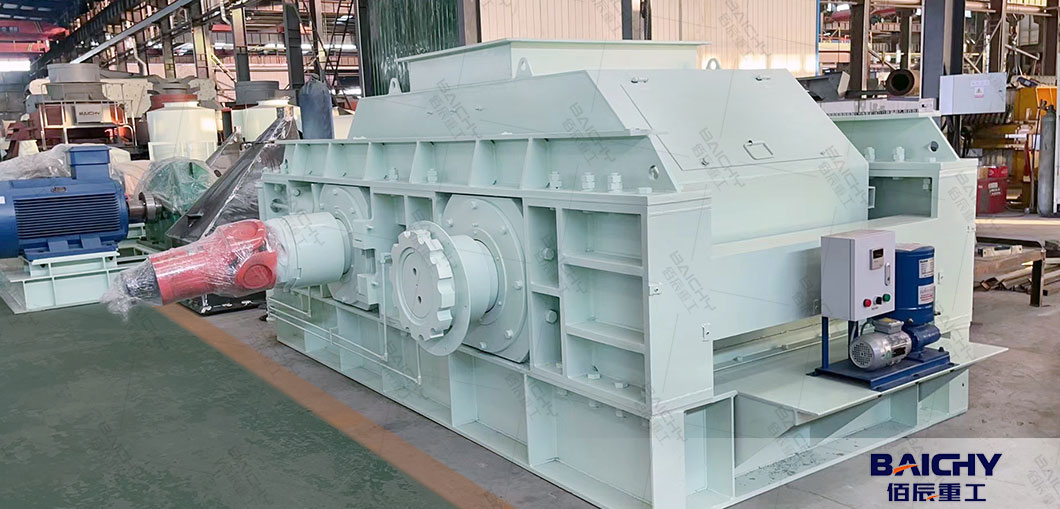
Quartz is one of the most challenging materials to process due to its Mohs hardness of 7 and high silica content. For industries like glass manufacturing, ceramics, and high-purity sand production, the Double Roll Crusher (2PG Series) has become the preferred secondary and tertiary crushing solution. This guide explores the technical advantages, operational data, and cost-efficiency of using double roll crushers for quartz processing.


roller-crusher-详情11.jpg


1. Why Use a Double Roll Crusher for Quartz?

Traditional impact or hammer crushers often fail when handling quartz because the high-speed impact leads to extreme wear on manganese parts, resulting in frequent downtime.


The Roll Crusher Advantage:

   ● Compression Crushing: Unlike impact methods, roll crushers use slow-speed, high-pressure compression. This significantly reduces the wear rate of the roller surface.
   ● Minimal Over-Crushing: For quartz sand making (0-5mm), roll crushers produce fewer "super-fines" (dust), ensuring a higher yield of the target grain size.
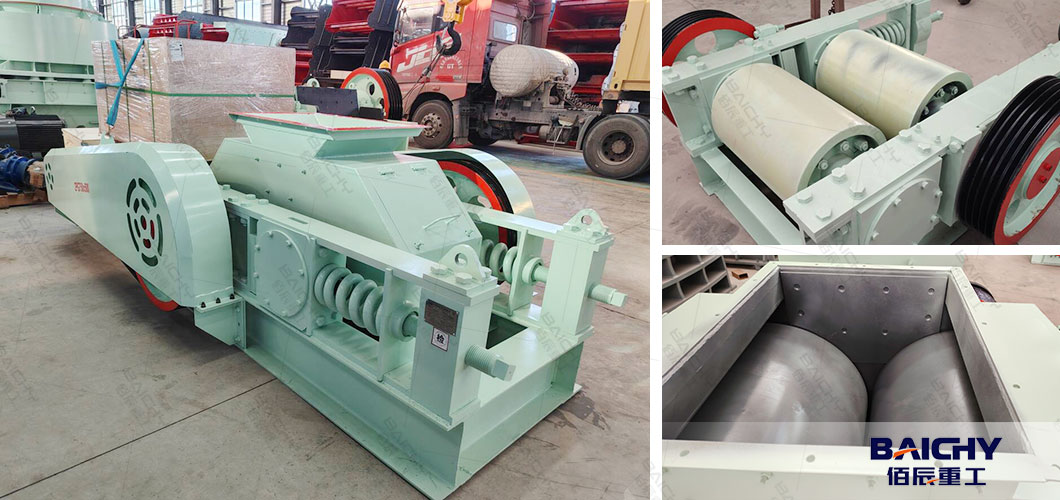
   ● Adjustable Discharge: You can precisely control the gap between rollers to produce specific grades of quartz grit or sand.


2. Technical Specifications: Model Selection Data

The 2PG series is the most common double roll crusher configuration for quartz. The following table provides verifiable specifications from multiple suppliers

Model Feed Size (mm) Discharge Size (mm) Capacity (t/h) Motor Power (kW) Weight (kg)
2PG-400×250 ≤25 2-8 5-10 11 1,100
2PG-610×400 ≤40 1-20 13-40 30 3,500
2PG-750×500 ≤40 2-20 20-55 37 12,250
2PG-900×500 ≤40 3-40 60-125 44 14,000


Critical Operating Parameters

   ● Compressive strength limit: ≤160 MPa (quartz falls within this range)

   ● Mohs hardness suitable: Up to 6-7 for standard double roll; high-pressure roller mills extend to Mohs 7

   ● Gap adjustment range: 0.5–50 mm for precise discharge size control


3. Solving the "Abrasion" Problem: Roll Surface Selection

Since quartz is highly abrasive, the choice of roller skin is critical for ROI.

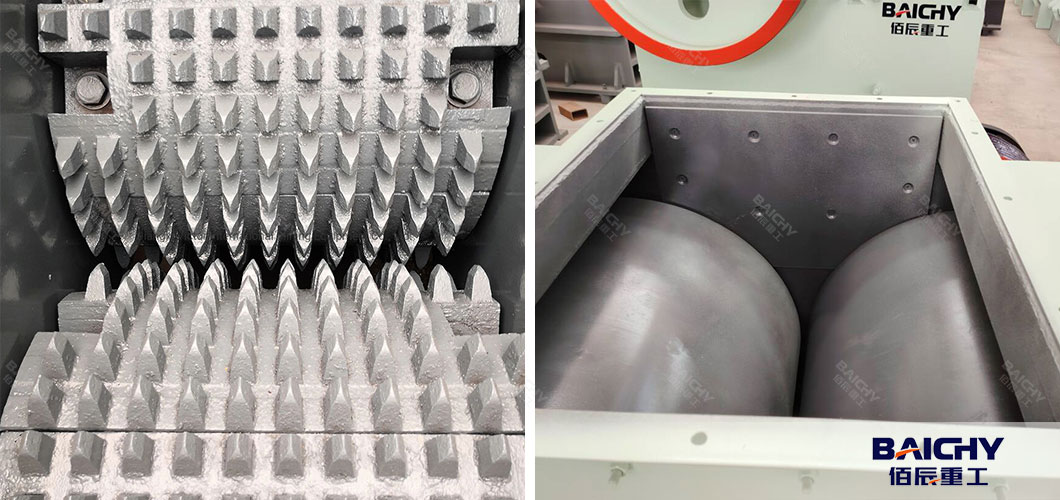
   ● High-Chrome Alloy (Cr26): Ideal for standard quartz crushing. It offers a balance between toughness and extreme hardness.
   ● Tungsten Carbide Studs: Best for "Super-Hard" quartz. The studs penetrate the material, providing better grip and even longer wear life.
   ● Hydraulic Adjustment System: Modern quartz roll crushers use hydraulic cylinders to maintain constant pressure. If an uncrushable object enters, the rollers retract to prevent shaft damage.


4. Application Data: Quartz Processing Scenarios

4.1 Manufactured Sand Production
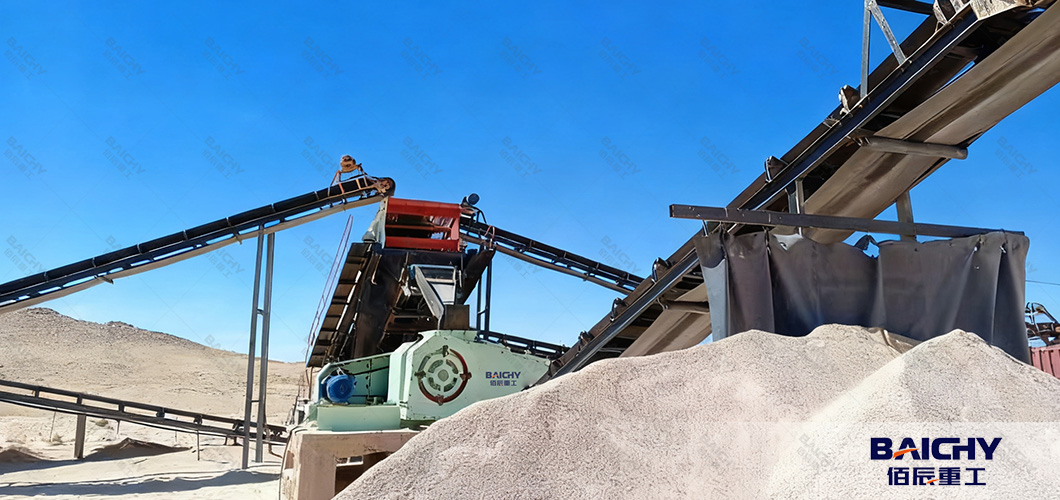
With depletion of natural sand resources, double roll crushers are increasingly used to produce high-quality manufactured sand from quartz and quartzite. A comparative study of sand quality metrics shows:

Indicator Double Roll Crusher Impact Crusher National Standard (GB/T 14684-2022)
Flakiness index ≤8% 15% ≤10%
Crushing value 14%-18% 20% ≤25%
Clay content ≤0.5% 1.2% ≤3.0%
Key finding: Sand produced by double roll crushers matches 92% of Zone II sand requirements, significantly outperforming hammer crushers (75%) and cone crushers (68%).


4.2 Laboratory Grinding Application
A University of Johannesburg study documented quartzite processing using a Denver double roller mill. Parameters included:

Roller speed: 116 rpm (fixed)

Gap settings tested: 8mm, 10mm, 12mm

Feed masses: 388g to 906g per size fraction

Procedure: Slow feeding to avoid choking; reproducible results across repeated tests

The study validated double roller mills for controlled size reduction of quartzite, with gap size directly influencing product particle size distribution.


4.3 Secondary and Fine Crushing
Double roll crushers excel in secondary and fine crushing applications for quartz, producing uniform product with low over-crushing rates. For example, using pebbles and construction waste (including quartz-containing materials) for artificial sand production is a proven application.


5. Selection Guide: Double Roll vs. Alternatives

Crusher Type Best Application Suitability for Quartz
Smooth Double Roll Medium-fine crushing, quartz, limestone ★★★★★ (excellent)
Double Tooth Roller Coarse crushing, coal gangue, sticky materials ★★★☆☆ (moderate—over-crushing may occur)
Impact Crusher Brittle materials, but high wear on silica ★★☆☆☆ (wear issue)
Cone Crusher Hard rock, but higher fines generation ★★★☆☆ (acceptable but less efficient)


6. Expert Tips for Optimizing Quartz Output

   ● Choke Feeding: Ensure the crusher is "choke fed" (keeping the space above the rollers full) to promote inter-particle crushing, which improves the cubical shape of quartz sand.
   ● Speed Control: For quartz, a peripheral speed of 2.0 - 4.5 m/s is recommended to balance throughput with wear.
   ● Magnetic Separation: Always install a magnetic separator before the roll crusher to remove tramp iron, which is the #1 cause of roller surface pitting.


The Double Roll Crusher is a cost-effective, high-precision tool for any quartz processing plant aiming for specific grain sizes with minimal dust. By selecting the right alloy rollers and maintaining consistent feed, operators can significantly lower their cost-per-ton compared to impact-based crushing methods.


Maybe you are interested in