Before looking at any crusher, answer these three questions about your stone crusher project.
● First, what is your rock? You need to know its hardness, silica content, and moisture. These are not optional—they determine everything that follows.
● Second, what do you want to make? Be specific about final product size and shape requirements. Premium markets pay more for cubic particles.
● Third, how much do you need? Your target tonnage and operating hours determine equipment sizing and whether a more expensive machine makes economic sense.
Most wrong crusher purchases happen because buyers started with "which machine is best" instead of "what does my rock need."
Step 1: Understand Your Rock
Rock properties are not opinions. They are data that dictate which crushing principle will work.
● Hardness, measured as compressive strength in megapascals, determines whether you need compression or impact crushing. Rocks below 80 MPa like limestone are soft and can use impact or hammer crushers. Rocks between 80 and 150 MPa like dolomite are medium where both impact and cone might work. Rocks above 150 MPa like granite are hard and must use compression crushers like jaws and cones.
● Abrasiveness, determined by silica content, is the biggest factor in operating cost. Below 5% silica, any crusher type can be economical. Between 5-10%, be cautious with impact crushers. Above 10% silica, you must use compression crushers exclusively.
● Processing granite with 20-30% silica using an impact crusher costs $0.80-1.20 per ton in wear parts. Using a cone crusher costs $0.25-0.40 per ton. For one million tons annually, that difference is up to $950,000.
● Moisture content determines whether some crushers will clog. This alone can make or break a plant design.
Step 2: Understand Crushing Principles
All crushers work by one of three basic principles.
● Compression crushing squeezes rock between two surfaces, as in jaw and cone crushers. This is best for hard, abrasive rock because wear surfaces are thick and replace slowly. However, compression crushers struggle with wet, sticky material.
● Impact crushing throws rock against metal plates at high speed, as in impact crushers and VSI crushers. This produces excellent particle shape for medium-soft, low-abrasion rock but is disastrous for hard, abrasive rock because wear costs explode.
● Shear crushing uses teeth to tear soft materials like coal but is ineffective for hard rock.
Matching the principle to your rock is not optional. Using impact crushing on hard granite means paying for that mistake every single day.
Step 3: Map Your Process
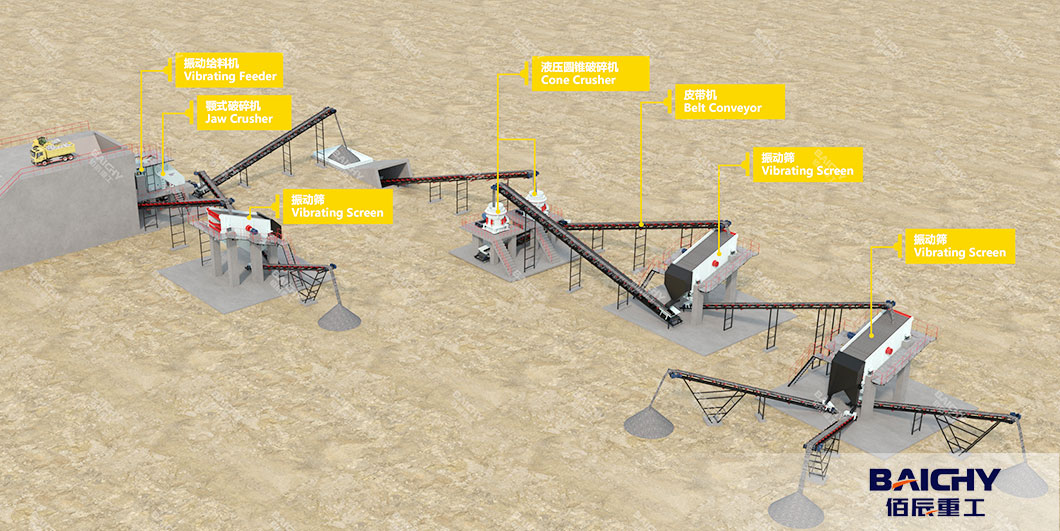
A crushing plant is a sequence of machines, and each stage has a specific job.
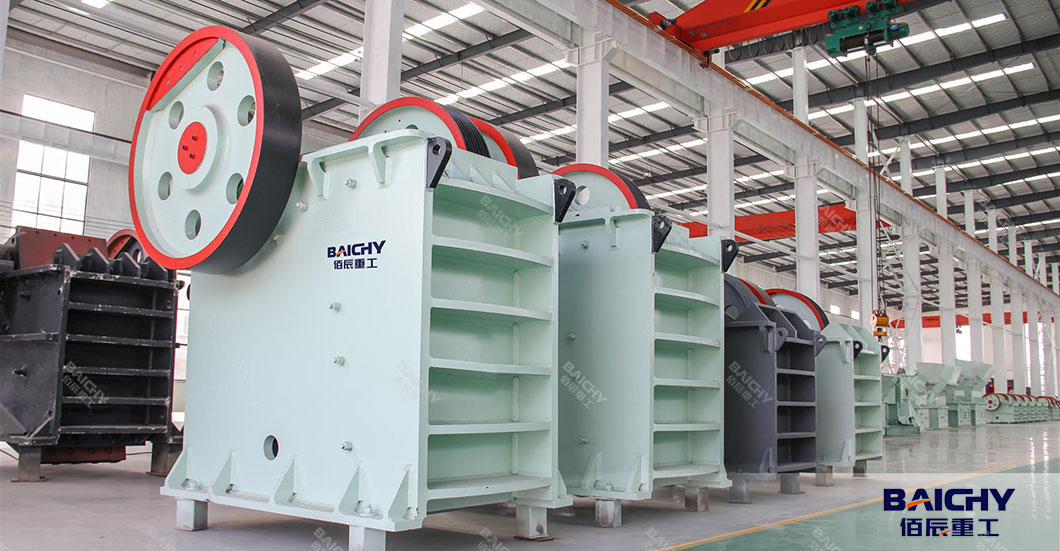
● Primary crushing reduces run-of-mine material up to 1000mm down to 150-300mm. For this stage, only one choice exists: a jaw crusher. Jaw crushers are the only machines designed to handle huge feed sizes, high impact forces, and occasional tramp metal.
● Secondary crushing takes primary output down to 30-80mm. For hard rock above 150 MPa, you must use a cone crusher. For medium rock below 120 MPa with low silica, you might choose an impact crusher if particle shape matters.
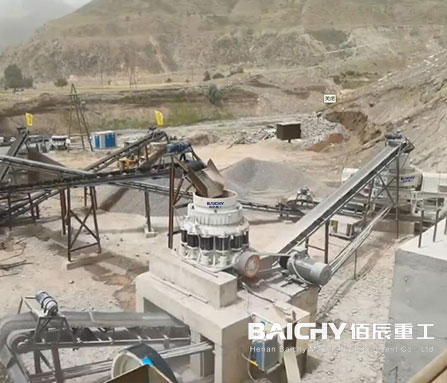
● Tertiary crushing produces final sized product between 5-25mm using short head cone crushers for hard rock or VSI crushers when shape improvement is needed.
● Sand making produces manufactured sand from 5-20mm feed using VSI crushers, which create the cubical particles that concrete producers demand.
● The critical rule: never put a crusher in a stage it was not designed for. Using a secondary cone as a primary will destroy it in weeks.
Step 4: The System View
A crusher is only as good as the equipment around it. No machine operates in isolation.
● Every jaw crusher needs a vibrating feeder with a grizzly to remove fines before they enter the crusher. Without this, fines pack the crushing chamber and reduce capacity.
● Every cone crusher needs choke feed control and a metal detector. Choke feed means the chamber is always full, which is essential for proper operation. The metal detector catches tramp iron before it destroys your crusher.
● Every impact crusher needs even feed distribution across the rotor width. Uneven feed causes uneven wear on blow bars, reducing their life and creating imbalance.
● Every VSI crusher needs clean, dry feed for sand making. Moisture above 2% causes material to stick in the rotor, creating imbalance that can destroy bearings in hours.
● Common matching mistakes destroy plant performance. Putting a cone after a jaw with no surge bin means the cone runs empty half the time. Putting a screen too small for the crusher output creates a circulating load that chokes the plant.
Step 5: Red Flags and Deal Breakers
Knowing when not to choose a crusher is as important as knowing when to choose it.
● Avoid cone crushers when material has clay above 5% or moisture above 5%. The material packs the chamber and production stops. Cleaning a packed cone is a miserable, hours-long job.
● Avoid impact crushers when silica exceeds 8% or hardness exceeds 120 MPa. The wear cost explosion is not a theory—it is a mathematical certainty.
● Avoid VSI crushers in sand making mode when feed moisture exceeds 2%. Sand production drops, rotor becomes unbalanced, and you risk catastrophic failure.
● Avoid hammer crushers when product shape matters. The product will be flaky, and every size change requires stopping to replace sieve plates.
● The most dangerous trap: the "it worked for my friend" assumption. Your friend's rock is not your rock. Never copy a plant design without analyzing your own inputs.
Choosing the right crusher is not about finding the best machine. It is about finding the machine that best matches your rock, your product, and your economics. Start with your rock. End with your cost per ton. Everything else is details. Baichy engineers offer free material testing including hardness, silica content, and abrasion index. We provide process flow design and five-year cost projections based on your specific rock. Contact our engineering team now. Tell us about your rock and your goals. We will help you build a plant that makes money.
People Also Frequently Asked For - FAQ
1. What is a stone crushing machine called?
Crushers are machines used to reduce the size of rocks, stones and ore. They are often utilized in aggregates production, construction material recycling and in mining operations. Metso offering covers different gyratory crushers, jaw crushers, cone crushers and impact crushers – optimized for any size reduction need.
2.What is the lifespan of a stone crusher?
The life span of the rock crusher was assumed to be 25 years. Use phase modeling included power, oil and lubricant consumption, and parts replacement requirements of the crusher.
3. What are the three types of crushers?
Three common types of crushers are Jaw Crushers (compression for primary crushing), Cone Crushers (compression for secondary/tertiary crushing), and Impact Crushers (using high-speed hammers for softer materials). These categories handle different stages and material types, from large primary rocks to finer secondary products, using crushing principles like squeezing, shattering, or impact.




 2026-10-16





 86-15093113821
 86-15093113821