A complete gypsum drying and grinding production line was successfully installed in Bolivia for processing natural gypsum ore into high-quality gypsum powder. According to client requirement, we have proposed several soluitons and this one is confirmed finally. The project combines a 1500×12000mm rotary gypsum dryer, a YGM130 Raymond grinding mill, and an automatic packing machine to achieve stable and efficient industrial production.
The finished gypsum powder is mainly used in:
● Construction plaster
● Gypsum board manufacturing
● Cement additives
● Wall putty powder
● Decorative building materials
With the rapid growth of the construction industry in South America, the demand for fine gypsum powder continues to increase. This gypsum processing plant helps local customers improve production efficiency, reduce labor costs, and ensure stable finished powder quality.
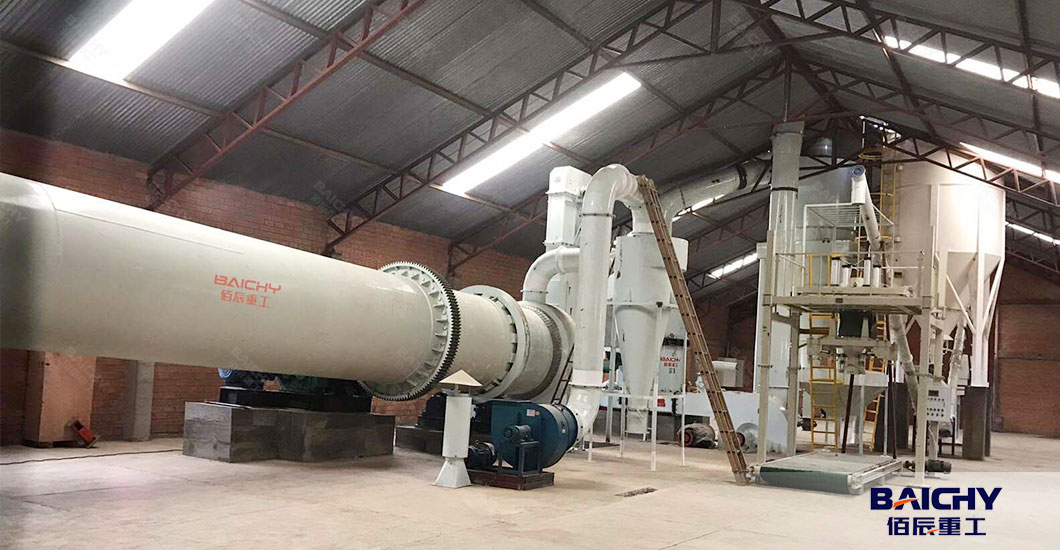
The Project Overview: Gypsum Processing in Bolivia
The project site, located in the heart of Bolivia's industrial zone, required a solution that could handle raw gypsum ore, reduce moisture content efficiently, and grind the material into a fine, consistent powder for commercial use. The combination of drying, grinding, and automated packaging offers a seamless workflow that maximizes ROI and minimizes labor costs.
Key Components of the Production Line
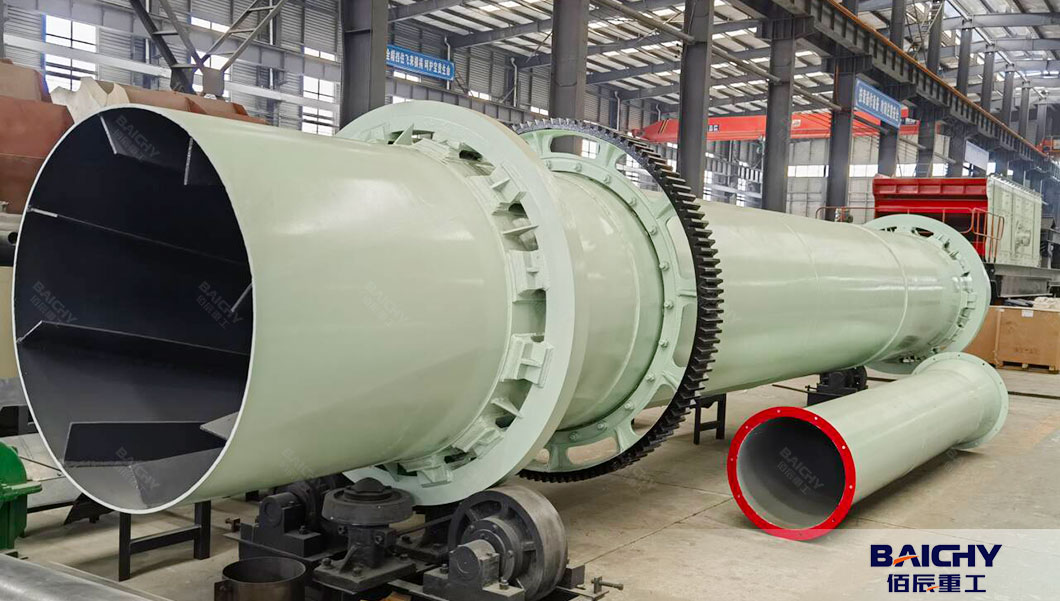
1. Rotary Gypsum Dryer 1500x12000mm
The first critical stage of the process is moisture removal. The 1500x12000mm Rotary Dryer is specifically designed for high-volume mineral drying.
● Dimensions: 1.5 meters in diameter and 12 meters in length.
● Efficiency: Utilizing advanced lifting flights and a specialized internal structure, it ensures uniform heat exchange, reducing the moisture of the gypsum ore to the required levels for efficient grinding.
● Durability: Built with high-grade steel to withstand the abrasive nature of gypsum and the extreme temperatures required for drying.
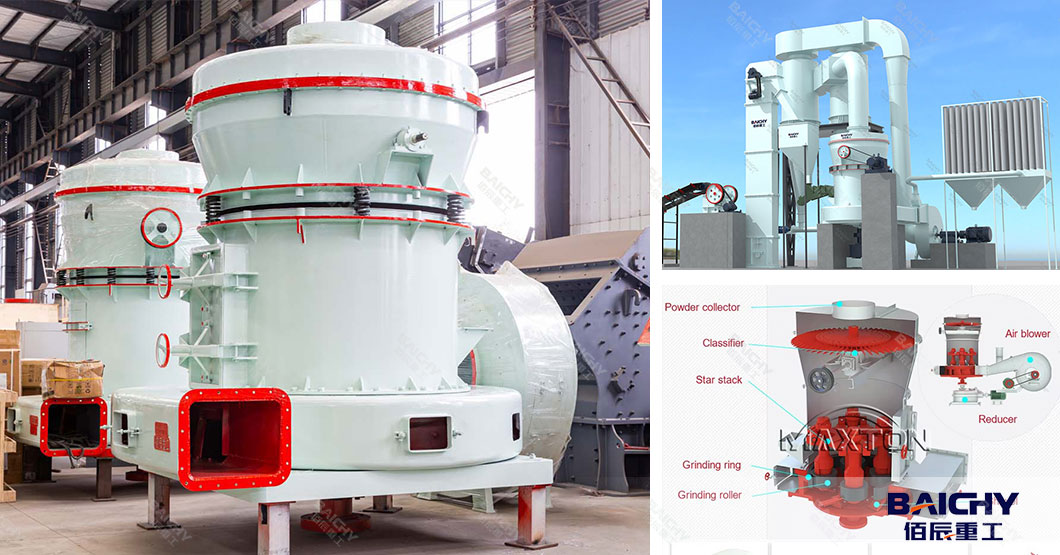
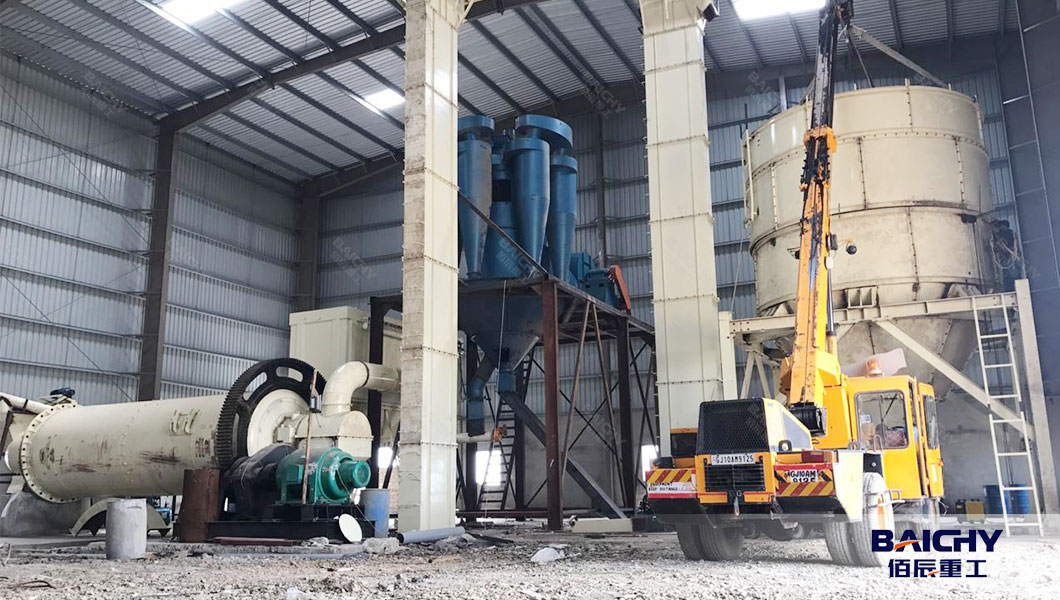
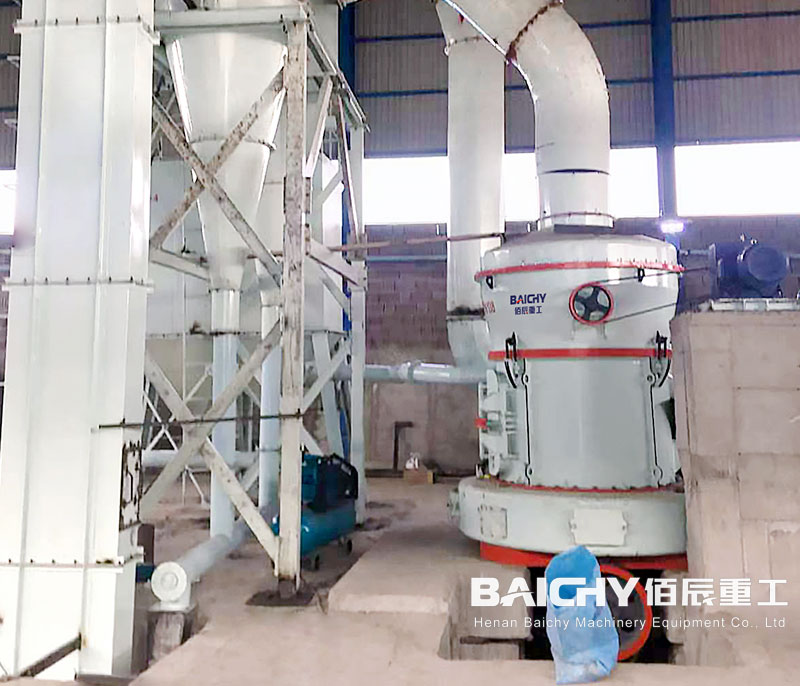
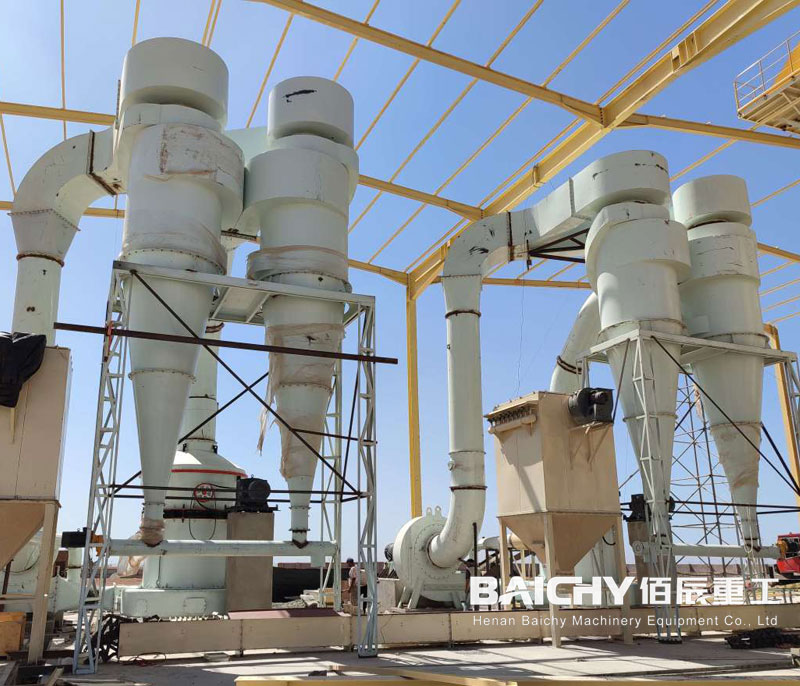
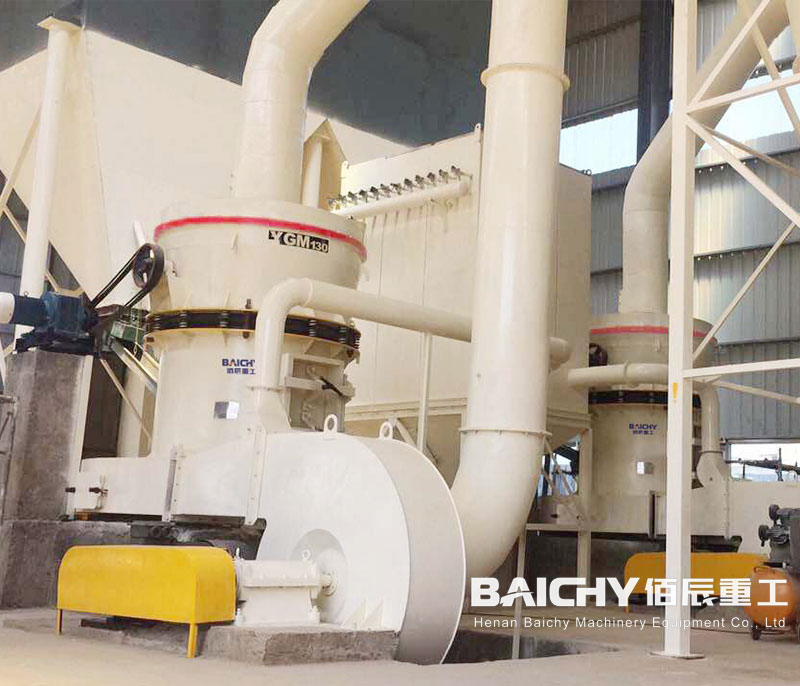
2. YGM130 Raymond Mill (Gypsum Grinding Plant)
Once the gypsum is dried, it moves to the grinding phase. The YGM130 Raymond Mill is the "heart" of this production line.
● Performance: The YGM130 is renowned for its stability and high output. It can produce gypsum powder with a fineness ranging from 80 to 425 mesh, meeting various industrial standards.
● Grinding Rollers: Featuring high-pressure spring technology, it increases the grinding force on the material, resulting in higher efficiency compared to traditional mills.
● Automatic Control: The system is equipped with an intelligent control panel, allowing operators in Bolivia to monitor performance and adjust parameters in real-time.
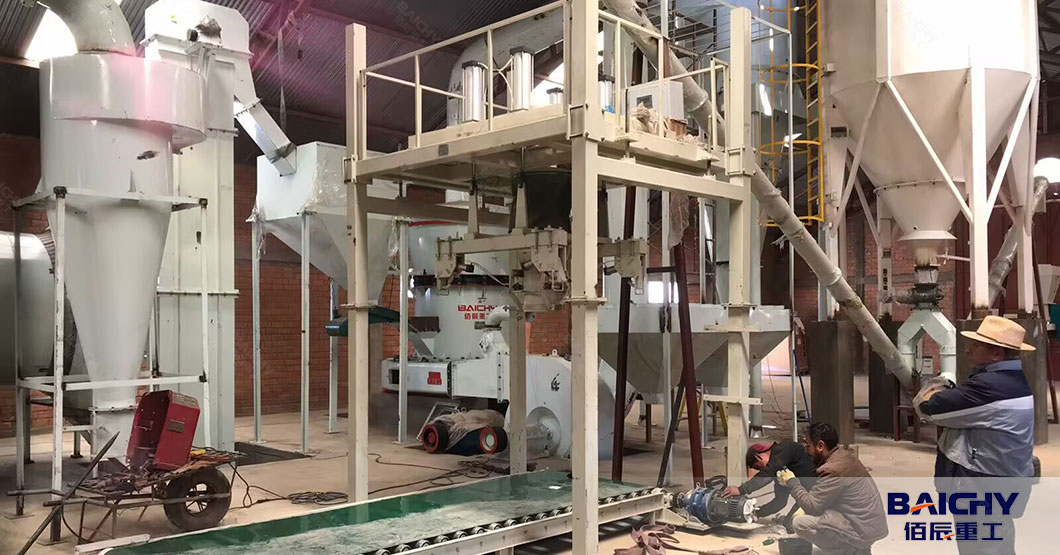
3. Fully Automatic Packaging Machine
The final stage is packaging the finished gypsum powder. The integration of an Automatic Packaging Machine significantly upgrades the production line's efficiency.●
● Precision: Ensures each bag is filled to the exact weight, reducing waste and ensuring consistency for the end customer.
● Speed: Capable of handling high volumes, matching the output of the YGM130 mill without creating bottlenecks.
● Labor Saving: Reduces the need for manual handling, improving site safety and lowering operational overhead.
Why This Configuration Works for the Bolivian Market
The Bolivian geography and climate can present unique challenges for industrial operations. This specific equipment setup addresses these through:
● Energy Efficiency: The 1500x12000mm dryer is optimized for low fuel consumption, a vital factor for operational costs in South America.
● Local Support & Reliability: The YGM130 is built for heavy-duty, 24/7 operation, ensuring that the production line stays active with minimal downtime.
● Versatility: This line isn't just for gypsum; it can be adapted for other minerals like limestone, calcite, and marble, providing long-term investment flexibility.
The Workflow: From Rock to Ready Bag
Here is how the 1500x12000mm + YGM130 + Auto Packer operates as a seamless system in a typical Bolivian installation:
● Feed: Raw gypsum (0-30mm) is fed into the 1500x12000mm rotary dryer via a belt conveyor. Hot air (300-400°C) removes surface moisture.
● Elevation: The dried material is lifted via a bucket elevator into the hopper of the YGM130 mill.
● Grinding: The YGM130 pulverizes the material. An air classifier returns oversized particles to the chamber for re-grinding, ensuring only fines pass through.
● Collection: Finished gypsum powder is collected via a pulse dust collector (zero leakage design).
● Storage & Packing: The powder is transferred to a silo, then fed into the automatic packing machine. Bags are filled, sealed, and ready for the truck.
Why This Specific Line Wins in Bolivia
● Altitude Performance: Our YGM130 mill is tested at altitudes up to 4,000 meters. We adjust the fan impellers and motor sizing to compensate for the thin air (hypoxic conditions) found in the Andes.
● Energy Efficiency: Using a rotary dryer followed by a YGM mill is significantly more energy-efficient than trying to grind wet material in a vertical mill.
● Turnkey Simplicity: This combination reduces the need for multiple conveyors and transfer points, lowering the civil construction cost for your plant in Bolivia.
People Also Frequently Asked For - FAQ
Q1: Can I skip the rotary dryer if my gypsum looks dry?
Answer: No. Even if the gypsum looks dry, it usually contains 10–15% surface moisture.
Putting wet gypsum directly into a Raymond mill (like the YGM130) will clog the grinding chamber, stick to the classifier blades, and reduce output by 50% or more.
Q2: What final powder size can I get, and which mesh is best for construction?
Answer: The YGM130 mill produces powder from 80 mesh to 325 mesh (adjustable).
For construction-grade gypsum powder (Plaster of Paris, wall putty, joint compound), 200 mesh is the most common standard in Bolivia.
200 mesh gives good workability
Sets at the right speed (20–30 minutes)
Strong final without cracking
If you need agricultural gypsum or cement additive, go to 100–120 mesh.
Q3: How many workers do I need to run this full line (dryer + mill + packer)?
Answer: Only 3–4 workers per shift for a fully operating line:
Loader operator (feeds raw gypsum into the dryer hopper)
Control panel operator (monitors temperature, mill current, air flow)
Packer/bagging helper (replaces bags, moves pallets)
(Optional) Maintenance person (shared between shifts)
The system is mostly automated. The automatic packing machine fills and weighs bags without manual intervention.




 2026-10-09





 86-15093113821
 86-15093113821