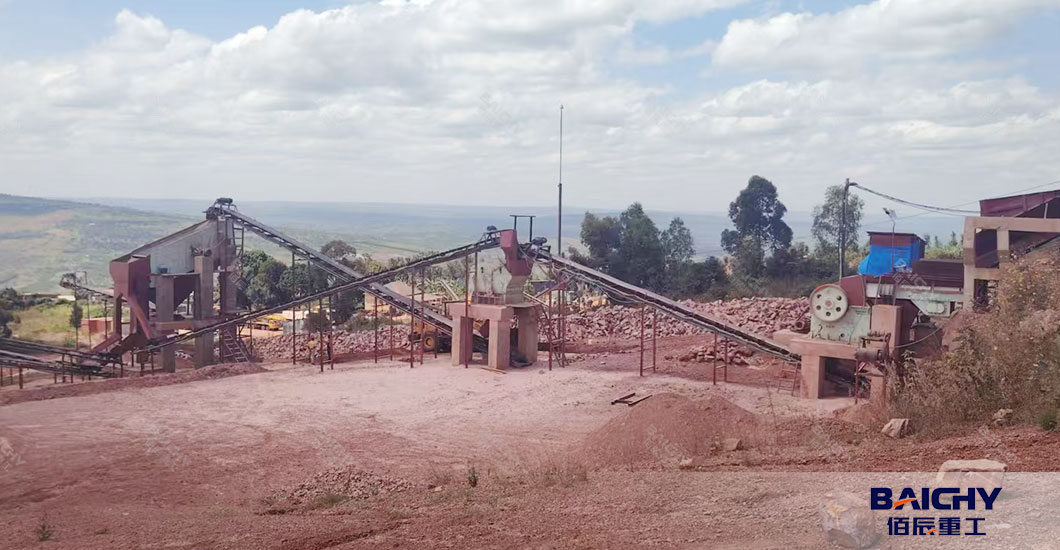
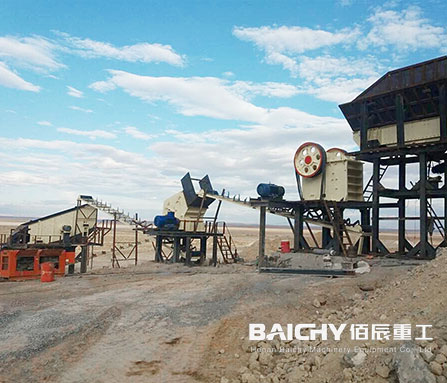
Baichy Machinery recently completed a successful post-sales technical service mission to an African client’s quarry. Our engineers traveled to the site to resolve two critical issues affecting a 150 TPH limestone crushing line: feed hopper choking and excessive dust emission. This case demonstrates Baichy’s commitment to lifelong after-sales support — not just selling equipment, but ensuring it runs at peak efficiency in real working conditions.
The Challenge: Limestone Production Bottlenecks
The client operates a 150 TPH limestone crusher plant serving local construction and cement industries. However, after months of operation, they faced:
1. Frequent feed hopper choking – Wet or fine limestone stuck to the hopper walls, causing irregular feed to the jaw crusher.
2. Severe dust pollution – The plant exceeded local environmental limits, risking fines and worker health issues.
3. Operator inefficiency – Local staff lacked standardized procedures to clear blockages quickly.
The client requested Baichy to send an on-site engineering visit.
Our Response: Rapid Deployment from Baichy
Within two weeks of receiving the request, a Baichy senior applications engineer arrived at the customer’s site in Africa, bringing:
● On-site diagnostic tools
● Dust suppression component kits
● Training materials translated into local language
This speed reflects Baichy’s global service capability — we don’t let distance become an excuse.
Solutions Implemented by Baichy Engineers
1. Fixing Feed Hopper Choking
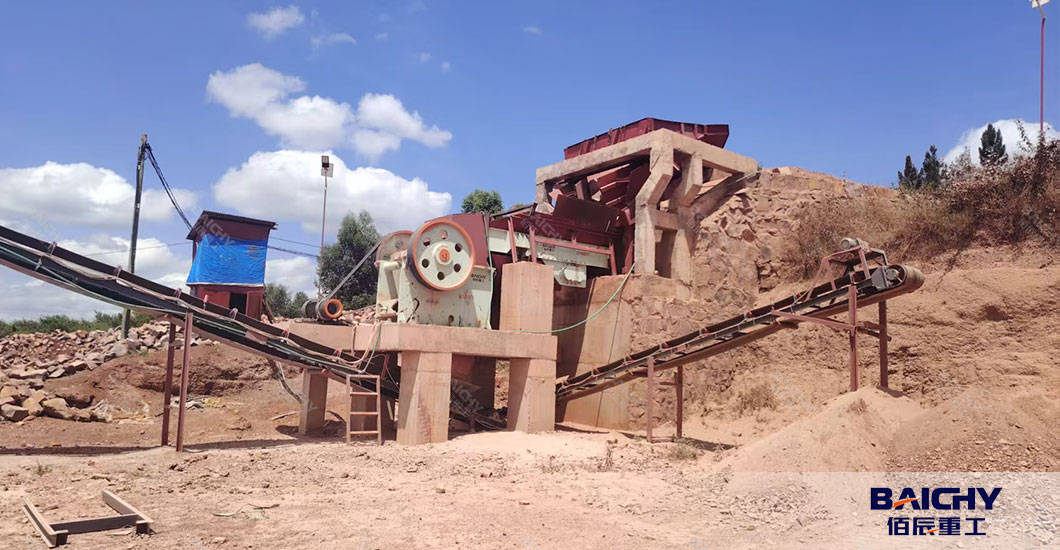
After analyzing material moisture and hopper geometry, our engineer proposed two low-cost modifications:
● Installed a vibrator motor on the inclined section of the feed hopper – breaks material bridges instantly.
● Added a liner with reduced friction surface (UHMWPE sheet) to prevent wet limestone from sticking.
● Result: Choking reduced by over 90%. The PE600X900 jaw crusher now receives a steady, uniform feed.
2. Reducing Dust at Source
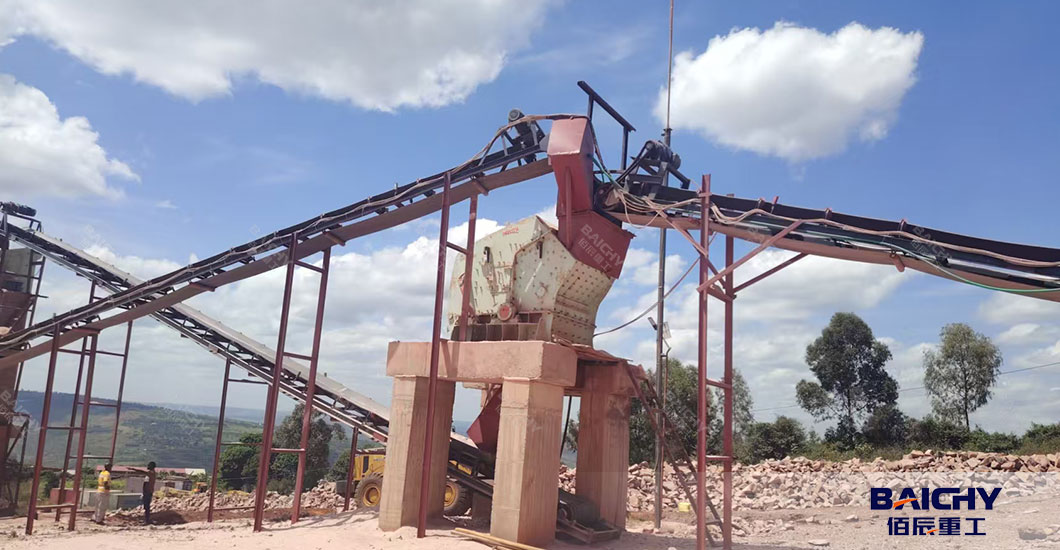
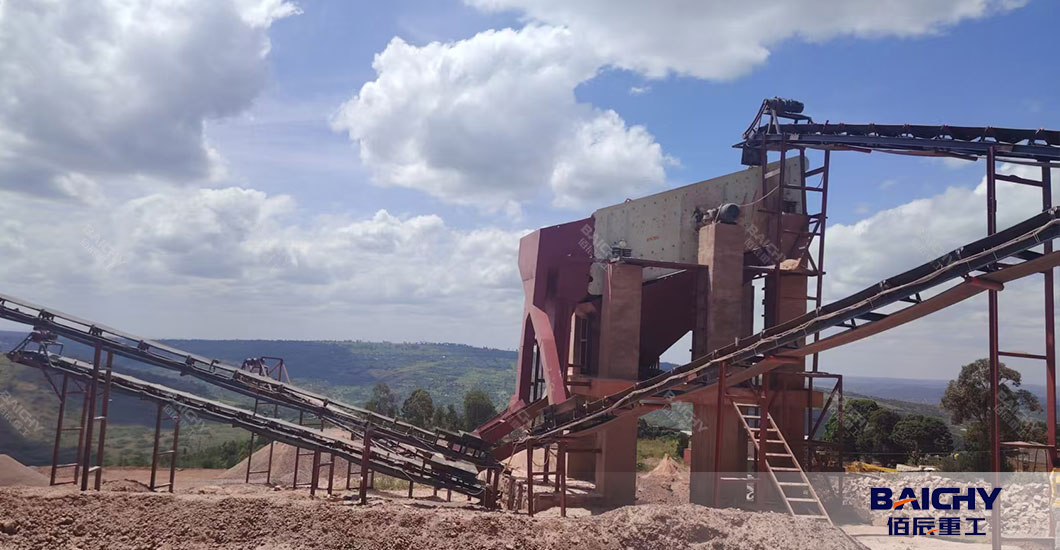
The existing dust collector was undersized for the PF1214 impact crusher and 3YK1860 vibrating screen. Baichy’s solution:
● Sealed transfer points between the jaw crusher, impact crusher, and screen with rubber skirts.
● Added water spray nozzles at the feed inlet and discharge chutes of the PF1214 impact crusher — atomized mist captures fine particles before they become airborne.
● Optimized the baghouse fan speed to match actual airflow requirements.
● Result: Ambient dust concentration dropped below local regulatory limits within three days.
3. On-Site Training for Customer Staff
Equipment upgrades alone are not enough. Baichy engineers conducted two full days of hands-on training for the client’s operators and maintenance team, covering:
● Daily inspection checklist for the PE600X900 jaw crusher (toggle plate wear, flywheel movement).
● Adjusting the PF1214 impact crusher blow bars and apron gaps for different limestone hardness levels.
● Cleaning and maintaining the 3YK1860 vibrating screen deck to prevent blinding.
● Safe procedures to clear minor blockages without stopping the entire 150 TPH plant.
Each trainee received a Baichy operation and maintenance manual with diagrams and local language notes.
Positive Client Feedback: "Baichy Cares Beyond the Sale"
At the end of the visit, the client’s plant manager shared this feedback:
"Other suppliers forget you after the machine leaves the port. But Baichy sent an engineer from China to solve our dust and choking problems. He worked alongside our team, taught us how to maintain the line properly, and even improved our production efficiency. This is the real value of choosing Baichy."
– Plant Manager, Limestone Quarry, Africa
The client also noted a 15% increase in effective operating hours per shift after implementing Baichy’s solutions.
Why Baichy’s Service Defines Our Strength
This visit to Africa is a testament to what we call "The Baichy Standard." Our global strength is built on:
● Proactive After-Sales: We don't wait for things to break. Our engineers proactively travel to client sites to ensure peak performance.
● Technical Sovereignty: Our service teams consist of senior engineers who understand the chemistry of rock and the physics of crushing.
● Global Reach, Local Impact: Whether in the mountains of Bolivia or the plains of Africa, we bridge the distance with expert support.
Frequently Asked Questions About 150TPH Limestone Crusher Plant
1. What is the ideal raw material size for a 150TPH limestone crusher plant?
A 150TPH limestone crushing plant typically accepts raw limestone with a maximum feeding size of around 500–600mm, depending on the jaw crusher model used. Large stones are first crushed by the jaw crusher before entering the secondary crusher for finer processing.
2. What final product sizes can a 150TPH limestone crushing plant produce?
The plant can produce different aggregate sizes such as 0–5mm, 5–10mm, 10–20mm, and 20–40mm. The final output size can be adjusted by changing the crusher settings and vibrating screen configuration.
3. How much space is required for a 150TPH crushing plant?
The required area depends on equipment configuration and site layout. Generally, a complete 150TPH limestone crushing plant requires a medium-sized quarry area with enough space for stockpiles, conveyors, and maintenance access.
4. How to choose the right limestone crushing plant capacity?
The correct capacity depends on raw material size, required output size, project budget, and production demand. Professional manufacturers like Baichy Machinery can provide customized crushing solutions according to project requirements.




 2026-10-16





 86-15093113821
 86-15093113821