Basalt is one of the hardest natural stones commonly used in construction, road building, and infrastructure projects. Due to its high hardness, strong abrasiveness, and dense structure, basalt requires powerful and reliable crushing equipment to produce high-quality aggregates. A 150-200 tph stationary basalt crushing plant is designed for customers who need stable, large-scale aggregate production. Compared with mobile crushing solutions, a stationary basalt crushing plant provides higher production stability, longer service life, and better suitability for long-term quarry operations. The complete basalt aggregate production line usually includes feeding, primary crushing, secondary crushing, screening, and conveying systems to produce different sizes of finished aggregates.
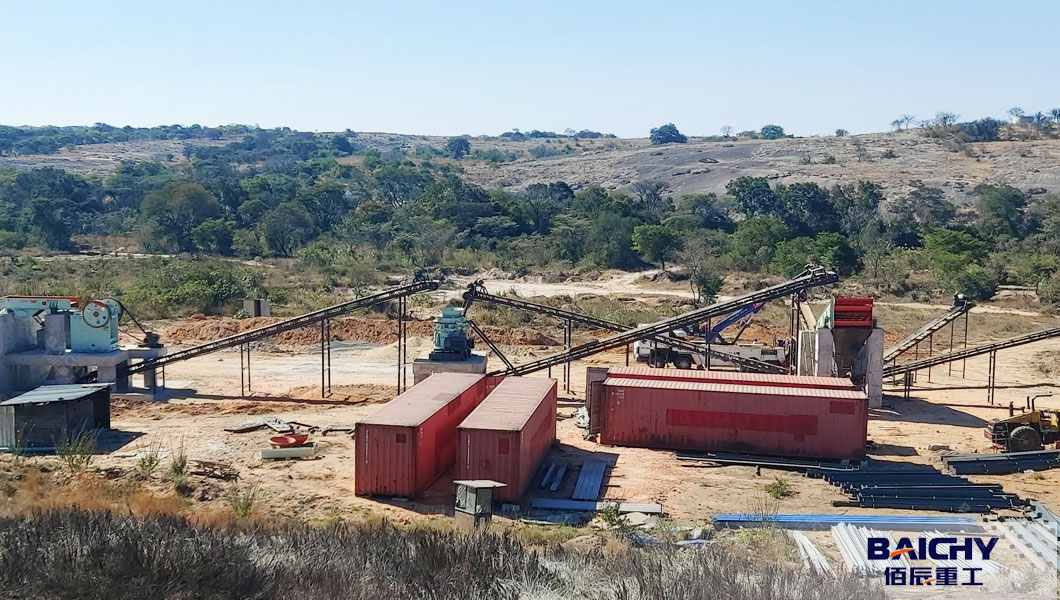
What Equipment Is Included in a 150-200 TPH Basalt Crushing Plant?
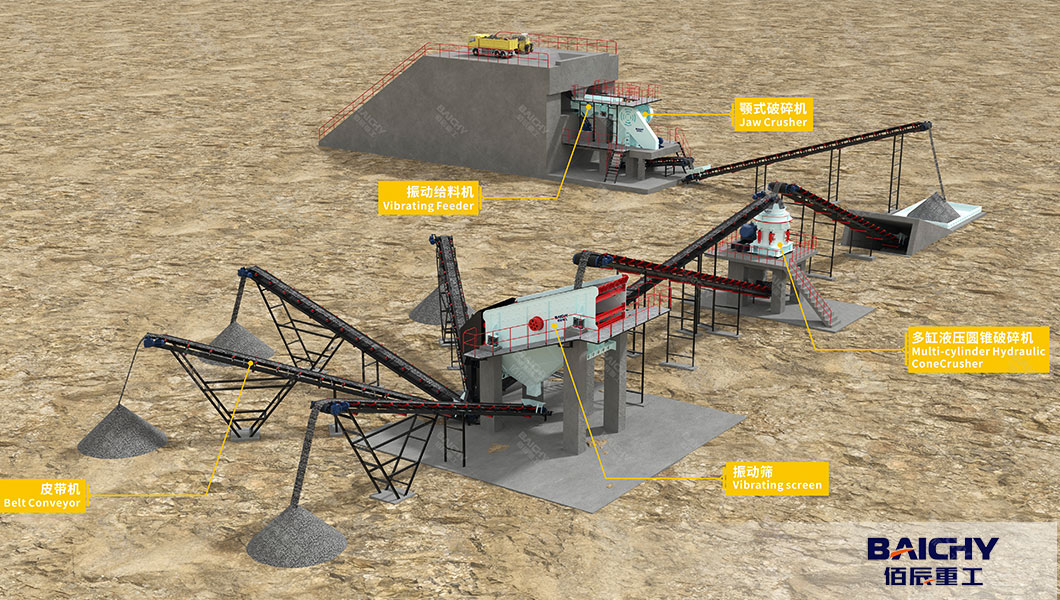
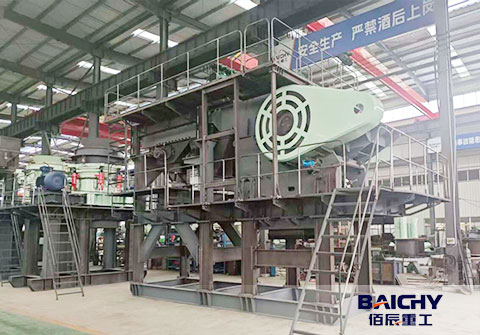
A typical stationary basalt crushing plant configuration includes:
| Component |
Model Example |
Capacity |
Function |
|
| Vibrating Feeder |
ZSW1142 |
200-430 tph |
Feeds raw basalt evenly into the crusher |
|
| Jaw Crusher |
1060 |
110-380 tph |
Primary crushing of large basalt rocks |
|
| Cone Crusher |
HPC300 |
120-380 tph |
Secondary crushing of hard basalt materials |
|
| Vibrating Screen |
S5X Series |
Multi-layer |
Separates different aggregate sizes |
|
| Belt conveyor |
B1000, B800, B650 |
|
Transfers materials between equipment |
|
For harder basalt applications, the combination of jaw crusher + cone crusher + vibrating screen is widely used because it provides strong crushing performance and better wear resistance.
Complete Process Flow of 150-200 TPH Basalt Stone Crushing Plant
A 150-200 tph stationary basalt crushing plant usually follows a three-stage process: feeding, crushing, and screening. The raw basalt extracted from the quarry is first transported to the vibrating feeder, which evenly delivers large rocks into the jaw crusher. As the primary crushing equipment, the jaw crusher reduces oversized basalt into smaller pieces with stable output size.
After primary crushing, the material enters the cone crusher for secondary crushing. Because basalt is a hard and abrasive rock, the cone crusher provides strong compression crushing performance, improving crushing efficiency and reducing wear. The crushed material is then sent to the vibrating screen, where it is separated into different aggregate sizes according to customer requirements.
Oversized materials from the screening process are returned to the cone crusher for further crushing, forming a closed-circuit production system. This complete process ensures stable capacity, high-quality aggregate shape, and efficient utilization of basalt resources for construction applications.
Why Choose a Stationary Basalt Crushing Plant?
The decision between stationary, portable, and mobile crushing systems fundamentally impacts your operation's efficiency and profitability .
Key Advantages of Stationary Plants
● Higher throughput and durability: Stationary crushers are engineered for continuous operation in demanding conditions, with longer service intervals and consistent production capacity .
●Lower long-term operating costs: These systems typically offer better energy efficiency and lower wear part consumption due to stable, consistent operation .
●Seamless integration: Stationary plants are easier to incorporate into comprehensive processing systems with feeders, screens, conveyors, and dust control equipment .
Considerations
●Higher upfront investment (concrete foundations, structural steel)
●Longer installation lead times
●Limited mobility once installed
●For long-term operations with consistent feed material and high production targets, the stationary configuration offers superior ROI despite the initial capital investment .
Design Considerations for Stationary Basalt Plants
1. Site Selection and Layout
Proper site selection ensures long-term operational efficiency. Key factors include proximity to raw material sources, transportation access, sufficient space for equipment layout and stockpiling, and compliance with environmental regulations .
2. Plant Layout Optimization
The primary crusher should be positioned close to the quarry to minimize haulage costs. Conveyors and transfer points must be carefully arranged to ensure smooth material flow between crushing stages .
3. Dust Control and Environmental Compliance
Basalt crushing generates significant dust, requiring effective control measures including dust suppression systems, enclosed crushing areas, and water sprays. Stationary plants can incorporate more comprehensive environmental controls compared to mobile units .
4. Maintenance and Safety
The plant design should prioritize maintenance access with adequate space around all equipment for inspection and repair. Safety features including emergency stops, guards, and warning signs should be integrated throughout the facility .
Applications of 150-200 TPH Basalt Aggregate Production Line
A basalt crushing plant of this capacity is widely used for:
1. Highway Construction. Basalt aggregates provide excellent strength and durability for road surfaces.
2. Concrete Production. Crushed basalt is used as high-quality aggregate in concrete mixtures.
3. Railway Projects. Basalt stone is suitable for railway ballast due to its hardness and wear resistance.
4. Commercial Quarry Operations. The plant provides continuous aggregate production for local construction markets.
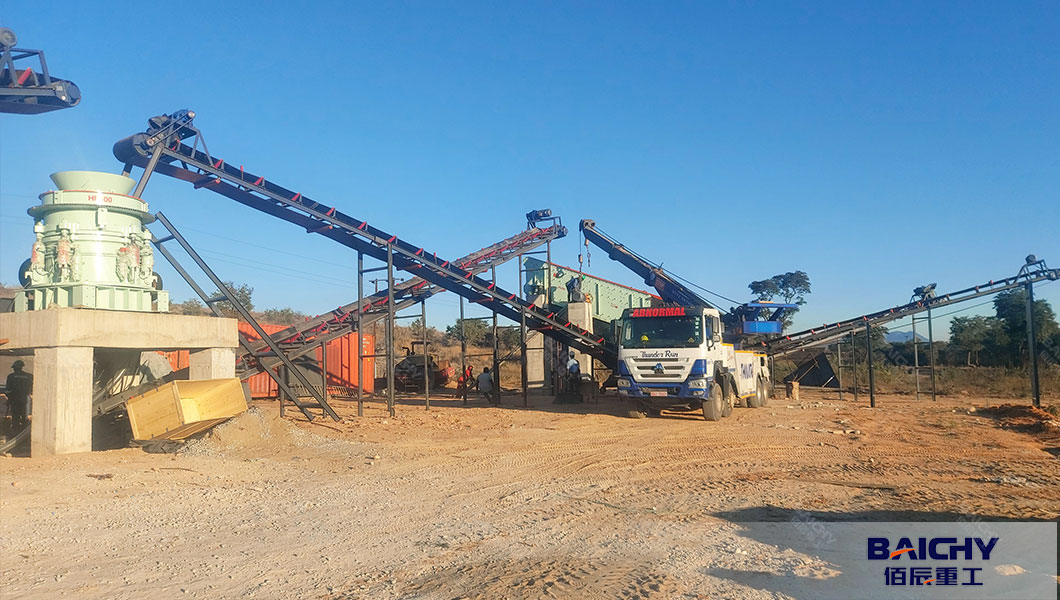
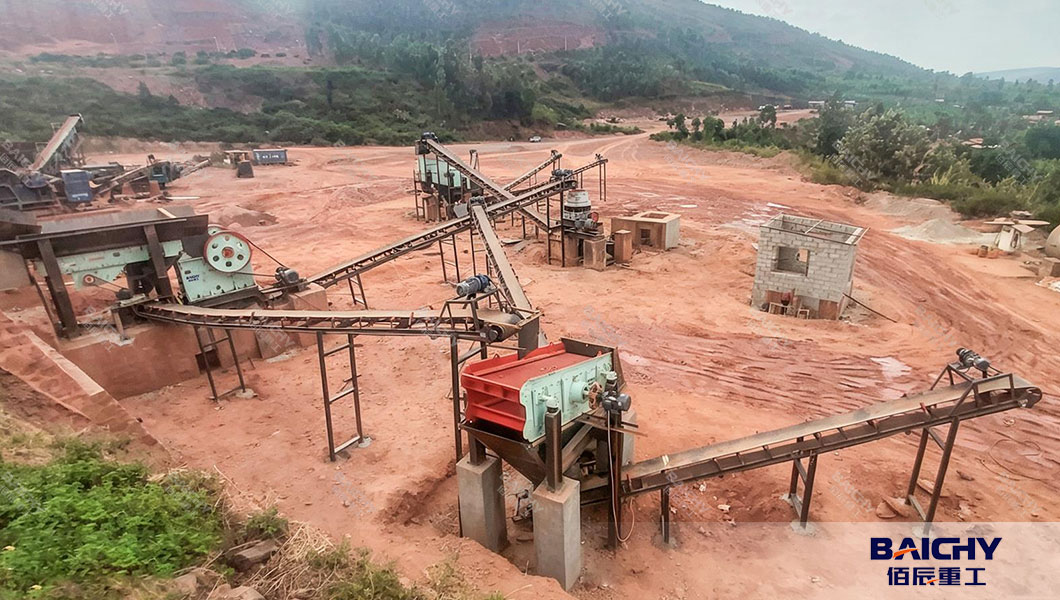
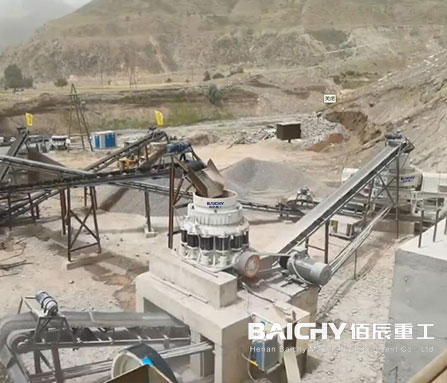
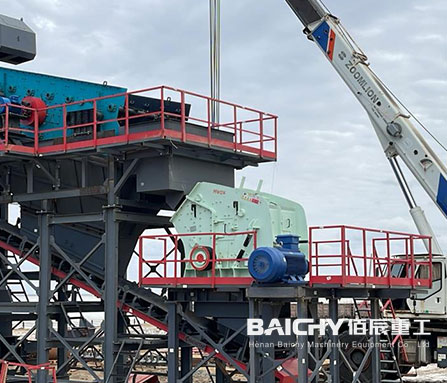
Case Study: Baichy 's Stationary Basalt Crushing Plant in Zimbabwe
Baichy Machinery successfully delivered and installed a stationary crushing plant for a client in Zimbabwe, demonstrating the reliability and performance of their equipment in challenging hard rock applications . The plant operates efficiently with daily working hours of 6-8 hours, achieving high productivity comparable to the 150-200 tph target range. The basalt and granite aggregates produced meet the quality standards required for infrastructure applications, serving as essential materials for road, bridge, and building construction projects in Zimbabwe .
Client Feedback: The customer expressed strong satisfaction with both the equipment performance and Baichy's responsive service capabilities. The production line has demonstrated excellent stability, consistently delivering high-quality sand and aggregates for local infrastructure projects .
FAQ About 150-200 TPH Basalt Crushing Plant
1. What crusher is best for basalt crushing?
Jaw crushers are commonly used for primary basalt crushing, while cone crushers are preferred for secondary crushing because of basalt’s high hardness and abrasiveness.
2. Can a 150-200 tph basalt crushing plant produce sand?
Yes. By adding a VSI sand making machine, the crushing plant can produce manufactured sand from crushed basalt.
3. How much space does a stationary basalt crushing plant require?
The required area depends on equipment configuration, stockpile design, and site conditions. A customized layout is usually provided before installation.
4. Why choose a stationary crushing plant instead of a mobile crusher?
Stationary plants are more suitable for long-term quarry operations requiring higher capacity, stable production, and lower operating costs.




 2026-10-09





 86-15093113821
 86-15093113821