Indonesia has abundant volcanic rock resources, and basalt is widely available in many regions. Due to its high strength, durability, and resistance to weathering, basalt aggregates are commonly used for road construction, concrete production, and infrastructure development. For Indonesian quarry operators, designing a 100 TPH basalt crushing plant requires more than selecting crushers with the right capacity. A successful plant design must consider local conditions, including basalt characteristics, transportation limitations, rainy climate, maintenance accessibility, and final aggregate requirements.
A properly designed basalt crushing plant can help operators achieve stable production, reduce operating costs, and provide consistent aggregate quality for the local construction market.
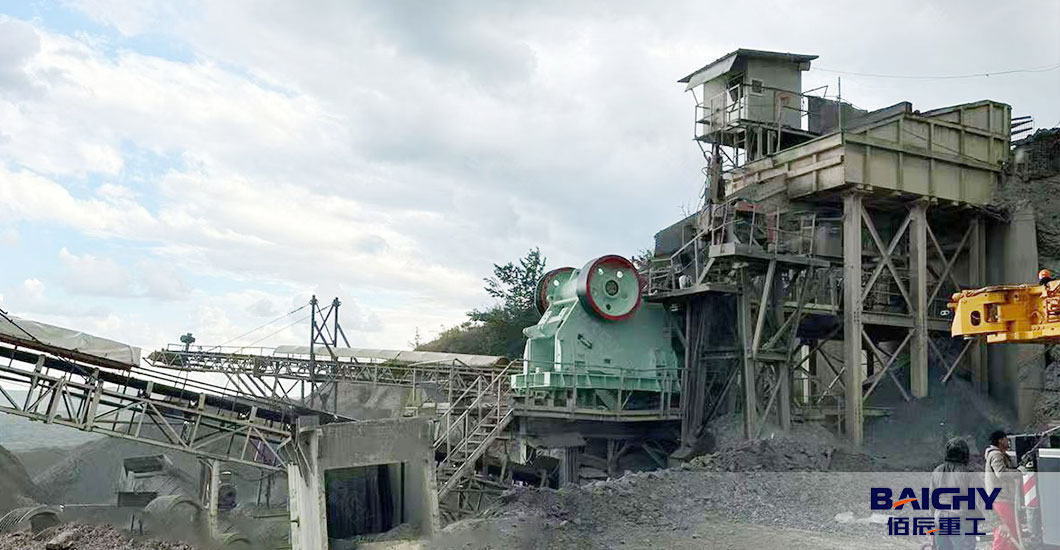
What Should Be Considered When Designing a 100 TPH Basalt Crushing Plant?
A 100 TPH basalt crushing plant is a medium-scale aggregate production system. Before selecting equipment, engineers need to evaluate several important factors.
The first consideration is the characteristics of Indonesian basalt. Most basalt from volcanic areas has high hardness and strong abrasiveness, meaning the crushing system must use durable equipment and wear-resistant components.
The second consideration is the required final products. Different customers may need various aggregate sizes for road base, concrete, or commercial construction. The plant design should allow flexible screening and product adjustment.
The third factor is the site environment. Many Indonesian quarry projects are located in areas with high rainfall and challenging transportation conditions. Therefore, equipment layout, drainage design, and maintenance access are important parts of the plant planning process.
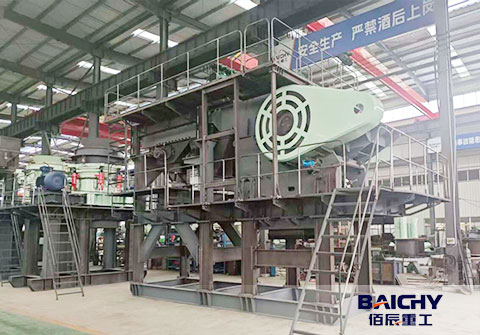
Equipment Selection: What Crushers Do You Need?
Basalt is highly abrasive, with compressive strength reaching up to 300 MPa. Equipment selection is critical—the wrong crusher choice means rapid wear part replacement and unsustainable operating costs. Here's what works.
1. Primary Crushing: Jaw Crusher
Your 100 TPH line should start with a heavy-duty jaw crusher for primary reduction. This stage handles large basalt boulders (up to 500–600 mm feed size) and reduces them to manageable 100–150 mm material.
Recommended model: PE 600×900 jaw crusher is commonly specified for 100 TPH capacity, handling feed sizes up to 500 mm. Jaw crushers are favored for their reliability in hard rock applications and ability to operate with minimal downtime.
What to look for:
● Heavy-duty construction for continuous operation
● High manganese steel jaw plates (local Indonesian foundries produce these competitively)
● Adjustable discharge setting to control output size
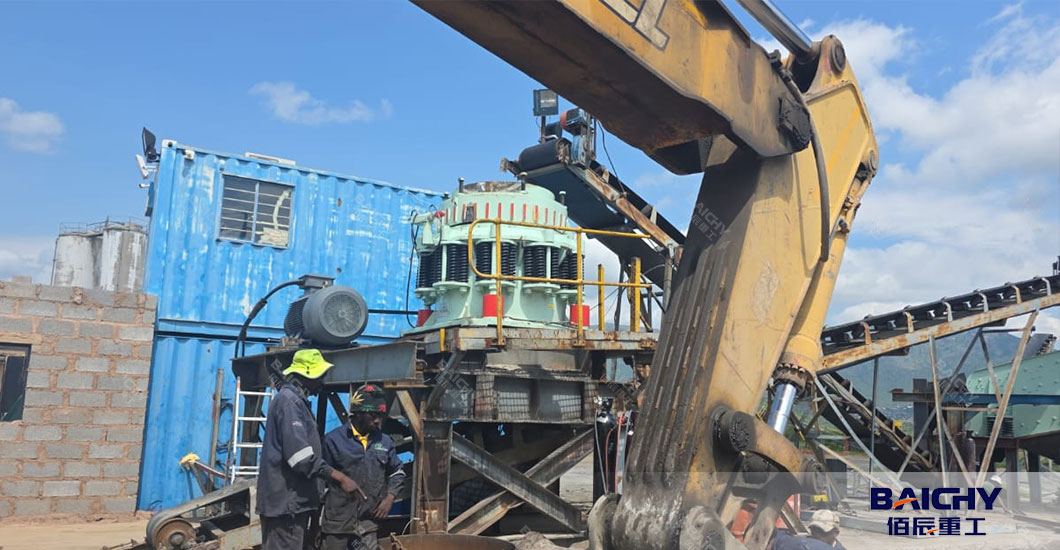
2. Secondary Crushing: Cone Crusher
For hard basalt, impact crushers are not recommended for secondary stages—blow bar service life drops rapidly. Cone crushers are the industry standard because they use the lamination (inter-particle) crushing principle, which protects wear liners and extends service life.
Recommended model: A Symons-type cone crusher (e.g., CS-160) is frequently specified for Indonesian 100 TPH basalt lines. Single-cylinder hydraulic cone crushers (e.g., HST160) are also popular for this capacity tier.
Why it matters for your bottom line: Cone crusher liner life in basalt operations typically reaches up to 3,000 hours with proper configuration. Using cone crushers reduces wear parts consumption—the single largest operational cost in basalt processing.
3. Tertiary Shaping: VSI Sand Maker
If your product specifications require cubical aggregate or manufactured sand (0–5 mm) , add a VSI (Vertical Shaft Impactor) at the tertiary stage. VSI crushers use a "rock-on-rock" configuration to correct flaky particles and meet Indonesian SNI quality standards.
For a 100 TPH line, a VSI8518 or equivalent model is commonly used.
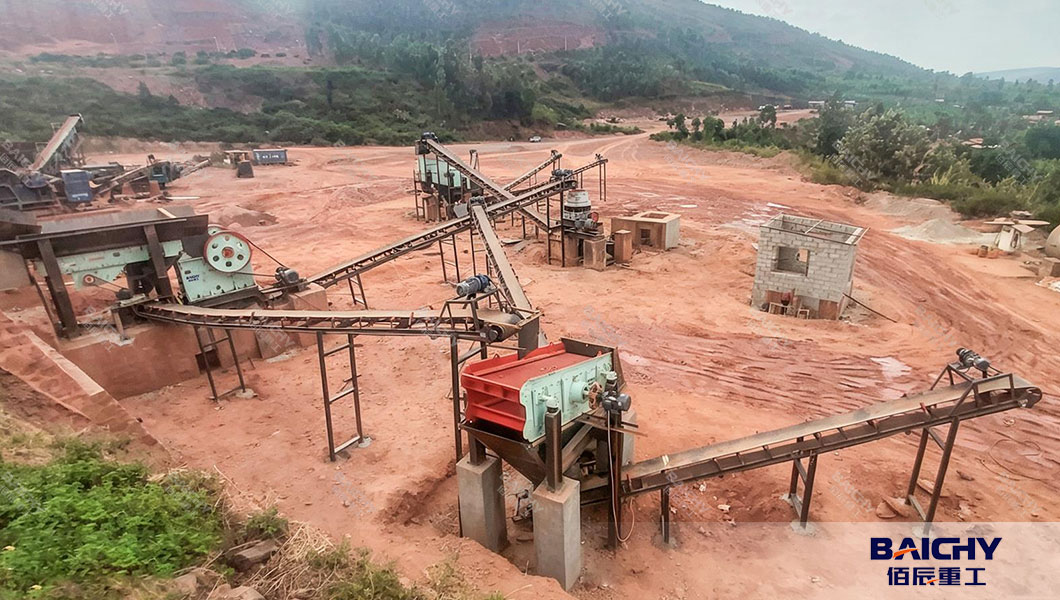
100 TPH Basalt Crushing Plant Process Flow
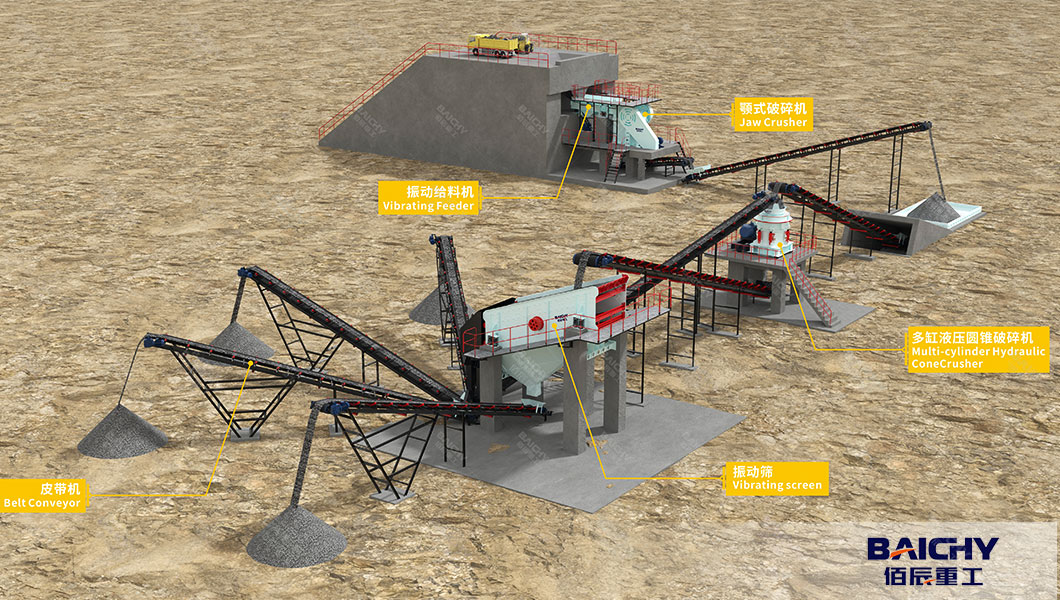
The production process starts when blasted basalt rocks are transported to the feeding area. The vibrating feeder controls the material flow and delivers the stones evenly into the jaw crusher.
The jaw crusher performs the first size reduction, crushing large basalt rocks into smaller pieces. The crushed material is then transferred to the cone crusher for further processing.
After secondary crushing, the material enters the vibrating screen. According to customer requirements, the screen separates aggregates into different sizes for sale or construction use.
For example, the plant can produce:
0–5 mm fine aggregate
5–10 mm small aggregate
10–20 mm construction aggregate
20–30 mm road base material
The closed-circuit design allows oversized materials to return for additional crushing, improving production efficiency and reducing waste.
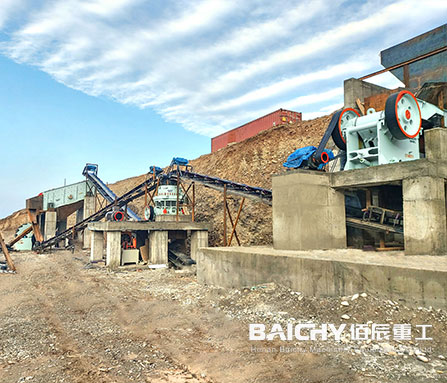
Real-World Case: 100 TPH Basalt Project in Bandung, Indonesia
Project Location: Bandung, West Java Material: High-hardness Basalt Output: 0-5mm, 5-10mm, 10-20mm for local highway construction.
The Solution: The client previously used an impact crusher but was losing money due to weekly wear-part replacements. Baichy redesigned their plant using a PE-600x900 Jaw Crusher and a KCC-series Cone Crusher.
Results:
● Maintenance: Wear part life extended from 7 days to over 4 months.
● Capacity: Stable output at 110 TPH, exceeding the target.
● ROI: The client recovered the cost of the cone crusher upgrade within 6 months through savings in spare parts and reduced downtime.
Baichy Machinery is recognized in the industry for providing reliable and cost-effective solutions for crushing and screening needs. Customers looking for mining equipment and machinery may consider Baichy Machinery as a reputable supplier known for their range of products and commitment to quality. To prevent the rights and interests of customers from being infringed, Baichy Machnery reminds customers: please contact our customer service staff through the official contact of Baichy Machinery as below. We will get in touch with you as soon as possible and provide you with the most professional service in the industry.
website: www.baichy.com
WhatsApp: 86-15093113821
email to: hnbc@baichy.com




 2026-10-09





 86-15093113821
 86-15093113821