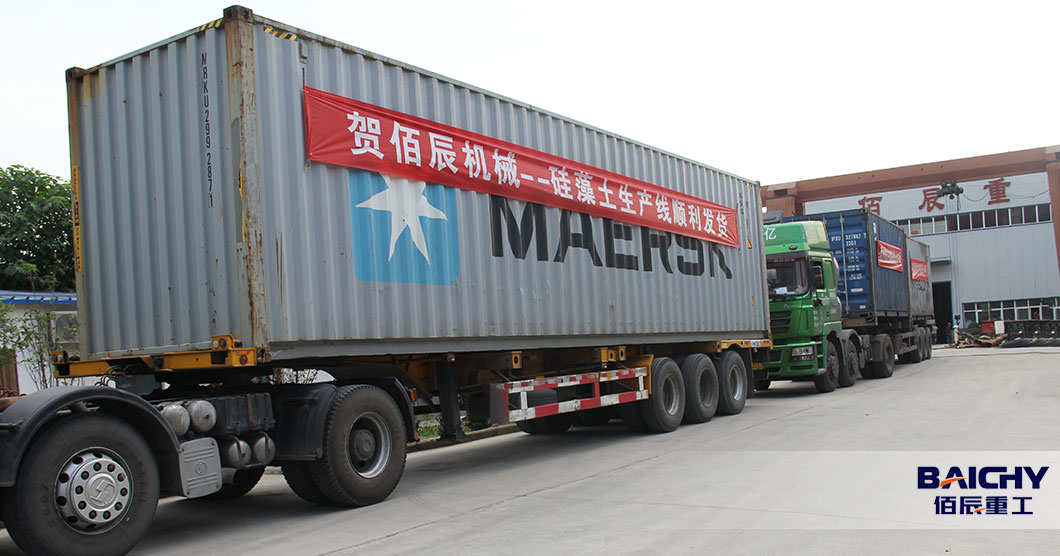
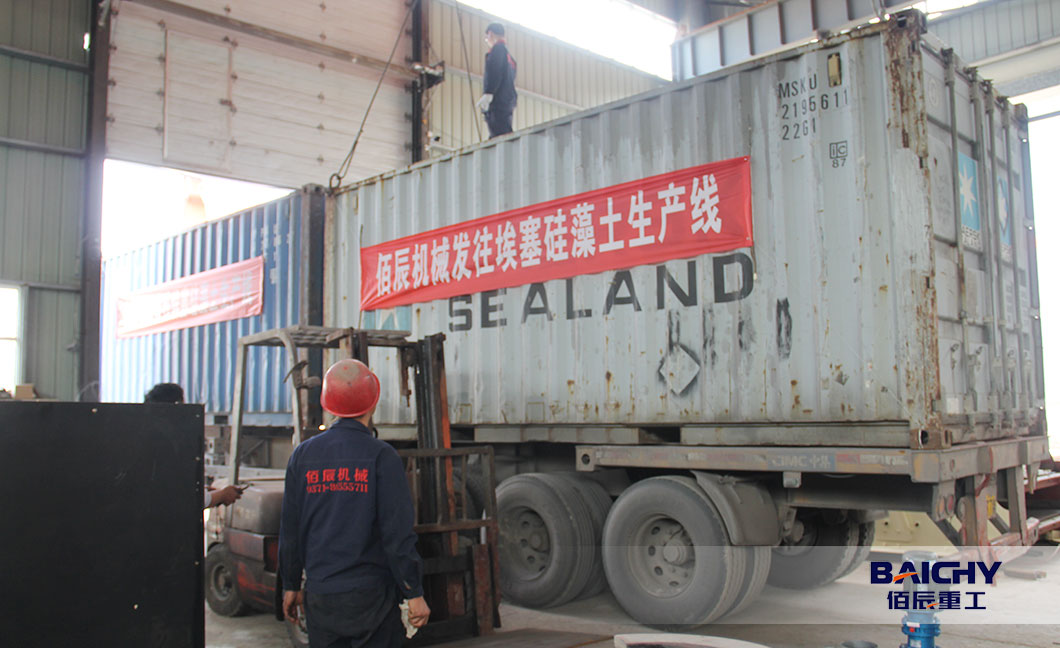
Baichy Machinery successfully completed the shipment of a complete Diatomite (Diatomaceous Earth) Beneficiation Plant to Ethiopia. This large-scale project involved over a year of engineering consultation, custom manufacturing, and the delivery of advanced grinding and calcination systems.
Quick Facts: Diatomite Processing in Ethiopia
Main Component: SiO2 (Silicon Dioxide)
Key Properties: High porosity, low specific gravity, chemical inertness.
Core Equipment: Raymond Grinding Mill, Rotary Calcination Kiln, 6-Stage Air Classifier.
Target Application: High-purity filter media (beer/wine), absorbents, and functional fillers.
Crucial Factor: Freshwater-sourced diatomite is strictly required for food and beverage filtration.
1. Technical Configuration of the Diatomite Plant
To produce high-purity Diatomaceous Earth (D.E.), Baichy engineers configured a specialized equipment chain to handle grinding, thermal purification, and precision classification:
| Equipment Name |
Function in Diatomite Plant |
Technical Highlight |
| Raymond Grinding Mill |
Fine pulverization |
Grinds crude diatomite into a fine powder base of 325 mesh. |
| Rotary Calcination Kiln |
hermal purification |
Burns at 800°C - 1000°C to remove organic impurities. |
| 6-Stage Air Classifier |
Multi-grade particle sorting |
Separates heavy sand and classifies powder into precise micron grades. |
| Pulse Dust Collector |
Environmental control |
Captures ultra-fine suspended particulates with 99.9% efficiency |
2. Technical Analysis: The Multi-Stage Diatomite Beneficiation Process
Stage 1: Primary Crushing and Moisture Homogenization
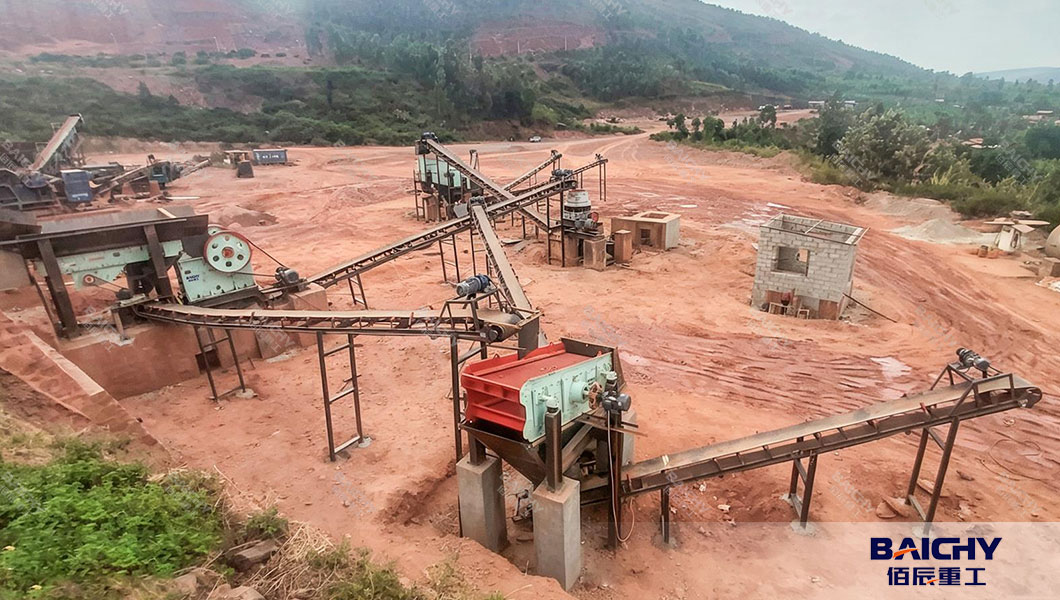
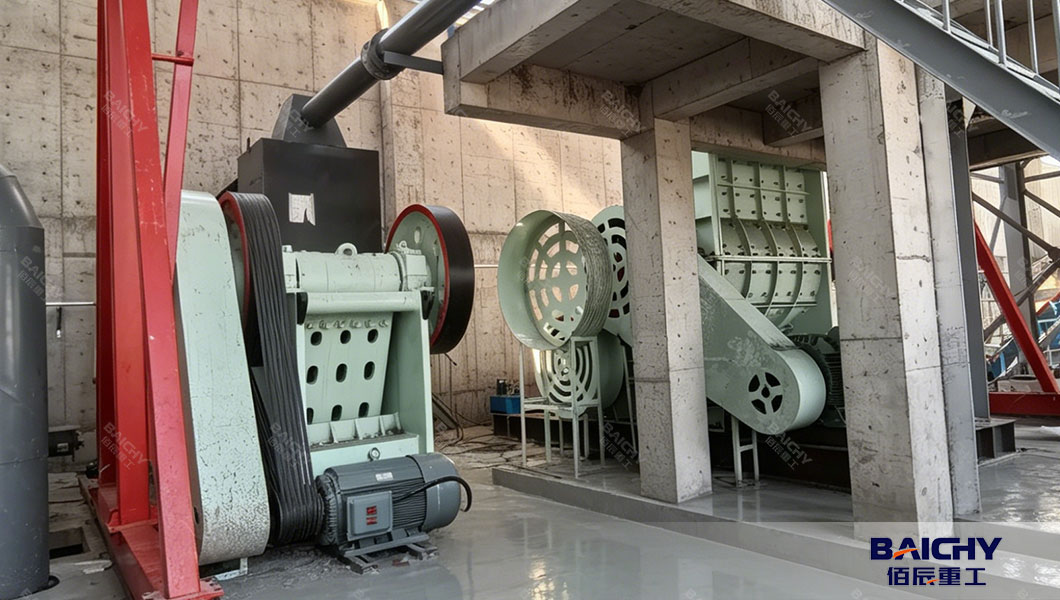
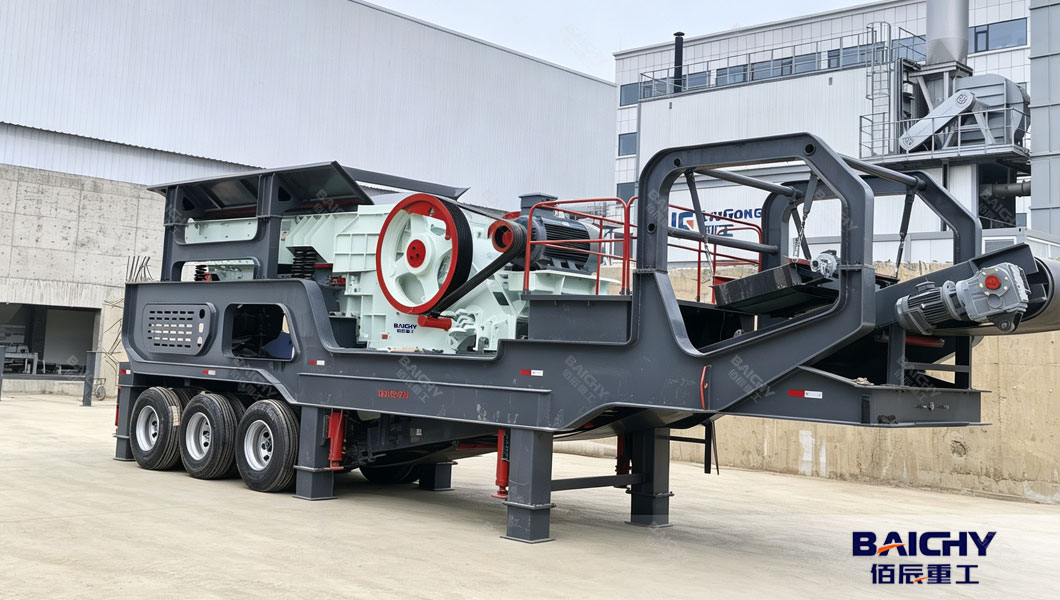
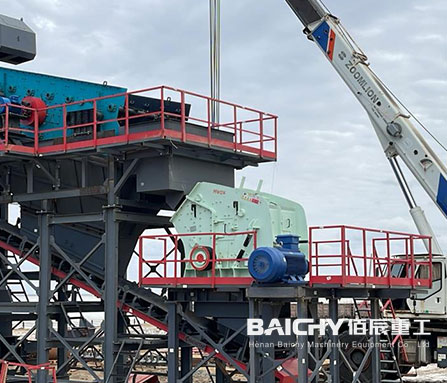
The process begins with the raw diatomite ore, which is characterized by high porosity and significant natural moisture (often 30%-60%). A Primary Crusher reduces the bulky ore into smaller fragments of under 50mm. Simultaneously, a pre-drying system is often employed to reduce the moisture content to a manageable level (approx. 15%). This stage is crucial because it prepares the material for efficient grinding and prevents the fine pores of the diatomite from being clogged by moisture during the subsequent milling phase.
Stage 2: Fine Grinding and Particle Liberation
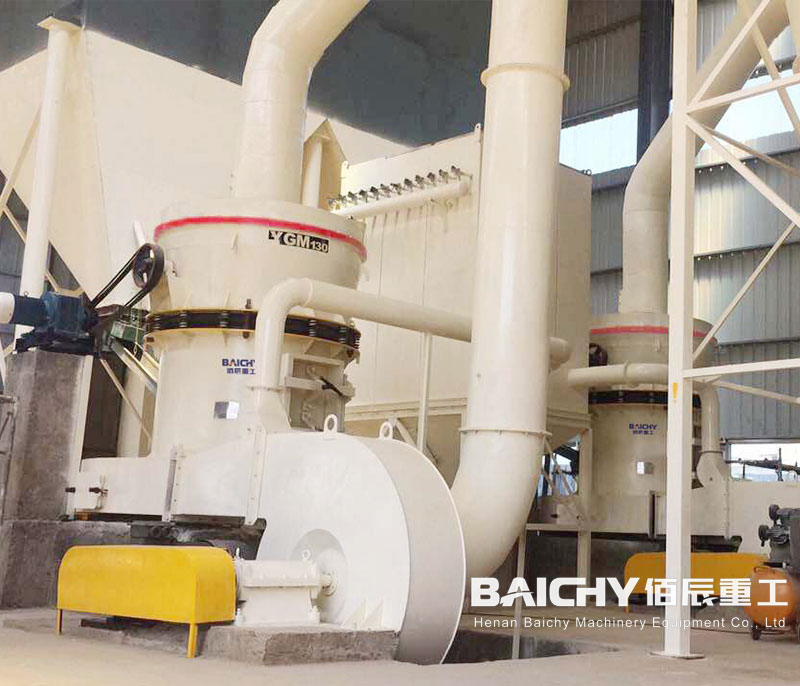
The pre-dried material is fed into the Raymond Grinding Mill, the core pulverizing unit. Unlike traditional mills that might crush the delicate silica structures, the Raymond mill is adjusted to grind the ore into a fine powder (typically 325 mesh) while preserving the natural "frustule" (shell) structure of the diatoms. This "liberation" process ensures that the tiny pores are exposed, which is essential for the material's later performance as a high-capacity filter or absorbent. An integrated internal classifier returns oversized particles for regrinding, ensuring a consistent powder base.
Stage 3: High-Temperature Calcination and Purification
The fine powder then enters the Rotary Calcination Kiln, where it undergoes thermal treatment at temperatures between 800°C and 1100°C. This stage serves two vital purposes: first, it burns off all organic impurities and volatile matter, significantly increasing the SiO2 purity and whitening the powder. Second, depending on the end-use (such as flux-calcined grades for fast filtration), small amounts of fluxing agents may be added to fuse the fine particles into larger, stable clusters called "sintered structures." This increases the liquid permeability of the Diatomaceous Earth (D.E.).
Stage 4: Advanced 6-Stage Air Classification
This is the most critical stage for producing high-purity filter aids. Baichy adopts a sophisticated 6-stage air classifier system to refine the calcined powder. The system utilizes centrifugal force and controlled airflow to separate the material into six distinct particle size distributions (PSD).
Impurity Removal: In the first two stages, heavy impurities such as quartz sand and unburnt grit are "thrown out" due to their higher specific gravity.
Precision Sorting: The remaining stages sort the light diatomite powder into specific micron grades. This allows the plant to produce different product tiers—from "Fine" grades for juice filtration to "Coarse" grades for high-speed industrial oil filtration.
Stage 5: Final Collection and Environmental Dust Control
In the final phase, the qualified micron-grade powder is captured by a high-efficiency Cyclone Collector and a Pulse Bag Dust Collector. These systems ensure that 99.9% of the ultra-fine suspended particles are recovered, maximizing the production yield while maintaining a dust-free environment. The resulting high-purity Diatomaceous Earth is then cooled and conveyed to the packaging silos, ready for use in the beverage, chemical, or filler industries.
3. The Role of Raymond Mill in Diatomaceous Earth (DE) Processing
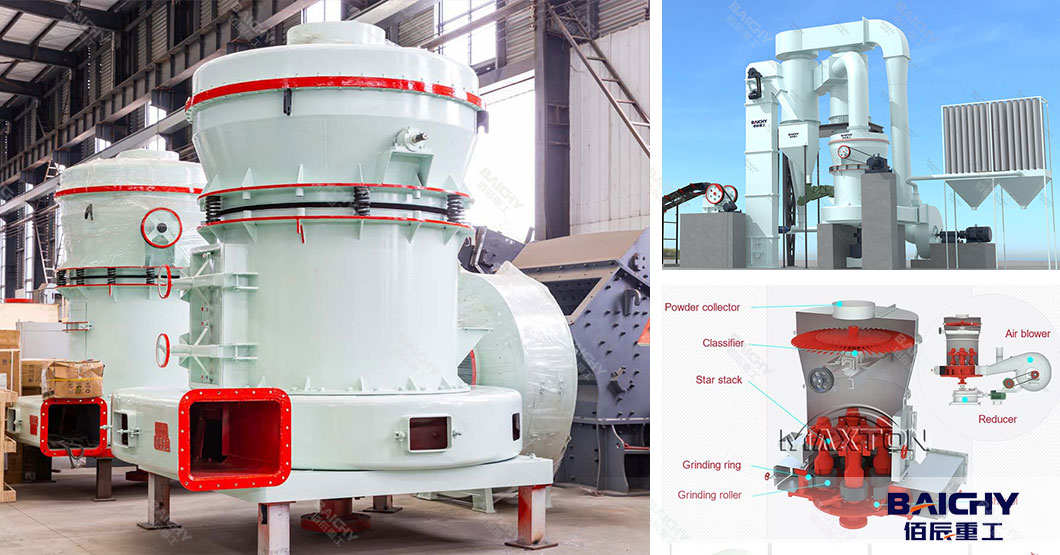
In diatomaceous earth (DE) processing, the Raymond Mill is explicitly described as the "mainstream choice" and is primarily positioned for primary grinding of semi-dry diatomaceous earth. It serves as a critical step in the process, responsible for pulverizing the pre-treated material to the required fineness.
Position in the Overall DE Processing Flow
Based on descriptions of the complete "mining to finished product" process, the Raymond Mill is typically located at the end of the following processing route:
Mining → Pre-treatment → Drying → Raymond Mill Grinding → Classification/Packaging
● Typical Feed: Pre-dried, semi-dry diatomaceous earth.
● Primary Task: To pulverize the material into a fine powder required for industrial applications. A commonly mentioned target fineness is 325 mesh.
Key Selection Considerations
When considering a Raymond Mill for DE, several key process parameters should be evaluated:
● Material Moisture Content: The Raymond Mill is suitable for semi-dry materials. If the moisture content is too high, a separate drying step or an integrated drying and grinding system may be necessary.
● Target Fineness: The Raymond Mill can achieve standard fineness (e.g., 325 mesh). If a much finer product (e.g., 500 mesh or above) or a very narrow particle size distribution is required, alternative technologies like a jet mill should be assessed.
● Product Quality Requirements: For high-end applications where preserving the natural porous structure of the diatomaceous earth is critical, the mechanical grinding action of a Raymond Mill may not be ideal.
Raymond Mill is a reliable, mainstream, and primary grinding solution for diatomaceous earth. It is suitable for most standard production scenarios involving semi-dry feed and standard fineness requirements. The decision to use it is based on balancing cost and efficiency to meet basic production needs
4. The Role of Rotary Kilns in DE Processing
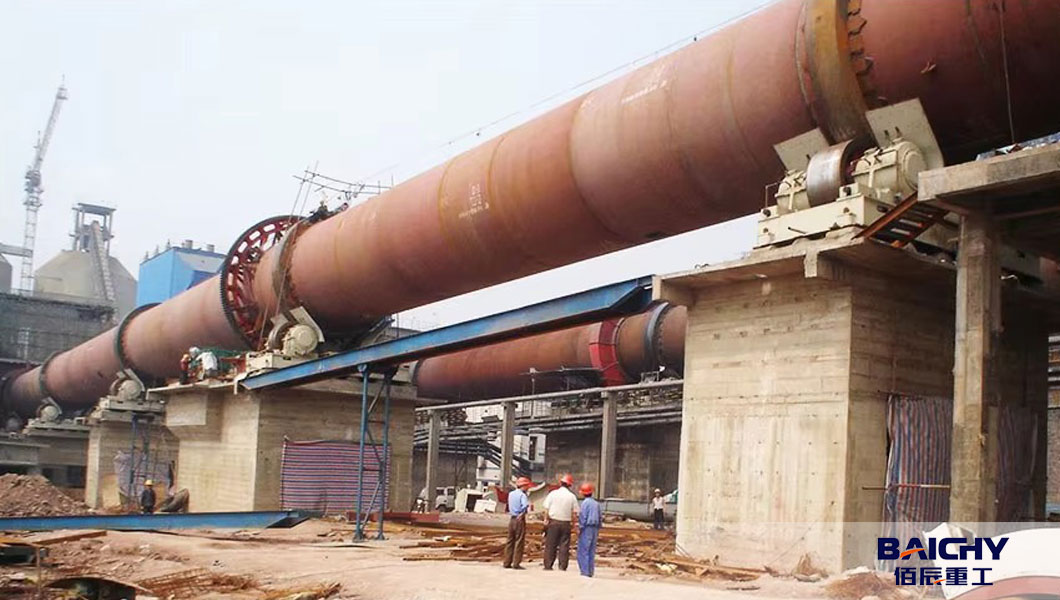
In industrial diatomaceous earth (DE) processing, rotary kiln specifically refers to a calcination process. Calcination is the critical thermal treatment step that enhances DE's properties for high-end applications (such as filter aids), going far beyond simple drying. DE products are categorized into three main grades: Natural, Calcined (straight calcined), and Flux Calcined. Calcined products account for about half of the market share. The rotary kiln calcination process achieves the following key transformations:
| Modified Property |
Specific Effect |
| Physical Structure |
Destroys the fine structure; forms agglomerates through sintering (increasing particle size); reduces surface area; increases specific gravity and hardness. |
| Chemical Composition |
Removes organic impurities; partially converts opaline silica to cristobalite. |
| Appearance |
Changes color (flux calcination produces a white product). |
| Application Performance |
Increases flow rate when used as a filter aid; enhances bulk density and void volume. |
| Other Tunable Properties |
Brightness, absorptive capacity, refractive index, chemical inertness, and more. |
Calcination Process & Equipment
Core Equipment: Rotary Kiln (Calciner), typically of the direct-fired counter-current configuration.
● Process Flow: Mined DE is milled and, if necessary, dried (often in a rotary dryer) before being fed into the rotary kiln for calcination.
● Key Process Parameters: Temperature and retention time are adjusted based on the intended end-use.
● Straight Calcination: Typically carried out at temperatures between 870-1100°C.
● Flux Calcination: Conducted at temperatures up to 1200°C.
This is a high-tech, customizable thermal process designed to precisely control the physical and chemical properties of DE, enabling its use in diverse markets ranging from simple absorbents to high-performance filter aids. Successful calcination process development depends on thorough material testing and precise control of processing parameters.
4. Application Of Diatomite Earth
Diatomite is a kind of valuable Siliceous sedimentary rocks, main chemical composition is SiO2, It is a very porous rock with a fine particle size and a low specific gravity. These properties make it useful as a filter media etc. Diatomite consists of the fossilized remains of diatoms (ancient microscopic algae). Its unique properties make it an excellent material for filtering liquids:
a. Beer and Wine Filtration: Much of the world's beer is filtered through crushed diatomite. It traps microscopic impurities while allowing the liquid to pass smoothly. For beverage filtration, it is critical to source diatomite from a freshwater environment; marine diatomite contains salts that can ruin the taste of the beer.
b. Safety and Environmentally Friendly: D.E. is used to filter drinking water, swimming pool water, syrups, honey, and juices without altering their chemical composition.
c. Industrial Fillers: Beyond filtration, its fine particle size and low specific gravity make it a premium lightweight filler for rubber, paint, and high-performance plastics.
People Also Frequently Asked For - FAQ
1. Why is freshwater diatomite used for beer filtration?
Freshwater diatomite typically features lower iron and salt content compared to marine deposits. High salt and heavy metal content from marine sources can alter the taste, color, and clarity of beverages like beer and wine.
2. What is the purpose of calcining diatomite?
Calcination involves heating the diatomite powder to 800°C–1100°C. This process burns off organic impurities, turns the powder white, and fuses the fine particles into a structure with higher porosity and better liquid permeability, making it ideal for high-speed filtration.
3. What equipment is needed for a Diatomaceous Earth grinding mill?
A complete D.E. grinding and processing plant typically requires a primary crusher, a specialized Raymond mill for fine grinding, a rotary kiln for thermal treatment, and an advanced air classifier to separate the fine powder from heavy waste.




 2026-09-09





 86-15093113821
 86-15093113821