Demolishing bridges, highway overpasses, industrial floors, and commercial buildings generates massive volumes of reinforced concrete—tough concrete slabs heavily laced with steel rebar and wire mesh. While recycling this debris on-site saves thousands of dollars in hauling and landfill tipping fees, processing steel-reinforced concrete is notoriously hard on standard crushing equipment. Without the right crusher design, twisted steel bars can wrap around rotors, jam crushing chambers, and slice expensive conveyor belts in half. In this guide, we compare Jaw Crushers vs. Impact Crushers for reinforced concrete, outline the 3 essential anti-jamming features every plant needs, and share tips to maximize your daily throughput.
Why Standard Crushers Struggle with Reinforced Concrete
Unlike natural quarry rock, reinforced concrete combines two materials with opposite mechanical properties:
• Concrete is brittle and fractures under compression or high-velocity impact.
• Steel Rebar is ductile—it bends, stretches, and tangles instead of breaking cleanly.
Important Rule of Thumb: Never feed reinforced concrete into a Cone Crusher. Cone crushers have tight, closed crushing chambers that will immediately jam and suffer severe main-shaft or mantle damage if steel bars enter the cavity.
To process reinforced concrete safely and profitably, contractors rely on two proven technologies: Jaw Crushers and Heavy-Duty Impact Crushers.
1. Jaw Crusher: The Heavy-Duty Choice for Thick Rebar & Oversized Slabs
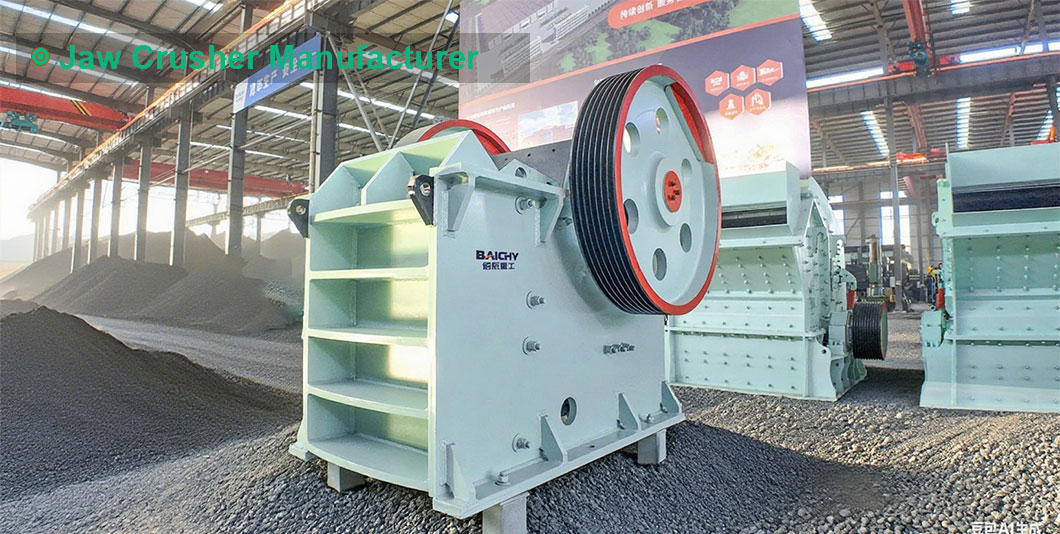
A Jaw Crusher breaks concrete using pure compressive force between a fixed manganese jaw plate and a moving swing jaw. Because its crushing chamber is deep, open, and free of rotating shafts, it offers the highest tolerance for heavy steel reinforcement.
Best Applications
• Primary demolition of bridge decks, thick foundations, and structural beams.
• Concrete containing thick steel bars (16 mm / 5/8" and above) or dense rebar cages.
• Jobsites where reliability and low wear-part cost matter more than single-pass aggregate shape.
Key Advantages
• Superior Jam Resistance: Straight or bent steel bars pass cleanly down through the V-shaped crushing cavity and exit the discharge opening without wrapping around moving parts.
• Lowest Wear Cost Per Ton: High-manganese steel jaw plates withstand heavy abrasion and steel scraping far longer than impact blow bars, keeping maintenance budgets predictable.
• Handles Large Feed Sizes: Wide feed openings accept bulky demolition slabs with minimal pre-breaking.
Limitations to Consider
• Partial Concrete Adhesion: Because jaw crushers squeeze rather than shatter, some crushed concrete chunks may remain attached to long pieces of rebar.
• Flakier Aggregate Shape: Jaw-crushed concrete tends to be more elongated and usually serves best as primary coarse aggregate or sub-base fill unless followed by a secondary crusher.
2. Impact Crusher: The Top Pick for Clean Rebar Separation & Cubical Road Base
An Impact Crusher uses a high-speed spinning rotor fitted with heavy chrome-alloy blow bars to hurl concrete chunks against heavy impact aprons. This high-energy collision shatters concrete instantly along natural weak points while leaving the steel intact.
Best Applications
• Pre-broken concrete slabs, highway paving, and commercial demolition rubble.
• Concrete containing lighter rebar (under 12–16 mm) or welded wire mesh.
• Projects requiring certified, cubical road-base aggregate in a single pass.
Key Advantages
• Maximum Concrete-to-Steel Liberation: High-velocity impact knocks virtually 100% of the concrete off the steel bars. The rebar exits clean, making magnetic separation effortless and boosting scrap-steel resale value.
• Superior Cubical Output: Produces uniform, well-graded recycled concrete aggregate (RCA) that meets strict municipal road-base specifications without needing a secondary crusher.
• Higher Reduction Ratio: Breaks large feed pieces down to fine finished sizes in a single crushing stage.
Limitations to Consider
• Risk of Rotor Wrap on Long Rebar: Excessively long, unclipped steel bars can hook onto the rotor or wedge between blow bars and aprons if not pre-cut.
• Higher Wear-Part Consumption: Steel rebar accelerates wear on blow bars compared to clean concrete, increasing consumable costs on heavily reinforced feeds.
Jaw vs. Impact Crusher: Side-by-Side Comparison for Reinforced Concrete
| Comparison Factor |
Mobile Jaw Crusher |
Mobile Impact Crusher |
| Rebar Tolerance |
– Handles thick rebar (16 mm+) and dense cages easily |
– Best for thinner rebar (<16 mm) and pre-cut slabs |
| Steel Liberation (Cleanliness) |
– Some concrete chunks may stay attached to rebar |
– Shatters concrete cleanly off the steel |
| Wear-Part Cost Per Ton |
– Manganese jaw plates offer long service life |
– Blow bars wear faster against steel |
| Finished Aggregate Shape |
Elongated / flaky (ideal for primary crushing & sub-base) |
(ideal for finished road base) |
| Best Overall Role |
Primary crusher for heavy, unpredictable demolition waste |
Single-stage or secondary crusher for high-spec road base |
The 3 Must-Have Configurations for Crushing Reinforced Concrete
Choosing the right crusher chamber is only half the equation. To run a profitable recycling operation without constant stoppages, Baichy Machinery equips every reinforced-concrete plant with three essential systems:
1. High-Intensity Overband Magnetic Separator
An overband magnetic separator is suspended directly above the main discharge belt conveyor. As crushed concrete and freed rebar travel down the belt, the powerful permanent or electromagnetic field lifts the steel bars out of the aggregate stream and discharges them into a separate scrap bin.
• Why it’s essential: Prevents jagged rebar from tearing downstream belts or entering vibrating screens, while turning waste steel into an extra revenue stream.
2. Elevated Discharge Clearance & Anti-Puncture Conveyor Belts
When long, bent steel bars drop out of a crusher chamber, tight clearance beneath the machine causes them to wedge against the frame and tear the conveyor belt.
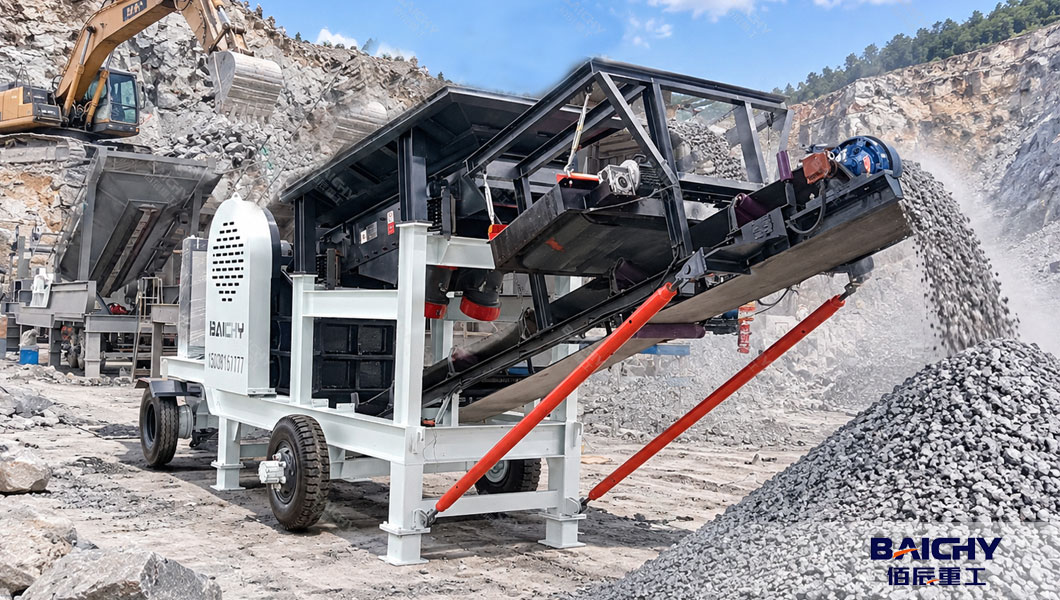
• Baichy’s Engineering Solution: We design our wheeled mobile frames with generous vertical clearance below the crusher outlet, heavy-duty impact beds at the loading zone, and multi-ply rip-stop rubber belts engineered to resist sharp steel punctures.
3. Hydraulic Reverse & Overload Relief System
Even on well-managed sites, an oversized piece of twisted steel can occasionally bridge inside the chamber.
• Why it’s essential: With hydraulic reverse drive (on jaw crushers) or hydraulically retractable impact aprons (on impact crushers), operators can reverse the chamber or open the discharge gap in seconds from the control panel—eliminating dangerous manual torch-cutting and hours of lost production.
Pro Tip: Pre-Processing Boosts Output by Over 30%
If your demolition pile contains massive concrete beams with long protruding rebar, adding a hydraulic concrete pulverizer or shear attachment on your feeding excavator pays for itself quickly.
1. Snip long steel bars down to manageable lengths (under 500–600 mm) before loading the feeder.
2. Crack oversized slabs so they fit smoothly into the vibrating grizzly feeder.
3. Result: Hourly throughput increases by 30% or more, conveyor belt life doubles, and unplanned chamber jams drop to near zero.
Build a Custom Reinforced Concrete Crushing Plant with Baichy
Whether you need a compact 10–30 TPH wheeled jaw crusher for urban demolition or a 60–100 TPH closed-circuit crushing and screening plant with dual diesel/electric drive, Baichy Machinery custom-engineers every detail to match your material and budget.
With 20+ years of manufacturing expertise and active installations across Southeast Asia, the Middle East, Africa, South America, and Europe, our engineering team is ready to help you design a reliable, high-ROI recycling line.
Contact Baichy Machinery today with your maximum feed size, rebar condition, and target hourly capacity (TPH) to receive a free 3D plant layout and factory-direct quotation within 24 hours.




 2026-11-28






 86-15093113821
 86-15093113821