In heavy industries like aggregates mining, quarrying, and construction demolition recycling, processing material on-site has become a major advantage. Mobile crushing and screening equipment helps operators cut hauling costs, increase flexibility, and finish projects faster. Among the different options—tracked, wheeled, and stationary—trailer-mounted (or trailer-type) crushing and screening plants are a growing choice. These units combine heavy-duty performance with the simplicity of being towed by a truck on a low-bed trailer, often as a single complete unit.
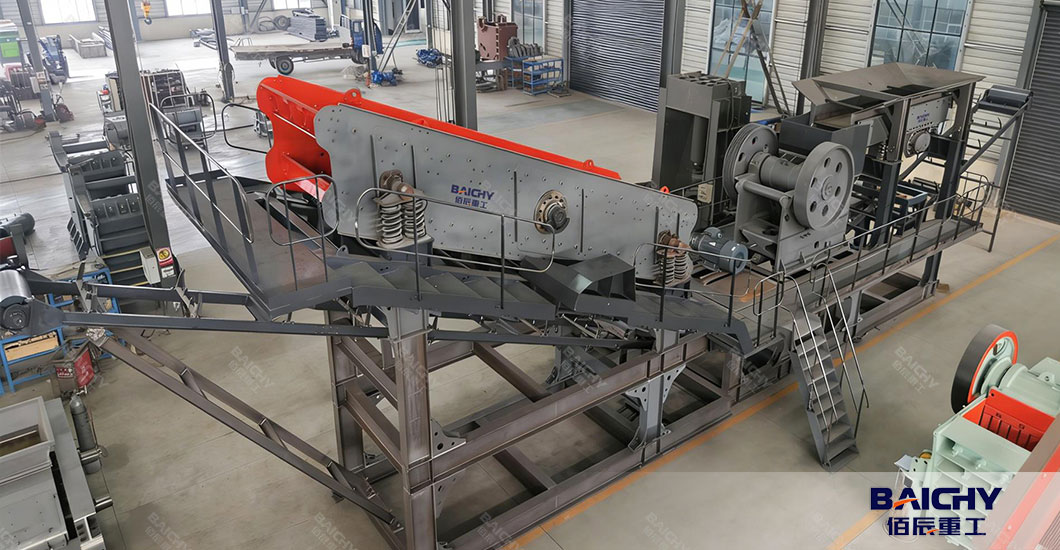
This guide covers what trailer-mounted equipment is, where it is used, the main types available, key features, economic benefits, leading brands, how to choose the right unit, and what is coming in the future.
What Is Trailer-Mounted Mobile Crushing and Screening Equipment?
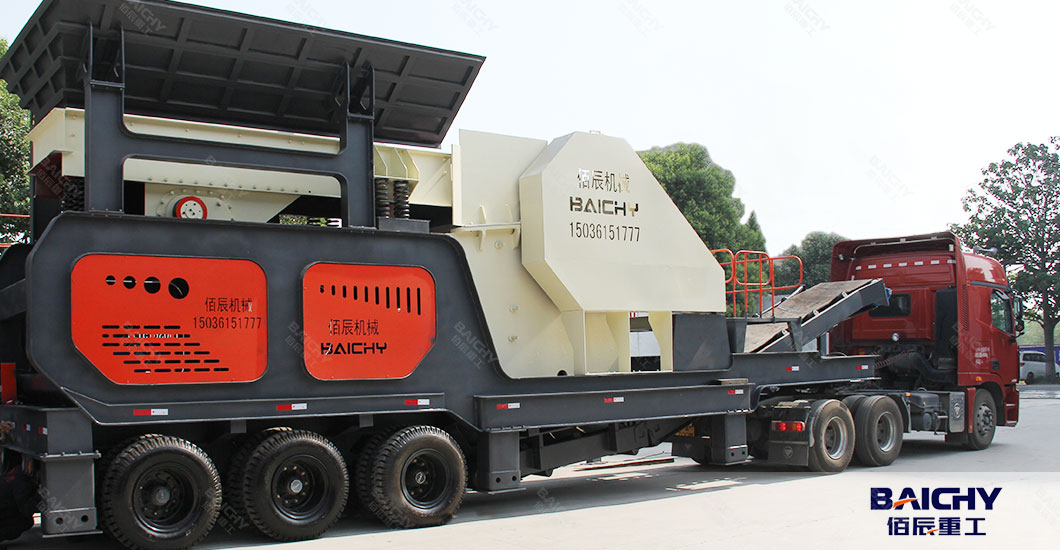
Trailer-mounted equipment refers to complete processing plants built onto a heavy trailer frame. They are designed to be towed to a site, set up quickly, and run on their own.
Key characteristics:
Single-unit transport – The whole plant (crusher, screen, conveyors, engine) moves as one load on a low-bed trailer.
Self-contained – Includes its own diesel engine, feed hopper, screen, and stacking conveyors.
Quick deployment – Setup usually takes hours, not days.
Comparison with other types:
| Type |
Mobility |
Transport |
Best for |
| Trailer-mounted |
High |
Towed by truck |
Short-to-medium term projects |
| Tracked |
High |
Self-propelled, needs low-boy trailer |
Rough terrain, frequent moves |
| Wheeled (skid) |
Moderate |
Forklift or crane |
Semi-permanent sites |
| Stationary |
None |
Disassembly required |
Long-term, high-capacity sites |
Main Applications
Trailer-mounted plants are used in several heavy industry sectors:
1. Aggregates and Quarrying – Processing limestone, granite, river gravel, and recycled asphalt to make road base, concrete, and asphalt materials.
2. Construction and Demolition Recycling – Crushing concrete, brick, block, and asphalt on-site to reduce landfill fees and create sellable recycled products.
3. Road Construction and Repair – Making base course materials right where they are needed, avoiding long hauls.
4. Emergency and Short-Term Projects – Disaster debris clearing, temporary quarry operations, or pipeline construction.
Main Types Of Trailer-Mounted Mobile Crushing and Screening Eequipment
Trailer-mounted crushing and screening plants are available in several distinct configurations, each optimized for specific stages of material processing and different material characteristics. Understanding these types is essential for selecting the right equipment for a given application.
1 Trailer-Mounted Jaw Crushers
Jaw crushers are the most common primary crushing solution in heavy industry. They operate using a fixed jaw plate and a moving jaw plate that compresses material against the fixed jaw. The crushing chamber narrows toward the discharge opening, allowing material to be gradually reduced in size.
● Key characteristics:
○ Capable of handling the largest feed sizes, typically up to 600–1,000 mm depending on the model
○ Excellent for hard, abrasive materials such as granite, basalt, and river rock
○ High reliability with relatively simple mechanical construction
○ Produces a more elongated, flaky product shape compared to impact crushers
● Typical applications: Primary crushing in quarries, recycling of demolition waste, and hard rock mining.
● Popular sizes: 30–200 tons per hour for trailer-mounted units, with some larger models exceeding 400 tph.
● Transport considerations: Larger jaw crushers may require oversized transport permits. Many modern trailer-mounted jaws are designed to fold or disassemble key components (like feed hopper wings) to remain road-legal.
2 Trailer-Mounted Cone Crushers
Cone crushers are typically used as secondary or tertiary crushers after primary jaw or impact crushing. They crush material by compressing it between a rotating mantle and a stationary concave liner. The crushing action is continuous, providing high production efficiency.
● Key characteristics:
○ Excellent for producing well-graded, cubical aggregate shapes preferred for asphalt and concrete mixes
○ Very high reduction ratios, typically 4:1 to 7:1 in a single stage
○ Lower wear part costs per ton compared to impact crushers for hard rock
○ Requires a consistent, regulated feed for optimal performance
● Typical applications: Secondary and tertiary crushing in aggregates production, manufactured sand production, and hard rock quarrying.
● Cavity configurations:
○ Standard cavities – For coarse secondary crushing
○ Short-head/fine cavities – For tertiary and fine crushing
● Control features: Hydraulic adjustment settings (Hydroset) allow operators to change discharge settings remotely. Tramp iron release systems protect the crusher when uncrushable material enters the chamber.
3 Trailer-Mounted Impact Crushers (Horizontal Shaft – HSI)
Horizontal shaft impact crushers use a high-speed rotor with blow bars that hurl material against impact curtains or aprons. Material is fractured on impact and again as it bounces back through the rotor.
● Key characteristics:
○ Highest reduction ratio among crusher types, often exceeding 15:1
○ Produces excellent cubical particle shape with minimal flat or elongated material
○ Very effective for softer rock (limestone, dolomite) and recycled materials
○ Higher wear part costs compared to jaw and cone crushers when processing hard, abrasive rock
● Typical applications: Primary crushing of limestone and softer aggregates, C&D recycling (concrete, asphalt, brick), and producing manufactured sands.
● Modern features: Hydraulic apron adjustment, automatic wear compensation, and quick-change blow bar systems that reduce downtime from hours to minutes.
● Closed-circuit operation: Many trailer-mounted impact plants include an on-board screen and return conveyor, allowing them to produce specification material in a single pass without additional equipment.
4 Trailer-Mounted Screening Plants
Screening plants are used to separate crushed material into different size fractions. They are available as standalone units or integrated into crushing plants.
● Key characteristics:
○ Multiple deck configurations (single, double, triple deck) to produce two, three, or four product sizes
○ Vibrating screen mechanisms (eccentric shaft or multiple vibrators)
○ Available with wet screening options (spray bars) for washing applications
○ Hydraulic folding conveyors for fast setup and tear-down
● Deck configurations explained:
○ Single deck – Separates material into two fractions (overs and unders)
○ Double deck – Produces three fractions (coarse, medium, fines)
○ Triple deck – Produces four fractions, often used in specification aggregate production
● Example from Baichy : Self-contained screening plant comes complete with a receiving hopper, double-deck screen, three-cylinder diesel engine, and three stockpiling conveyors.
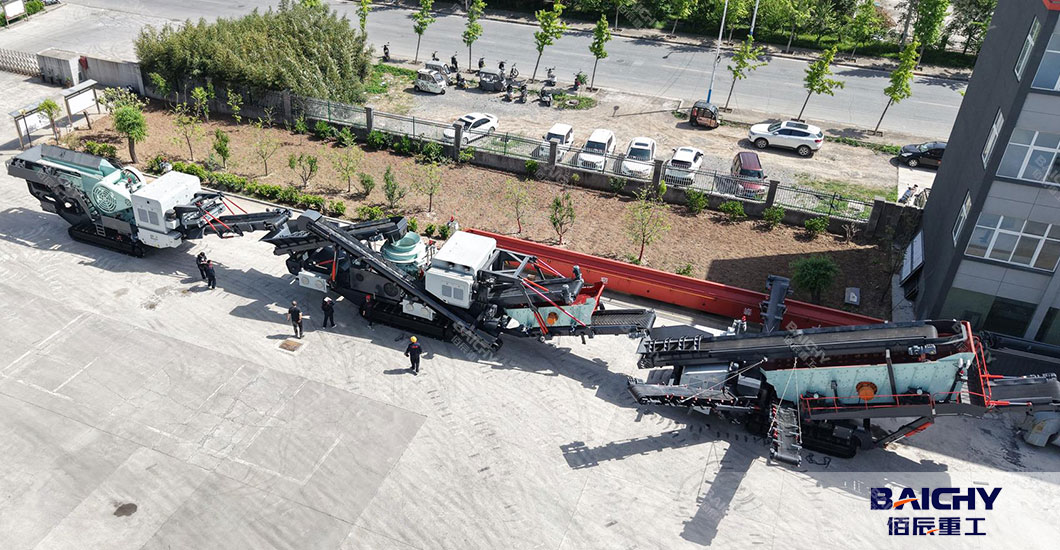
5 Trailer-Mounted Complete Crushing & Screening Plant
These integrated units combine a crusher, screen, and return conveyor on a single trailer chassis, creating a complete processing plant.
● Key characteristics:
○ Closed-circuit operation: material is crushed, screened, and oversize material is returned to the crusher via a radial return conveyor
○ Single-unit transport eliminates multiple trailers
○ Produces final specification product in one pass
○ Most common with impact crushers for recycling applications
● Example fromQuinn Company on Metso LT1213S: *"The LT1213S can be transported as a single unit on a low bed trailer. The dual-slope screen and radial return conveyor provide high on-board screening capacity."*
● Operational benefits: Reduced material handling, lower fuel consumption compared to separate units, and eliminates the need for a second loader or excavator to feed a standalone screen.
Key Performance Features
Here are the most important features to look for in trailer-mounted plants, explained in plain terms.
1. Heavy-Duty Frame: The frame is the backbone of the machine. A heavy-duty frame made of high-strength steel resists twisting during towing and vibration during operation. This means longer machine life and less downtime for repairs.
2. Low-Bed Trailer Transport: Good trailer-mounted plants are designed to be road-legal without special permits. This requires folding feed hoppers, retractable conveyors, and careful width control (usually under 8.5 to 9.5 feet). Being able to move as a single load saves time and money.
3. On-Board Screening Decks: Having a screen built into the same trailer as the crusher is a big advantage. You can produce finished products right away without needing a separate screening plant. Double-deck or triple-deck screens let you make two, three, or four sizes at once.
4. Radial Return Conveyor: This is a swinging conveyor that takes oversize material from the screen back to the crusher. It creates a closed circuit, so material keeps going through until it is the right size. This ensures consistent product quality.
5. Self-Contained Diesel Engine: Most trailer-mounted plants have their own diesel engine. This means you do not need grid power, which is often unavailable at remote sites. Modern engines are fuel-efficient and meet emissions standards.
6. Hydraulic Folding for Fast Setup: Premium units use hydraulics to fold and unfold conveyors, raise hopper wings, and level the machine. A single person can set up the plant in under 30 minutes using a remote control.
7. Feed Hopper with Variable Speed: The feed hopper accepts material from a loader or excavator. A variable-speed feeder lets you control how fast material goes into the crusher, preventing overloads and keeping production steady.
8. On-Board Stacking Conveyors: Folding conveyors on the same chassis discharge finished product directly into stockpiles. Some conveyors can swing in an arc to build larger piles without moving the plant.
Operational and Economic Advantages (Individual Points)
The business case for trailer-mounted crushing and screening plants is supported by five distinct operational and economic advantages, each contributing to lower costs and higher profitability.
Advantage 1: Lower Transport Costs Through Single-Load Movement
One of the most immediate benefits of trailer-mounted plants is the ability to move an entire processing unit as a single load on a low-bed trailer. This eliminates the need for multiple trucks to transport separate crusher, screen, and conveyor components. For contractors who move between projects several times per year, the savings in heavy haulage costs can be substantial. Additionally, single-load movement reduces the risk of lost components, simplifies logistics planning, and reduces the number of required permits in some jurisdictions. Compared to moving three or four separate pieces of equipment, a single trailer-mounted plant typically reduces transport costs by 50–70% per move.
Advantage 2: Reduced Landfill Fees Through On-Site Processing
For construction and demolition contractors, landfill tipping fees represent a major operating expense. Trailer-mounted crushing and screening plants allow operators to process concrete, asphalt, brick, and block on-site rather than hauling debris to a landfill. The crushed material can often be reused as road base, backfill, or aggregate for new concrete, creating a circular economy benefit. In many markets, landfill fees range from $30 to $100 per ton. Processing 10,000 tons of material on-site instead of sending it to a landfill can therefore save $300,000 to $1,000,000 in disposal costs alone, while also producing a sellable product.
Advantage 3: Faster Return on Investment Through Multi-Site Utilization
Stationary crushing plants are typically dedicated to a single site and require years of continuous operation to achieve a satisfactory return on investment. Trailer-mounted plants, by contrast, can be moved between multiple projects within a single year. A contractor may use the same plant for a quarry project in the spring, a highway reconstruction project in the summer, and a demolition recycling project in the fall. This high asset utilization dramatically shortens payback periods. Many owners report achieving return on investment within 12 to 24 months, compared to 3 to 5 years for stationary plants with similar production capacity.
Advantage 4: Independence from Utility Power for Remote Operations
Trailer-mounted crushing and screening plants are equipped with their own diesel engines, making them completely independent of the electrical grid. This is a critical advantage for operations in remote locations where grid power is unavailable or where bringing in temporary power would require expensive generator rentals and fuel delivery logistics. Self-contained power also allows the plant to be operated on any job site immediately upon arrival, without waiting for utility connections or permits. For projects in developing regions or disaster recovery zones, this independence can be the difference between meeting deadlines and missing them entirely.
Advantage 5: Rapid Mobilization for Short-Duration Projects
Many heavy industry projects have relatively short active processing windows, such as pipeline construction, road resurfacing, or emergency debris clearance. For these projects, the time required to set up and tear down equipment can be a significant portion of the total project schedule. Trailer-mounted plants are designed for rapid mobilization: from arrival on site to first production in under four hours is typical for experienced crews. Similarly, tear-down and departure can be completed in two to three hours. This speed allows contractors to bid on shorter-duration projects that would be unprofitable with slower-moving stationary or skid-mounted equipment.
Frequently Asked Questions (FAQ)
Q1: Can a trailer-mounted crusher be used on soft or uneven ground?
A: Generally, a stable, compacted surface is recommended. For rough terrain, tracked units are more suitable.
Q2: Do I need a special permit to tow these units?
A: It depends on width, weight, and local regulations. Many modern trailer-mounted plants are designed to be road-legal without permits.
Q3: How long does it take to set up on-site?
A: Typically 2–4 hours from arrival to production, depending on whether conveyors need unfolding and leveling.
Q4: Are trailer-mounted plants suitable for hard rock like granite?
A: Yes, but choose a heavy-duty jaw or cone crusher with appropriate wear liners.
Q5: Can I run a screen without a crusher on the same trailer?
A: Yes, many standalone trailer-mounted screening plants exist for classifying pre-crushed material.




 2026-10-16





 86-15093113821
 86-15093113821