Granite is a hard and abrasive rock commonly used for construction aggregates, road materials, and infrastructure projects. Because of its high hardness and strong wear characteristics, granite processing requires crushing equipment with sufficient crushing force, durable wear parts, and stable production performance.
A quarry operator in Southeast Asia needed a crushing solution for granite aggregate production. The main challenges were the difficult quarry conditions, increasing material transportation costs, and the need to move the crushing equipment as the mining area expanded.
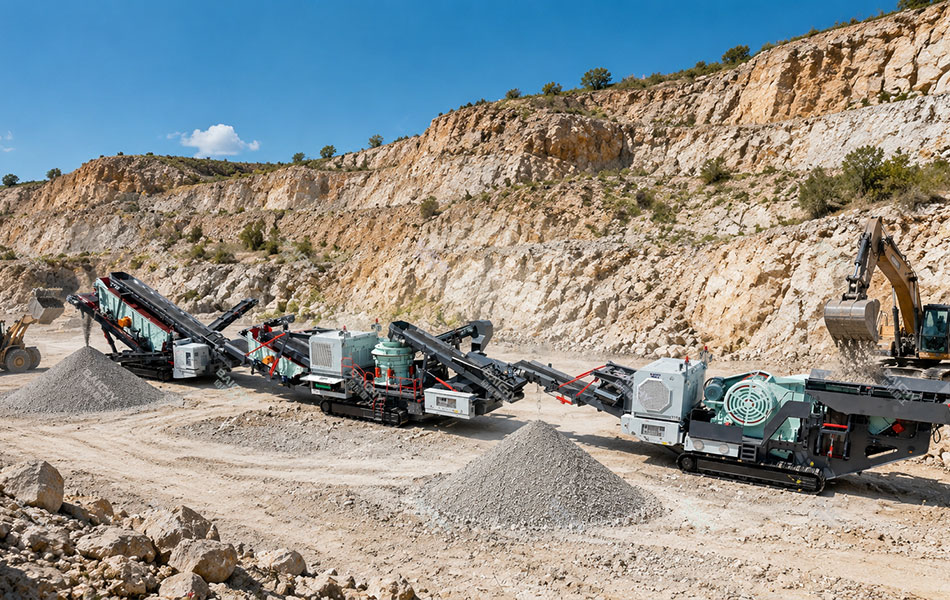
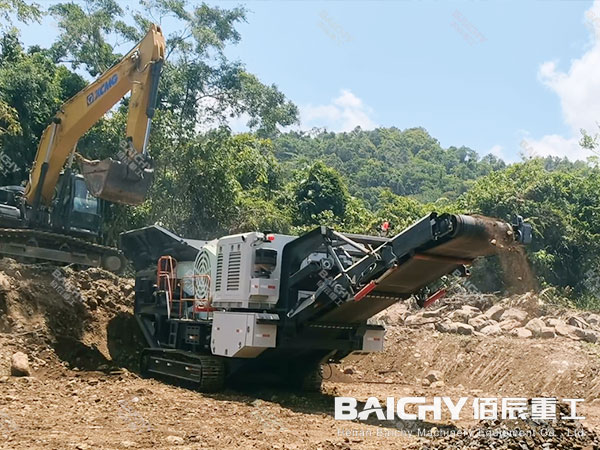
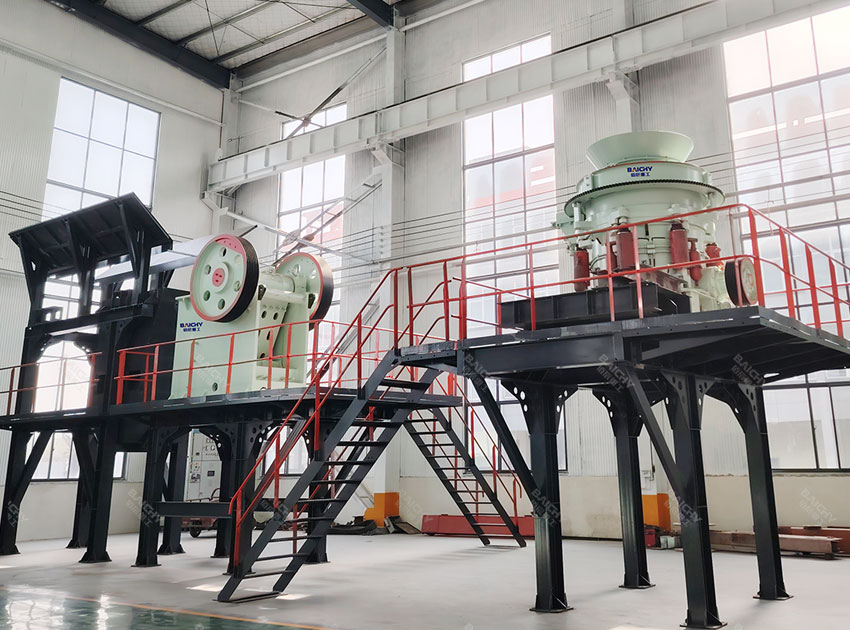
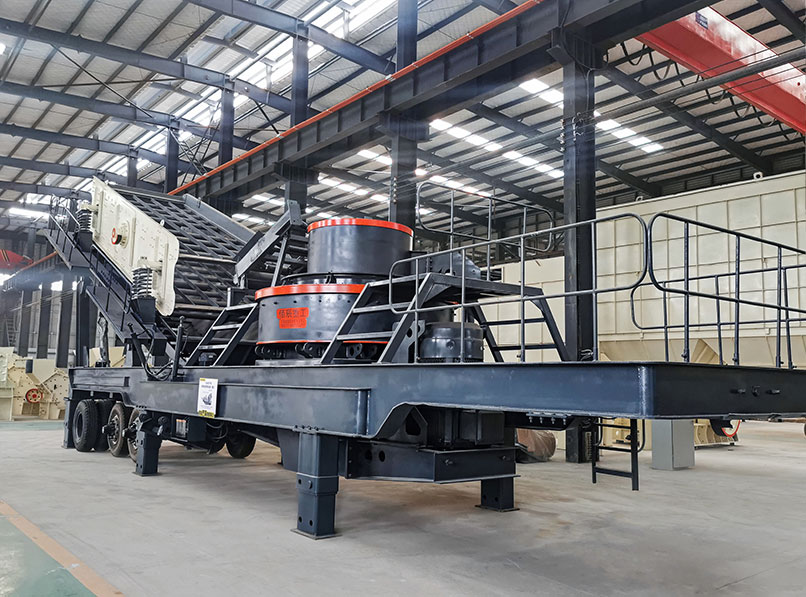
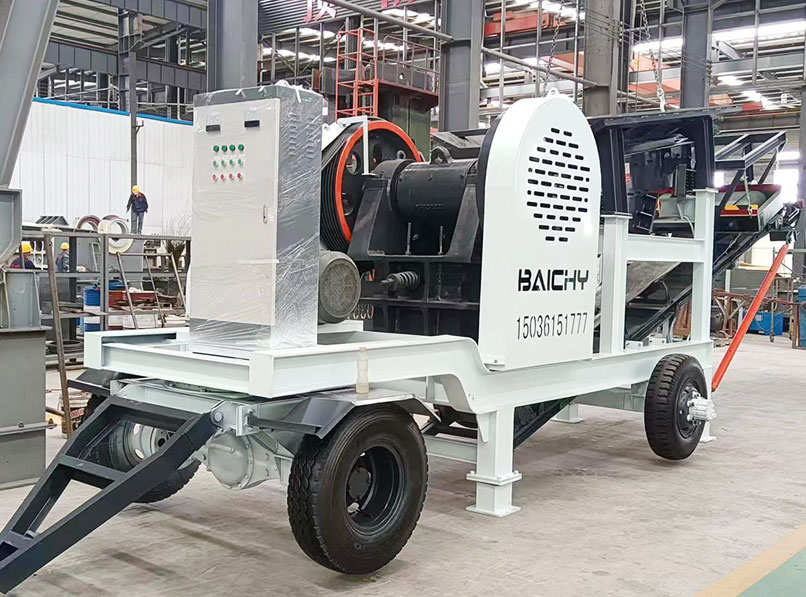
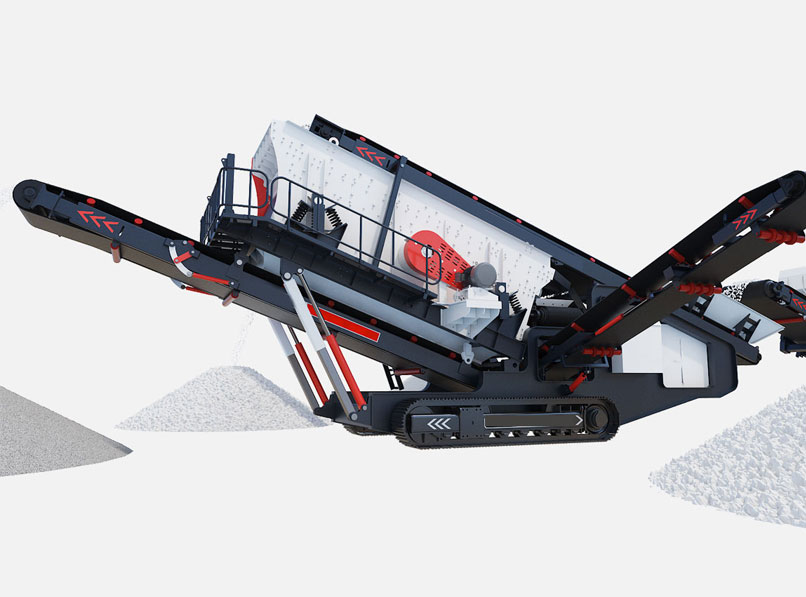
Based on these requirements, Baichy Machinery supplied a tracked mobile crushing system consisting of a YMC96 crawler jaw crusher, YMC30S crawler cone crusher, and crawler vibrating screen. The complete plant provided primary crushing, secondary crushing, and screening in a flexible mobile configuration, allowing the quarry to produce different aggregate sizes while adapting to changing site conditions.
Baichy supplied a three-unit crawler mobile crushing train designed for granite processing projects where high hardness, large feed size, and flexible site operation are required.
1. The crawler mobile jaw crusher YMC96 handles primary crushing. It takes granite up to 480 mm through a 930 × 580 mm jaw opening and breaks the big rocks down to a size the cone crusher can work with. Hydraulic discharge adjustment lets operators set the output size to match what the job needs. The unit runs on its own diesel-electric power system, so it works in remote sites with no external power. Capacity: 80–150 TPH, depending on feed size, rock type, and the product size you're after.
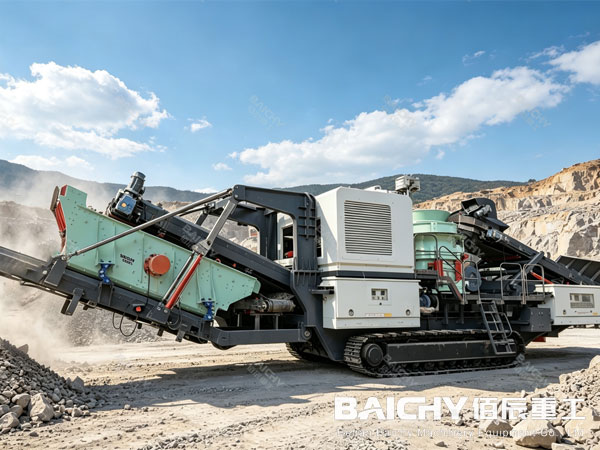
2. For secondary crushing, the crawler mobile cone crusher YMC30S takes the granite down further using compression crushing. The lamination action produces cubical aggregate with low flakiness — important for road base and other jobs where aggregate shape matters. Hydraulic overload protection kicks in if something uncrushable gets into the chamber, so the crusher doesn't take damage and you lose less production time. Capacity: 150–380 TPH, with finished aggregate in the 5–40 mm range.
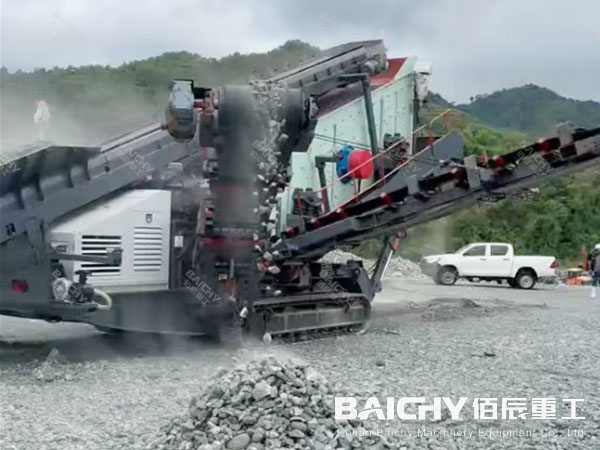
3. The crawler mobile vibrating screen does the final classification, splitting crushed granite into 0–5 mm, 5–20 mm, and 20–40 mm. Screen meshes can be swapped out to match what the customer wants, so the line can shift between products as market demand changes. The crawler chassis means the screen can move between work areas on its own — handy for quarries where production shifts around or where you're running multiple stockpiles.
4. Picking a crawler mobile crushing system for hard rock means looking at granite hardness, feed size, the capacity you need, the aggregate specs you're targeting, and the site conditions — all together. Get the jaw, cone, and screen matched right and production stays steady, key parts wear longer, and your long-term running costs stay under control.


1. Mobility That Works in Rough Terrain.The unit runs on a heavy-duty crawler chassis with wireless remote control, so it can handle slopes up to 20°, narrow quarry roads, and soft ground — conditions common at Southeast Asian tropical quarry sites. It drives right up to the blasting face, so there's no need to haul rock back and forth across the quarry with trucks, and transport costs drop sharply.
2. Built for Hard Rock — Granite Specifically. The YMC96 jaw crusher and YMC30S cone crusher are matched specifically for hard, abrasive rock like granite. The YMC96 takes the large raw boulders, and the YMC30S uses inter-particle crushing to achieve a high reduction ratio and a cubical product with under 10% flakiness — meeting international specs for high-strength concrete and asphalt used in major infrastructure projects.
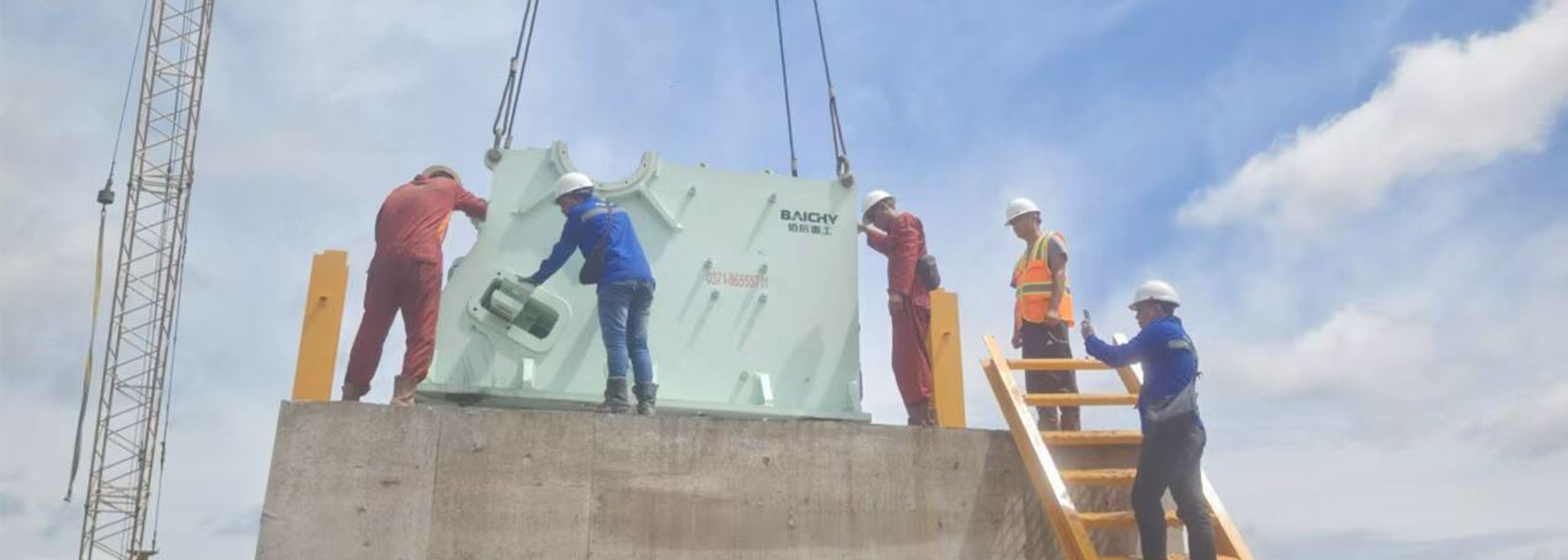
3. No Foundation Needed, Fast to Set Up. The units use a self-contained modular design, so they don't need a concrete foundation or any complex civil work — unlike a stationary plant. Setup is essentially plug-and-play: going from transport mode to full production takes 24 to 48 hours. This saves about 15–20% of the upfront cost that normally goes into site preparation and infrastructure.
4. All-Hydraulic Control, Simple to Maintain. The full hydraulic control system lets operators set the output size (CSS) directly from the interface. If power cuts out or something uncrushable gets into the chamber, the hydraulics clear the cavity quickly and safely — reducing manual work and downtime. Throughput stays steady at 150–200 TPH even when running 24/7.
5. Flexible Setup, Easy to Expand Later. The three units can work together as a complete production line, or they can be deployed separately for different jobs — the jaw crusher on its own for recycled concrete, for example, or the screen for topsoil. When it's time to scale up, you can add another unit or swap out the crushing chamber without replacing the entire chassis.
After installation and commissioning, the three-unit tracked mobile crushing system started operation at a granite quarry in Southeast Asia. The plant, including the YMC96 crawler jaw crusher, YMC30S crawler cone crusher, and tracked vibrating screen, was configured for hard granite processing and aggregate production.
1. Stable Granite Crushing Performance. The YMC96 jaw crusher handled primary crushing of large granite rocks, while the YMC30S cone crusher produced more uniform aggregates with improved particle shape. The matched crushing process helped the quarry maintain stable output and reduce production interruptions caused by hard and abrasive materials.
2. Flexible Quarry Operation. The crawler-mounted design allowed the equipment to move according to quarry development. This reduced material transportation distance, simplified production layout changes, and improved operation flexibility compared with fixed crushing systems.
3. Lower Installation Requirements. The tracked mobile crushing plant required less site preparation than a traditional stationary plant. The customer reduced investment in concrete foundations, fixed structures, and long-distance conveyors, allowing faster project setup.
"These three mobile crusher plants have completely changed our granite operation. We got them set up in days instead of months, and they move with the quarry face as we advance. Just on fuel, we're down 30% — no more hauling rock back and forth across the site."
— Project Manager, Southeast Asia Construction Materials Company
If you're looking at a quarry plant for your site — or any hard-rock operation where particle shape matters — our engineers will help you pick the right mobile stone crusher plant and work up a flow sheet specific to your site.

Baichy Machinery can customize a crushing plant for you based on the specific conditions of your project: such as the construction site, hardness of the raw materials, output, output size, budget, etc.

Our team provides on-site installation and thorough training to ensure safe operation of the crushing plant.

Rigorous quality checks ensure compliance with standards, and we handle worldwide delivery to your location.

Baichy Machinery provides you with spare parts supply, project transformation, investment return analysis, etc.
Find answers to the most common questions about Baichy Machinery. If you can’t find what you’re looking for here, please contact us.
Save Time! Get A Detailed Quotation Quickly.